Pre-Born! gives free ultrasounds to women looking to abort their babies and 86% of those women choose to keep their babies!
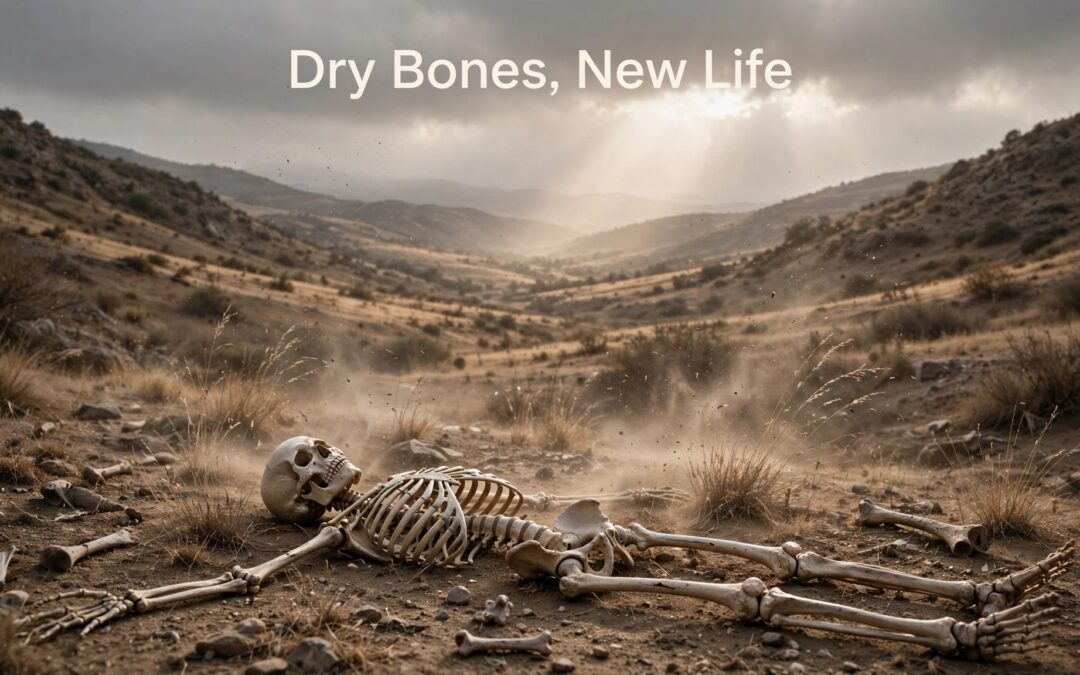
Ezekiel's vision of the valley of dry bones shows God promising to restore the house of Israel when its hope seemed completely gone. The bones come together, but they only live when breath enters them, giving us a picture of God's life-giving Spirit.
If you've ever wondered whether the vision is about Israel, resurrection, or your own spiritual life, you're asking an important question. God's own explanation gives us the place to begin.
God identifies the dry bones as the whole house of Israel, a people who felt cut off and without hope.
Ezekiel speaks God's word, but God is the One who brings the bones together and gives them life.
Breath, wind, and Spirit are connected through a Hebrew word whose meaning depends on its context.
The promise includes a return to the land and God's Spirit within His people.
Christians can find encouragement in the vision without taking Israel out of its original setting.
Why Ezekiel Spoke to People in Exile
Ezekiel was a priest and prophet living among Israelites who had been taken to Babylon. Jerusalem had suffered judgment, and the people were separated from the land tied to God's covenant with their ancestors. The BibleProject guide to Ezekiel helps place his visions within that larger history.
Exile wasn't simply an inconvenient change of address. The people had lost their homes, their familiar places of worship, and much of what made their life together recognizable. God's warnings about their sin had come to pass, and they faced the painful question of what would become of them.
That setting matters when we come to the valley. God isn't speaking to people who are merely having a difficult afternoon. He's addressing a people who see their future as finished.
Yet judgment isn't the end of Ezekiel's message. God also promises to gather, cleanse, and renew His people. The vision of the bones gives those promises a picture we can almost see: a vast field of death transformed by the word and Spirit of God.
We can read Ezekiel 37 with that whole setting in mind. The chapter continues beyond the valley with another picture of Israel's reunification, so the vision belongs within a wider promise of restoration.
The Valley of Dry Bones in Ezekiel 37
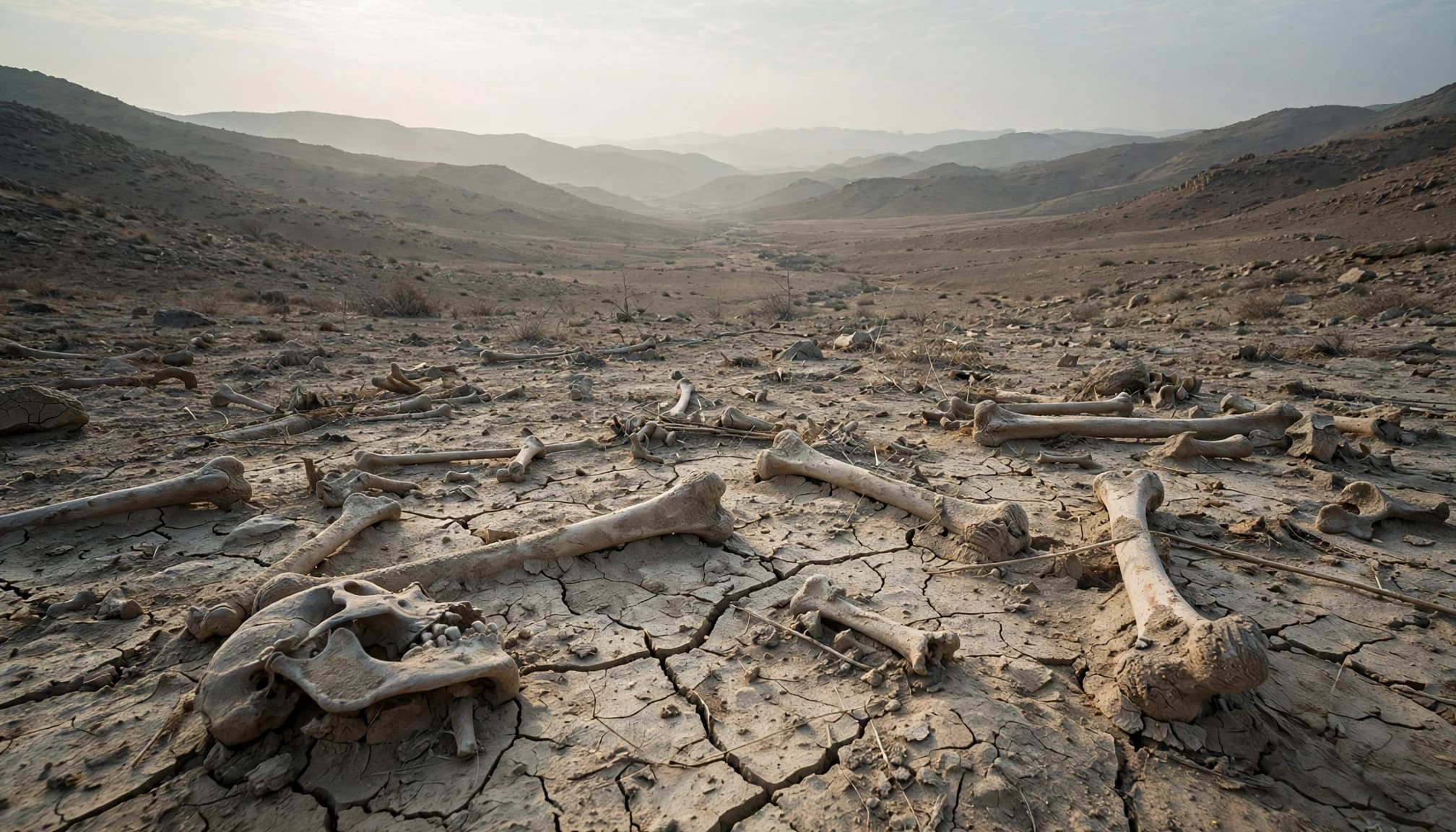
In Ezekiel 37:1-3, the hand of the Lord comes upon Ezekiel, and the Spirit brings him into a valley full of bones. God leads him around them so he can see the condition of the valley for himself.
The bones were very dry
The bones were numerous, and they were very dry. That detail matters. Ezekiel wasn't looking at a situation that appeared likely to improve on its own. The vision confronts him with death that seems settled and beyond human help.
Imagine walking among those scattered remains. There is no breath, no movement, and no human voice coming from the valley. Everything Ezekiel sees gives him a reason to conclude that life is gone.
The Lord brought Ezekiel there
The prophet doesn't discover this place by accident. God brings him into it and lets him see it. Before Ezekiel speaks a word, the Lord already knows what lies in the valley.
We shouldn't miss that. God's presence in the vision does not depend on the bones appearing healthy. He is present while the need is plain to see, and He has a purpose for bringing His prophet into the middle of it.
“Can These Bones Live?”
God asks Ezekiel whether the bones can live. It's a question that puts the visible condition of the valley beside the power of the Lord who made life in the first place.
Ezekiel answers, "O Lord GOD, You know." That answer is humble, and we think there's something beautiful about it. Ezekiel doesn't pretend that the bones have life in themselves. He also doesn't tell God that the situation is beyond His power.
How often do we think the only honest response to a hopeless situation is to agree that nothing can change? Ezekiel gives us another response. He places the answer in God's hands.
That doesn't mean faith requires us to deny what we see. The prophet saw the dryness clearly. He had walked among the bones. His answer holds both truths together: the situation is beyond him, and the Lord knows what He can do.
We should be careful here, though. Ezekiel isn't given a general instruction to announce any outcome he wants. God is about to tell him what to say. The prophet's confidence rests in the Lord's knowledge and word, not in Ezekiel's ability to imagine a better ending.
For anyone reading this while facing a hard situation, that distinction can be a relief. We don't have to know how God will work before we bring our need to Him. We can be honest about what we see and still trust His wisdom.
What Happened When Ezekiel Prophesied?
In Ezekiel 37:4-10, God tells Ezekiel to prophesy to the bones. The message is God's own promise: He will cause breath to enter them, and they will live.
The bones came together
Ezekiel speaks as he is commanded, and there is a noise and a rattling. The bones come together, bone to bone. Sinews and flesh appear, and skin covers the bodies.
The change is astonishing, but Ezekiel notices something else. The bodies have taken shape, yet there is no breath in them. They look different than the scattered bones, but the work described in the vision isn't complete.
We can understand why that detail stands out. An outward structure can be present while life is still absent. God has more in mind than giving His people the appearance of restoration.
Breath entered the bodies
God then tells Ezekiel to prophesy to the breath and call it from the four winds. Ezekiel obeys, breath enters the bodies, and they live. They stand on their feet as an exceedingly great army.
The sequence is important, but we shouldn't turn it into a formula that God must follow whenever we pray. In the vision, the Lord directs the prophet, fulfills His own word, and supplies the breath. Ezekiel's obedience matters because he's responding to what God has said.
What Do Breath, Wind, and Spirit Mean?
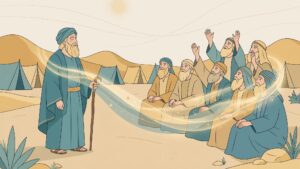
The Hebrew word ruach can mean "breath," "wind," or "spirit." In this vision, that range of meaning helps us hear the connection between the breath entering the bodies, the four winds, and God's promise to put His Spirit within His people.
One word, several possible meanings
We use words like this in English too. A word can have more than one meaning, and the sentence around it helps us understand which meaning fits. We shouldn't assume that every occurrence of the Hebrew word means breath, wind, and Spirit in exactly the same way.
In the valley, breath gives life to the bodies. The four winds enter the prophetic command. Then God explains that He will put His Spirit in His people. Those images belong together, even though each occurrence deserves attention in its own setting.
The Holy Spirit is personal
When we speak about God's Spirit, we aren't reducing Him to moving air. We believe the Holy Spirit is God, present and active. He teaches, leads, convicts, and empowers His people.
Wind gives us a way to picture something we cannot see directly. Breath reminds us how dependent we are on life we cannot produce for ourselves. But the Holy Spirit is more than a picture. He is the living presence of God, and His promise to dwell within His people reaches further than an outward change.
What Do the Dry Bones Represent?
God gives Ezekiel the answer: the bones are the whole house of Israel. The people say their bones are dry, their hope is lost, and they are cut off. Their words explain why the valley looks the way it does.
The vision is about a people who understand themselves to be finished. It includes their sense of loss and their separation from the life they had known. When God tells Ezekiel what the bones mean, we don't have to guess at the first audience of the promise.
That matters because it's easy to read ourselves into the valley before we listen to what God says about Israel. We can draw encouragement from the passage, and we should. But our application becomes stronger when we first honor the people to whom the promise was given.
God's response to their lament is full of action. He says He will open their graves, bring them up, bring them into the land, and put His Spirit within them. Israel's assessment of its condition is real, but it isn't the final word over its future.
The vision also shows that God knows what His people have been saying. He doesn't dismiss their grief as if it were imaginary. He speaks into it with a promise that comes from His own power and faithfulness.
That is the heart of the passage: Israel sees a valley of dry bones, while God declares that His people will live.
The Graves, the Land, and God’s Promise
The picture changes as God explains the vision. Alongside the bones in the valley, He speaks of opening graves and bringing His people up. It's a striking way to describe a restoration that only He can accomplish.
What the open graves mean
In the immediate explanation, the graves belong with Israel's condition of hopelessness and exile. The people feel cut off. God promises to bring them out and give them life.
The image is strong because a grave is a place from which a person cannot climb out by ordinary effort. God's promise reaches a situation His people cannot repair through their own strength.
The language also invites Christians to think about resurrection. We should keep that wider connection in view while recognizing that God Himself identifies the bones with Israel and speaks of bringing His people home.
Why the land matters
God's promise includes bringing Israel into its own land. That detail belongs in the passage. If we turn every part of the vision into a private message about our emotions, we lose the concrete promise God makes to His people.
The return from Babylon is part of the history surrounding that hope. The promise also reaches inward, toward a people who know the Lord and live by His Spirit. The land and the Spirit belong together in God's words, even though they aren't the same thing.
We don't need to force every detail of the vision into a single modern timetable to receive its message. The passage calls us to trust the God who keeps His promises and brings life where His people see an ending.
Ezekiel’s Promise of a New Heart
The chapter before the valley vision helps us understand what kind of restoration God has in mind. He promises to gather His people, cleanse them, give them a new heart, and put His Spirit within them.
Restoration begins with God’s mercy
God says He will act for the sake of His holy name. Israel's return isn't presented as a reward earned by perfect behavior. The people had sinned, and their exile was connected to that sin. God acts because He is faithful to His name and His purposes.
That should make us humble too. None of us can come to God and claim that His mercy is a debt He owes us. We come because He is merciful.
Mercy doesn't mean God is unconcerned about sin. In Ezekiel's message, cleansing is part of the promise. God deals with the condition that brought His people into trouble rather than pretending it never mattered.
Click Our Ad to Support Us!
A new heart and the Spirit within
God's promise reaches deeper than a change of location. He speaks of replacing a heart of stone with a heart of flesh and putting His Spirit within His people so they walk in His ways.
The dry bones help us picture why this inward work matters. Bodies can be assembled, but they need breath. In the same way, returning to a place is joined to the promise of life with God.
We see a related promise in Isaiah's picture of the Spirit poured out, where renewal also comes from God. The prophets keep directing our attention to the Giver, because His people cannot manufacture His life for themselves.
God’s Word and God’s Spirit Work Together
Ezekiel speaks, and the Spirit gives life. Both belong in the vision, but they don't carry the same authority. Ezekiel is the messenger. God is the One who speaks the promise and brings it to pass.
That distinction protects us from treating prophecy as though words have power independent of God. Ezekiel doesn't invent a message and ask the Lord to support it afterward. He receives a command and speaks what God gives him to say.
At the same time, God chooses to involve His prophet. Ezekiel's obedience is part of the vision. The Lord could have shown His power without Ezekiel speaking, but He tells His servant to prophesy, and Ezekiel responds.
We believe the Holy Spirit still works among God's people today, including through gifts of the Spirit. That belief should make us attentive to Scripture, not careless with it. A message that claims God's authority should be weighed with humility and tested against what He has already revealed.
There is also a lesson here for ordinary faithfulness. We don't need to make ourselves impressive before we can obey God. We need to listen, speak truthfully, and depend on Him for the life that only He can give.
The bones don't live because Ezekiel has discovered a special religious technique. They live because the Lord fulfills His word and supplies His breath. That's where the wonder of the vision belongs.
How the Vision Points Christians Toward Jesus
Ezekiel's promise was given to Israel, and we should let it remain there. As Christians, we also read it alongside the wider witness of Scripture, where Jesus brings the life and renewal God promised.
Jesus and the gift of the Spirit
After His resurrection, Jesus breathes on His disciples and speaks of receiving the Holy Spirit. That moment calls to mind God's gift of breath in creation and the life given in Ezekiel's vision.
The passages aren't identical. Ezekiel sees a vision about Israel's restoration, while Jesus speaks to His disciples after rising from the dead. Still, the shared images help us see a consistent truth: life and the Spirit come from God.
Our study of Jesus breathing on His disciples looks more closely at that connection. The risen Jesus is the One through whom God gives His people new life.
New life is received by grace
The New Testament describes salvation as God's merciful work through Jesus and the renewing work of the Holy Spirit. We don't bring ourselves to life by collecting enough religious habits or cleaning up our own record.
That doesn't make obedience unimportant. It puts obedience in its proper place. We respond to God's mercy because He has given life, and the Spirit continues to shape how we live.
Our study of renewal through the Holy Spirit explores that promise further. God's grace meets us in our need and teaches us to walk differently.
Is Ezekiel’s Vision About Resurrection?
The vision uses unmistakable resurrection imagery. Bones receive flesh, breath enters lifeless bodies, and God speaks of opening graves. Christians who believe in the resurrection can hear those images with wonder.
But when we ask what the vision itself means, God's explanation directs us first to the whole house of Israel. The people are pictured as dead because their hope is gone, and God promises to restore them and bring them into their land.
That doesn't mean bodily resurrection is unimportant. We believe Jesus rose bodily from the dead, and we believe God will raise the dead. Those convictions belong to the wider teaching of Scripture. We don't have to make the dry bones passage carry that entire teaching by itself.
The difference matters for Bible study groups. One person may hear the vision and immediately think about the future resurrection. Another may hear a promise about Israel's return. We can acknowledge the resurrection language while allowing God's own interpretation to guide our first answer.
The image is effective because death is such a complete picture of human inability. No ordinary effort can make a valley of scattered bones stand up and breathe. In the vision, God uses that picture to declare that Israel's hopelessness will not defeat His promise.
So when we explain the dry bones, we begin with Israel's restoration. From there, we can consider how the imagery fits the larger Biblical hope of life through God's power.
Pentecost and the Spirit’s Work Today
The Holy Spirit's work didn't begin at Pentecost. Ezekiel was brought into the vision by the Spirit, and the Old Testament describes the Spirit at work among God's people in other ways.
After Jesus' death, resurrection, and ascension, the Spirit was poured out on His followers at Pentecost. The sound like a mighty rushing wind brings another meaningful image to mind, though the events in Acts and Ezekiel's vision have their own settings.
Life within and power for witness
We believe everyone who belongs to Jesus receives the Holy Spirit. We also believe baptism in the Holy Spirit is an empowering gift for believers, given for witness and ministry.
Those truths shouldn't become a reason for pride or a measure of who is more important to God. The Spirit points us toward Jesus and equips us to serve. His presence is a gift of grace.
Ezekiel's vision isn't a set of instructions for receiving Spirit baptism. It does remind us that God's people need the life He gives, and that His Spirit is never an optional decoration on an otherwise complete spiritual life.
Gifts and Godly character belong together
We expect the Spirit's gifts to remain active today. We also expect His work to shape our character, our love for others, and our obedience to God.
A church can have an impressive schedule, skilled speakers, and plenty of activity. Those things may be useful, but they cannot replace dependence on the Holy Spirit. We need His guidance in our gatherings and His help in the choices we make when nobody else is watching.
Hope When Your Spiritual Life Feels Dry
What can we take from this vision when prayer feels difficult or our hope has grown thin? First, we can remember who God is. The Lord who spoke to Israel in exile is able to meet His people in places of real need.
We shouldn't claim that every detail of Israel's promise guarantees an immediate solution to our personal circumstances. The vision doesn't tell us that every illness, loss, or strained relationship will be resolved on our preferred schedule. It does show us a God whose power isn't limited by what looks impossible to us.
If sin is part of what has drawn us away from God, we can confess it honestly. We don't need to dress it up or hide it behind spiritual language. His mercy invites us to return, and His Spirit works in us as we learn to obey.
Sometimes spiritual weariness comes with grief, exhaustion, or a need for support. Bringing those burdens to God and sharing them with trusted believers can belong together. Asking for help isn't a failure of faith.
We can also return to simple practices: read Scripture, pray honestly, worship, and stay connected to the church. Our guide to praying in the Holy Spirit offers a place to think about prayer that depends on His help.
The point isn't to perform our way back into God's favor. It's to turn toward the One who gives life and remain open to His correction, comfort, and leading.
How Should We Approach Prophetic Words?
Ezekiel's obedience can encourage us to listen for the Holy Spirit and respond when God leads. It should also teach us to take His word seriously. The prophet speaks what the Lord commands, rather than using God's name to give weight to his own wishes.
We should approach a claimed prophetic word with humility and discernment. Does it agree with Scripture? Does it direct attention toward Jesus? Does it encourage truth and Godly living, or does it pressure people to surrender their judgment to a human speaker?
We believe God still gives spiritual gifts, including prophecy. Believing that makes discernment more important, not less. A sincere person can misunderstand what they think they have heard, and a confident delivery doesn't make a message true.
It's also wise to be careful with promises made to people in pain. Telling someone that God has guaranteed a particular outcome can add a burden if God has not spoken that promise. We can pray with faith and compassion without pretending to know every detail of His plan.
Ezekiel's vision calls us to trust the Lord who speaks and gives life. It doesn't give us permission to treat our own words as commands God must obey.
Frequently Asked Questions
What is the main message of the valley of dry bones?
God promises to restore the whole house of Israel when the people believe their hope is gone. He will bring them into their land and put His Spirit within them, so they live and know that He is the Lord.
Are the dry bones a picture of individual salvation?
The bones are identified in the passage as Israel. Christians can draw a related lesson about our need for God's life-giving Spirit, but individual salvation isn't the direct explanation God gives Ezekiel.
Does the breath in the vision mean the Holy Spirit?
The breath gives life to the bodies, and God later promises to put His Spirit within His people. The Hebrew word connects breath, wind, and spirit, while the surrounding words help us understand each use.
What can believers learn from Ezekiel’s answer?
Ezekiel acknowledges that the Lord knows whether the bones can live. His answer encourages us to be honest about what we see while trusting God's knowledge and power.
Trust the God Who Gives Life
Ezekiel saw a valley full of dry bones, and God showed him a people brought to life. The promise begins with Israel, and its hope rests in the Lord who speaks and gives His Spirit.
For us, the vision is an invitation to remember that life comes from God. We can bring Him our need, listen to His word, and trust the Holy Spirit to lead us toward Jesus.
Related Posts
Reprobate Mind: 5 Warning Signs and Hope for Change The Bible’s take on a reprobate mind isn’t just a warning or a piece of theology. It’s a wake-up call. “Reprobate mind” (from the Greek adokimos, meaning rejected or unapproved) describes what happens when people no longer care about God’s truth—they trade what’s holy for what feels good, grow numb to right and wrong, and God lets go. It’s mentioned…
1 Truth: Blood of Jesus: God's Life in Sinless Flesh What if the very thing running through the veins of Jesus was not just human, but the Blood of Jesus holding the actual life of God Himself, poured out for us? That sounds huge, maybe even hard to take in at first, yet Scripture keeps pulling us back to this one thread: life is in the blood, sin corrupts human…
Holy Spirit Scriptures: 21 Century Meaning, Original Words, and God's Purpose What would life be if we never understood the heart behind every movement of God’s Spirit? Every verse that mentions the Holy Spirit points us somewhere deeper—into friendship with God, into His power for living, and into the mystery of His love and presence that started in Eden and keeps going until Jesus rules the earth in the Millennial Reign.…
The Seven Spirits of God stand as one of the most profound and often misunderstood truths in Christian theology. Rooted deeply in Scripture, they aren’t seven separate entities but rather seven attributes of the one Holy Spirit—God revealing Himself in fullness. Isaiah 11:2 describes these [...]
The gifts of the Holy Spirit reveal the active power of God working in the lives of His people. They aren’t just distant historical records or fading Biblical accounts; they’re living because the Holy Spirit, He is living and He is God, and His transformative gifts are reaching people [...]
The phrase “tongues of fire” in Acts 2:3 sparks worldwide curiosity and spiritual wonder. It appears in Scripture to describe the Holy Spirit’s descent during Pentecost, when visible flames rested on the apostles, marking the time when God’s Spirit descended on earth, [...]
The Bible’s take on a reprobate mind isn’t just a warning or a piece of theology. It’s a wake-up call. “Reprobate mind” (from the Greek adokimos, meaning rejected or unapproved) describes what happens when people no longer care about God’s truth—they trade what’s holy for what feels good, grow numb [...]
The upper room, a sacred space in Jerusalem, holds profound significance in Christian history. Acts 2 tells us it is the gathering place for Jesus’ disciples when the Holy Spirit descended upon them during Pentecost. This transformative moment not only empowered those present but also sparked [...]
Pentecost isn’t just a Christian event; its roots stem from the Jewish celebration of Shavuot, the day Moses received the Ten Commandments from God. For Christians, Pentecost marks the moment when God poured out His Spirit and Jesus’ worldwide church empowered by the Holy Spirit and His gifts [...]
Charismatic gifts, often referred to as manifestation gifts, showcase the miraculous power of the Holy Spirit. From healing and miracles to prophecy and discernment, they serve as tangible evidence of God’s presence and transformative work. These gifts, seen throughout Biblical history, have [...]
Revelation 3:7-8 offers a powerful message to the church in Philadelphia, a message that remains relevant today. It speaks of a divine “open door” that no man can shut, given by the one who holds the Key of David. This imagery represents not only an opportunity but also God’s sovereign [...]
Have you ever wondered why the word “anointing” carries so much depth in Scripture? The idea of anointing—of sacred oil poured out on kings, priests, and prophets—echoes through the Old Testament as a symbol of God choosing, empowering, and setting apart. God didn’t leave the details of [...]
The Bible boldly declares the truth that Jesus is both fully God and fully man—a mystery that anchors the Christian faith. But what does it mean, practically, for us as believers? Jesus didn’t perform miracles or operate in the gifts of the Holy Spirit simply as God; He demonstrated how a [...]
The Antichrist
The Apostate Church
The Rapture
Angels
Book of Daniel
Giants
Judgment
Prophecy
The Apostles
Bible Prophecy
Beware of Deception
Sin
Antichrists
Demon Possession
Healing
Millennial Reign
Redemption
The Gospels
The Holy Spirit
American Prophecy
Israel
Armageddon
Forgiveness
Intercession
Prayer
Revival
The Old Testament
The Tribulation
Faith
Kingdom Of God
Bible Interpretation
Free Will
Book Of Jude
Pride
The Afterlife
The Red Dragon
We use cookies so you can have a great experience on our website. View more
Cookies settings
Accept
Decline
Privacy & Cookie policy
Privacy & Cookies policy
Cookies list
Cookie name
Active
Who we are
Our website address is: https://theholyspirit.us.
Comments
When visitors leave comments on the site we collect the data shown in the comments form, and also the visitor’s IP address and browser user agent string to help spam detection.
An anonymized string created from your email address (also called a hash) may be provided to the Gravatar service to see if you are using it. The Gravatar service privacy policy is available here: https://automattic.com/privacy/. After approval of your comment, your profile picture is visible to the public in the context of your comment.
Media
If you upload images to the website, you should avoid uploading images with embedded location data (EXIF GPS) included. Visitors to the website can download and extract any location data from images on the website.
Cookies
If you leave a comment on our site you may opt-in to saving your name, email address and website in cookies. These are for your convenience so that you do not have to fill in your details again when you leave another comment. These cookies will last for one year.
If you visit our login page, we will set a temporary cookie to determine if your browser accepts cookies. This cookie contains no personal data and is discarded when you close your browser.
When you log in, we will also set up several cookies to save your login information and your screen display choices. Login cookies last for two days, and screen options cookies last for a year. If you select "Remember Me", your login will persist for two weeks. If you log out of your account, the login cookies will be removed.
If you edit or publish an article, an additional cookie will be saved in your browser. This cookie includes no personal data and simply indicates the post ID of the article you just edited. It expires after 1 day.
Embedded content from other websites
Articles on this site may include embedded content (e.g. videos, images, articles, etc.). Embedded content from other websites behaves in the exact same way as if the visitor has visited the other website.
These websites may collect data about you, use cookies, embed additional third-party tracking, and monitor your interaction with that embedded content, including tracking your interaction with the embedded content if you have an account and are logged in to that website.
Who we share your data with
If you request a password reset, your IP address will be included in the reset email.
How long we retain your data
If you leave a comment, the comment and its metadata are retained indefinitely. This is so we can recognize and approve any follow-up comments automatically instead of holding them in a moderation queue.
For users that register on our website (if any), we also store the personal information they provide in their user profile. All users can see, edit, or delete their personal information at any time (except they cannot change their username). Website administrators can also see and edit that information.
What rights you have over your data
If you have an account on this site, or have left comments, you can request to receive an exported file of the personal data we hold about you, including any data you have provided to us. You can also request that we erase any personal data we hold about you. This does not include any data we are obliged to keep for administrative, legal, or security purposes.
Where your data is sent
Visitor comments may be checked through an automated spam detection service.