Pre-Born! gives free ultrasounds to women looking to abort their babies and 86% of those women choose to keep their babies!
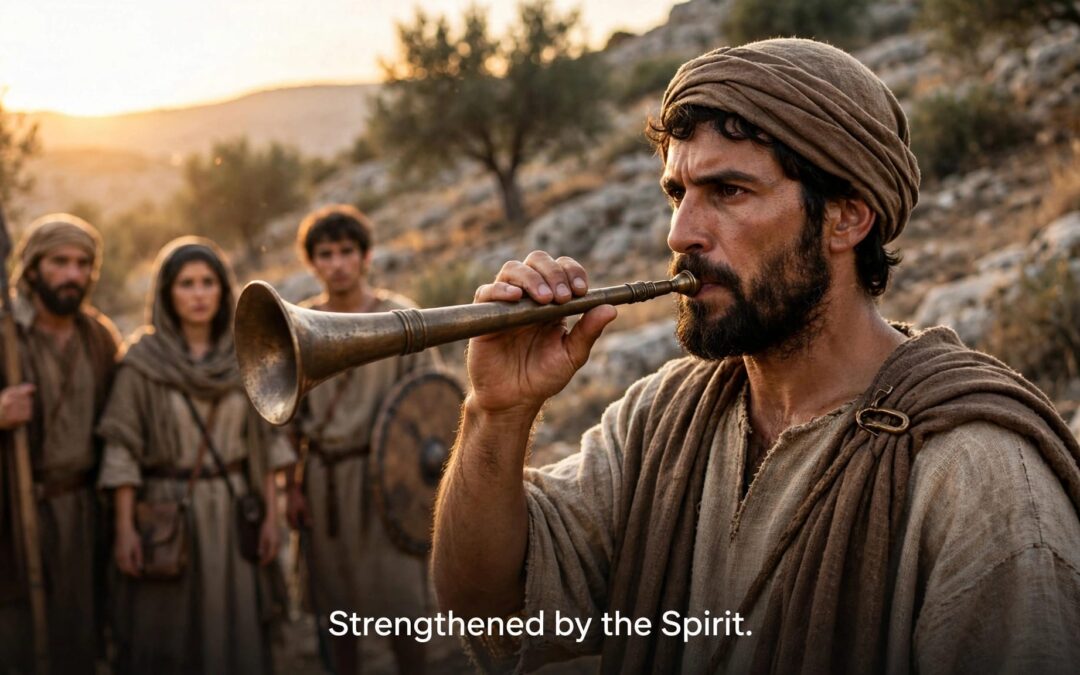
The meaning of Judges 6:34 is that the Holy Spirit came upon Gideon and empowered him to lead Israel against its oppressors. Gideon blew a trumpet, and his own people gathered behind him.
That moment matters because Gideon wasn't stepping forward on the strength of his family name or a record of military victories. God had called him, and now the Spirit of the Lord was equipping him for the work ahead.
To understand what happened, we need to look at the trouble Israel was facing and the man God chose to lead them.
Gideon's encounter with the Holy Spirit sits in the middle of a much larger account of Israel's need and God's mercy. Here are the points we want to keep in view:
Israel had suffered under Midianite oppression, and God called Gideon to help deliver His people.
The Spirit came upon Gideon before he sounded the trumpet and gathered the Abiezrites.
The Hebrew wording uses the picture of clothing to describe the Spirit's action.
Gideon's assignment belonged to a particular moment in Israel's history, while the passage also teaches us to depend on God's strength.
Spiritual empowerment and Godly character belong together, even though a gift or calling doesn't make someone incapable of sin.
With those points in mind, let's go back to the beginning of the chapter. The trumpet makes more sense when we understand why Gideon was hiding his wheat.
Israel’s Trouble Under Midian
The account begins with Israel doing evil in the sight of the Lord. In Judges 6:1-10, we read that God gave Israel into Midian's hand for seven years.
The raids left Israel hungry
The Midianites and their allies came against Israel's crops and livestock. The people made shelters in mountains, caves, and strongholds because the oppression was severe.
Think about what that meant for a family trying to live off the land. Planting a crop didn't guarantee that the family would eat it. Their enemies could arrive and take what they had worked to produce.
Israel eventually cried out to the Lord. The need for deliverance was about food, safety, and survival.
God addressed Israel’s disobedience
Before Gideon appeared, God sent a prophet to remind Israel of what He had done for them. He had brought them out of Egypt and delivered them from their oppressors. He had also told them not to fear the gods of the people around them.
The prophet's message ended with an uncomfortable truth: Israel hadn't obeyed God's voice.
We need that part of the history. God cared about the suffering of His people, and He also confronted the disobedience that had brought them into this trouble. His mercy didn't require Him to ignore their need for repentance.
Gideon Was Hiding Wheat When God Called Him
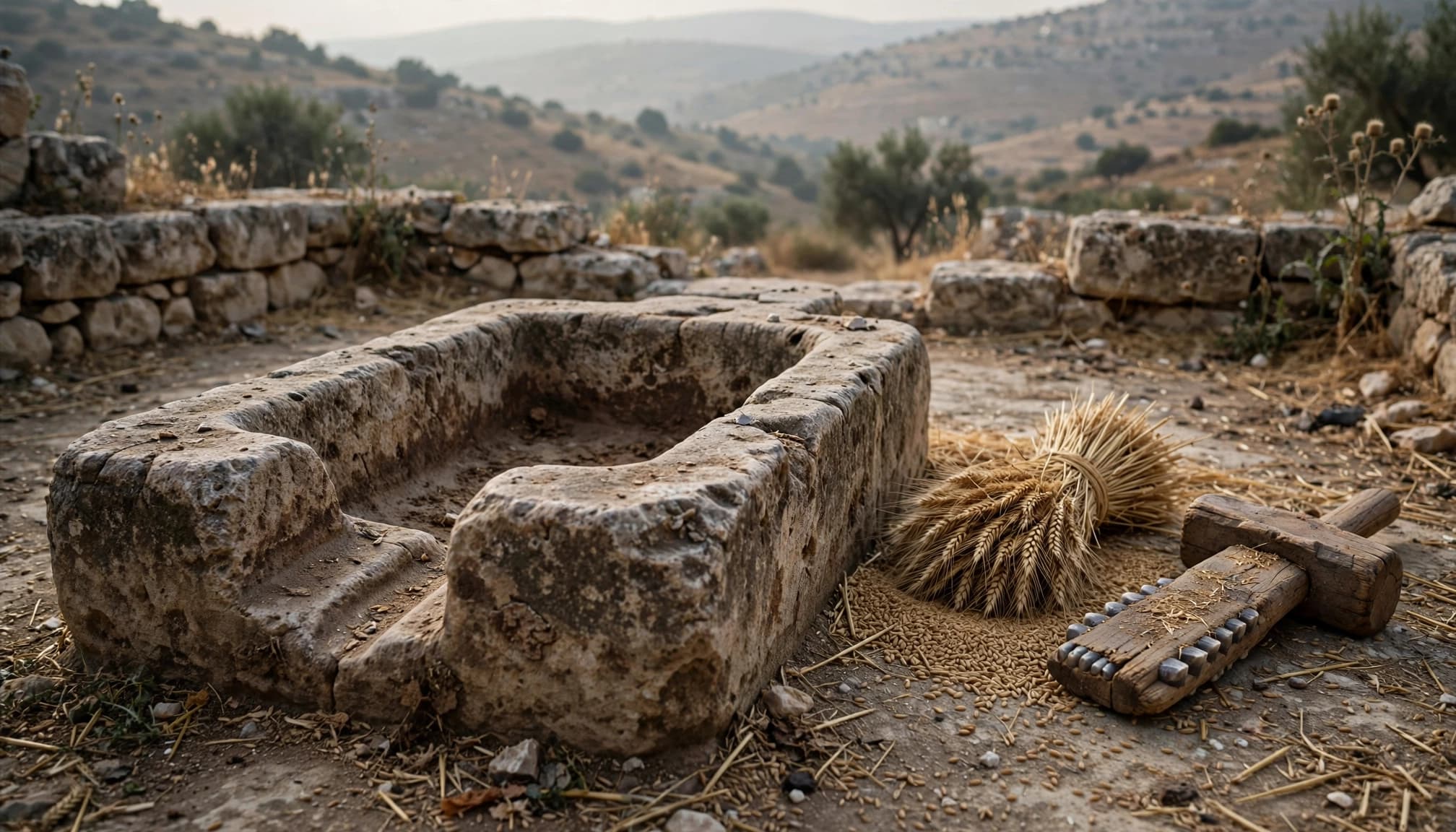
When we meet Gideon in Judges 6:11-24, he is threshing wheat in a winepress to hide it from the Midianites.
A winepress wasn't the usual open place for separating grain. Gideon was working where he hoped his enemies wouldn't find him. Then the Angel of the Lord appeared with a greeting that must have sounded strange to a man hiding his food.
The Lord called him a mighty man of valor
In Judges 6:12, Gideon heard, "The LORD is with you, you mighty man of valor!"
Gideon answered with questions about Israel's suffering and the wonders his people had heard about. If the Lord was with them, why had this happened?
We can understand the question. Gideon knew what God had done for Israel before, yet he was living under Midian's oppression. His circumstances didn't look like deliverance.
God’s presence was the answer
The Lord told Gideon to go and save Israel from Midian, adding, "Have I not sent you?" We can read those words in Judges 6:14.
Gideon pointed to his family's weakness and his own low place within it. God's answer was His presence: He would be with Gideon.
That distinction matters. Gideon was given an assignment, but he wasn't asked to carry it out apart from the God who sent him. The Lord's promise came before Gideon gathered an army.
Gideon First Confronted Idolatry at Home
Before Gideon sounded the trumpet, God gave him another assignment. In Judges 6:25-32, the Lord told him to tear down his father's altar to Baal and cut down the wooden image beside it.
Gideon was then to build an altar to the Lord and offer a sacrifice. The confrontation with false worship came close to home.
Obedience had a cost
Gideon took ten servants and did what God commanded, but he worked at night because he feared his father's household and the men of the city.
When the people discovered what had happened, they demanded Gideon's death. His father Joash challenged them, saying that if Baal was a god, Baal could plead for himself.
Gideon received the name Jerubbaal in connection with that event. The name was tied to the challenge that Baal should contend with him for tearing down the altar.
Deliverance and worship belonged together
Israel wanted relief from Midian, but the Lord had also confronted Israel's worship of other gods. Gideon's first assignment showed that the condition of the people's hearts mattered.
We shouldn't separate a desire for God's help from a willingness to listen when He corrects us. It can be tempting to ask God to remove a problem while protecting the habits He has told us to leave behind. Gideon's obedience brought that issue into the open before the larger conflict began.
What Judges 6:34 Says About the Spirit
The verse itself gives us a sequence of events. Judges 6:34 says, "But the Spirit of the LORD came upon Gideon; then he blew the trumpet, and the Abiezrites gathered behind him."
The Spirit came upon Gideon. Gideon blew the trumpet. The Abiezrites gathered. Those details belong together, and each one tells us something about the work God had begun.
The Spirit came upon Gideon
The verse identifies the source of Gideon's empowerment as the Spirit of the Lord. God had already promised His presence and given Gideon an assignment. Here, the Spirit came upon him as the moment to gather the people arrived.
We believe the Holy Spirit is God, and His work in Gideon was personal and purposeful. He wasn't a supply of spiritual energy Gideon could store up and control. The Lord was acting through the man He had called.
Gideon sounded the trumpet
Gideon responded by blowing the trumpet, and his people gathered behind him. The verse moves straight from the Spirit's coming to Gideon's public action.
We shouldn't rush past that. Gideon didn't remain alone with a private assignment. He called others to gather for the work ahead. His leadership would involve actual people responding to an actual threat.
The verse doesn't give us a detailed account of everything Gideon felt at that moment. It tells us what the Spirit did and what Gideon did next. That is enough to see God's hand in the beginning of this gathering.
What Does It Mean That the Spirit “Clothed” Gideon?
The phrase "came upon" gives us a clear English reading, but the Hebrew wording gives us a picture worth considering. The word labash can mean to put on, wear, or clothe. In this verse, the language describes the Spirit clothing Gideon.
Some translations bring that image into English, while others say the Spirit came upon him. Both help us see that God's Spirit was active in preparing Gideon for his task.
The image points to God’s action
When we put on a garment, the garment covers us. The picture in this verse is striking because the Spirit is the One doing the clothing, and Gideon is the one being clothed.
Does that mean Gideon became a puppet? The verse doesn't say that. Gideon blew the trumpet and led the people who gathered. The clothing language emphasizes the Spirit's action without removing Gideon's responsibility to respond.
A translation commentary on the verse discusses how the Hebrew image can be expressed in other languages. The picture is vivid, but we should let the surrounding passage guide how we understand it.
The clothing is figurative
Gideon didn't receive a literal cloak in this verse. The language gives us a human picture of a spiritual reality: the Spirit of the Lord came upon him for the work before him.
We don't need to make the image say more than the passage says. The wonder is already there. God took a man He had called and equipped him to act on behalf of His people.
Why Did Gideon Blow the Trumpet?
The trumpet was a call to gather. Gideon's assignment wasn't something he could carry out by hiding indefinitely or keeping God's call to himself.
The Abiezrites were connected to Gideon's own clan. They gathered behind the man whose community had already seen the confrontation over Baal's altar.
His own people responded first
That detail brings the history back to Gideon's immediate surroundings. The people who gathered weren't nameless figures in a distant land. They were connected to his own family and community.
Afterward, Gideon sent messengers more widely, and people from other tribes also came to meet him. The gathering grew beyond the first response to the trumpet.
There is a practical difference between recognizing a need and calling people to respond to it. Gideon had known about Midian's oppression while he was threshing wheat. Now the Spirit had come upon him, and he took a public step toward the assignment God had given him.
The call led people into a shared responsibility
Gideon had a particular leadership role, but the people who gathered also had a place in the work ahead. God was addressing a national need, and the response involved more than one man.
That doesn't mean everyone had the same assignment. It does remind us that God's work among His people isn't a contest to see who receives the most attention. He can call a leader and also bring others alongside that leader to serve His purpose.
How Did the Holy Spirit Strengthen Gideon?
When we talk about strength, we often picture physical power. Gideon's account asks us to think about strength in relation to the assignment God gave him.
The immediate action in the verse was leadership. Gideon sounded the trumpet and gathered people to face an enemy. The passage connects that action with the Spirit's coming upon him.
Strength for the work God assigned
God didn't ask Gideon to invent his own mission. He called him to deliver Israel from Midian. The Spirit's empowerment belonged to that calling and to the needs of God's people.
That helps us read the verse without turning it into a promise that we can accomplish any plan we choose. We can bring our plans to God, but His Spirit doesn't exist to approve every ambition we place before Him.
Instead, we ask what faithfulness to the Lord requires and depend on Him as we obey. His strength is connected to His purposes.
Strength without boasting
Later, God reduced Gideon's army so Israel wouldn't claim the victory as its own achievement. In Judges 7:2, the Lord warned that Israel might boast, "My own hand has saved me."
That takes us back to the source of Gideon's strength. The people had a real part to play, but the glory for deliverance belonged to God.
We can prepare, work, and take responsibility. We can also remember that our confidence rests in the Lord rather than our ability to impress others. Our study of God's work by the Spirit considers that dependence in another setting.
Gideon’s Fleece and His Questions
After the Spirit came upon Gideon and he gathered the people, the account turns to Gideon's request involving a fleece. We can read the sequence in Judges 6:33-40.
Gideon addressed God about the promise to save Israel by his hand. He then asked for a sign involving a fleece of wool on the threshing floor.
Click Our Ad to Support Us!
Gideon referred back to God’s promise
Gideon's request included the words "as You have said." He wasn't introducing an unrelated goal. He was speaking about the deliverance God had already promised.
That helps us keep the order straight. God's call came first. The Spirit came upon Gideon, and Gideon gathered the people. The fleece request followed within that larger sequence.
We can sometimes talk about the fleece as though it stands alone. It doesn't. It belongs to a conversation between God and a man who had already received a difficult assignment.
Questions can be brought to God
Gideon's words show him speaking directly to the Lord about the task before him. For readers who have questions, that is a welcome reminder that we can bring them to God.
We should also listen to what He has already said. Prayer isn't only a place to present our concerns. It is a place to submit our desires to the Lord and receive His correction through Scripture.
When an answer seems slow or the work ahead feels large, we can ask God for wisdom while remaining faithful to what He has already made clear.
Why Did God Reduce Gideon’s Army?
The gathering that began with Gideon's trumpet eventually led to a surprising instruction. God told Gideon that the army was too large for the victory He intended to give.
The reason was plain: Israel might claim that its own strength had saved it. God reduced the force until Gideon had 300 men.
The smaller army pointed to the Lord
The reduced number made human boasting harder. Israel's deliverance would not be explained by an overwhelming force gathered around a confident commander.
God's instruction didn't make Gideon's men unnecessary. They still had to listen and act. But the size of their force made the source of victory clear.
We can see the same emphasis running through Gideon's calling. God promised to be with him, the Spirit came upon him, and the Lord shaped the battle so Israel would have reason to remember who delivered them.
The victory involved obedience
Gideon's men followed his directions with trumpets, jars, and torches. The Lord caused confusion among the enemy, and the opposing camp turned against itself.
Those details are unusual, and they belong to this particular deliverance. The heart of the account is God's faithfulness to His word and the response of the people He called.
There are times when obedience makes sense to us immediately. There are also times when we see how little control we have over the outcome. Gideon's army had to follow the Lord's direction rather than trust the appearance of its own strength.
What Happened After Gideon’s Victory?
The later account gives us a reason to read Gideon's life with both gratitude and care. God used him in Israel's deliverance, yet the history doesn't end with every decision Gideon made afterward being presented as an example to follow.
When the Israelites asked Gideon and his descendants to rule over them, he answered that the Lord would rule over them. His words are recorded in Judges 8:23.
That answer acknowledged the Lord's authority. But the account also tells us that Gideon made an ephod from gold, and Israel later went after it in unfaithful worship. It became a snare to Gideon and his household.
We shouldn't hide that part of the history because Gideon was used by God. Scripture allows us to see both God's deliverance and the danger that followed.
A person can be given a significant assignment and still need humility, discernment, and correction. The presence of a calling doesn't remove the need to obey the Lord afterward.
For us, that means we don't measure someone's entire life by one moment of usefulness. We thank God for His work and continue to value faithfulness in the ordinary decisions that follow.
The Spirit’s Work in Other Old Testament Leaders
Gideon wasn't the only person empowered by the Spirit for a task. Throughout the Old Testament, we see the Spirit at work in leaders, prophets, and people serving in other ways.
The assignments weren't identical. The same God was at work, but the outward expression of His help fit the work He gave.
The Spirit and Israel’s elders
God placed His Spirit upon elders who were appointed to help carry the responsibility of caring for Israel alongside Moses. Their service involved a shared burden, and their prophetic speech accompanied the Spirit's resting upon them.
Our study of the Spirit resting on Israel's elders looks more closely at that moment. It reminds us that spiritual empowerment can accompany the work of caring for people, not only a dramatic confrontation with an enemy.
Samson and physical strength
Samson gives us a different example. The Spirit came upon him in connection with a feat of physical strength. His assignment and circumstances differed from Gideon's, even though both were judges God used among His people.
These accounts keep us from reducing the Spirit's work to one visible expression. He equipped people for the service God placed before them. That could involve leadership, speech, skill, or strength, depending on the assignment.
How Does Gideon’s Calling Relate to Believers Today?
Gideon lived in a different covenant setting from the church. We honor that difference while recognizing the same Holy Spirit at work throughout Scripture.
Jesus promised His followers that they would receive power when the Holy Spirit came upon them. In Acts 1:4-8, He connected that power with their calling to be His witnesses.
The Spirit empowers us to witness
Gideon gathered people to confront Midian. Jesus sent His followers to bear witness to Him. Those assignments aren't interchangeable, but both passages direct our attention to God's provision for the work He gives.
At Pentecost, the Holy Spirit came upon the believers gathered together, and they began to speak in other tongues as the Spirit gave them utterance. We believe the baptism in the Holy Spirit and His gifts remain for believers today.
That conviction should lead us to depend on Him, not to treat His gifts as a measure of personal importance. The purpose of His power is tied to God's will and the good of His people.
The Spirit also shapes our daily walk
The Holy Spirit doesn't only help us in public ministry. He teaches, convicts, guides, and forms Christlike character in us.
Our study of the fruit of the Holy Spirit considers that part of His work alongside the examples of people in Scripture.
We need both His power and His direction. A bold moment of ministry matters, and so does the way we speak to our family, respond to correction, and treat someone who cannot repay us.
Spiritual Power and Godly Character
Gideon's later decisions remind us that being used by God doesn't make a person incapable of making harmful choices. We need to hear that without becoming cynical about the gifts of the Spirit.
God's gifts are good. His power is real. We also remain responsible for our conduct and our response to His Word.
A gift isn’t a substitute for obedience
Someone may speak with confidence, lead a group, or have a visible ministry. Those things don't settle every question about that person's character.
How do they respond when corrected? Do they use their influence to serve others? Are they willing to turn away from sin? Those questions matter because the God who empowers us also calls us to holiness.
We don't have to choose between desiring the Spirit's gifts and caring about character. We should desire both. The Spirit's work draws us toward Jesus, and Jesus calls us to follow Him.
Humility keeps the focus on God
The warning against boasting in Gideon's battle applies to our attitude as well. When God answers prayer or uses us to help someone, we have reason to thank Him.
We don't need to build an identity around being the strongest person in the room. We belong to the Lord, and whatever He gives us is entrusted to us for His purposes.
That perspective also makes room for correction. If our goal is to honor God rather than protect our reputation, we can listen when another believer points us back to Scripture.
How Can We Depend on the Holy Spirit?
Gideon's calling invites us to bring our weakness to God, but dependence is more than admitting we feel inadequate. It means looking to the Lord and responding to what He has said.
Ask for help and listen to Scripture
We can pray honestly about the work in front of us. If we need courage to speak about Jesus, wisdom to care for someone, or strength to resist temptation, we can ask the Holy Spirit for help.
At the same time, we shouldn't use a claimed spiritual impression to set aside Scripture. God's Spirit and God's Word aren't opponents. When a desire leads us toward dishonesty, pride, or harm, we already have reason to stop and seek correction.
We can also welcome the counsel of mature believers. Gideon's assignment involved other people, and our walk with God is meant to be lived among His people too.
Take the step God has made clear
Gideon eventually sounded the trumpet. His response had a concrete form.
For us, a clear step may be asking forgiveness, telling the truth, praying with someone, or serving a need in the church. Those actions may not look dramatic, but obedience doesn't need an audience to matter.
We can trust the Holy Spirit in the moment before we know how everything will turn out. Our responsibility is to remain faithful to the Lord rather than pretend we can control every result.
Frequently Asked Questions
Did the Holy Spirit give Gideon physical strength?
The verse emphasizes the Spirit coming upon Gideon, followed by Gideon blowing the trumpet and gathering the Abiezrites. It doesn't describe a feat of physical strength at that moment. His visible action was to call people together for the assignment God had given him.
What does “the Spirit clothed Gideon” mean?
The Hebrew wording uses a word associated with putting on or clothing. It gives us a picture of the Spirit's action as He came upon Gideon. The surrounding account connects that action with Gideon's leadership and the gathering of his people.
Why did God choose Gideon?
The passage shows God calling Gideon despite Gideon's objections about his family and his own position. The Lord assured Gideon that He would be with him. The emphasis falls on God's presence and sending, rather than on Gideon's social standing.
Can believers ask the Holy Spirit for strength today?
Yes. We can ask the Holy Spirit to strengthen us as we follow Jesus and serve others. His help may be needed in public witness, patient service, resistance to sin, or faithful endurance. We depend on Him while listening to Scripture and remaining open to correction.
Trust the God Who Called Gideon
Gideon's trumpet sounded because God had called him and the Spirit of the Lord had come upon him. The people gathered, but the strength behind their deliverance belonged to God.
That is the truth we want to carry with us. The Holy Spirit is worthy of our trust, and His power is given for God's purposes.
We can bring our questions and weaknesses to the Lord. Then we can listen to His Word, depend on His Spirit, and take the step of obedience He has placed before us.
Related Posts
Holy Spirit Scriptures: 21 Century Meaning, Original Words, and God's Purpose What would life be if we never understood the heart behind every movement of God’s Spirit? Every verse that mentions the Holy Spirit points us somewhere deeper—into friendship with God, into His power for living, and into the mystery of His love and presence that started in Eden and keeps going until Jesus rules the earth in the Millennial Reign.…
21st Century Biblical Anointing: Oil, Prophets, and Holy Spirit Baptism Have you ever wondered why the word "anointing" carries so much depth in Scripture? The idea of anointing—of sacred oil poured out on kings, priests, and prophets—echoes through the Old Testament as a symbol of God choosing, empowering, and setting apart. God didn’t leave the details of the anointing oil a mystery: He gave Moses a recipe, specific and holy,…
1 Truth: Blood of Jesus: God's Life in Sinless Flesh What if the very thing running through the veins of Jesus was not just human, but the Blood of Jesus holding the actual life of God Himself, poured out for us? That sounds huge, maybe even hard to take in at first, yet Scripture keeps pulling us back to this one thread: life is in the blood, sin corrupts human…
The Seven Spirits of God stand as one of the most profound and often misunderstood truths in Christian theology. Rooted deeply in Scripture, they aren’t seven separate entities but rather seven attributes of the one Holy Spirit—God revealing Himself in fullness. Isaiah 11:2 describes these [...]
The gifts of the Holy Spirit reveal the active power of God working in the lives of His people. They aren’t just distant historical records or fading Biblical accounts; they’re living because the Holy Spirit, He is living and He is God, and His transformative gifts are reaching people [...]
The phrase “tongues of fire” in Acts 2:3 sparks worldwide curiosity and spiritual wonder. It appears in Scripture to describe the Holy Spirit’s descent during Pentecost, when visible flames rested on the apostles, marking the time when God’s Spirit descended on earth, [...]
The Bible’s take on a reprobate mind isn’t just a warning or a piece of theology. It’s a wake-up call. “Reprobate mind” (from the Greek adokimos, meaning rejected or unapproved) describes what happens when people no longer care about God’s truth—they trade what’s holy for what feels good, grow numb [...]
The upper room, a sacred space in Jerusalem, holds profound significance in Christian history. Acts 2 tells us it is the gathering place for Jesus’ disciples when the Holy Spirit descended upon them during Pentecost. This transformative moment not only empowered those present but also sparked [...]
Pentecost isn’t just a Christian event; its roots stem from the Jewish celebration of Shavuot, the day Moses received the Ten Commandments from God. For Christians, Pentecost marks the moment when God poured out His Spirit and Jesus’ worldwide church empowered by the Holy Spirit and His gifts [...]
Charismatic gifts, often referred to as manifestation gifts, showcase the miraculous power of the Holy Spirit. From healing and miracles to prophecy and discernment, they serve as tangible evidence of God’s presence and transformative work. These gifts, seen throughout Biblical history, have [...]
Revelation 3:7-8 offers a powerful message to the church in Philadelphia, a message that remains relevant today. It speaks of a divine “open door” that no man can shut, given by the one who holds the Key of David. This imagery represents not only an opportunity but also God’s sovereign [...]
Have you ever wondered why the word “anointing” carries so much depth in Scripture? The idea of anointing—of sacred oil poured out on kings, priests, and prophets—echoes through the Old Testament as a symbol of God choosing, empowering, and setting apart. God didn’t leave the details of [...]
The Bible boldly declares the truth that Jesus is both fully God and fully man—a mystery that anchors the Christian faith. But what does it mean, practically, for us as believers? Jesus didn’t perform miracles or operate in the gifts of the Holy Spirit simply as God; He demonstrated how a [...]
The Antichrist
The Apostate Church
The Rapture
Angels
Book of Daniel
Giants
Judgment
Prophecy
The Apostles
Bible Prophecy
Beware of Deception
Sin
Antichrists
Demon Possession
Healing
Millennial Reign
Redemption
The Gospels
The Holy Spirit
American Prophecy
Israel
Armageddon
Forgiveness
Intercession
Prayer
Revival
The Old Testament
The Tribulation
Faith
Kingdom Of God
Bible Interpretation
Free Will
Book Of Jude
Pride
The Afterlife
The Red Dragon
We use cookies so you can have a great experience on our website. View more
Cookies settings
Accept
Decline
Privacy & Cookie policy
Privacy & Cookies policy
Cookies list
Cookie name
Active
Who we are
Our website address is: https://theholyspirit.us.
Comments
When visitors leave comments on the site we collect the data shown in the comments form, and also the visitor’s IP address and browser user agent string to help spam detection.
An anonymized string created from your email address (also called a hash) may be provided to the Gravatar service to see if you are using it. The Gravatar service privacy policy is available here: https://automattic.com/privacy/. After approval of your comment, your profile picture is visible to the public in the context of your comment.
Media
If you upload images to the website, you should avoid uploading images with embedded location data (EXIF GPS) included. Visitors to the website can download and extract any location data from images on the website.
Cookies
If you leave a comment on our site you may opt-in to saving your name, email address and website in cookies. These are for your convenience so that you do not have to fill in your details again when you leave another comment. These cookies will last for one year.
If you visit our login page, we will set a temporary cookie to determine if your browser accepts cookies. This cookie contains no personal data and is discarded when you close your browser.
When you log in, we will also set up several cookies to save your login information and your screen display choices. Login cookies last for two days, and screen options cookies last for a year. If you select "Remember Me", your login will persist for two weeks. If you log out of your account, the login cookies will be removed.
If you edit or publish an article, an additional cookie will be saved in your browser. This cookie includes no personal data and simply indicates the post ID of the article you just edited. It expires after 1 day.
Embedded content from other websites
Articles on this site may include embedded content (e.g. videos, images, articles, etc.). Embedded content from other websites behaves in the exact same way as if the visitor has visited the other website.
These websites may collect data about you, use cookies, embed additional third-party tracking, and monitor your interaction with that embedded content, including tracking your interaction with the embedded content if you have an account and are logged in to that website.
Who we share your data with
If you request a password reset, your IP address will be included in the reset email.
How long we retain your data
If you leave a comment, the comment and its metadata are retained indefinitely. This is so we can recognize and approve any follow-up comments automatically instead of holding them in a moderation queue.
For users that register on our website (if any), we also store the personal information they provide in their user profile. All users can see, edit, or delete their personal information at any time (except they cannot change their username). Website administrators can also see and edit that information.
What rights you have over your data
If you have an account on this site, or have left comments, you can request to receive an exported file of the personal data we hold about you, including any data you have provided to us. You can also request that we erase any personal data we hold about you. This does not include any data we are obliged to keep for administrative, legal, or security purposes.
Where your data is sent
Visitor comments may be checked through an automated spam detection service.