Pre-Born! gives free ultrasounds to women looking to abort their babies and 86% of those women choose to keep their babies!
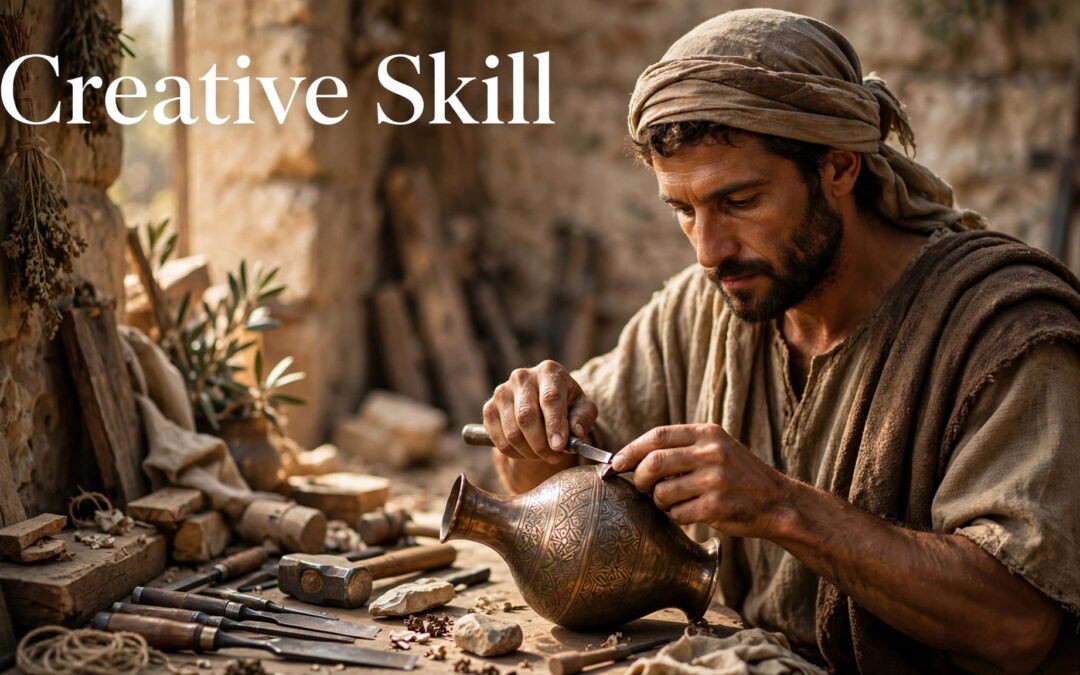
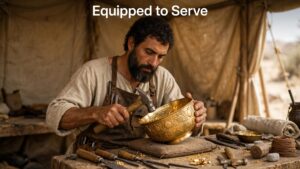
The Holy Spirit gives creative skill by supplying wisdom, understanding, knowledge, and the ability to carry out the work God assigns. We see this plainly in Bezalel, a craftsman whose Spirit-given ability helped prepare Israel's place of worship.
That should widen how we think about spiritual usefulness: Holy Spirit creativity equips people for practical service beyond the pulpit. If you paint, write, build, teach, compose, or solve everyday problems, begin with what Scripture reveals about the One Who gives life and equips people to serve.
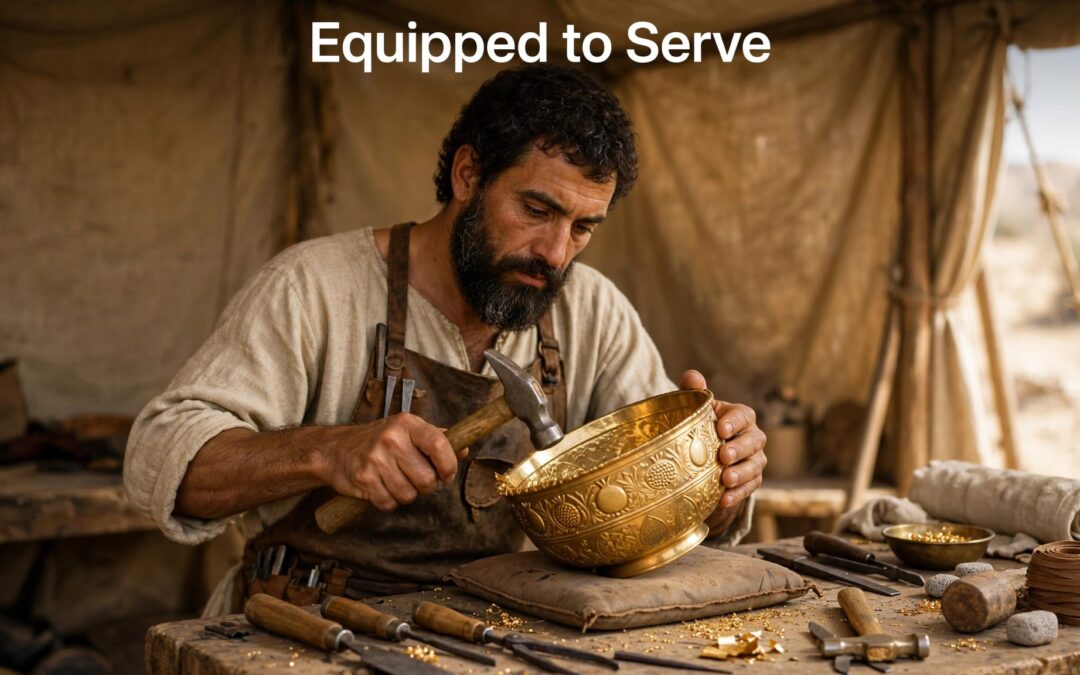
God filled Bezalel with His Spirit for skilled, practical work, including design, metalwork, stonework, and woodworking.
The Spirit's involvement in creation helps us understand His life-giving power, while human creativity works with abilities and materials God provides.
Prayer, instruction, practice, obedience, and cooperation belong together in Spirit-dependent creative work.
Artistic ability should serve others and honor Jesus. Talent alone doesn't establish spiritual maturity or make every creative impression a message from God.
What Creativity Through the Holy Spirit Means
The Creator gives what people receive
When we speak about the Holy Spirit and creativity, we need to begin with who He is. The Holy Spirit is God, fully personal and equal with the Father and the Son. He speaks, chooses, guides, and gives.
That means we approach Him as Lord. We don't learn a technique for controlling His power whenever inspiration runs low.
God's creative power also exceeds human inventiveness. We work with language, sound, color, wood, experience, and knowledge we have received. God is the source of our existence and of everything available for our work. That difference should produce gratitude rather than discourage us.
Every creative impulse needs direction
We can receive ability from God and still use it selfishly. An excellent musician can manipulate people. A persuasive writer can spread falsehood. A capable builder can cut corners.
The ability itself doesn't settle whether its use pleases God. We have to ask what the work communicates, whom it benefits, and whether we are willing to obey Him while doing it.
Creativity becomes Christian service as we place it under Christ's authority. Skill has a direction. The question is whether that direction agrees with His heart and His Word.
The Spirit Was Present at Creation
God’s Spirit moved over the waters
Genesis 1:2 places the Spirit of God over the waters while the earth is still unformed. He appears at the beginning of the creation account, before the command for light.
The Hebrew expression RuachElohim is commonly translated "Spirit of God." Its first word can mean spirit, wind, or breath, according to context. Christians recognize here the presence of the Holy Spirit in God's creative work.
Job 26:13 connects God's Spirit, or the breath of God, with the beauty and clearing of the heavens. Creation bears witness to power that belongs to God.
Life continues because God gives it
In Genesis 2:7, God breathes life into the man He formed. Human life begins in dependence upon Him.
Psalm 104:29-30 broadens that dependence to God's creatures. They die when He withdraws their breath; they are created when He sends His Spirit.
Isaiah likewise describes wilderness becoming fruitful when the Spirit is poured out. Our study of the Spirit's renewing work follows that connection between His presence, righteousness, and peace.
The same Lord Who gives life can supply understanding for the work He places before you.
Bezalel Shows How Spirit-Given Skill Works
Wisdom becomes capable workmanship
Exodus 31:1-6 directly connects the Spirit with creative skill. God calls Bezalel by name and equips him to build the tabernacle, where Israel would worship.
The abilities include wisdom, understanding, knowledge, and workmanship. They belong together. A worker needs sound judgment, a clear grasp of the assignment, knowledge of materials, and the skill to complete the work.
Gold doesn't behave like wood. Cutting stone requires different knowledge than weaving cloth. Bezalel's skill helped create a place for Israel's worship and served the whole worshiping community. God's provision reached into these practical details, even when the work involved tools rather than a sermon.
Creativity remains accountable to God’s instructions
Bezalel received a defined assignment. The tabernacle was Israel's portable sanctuary, and its construction followed directions God had already given.
His imagination worked within those directions. He couldn't replace God's instructions with something he considered more impressive.
A spiritual impression never gives a creative person authority to overrule Scripture.
We explore this relationship further in our teaching on Spirit-given wisdom and workmanship. Beauty, usefulness, and obedience belong together. An object could attract attention and still fail the purpose God commanded it to serve.
Creative Skill Grows Through Learning
Being filled with the Spirit doesn't remove the responsibility to learn. Bezalel still had to work, and the wider tabernacle account includes artisans teaching others.
That matters for anyone who feels torn between trusting God and developing a skill. We can pray for help and take a music lesson. We can seek wisdom and study how a material behaves. Receiving instruction is compatible with dependence on the Holy Spirit.
Scripture doesn't explain every stage of Bezalel's development. We shouldn't invent a training history for him or insist that every ability appeared instantly. The account identifies God as the source of his equipment.
For your own work, give proper attention to what the task requires. A songwriter benefits from understanding melody and language. A carpenter needs accurate measurements. Someone preparing a Bible lesson needs careful reading.
There is humility in learning. We admit that we don't know everything, and we accept that another person may help us understand.
Careful preparation also protects the people our work serves. Calling something inspired doesn't repair an unsafe structure or make a confused explanation clear. Faithfulness reaches all the way into execution.
God Gives Gifts to Build a People
Shared work belongs to God’s design
Bezalel didn't build alone. Exodus 31 names Oholiab as his partner, and Exodus 35 describes other skilled artisans contributing to the work.
God gave these artisans wisdom and skill, and Bezalel and Oholiab were also given the ability to teach others. Their shared assignment was larger than one person's contribution.
Why should another person's ability feel threatening when God provided it for the same work?
We should make room for that in Christian community. One person may compose a melody while another recognizes a weak line. Someone may design a teaching resource while another notices that children won't understand its instructions.
Receiving help can improve the work and expose pride. Both are useful. Teaching another person allows a gift to benefit people beyond its original recipient.
Different gifts have different purposes
1 Corinthians 12:4-11 describes gifts distributed by the same Spirit for the benefit of others. We believe these gifts remain active, including healing, prophecy, tongues, interpretation, and discernment.
Artistic talent shouldn't be treated as interchangeable with every manifestation Paul names. Bezalel's knowledge concerned his assigned work; that doesn't automatically identify it as the New Testament word of knowledge.
We also distinguish the Spirit's indwelling presence from baptism in the Holy Spirit for empowering witness and ministry. These truths belong together without becoming identical experiences or assignments.
New Creation Changes the Person Creating
2 Corinthians 5:17 says that anyone in Christ is a new creation. Paul's subject is the person reconciled to God through Christ.
That gives creative work a moral center. The Spirit renews the person who holds the brush, writes the sentence, or leads the song.
What happens when the desire for applause begins to govern your decisions? What happens when another person's success makes you resentful? Those questions concern the heart that produces the work.
We need the Holy Spirit's correction as much as His help. He can expose dishonesty, teach generosity, and turn ambition toward service.
Our study of Jesus breathing on His disciples considers the connection between resurrection life and the Spirit's presence. Christian creativity grows within that larger life with Jesus.
You don't have to produce something exceptional before you belong to Him. Our acceptance rests in Christ. That frees us to receive correction without treating every imperfect result as a verdict on our worth.
A renewed person can make beautiful things without asking those things to become a savior.
Ordinary Materials Can Serve Extraordinary Purposes
Rich Deakus describes creativity as synthesis, bringing experiences and existing parts together in a fresh form. That describes much of what human beings do.
A composer arranges notes. A cook combines ingredients. A teacher connects an unfamiliar truth with something the listener already understands. We receive, consider, arrange, and make.
Biblical accounts can help us think about that process without reducing miracles to human ingenuity. Israel gathered manna and prepared it for eating. God's provision involved a daily response from His people.
In Matthew 14:13-21, Jesus feeds a multitude with five loaves and two fish. Human creativity cannot explain that multiplication. Yet the account does direct our attention toward what happens when limited provision is brought to Him.
Fr. Alex Roche also reflects on Noah releasing a raven in Genesis 8:6-7. He reads its movement over the waters as an echo of creation participating in God's renewing work.
We can appreciate that devotional connection while keeping the passage's direct account clear: Noah sent out a raven as the floodwaters receded. An illustration should help us attend to Scripture without becoming a claim Scripture never makes.
Click Our Ad to Support Us!
Gideon and Pentecost Point Beyond Human Methods
God’s victory challenges self-confidence
Judges 6:34 describes the Spirit of the Lord coming upon Gideon. Later, in Judges 7:2-7, God reduces his force so Israel won't claim credit for saving itself.
Gideon proceeds with 300 men. The later account records 120,000 enemy soldiers fallen and 15,000 remaining.
Ray Reynolds points to Gideon's unusual means as an example of God's creative provision. The account certainly challenges confidence in numbers and conventional strength.
With hindsight, the account teaches dependence on God, not that every unusual plan has His approval. Being unexpected doesn't make an idea obedient.
Pentecost empowers clear witness to Jesus
Acts 2:1-41 describes believers filled with the Holy Spirit, speaking in other tongues, and declaring God's works. Peter then proclaims Jesus, and about 3,000 people are added that day.
The Spirit's power gives the church boldness and speech beyond its unaided ability. His activity directs attention toward Christ and calls people to respond.
We welcome that same Spirit's empowering work. Still, Pentecost gives us no formula for manufacturing a crowd through novelty. A surprising presentation and a Spirit-empowered witness aren't automatically the same thing.
Worship Can Be Joyful and Skillful
David's celebration before the Ark included visible joy. 1 Chronicles 15:29 describes him dancing as the Ark entered the city.
That challenges the assumption that reverence must always look restrained. We can honor God with gladness, movement, instruments, and strong voices.
Yet volume doesn't establish anointing, and a restrained arrangement doesn't establish spiritual coldness. We need more than a preference for either excitement or stillness.
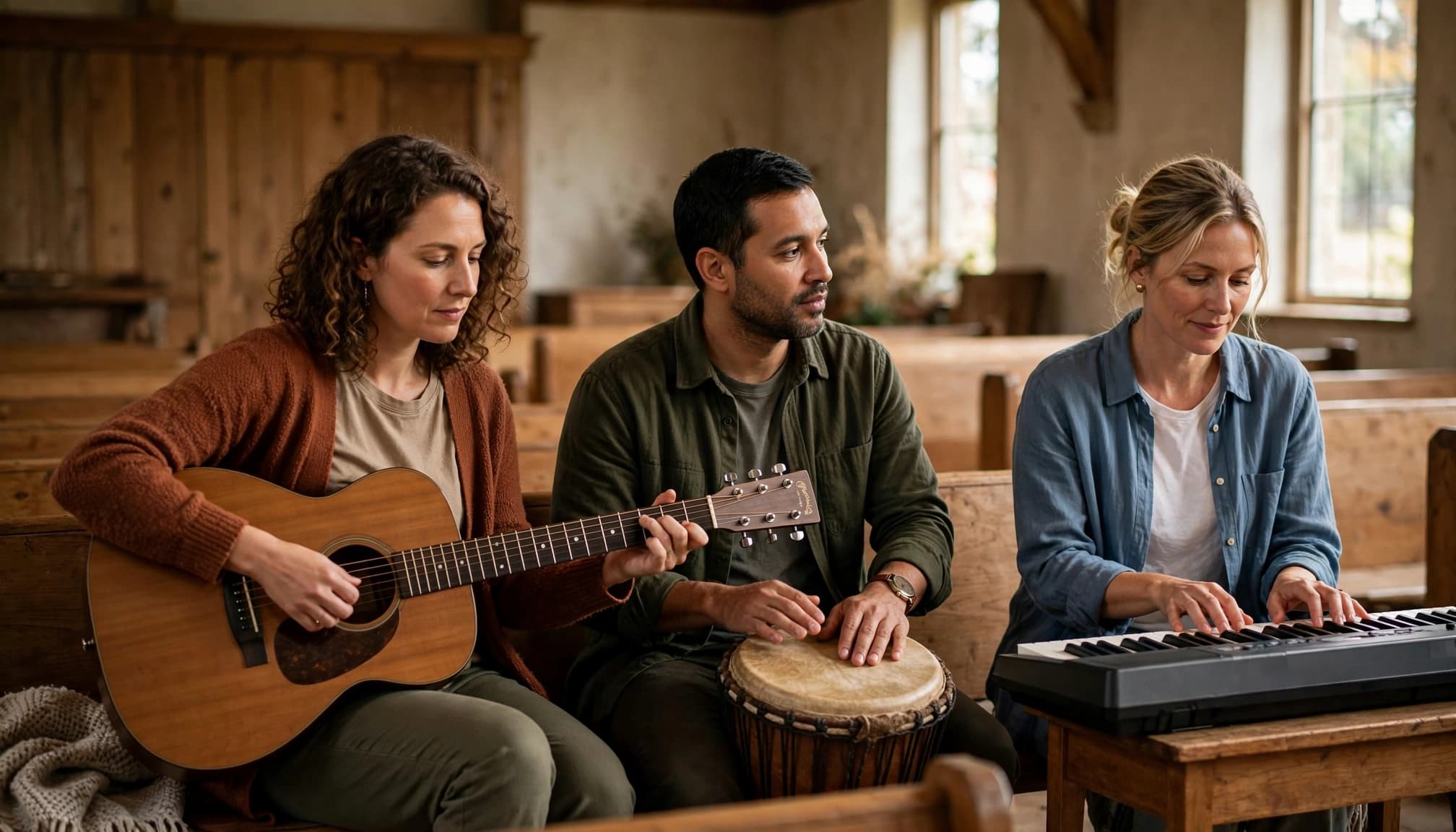
For worship leaders, choices about worship music and worship style should help the congregation participate. A melody may sound impressive but be difficult for people to sing. An arrangement may display the musicians' ability while burying the words everyone needs to hear.
We should ask whether the lyrics are true, whether the congregation can join in, and whether the presentation directs attention toward Jesus.
Hymns, contemporary songs, drums, strings, and unaccompanied singing can all be used faithfully. A style doesn't own the Holy Spirit.
A.W. Tozer connected a visitation of the Spirit with Christians becoming better poets and artists, and more devoted lovers of God and His universe. We share that expectation of enlarged devotion. The Spirit can stir imagination while also making us more attentive to the people singing beside us.
Christian Art Can Direct Attention Toward God
Historic works show the reach of Christian imagination
Michelangelo's Sistine Chapel paintings, Bach's oratorios, and Handel's Messiah show how Christian subjects have received substantial artistic attention.
These works use different forms, but each demonstrates the patience and skill involved in giving expression to theological themes. Christian art has room for composition, visual design, architecture, poetry, and careful work with language.
We don't have to pronounce every decision in a famous work Spirit-directed to appreciate its achievement. Historical influence and spiritual authority are different matters.
Beauty can invite attention. Scripture remains the measure of what that attention teaches us about God.
Biblical images help express the invisible
Artists often depict the Holy Spirit through a dove, fire, wind, or water. The dove draws upon the Spirit descending like a dove at Jesus' baptism in Matthew 3:16.
These images communicate particular truths. They don't contain the fullness of His Person.
A dove can suggest the baptism account. Fire can recall Pentecost. Neither makes the Spirit an animal or an impersonal substance.
When teaching through art, explain the image's Biblical connection. Otherwise, a familiar symbol can become a substitute for understanding the God it is meant to help us remember.
How to Cultivate Spirit-Dependent Creativity
We don't need to wait for an extraordinary feeling before beginning faithful work. A prayerful creative process can include ordinary, deliberate actions.
Begin with surrender. Ask the Holy Spirit for wisdom, and give Him your motives as well as your assignment. Be willing for the work to serve someone without bringing you recognition.
Attend to Scripture before chasing impressions. Read the passage you hope to express or teach in its context. If your project concerns worship, let truth shape the words before an attractive arrangement makes them difficult to change.
Develop the ability the task requires. Practice the instrument, study the material, revise the sentence, or learn the tools. Give focused attention to the part you find difficult instead of hiding it behind spiritual language.
Invite honest help. Ask a mature believer to consider the work's message and ask a capable practitioner to assess its execution. These may be different people. Receive correction without requiring everyone to share your taste.
Put the work to useful service. Offer it where it can help, then consider how people actually receive it. Keep what communicates faithfully and revise what causes unnecessary confusion.
Jesus describes Himself as the true Vine in John 15. Our life depends upon abiding in Him.
That relationship protects creative practice from becoming an empty religious routine. We seek His presence, obey His words, and work as people who need Him.
Discern Inspiration by Scripture and Fruit
A strong feeling can accompany a good idea. It can also accompany pride, excitement, anxiety, or wishful thinking. We need discernment.
Begin with what God has already revealed. Does the work misrepresent Jesus? Does it excuse sin? Does it pressure people to accept a claim because the creator says God gave it?
No amount of artistic skill makes those questions unnecessary.
Then consider character. The fruit of the Spirit includes love, patience, gentleness, faithfulness, and self-control, qualities the Holy Spirit forms in us. These qualities matter in rehearsal rooms, planning conversations, workshops, and church services.
A person's response to correction can reveal something a polished performance cannot show.
We should also distinguish between a creative choice and a prophetic message. Saying, "We believe this arrangement will help the congregation," allows ordinary discussion. Claiming direct divine authority for every preference can make useful correction feel forbidden.
The Spirit gives wisdom without authorizing us to control people. Our teaching on the word of wisdom explores that gift within its Biblical setting.
Does your creative process leave room for truth, correction, and other people? That question deserves attention alongside the quality of the finished work. Godly character belongs in the room while the work is being made.
Can AI Share in Spirit-Given Creativity?
Fr. Alex Roche contrasts ChatGPT's ability to compile and re-present material with God's power to bring forth new life. That distinction raises a worthwhile question: what kind of creativity are we discussing?
Artificial intelligence tools can generate unfamiliar combinations of words or images. Whether someone calls that creative depends partly on how the term is defined.
Christian teaching concerns something beyond an unfamiliar output. The Holy Spirit is a divine Person. An AI system doesn't pray, repent, love God, receive salvation, or obey a calling.
We can use a tool without assigning it spiritual authority. Software may assist with organization or technical tasks, but it can't take responsibility for the truth of what a church teaches.
That responsibility remains with people.
If you use AI in creative ministry, consider accuracy, ownership, honesty, and whether its use serves the people involved. Never present generated material as personal testimony or divine revelation.
A machine producing religious language isn't evidence that the Holy Spirit has spoken. Spiritual discernment cannot be delegated to software.
Frequently Asked Questions
What abilities does the Holy Spirit give?
The Holy Spirit gives wisdom, understanding, power for witness, and spiritual gifts according to His will. Scripture also shows Him giving life and renewing people. We should receive His help for the responsibility before us without demanding someone else's assignment or manifestation.
Is every creative idea the Holy Spirit speaking?
Every idea needs evaluation. Human imagination draws upon memory, desire, observation, and knowledge. We test an impression against Scripture and receive wise counsel. An idea can be useful without carrying the authority of a direct message from God. That distinction leaves room for honest revision.
Can people who aren’t Christians make beautiful things?
Yes. People who don't confess Christ can demonstrate extraordinary artistic and practical skill. We can appreciate what is good in their work. Artistic excellence alone doesn't establish salvation, Spirit baptism, or spiritual maturity. Those questions require more than an assessment of someone's talent.
What if creative work feels blocked?
A difficult period doesn't prove that God has withdrawn His presence. Begin with the next faithful task: rest when needed, seek instruction, reconsider an unclear assignment, or ask for help. We can depend upon the Spirit while acknowledging fatigue, limited knowledge, and the demands of learning.
Let the Gift Serve the Giver
The Holy Spirit's work in Bezalel reminds us that God cares about skilled hands, sound judgment, and completed work. We can welcome His help wherever He calls us to serve.
Bring your ability to Jesus with an obedient heart. Receive instruction, practice patiently, and remain willing to share the work.
Our prayer is that the Spirit will make us faithful with what He gives, so the finished work honors Christ and benefits the people He loves.
Related Posts
Exodus 31:3 Explained: The Spirit Who Equips for Service Exodus 31:3 means God filled Bezalel with the Spirit of God and gave him the wisdom and skill needed to build the tabernacle. God cared about the work, and He equipped the person He called to do it. We often associate the Holy Spirit with preaching, prophecy, and healing, but here His power is expressed through design and skilled hands.…
Holy Spirit Scriptures: 21 Century Meaning, Original Words, and God's Purpose What would life be if we never understood the heart behind every movement of God’s Spirit? Every verse that mentions the Holy Spirit points us somewhere deeper—into friendship with God, into His power for living, and into the mystery of His love and presence that started in Eden and keeps going until Jesus rules the earth in the Millennial Reign.…
Who Is the Holy Spirit? Discover God’s Helper and Friend - Genesis 1:2 The Holy Spirit is one of the most fascinating yet often misunderstood aspects of Christian theology. From the very first pages of the Bible, His presence weaves through history—pointing, guiding, and empowering God’s people. But who exactly is the Holy Spirit? Is He a person, a force, or something else entirely? Spoiler: He’s God, revealed to us as part of…
The Seven Spirits of God stand as one of the most profound and often misunderstood truths in Christian theology. Rooted deeply in Scripture, they aren’t seven separate entities but rather seven attributes of the one Holy Spirit—God revealing Himself in fullness. Isaiah 11:2 describes these [...]
The gifts of the Holy Spirit reveal the active power of God working in the lives of His people. They aren’t just distant historical records or fading Biblical accounts; they’re living because the Holy Spirit, He is living and He is God, and His transformative gifts are reaching people [...]
The phrase “tongues of fire” in Acts 2:3 sparks worldwide curiosity and spiritual wonder. It appears in Scripture to describe the Holy Spirit’s descent during Pentecost, when visible flames rested on the apostles, marking the time when God’s Spirit descended on earth, [...]
The Bible’s take on a reprobate mind isn’t just a warning or a piece of theology. It’s a wake-up call. “Reprobate mind” (from the Greek adokimos, meaning rejected or unapproved) describes what happens when people no longer care about God’s truth—they trade what’s holy for what feels good, grow numb [...]
The upper room, a sacred space in Jerusalem, holds profound significance in Christian history. Acts 2 tells us it is the gathering place for Jesus’ disciples when the Holy Spirit descended upon them during Pentecost. This transformative moment not only empowered those present but also sparked [...]
Pentecost isn’t just a Christian event; its roots stem from the Jewish celebration of Shavuot, the day Moses received the Ten Commandments from God. For Christians, Pentecost marks the moment when God poured out His Spirit and Jesus’ worldwide church empowered by the Holy Spirit and His gifts [...]
Charismatic gifts, often referred to as manifestation gifts, showcase the miraculous power of the Holy Spirit. From healing and miracles to prophecy and discernment, they serve as tangible evidence of God’s presence and transformative work. These gifts, seen throughout Biblical history, have [...]
Revelation 3:7-8 offers a powerful message to the church in Philadelphia, a message that remains relevant today. It speaks of a divine “open door” that no man can shut, given by the one who holds the Key of David. This imagery represents not only an opportunity but also God’s sovereign [...]
Have you ever wondered why the word “anointing” carries so much depth in Scripture? The idea of anointing—of sacred oil poured out on kings, priests, and prophets—echoes through the Old Testament as a symbol of God choosing, empowering, and setting apart. God didn’t leave the details of [...]
The Bible boldly declares the truth that Jesus is both fully God and fully man—a mystery that anchors the Christian faith. But what does it mean, practically, for us as believers? Jesus didn’t perform miracles or operate in the gifts of the Holy Spirit simply as God; He demonstrated how a [...]
The Antichrist
The Apostate Church
The Rapture
Angels
Book of Daniel
Giants
Judgment
Prophecy
The Apostles
Bible Prophecy
Beware of Deception
Sin
Antichrists
Demon Possession
Healing
Millennial Reign
Redemption
The Gospels
The Holy Spirit
American Prophecy
Israel
Armageddon
Forgiveness
Intercession
Prayer
Revival
The Old Testament
The Tribulation
Faith
Kingdom Of God
Bible Interpretation
Free Will
Book Of Jude
Pride
The Afterlife
The Red Dragon
We use cookies so you can have a great experience on our website. View more
Cookies settings
Accept
Decline
Privacy & Cookie policy
Privacy & Cookies policy
Cookies list
Cookie name
Active
Who we are
Our website address is: https://theholyspirit.us.
Comments
When visitors leave comments on the site we collect the data shown in the comments form, and also the visitor’s IP address and browser user agent string to help spam detection.
An anonymized string created from your email address (also called a hash) may be provided to the Gravatar service to see if you are using it. The Gravatar service privacy policy is available here: https://automattic.com/privacy/. After approval of your comment, your profile picture is visible to the public in the context of your comment.
Media
If you upload images to the website, you should avoid uploading images with embedded location data (EXIF GPS) included. Visitors to the website can download and extract any location data from images on the website.
Cookies
If you leave a comment on our site you may opt-in to saving your name, email address and website in cookies. These are for your convenience so that you do not have to fill in your details again when you leave another comment. These cookies will last for one year.
If you visit our login page, we will set a temporary cookie to determine if your browser accepts cookies. This cookie contains no personal data and is discarded when you close your browser.
When you log in, we will also set up several cookies to save your login information and your screen display choices. Login cookies last for two days, and screen options cookies last for a year. If you select "Remember Me", your login will persist for two weeks. If you log out of your account, the login cookies will be removed.
If you edit or publish an article, an additional cookie will be saved in your browser. This cookie includes no personal data and simply indicates the post ID of the article you just edited. It expires after 1 day.
Embedded content from other websites
Articles on this site may include embedded content (e.g. videos, images, articles, etc.). Embedded content from other websites behaves in the exact same way as if the visitor has visited the other website.
These websites may collect data about you, use cookies, embed additional third-party tracking, and monitor your interaction with that embedded content, including tracking your interaction with the embedded content if you have an account and are logged in to that website.
Who we share your data with
If you request a password reset, your IP address will be included in the reset email.
How long we retain your data
If you leave a comment, the comment and its metadata are retained indefinitely. This is so we can recognize and approve any follow-up comments automatically instead of holding them in a moderation queue.
For users that register on our website (if any), we also store the personal information they provide in their user profile. All users can see, edit, or delete their personal information at any time (except they cannot change their username). Website administrators can also see and edit that information.
What rights you have over your data
If you have an account on this site, or have left comments, you can request to receive an exported file of the personal data we hold about you, including any data you have provided to us. You can also request that we erase any personal data we hold about you. This does not include any data we are obliged to keep for administrative, legal, or security purposes.
Where your data is sent
Visitor comments may be checked through an automated spam detection service.