Pre-Born! gives free ultrasounds to women looking to abort their babies and 86% of those women choose to keep their babies!
Few verses feel more mysterious than John 20:22. Jesus rises from the dead, stands among frightened disciples, breathes on them, and says, "Receive the Holy Spirit." We can feel the weight of it, yet we may still ask what happened in that room.
If we have ever searched for the John 20:22 meaning, the tension is easy to see. Was this the moment the disciples received the Spirit, or was it pointing ahead to Pentecost? The answer becomes clearer when we read the verse in its setting and let Scripture interpret Scripture.
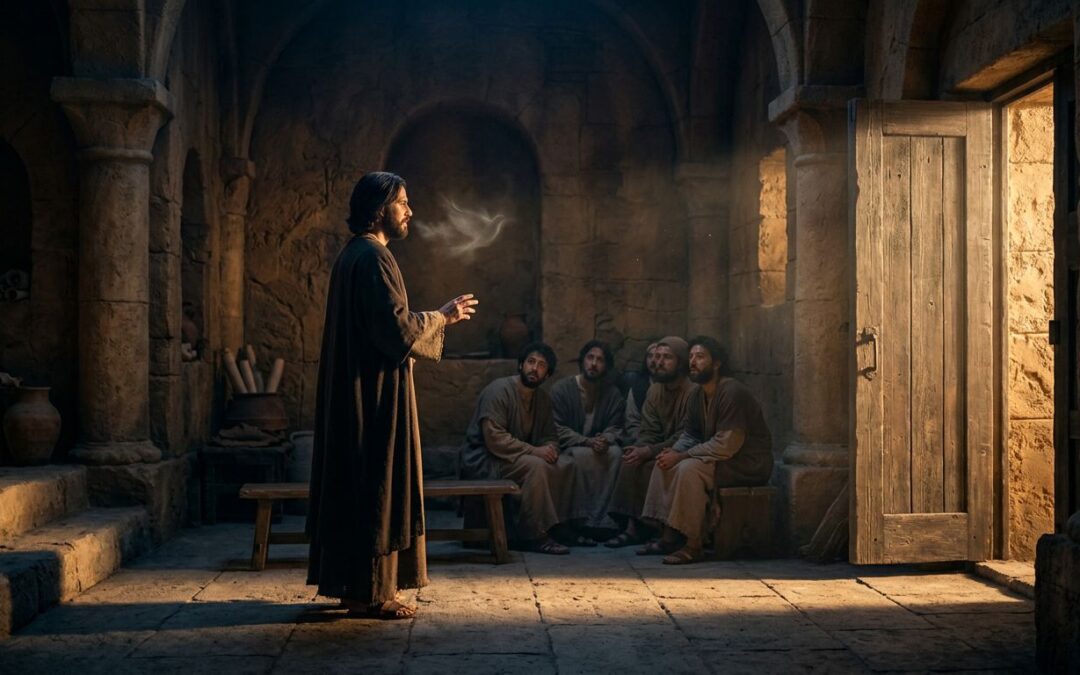
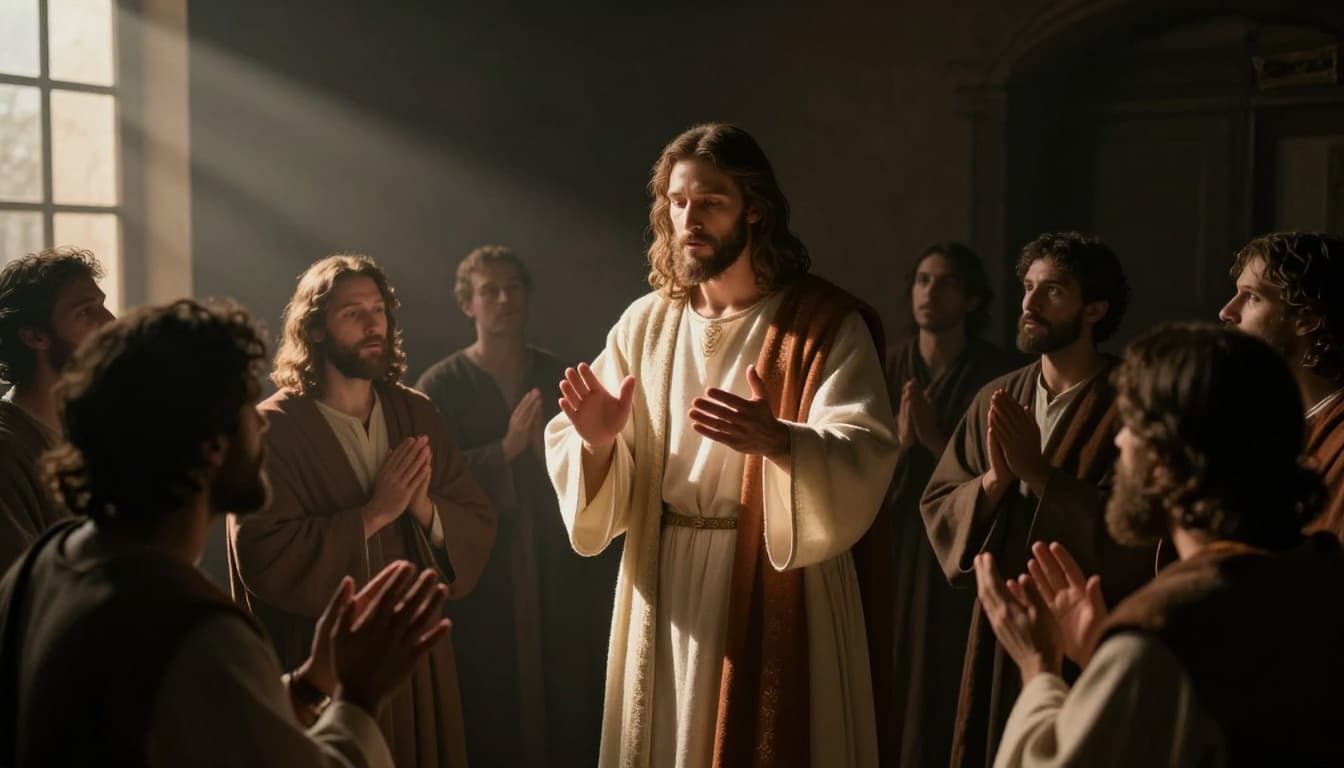
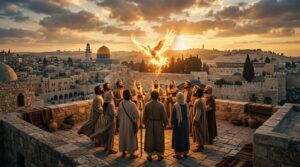
John places this event on resurrection evening. The disciples are behind locked doors, full of fear, and Jesus comes to them with peace. He shows them His wounds, then says, "As the Father has sent me, even so I am sending you" (John 20:21). Only after that does He breathe on them and say, "Receive the Holy Spirit."
That order matters. Jesus ties the gift of the Spirit to His risen presence and to their mission. This is not a random act. It comes after peace, after proof of His resurrection, and right as He commissions them.
It also fits what Jesus had already promised in John 14 through 16. He had spoken of the Spirit as the Helper, the Spirit of truth, the One who would dwell with them and be in them. If we want a wider frame for that promise, this study on Holy Spirit as God's Helper adds helpful background from the same Gospel.
So why would Jesus do this before Pentecost? Because John is showing us that the risen Christ is the giver of the Spirit. The disciples do not stir up spiritual life on their own. They receive it from Jesus. That point is simple, and it is precious.
Jesus’ breath echoes Genesis and Ezekiel
Many readers see an echo of Genesis 2:7 here. In creation, God breathes into Adam, and the man becomes alive. In John 20:22, Jesus breathes on His disciples. John uses a rare verb for "breathed," and it sounds like new creation language.
That does not mean every detail is identical. Still, the connection is hard to miss. The One through whom all things were made now breathes resurrection life into His people. The old world has been cracked open by sin and death, yet in the risen Jesus a new creation has begun.
Ezekiel 37 also helps us. There the prophet sees dry bones, and breath enters them so they live. The Hebrew word ruach can mean breath, wind, or spirit. That same cluster of ideas matters here too. The disciples had watched Jesus die. Their hope had collapsed. Then the risen Lord stands among them and breathes life, peace, and calling into a fearful group.
Jesus' breath in John 20:22 points us toward new creation, restored people, and Spirit-filled mission.
John had already prepared us for this with Jesus' teaching on born of the Spirit in John 3:5-8. The Spirit gives life that human effort cannot produce. John 20 shows that life flowing from the crucified and risen Christ.
Click Our Ad to Support Us!
John 20:22 meaning in light of Luke 24 and Acts 1-2
Faithful Christians have read this verse in a few different ways. We should handle that with care, because Scripture gives us reasons to pause before speaking too fast.
This quick comparison helps us see the main options:
View
What it says
Why people hold it
Symbolic act
Jesus acted out the coming gift of the Spirit
Luke 24 and Acts 1 still tell the disciples to wait
Unique commissioning
Jesus gave the apostles a special commission tied to their role
John 20 links the act closely to being sent
Anticipatory giving
The disciples truly received the Spirit here in some sense, before Pentecost's fuller outpouring
John treats the moment with real weight, not as empty theater
Luke 24:49 and Acts 1:4-8 are key here. Jesus still tells the disciples to wait for power from on high. Then Acts 2 records the public outpouring with wind, bold witness, and the tongues of fire at Pentecost. Because of that, John 20:22 should not be read as if Pentecost no longer matters.
At the same time, John 20 should not be flattened into a mere object lesson. Jesus did something meaningful in that room. The safest conclusion is this: John 20:22 marks a real resurrection commission, rich with new-creation meaning, while Acts 2 shows the fuller public empowering Jesus had told them to await.
Why this matters for our faith and mission
This verse still speaks to us because it shows how Jesus forms His people. He gives peace before He gives assignment. He reveals His wounds before He sends. Then He gives the Spirit. Our life with God begins in grace, not pressure.
It also keeps mission and the Holy Spirit together. Jesus does not give the Spirit for private excitement alone. He gives the Spirit so His people can bear witness, forgive sins through the gospel they proclaim, and live as those sent into the world.
A few takeaways rise to the surface:
We receive the Holy Spirit from the risen Jesus, so our confidence rests in Him, not in our strength.
We should read John 20 and Acts 2 together, because private comfort and public power belong in the same story.
We need the Spirit for holy living, fresh courage, and faithful witness, because fear still shuts doors in every age.
When we read John 20:22, we are not watching a strange side note. We are watching Jesus begin to shape a new-creation people.
The same Lord who breathed peace into fearful disciples still meets us with peace now. And the same Lord still gives His Spirit so we may live, love, and witness in His name.
Related Posts
Holy Spirit Scriptures: 21 Century Meaning, Original Words, and God's Purpose What would life be if we never understood the heart behind every movement of God’s Spirit? Every verse that mentions the Holy Spirit points us somewhere deeper—into friendship with God, into His power for living, and into the mystery of His love and presence that started in Eden and keeps going until Jesus rules the earth in the Millennial Reign.…
21st Century Biblical Anointing: Oil, Prophets, and Holy Spirit Baptism Have you ever wondered why the word "anointing" carries so much depth in Scripture? The idea of anointing—of sacred oil poured out on kings, priests, and prophets—echoes through the Old Testament as a symbol of God choosing, empowering, and setting apart. God didn’t leave the details of the anointing oil a mystery: He gave Moses a recipe, specific and holy,…
Who Is the Holy Spirit? Discover God’s Helper and Friend - Genesis 1:2 The Holy Spirit is one of the most fascinating yet often misunderstood aspects of Christian theology. From the very first pages of the Bible, His presence weaves through history—pointing, guiding, and empowering God’s people. But who exactly is the Holy Spirit? Is He a person, a force, or something else entirely? Spoiler: He’s God, revealed to us as part of…
The Seven Spirits of God stand as one of the most profound and often misunderstood truths in Christian theology. Rooted deeply in Scripture, they aren’t seven separate entities but rather seven attributes of the one Holy Spirit—God revealing Himself in fullness. Isaiah 11:2 describes these [...]
The gifts of the Holy Spirit reveal the active power of God working in the lives of His people. They aren’t just distant historical records or fading Biblical accounts; they’re living because the Holy Spirit, He is living and He is God, and His transformative gifts are reaching people [...]
The phrase “tongues of fire” in Acts 2:3 sparks worldwide curiosity and spiritual wonder. It appears in Scripture to describe the Holy Spirit’s descent during Pentecost, when visible flames rested on the apostles, marking the time when God’s Spirit descended on earth, [...]
The Bible’s take on a reprobate mind isn’t just a warning or a piece of theology. It’s a wake-up call. “Reprobate mind” (from the Greek adokimos, meaning rejected or unapproved) describes what happens when people no longer care about God’s truth—they trade what’s holy for what feels good, grow numb [...]
The upper room, a sacred space in Jerusalem, holds profound significance in Christian history. Acts 2 tells us it is the gathering place for Jesus’ disciples when the Holy Spirit descended upon them during Pentecost. This transformative moment not only empowered those present but also sparked [...]
Pentecost isn’t just a Christian event; its roots stem from the Jewish celebration of Shavuot, the day Moses received the Ten Commandments from God. For Christians, Pentecost marks the moment when God poured out His Spirit and Jesus’ worldwide church empowered by the Holy Spirit and His gifts [...]
Charismatic gifts, often referred to as manifestation gifts, showcase the miraculous power of the Holy Spirit. From healing and miracles to prophecy and discernment, they serve as tangible evidence of God’s presence and transformative work. These gifts, seen throughout Biblical history, have [...]
Revelation 3:7-8 offers a powerful message to the church in Philadelphia, a message that remains relevant today. It speaks of a divine “open door” that no man can shut, given by the one who holds the Key of David. This imagery represents not only an opportunity but also God’s sovereign [...]
Have you ever wondered why the word “anointing” carries so much depth in Scripture? The idea of anointing—of sacred oil poured out on kings, priests, and prophets—echoes through the Old Testament as a symbol of God choosing, empowering, and setting apart. God didn’t leave the details of [...]
The Bible boldly declares the truth that Jesus is both fully God and fully man—a mystery that anchors the Christian faith. But what does it mean, practically, for us as believers? Jesus didn’t perform miracles or operate in the gifts of the Holy Spirit simply as God; He demonstrated how a [...]
The Antichrist
The Apostate Church
The Rapture
Angels
Book of Daniel
Giants
Judgment
Prophecy
The Apostles
Bible Prophecy
Beware of Deception
Sin
Antichrists
Demon Possession
Healing
Millennial Reign
Redemption
The Gospels
The Holy Spirit
American Prophecy
Israel
Armageddon
Forgiveness
Intercession
Prayer
Revival
The Old Testament
The Tribulation
Faith
Kingdom Of God
Bible Interpretation
Free Will
Book Of Jude
Pride
The Afterlife
The Red Dragon
We use cookies so you can have a great experience on our website. View more
Cookies settings
Accept
Decline
Privacy & Cookie policy
Privacy & Cookies policy
Cookies list
Cookie name
Active
Who we are
Our website address is: https://theholyspirit.us.
Comments
When visitors leave comments on the site we collect the data shown in the comments form, and also the visitor’s IP address and browser user agent string to help spam detection.
An anonymized string created from your email address (also called a hash) may be provided to the Gravatar service to see if you are using it. The Gravatar service privacy policy is available here: https://automattic.com/privacy/. After approval of your comment, your profile picture is visible to the public in the context of your comment.
Media
If you upload images to the website, you should avoid uploading images with embedded location data (EXIF GPS) included. Visitors to the website can download and extract any location data from images on the website.
Cookies
If you leave a comment on our site you may opt-in to saving your name, email address and website in cookies. These are for your convenience so that you do not have to fill in your details again when you leave another comment. These cookies will last for one year.
If you visit our login page, we will set a temporary cookie to determine if your browser accepts cookies. This cookie contains no personal data and is discarded when you close your browser.
When you log in, we will also set up several cookies to save your login information and your screen display choices. Login cookies last for two days, and screen options cookies last for a year. If you select "Remember Me", your login will persist for two weeks. If you log out of your account, the login cookies will be removed.
If you edit or publish an article, an additional cookie will be saved in your browser. This cookie includes no personal data and simply indicates the post ID of the article you just edited. It expires after 1 day.
Embedded content from other websites
Articles on this site may include embedded content (e.g. videos, images, articles, etc.). Embedded content from other websites behaves in the exact same way as if the visitor has visited the other website.
These websites may collect data about you, use cookies, embed additional third-party tracking, and monitor your interaction with that embedded content, including tracking your interaction with the embedded content if you have an account and are logged in to that website.
Who we share your data with
If you request a password reset, your IP address will be included in the reset email.
How long we retain your data
If you leave a comment, the comment and its metadata are retained indefinitely. This is so we can recognize and approve any follow-up comments automatically instead of holding them in a moderation queue.
For users that register on our website (if any), we also store the personal information they provide in their user profile. All users can see, edit, or delete their personal information at any time (except they cannot change their username). Website administrators can also see and edit that information.
What rights you have over your data
If you have an account on this site, or have left comments, you can request to receive an exported file of the personal data we hold about you, including any data you have provided to us. You can also request that we erase any personal data we hold about you. This does not include any data we are obliged to keep for administrative, legal, or security purposes.
Where your data is sent
Visitor comments may be checked through an automated spam detection service.