Word of Wisdom: Scripture, History, and Gifts Today
The word of wisdom has stirred debate for a long time, and the question is simple enough, did the Bible mean a gift for the early church only, or a gift the Holy Spirit still gives today? We can't answer that well by opinion alone.
We need to look at the original language, the Bible's own examples, and the way the church has understood this gift across history. That includes places where the word of wisdom shows up in Scripture, where it first appears in modern times, and whether it ever disappeared or was just left undocumented for a season.
If we want a solid answer, we have to test tradition against Scripture, not the other way around.
We also need to talk honestly about the gifts of the Spirit in the church today, since many faiths and denominations say those gifts ended with the apostles. We'll weigh those claims against Scripture, church practice, and what believers are seeing now, while also addressing the Islamic claim that miracles after the apostles must come from demons, not God. For a broader look at the Spirit's gifts, the Biblical overview of spiritual gifts gives helpful context before we go deeper.
What the Bible means by word of wisdom in its original language
When we go back to the Bible's original language, the phrase gets clearer fast. The word of wisdom is not a pile of facts and not a religious hunch. It is wisdom from God, given for a moment, so we can know what to say or do next.
That matters because Scripture treats wisdom as more than information. It is truth put to work. If we want a fuller picture of how this gift fits with other Spirit-given workings, understanding charismatic spiritual gifts helps us keep the right frame in view.
How sophia differs from mere knowledge
In the New Testament, the Greek word sophia means wisdom. It points to skill, good judgment, and the ability to use truth well. Knowledge tells us what is true. Wisdom tells us what to do with what is true.
Think about a doctor. Knowledge can identify the illness, list the symptoms, and name the treatment options. Wisdom chooses the right treatment at the right time for the right patient. The facts matter, but the facts alone do not heal anyone.
We see the same thing in ministry. A person may know a verse, a doctrine, or a church rule. Yet the word of wisdom helps them use that truth in the right way, at the right moment, with the right tone. Sometimes that means speaking gently instead of sharply. Sometimes it means waiting instead of rushing. Wisdom knows the difference.
Knowledge fills the shelf. Wisdom opens the door.
That is why Bible study and spiritual maturity belong together. The more we know God's Word, the more room there is for wise use of it. Without that, knowledge can grow cold, proud, or blunt.
Why Biblical wisdom is tied to God’s character
Biblical wisdom is never just smart thinking with a holy label. It reflects who God is. His wisdom is holy, because it never bends toward sin. It is loving, because it aims at what truly helps people. It is true, because God never leads by confusion or deceit.
That also means the gift points away from ego. Human pride wants to look impressive. God's wisdom points us toward His will, not our own spotlight. The right answer from God is never a trophy for the speaker. It is a guide for obedience.
Paul links God's wisdom with God's own work in Christ, and that keeps us grounded. Real wisdom does not flatter the flesh. It corrects us, steadies us, and makes room for faithfulness. When the Spirit gives a word of wisdom, we should expect clarity that fits God's character, not flash that feeds human pride.
So when we hear the phrase in its original language, we should think less about raw intelligence and more about God-given judgment. Sophia is wisdom with direction. It helps us walk rightly, speak carefully, and choose well under pressure.
Where the word of wisdom appears in Scripture
The phrase doesn't sit in one corner of the Bible. We see wisdom in the Law, the Prophets, the Writings, the Gospels, and then most clearly in Paul's teaching on spiritual gifts. Sometimes it looks like counsel. Sometimes it looks like skill. In 1 Corinthians, it becomes a gift the Spirit gives for a needed moment.
That matters because the Bible never treats wisdom as random or decorative. It is practical, spiritual, and tied to real decisions. When we follow it through Scripture, we get a fuller picture of how God speaks and guides His people.
Wisdom in the Old Testament and the wisdom books
The Old Testament gives wisdom a wide field. Proverbs is the most obvious place, since it gathers short sayings about life, speech, work, and fear of the Lord. Proverbs doesn't just praise smart thinking, it keeps bringing us back to reverence, because "the fear of the Lord is the beginning of wisdom."
Job takes a different path. There, wisdom is bigger than human reasoning, and suffering exposes our limits. We can ask honest questions, but we don't get to stand over God as if we know everything. Ecclesiastes pushes the same point in its own way. Human effort is thin, life is brief, and wisdom has to live under God's rule, not ours.
We also see wisdom show up in action. Joseph gives Pharaoh careful counsel about storing grain in Genesis. Bezalel is filled with the Spirit for skillful work in Exodus. Solomon asks for understanding to govern well, and God answers with wisdom that touches judgment, leadership, and discernment. That is not abstract theology. That is wisdom with dirt on its boots.
A quick way to see the pattern is this:
Proverbs gives us wisdom for daily life and speech.
That old pattern matters because it prepares us for the New Testament. God has always given wisdom for real needs, not just for private reflection. For a wider view of how wisdom fits into the Spirit's work, the Biblical overview of spiritual gifts fits right beside this theme.
Wisdom in Jesus’ teaching and ministry
Jesus speaks with wisdom in a way no one can fake. He answers traps without falling into them. He cuts through false choices. He sees motives that others miss. Again and again, His words expose shallow religion and guide people toward the Father's will.
We see that in the way He handles the Sabbath, taxes, marriage, money, and hypocrisy. When the Pharisees try to corner Him, He does not merely defend Himself. He reveals the deeper issue. Their questions often sound clever, but Jesus answers with truth that goes straight to the heart.
His parables do the same work. They sort people. Some hear a story and stay comfortable. Others hear the same story and realize their own blindness. That is wisdom at work, because it does more than inform. It judges the heart.
Jesus also models wisdom by His timing. He knows when to speak, when to withdraw, and when to press forward. He never looks scattered. He is steady, clear, and free from panic. That kind of wisdom is not just instruction. It is a way of living under the Spirit's rule.
The clearest New Testament picture in 1 Corinthians
The clearest use of the phrase comes in 1 Corinthians 12, where Paul lists spiritual gifts and includes "a word of wisdom." The point is not that every believer becomes a walking encyclopedia of answers. The point is that the Holy Spirit can give a specific word, for a specific need, at the right time.
That fits the rest of the chapter. Paul also mentions faith, healing, miracles, prophecy, distinguishing of spirits, tongues, and interpretation. The gifts are different, but they work together for the good of the church. One gift may bring insight, another direction, another encouragement, and another correction. The body needs all of them.
In other words, the word of wisdom is not standing alone on a pedestal. It is part of a family of Spirit-given gifts meant to build up believers. It can bring clarity in a hard decision, balance in a tense moment, or a wise course when emotions are running hot.
The gift is not about sounding impressive. It is about helping the church hear God's mind for the moment.
Paul's emphasis keeps us grounded. These gifts are given "for the common good," not for spiritual performance. That means the word of wisdom should produce peace, direction, and obedience, not confusion or self-display. It should sound like something God would say, because that is exactly the point.
For a closer look at how interpreters describe this gift in 1 Corinthians 12, this overview of the word of wisdom gives a helpful starting point.
How this gift worked in the early church and what it did for believers
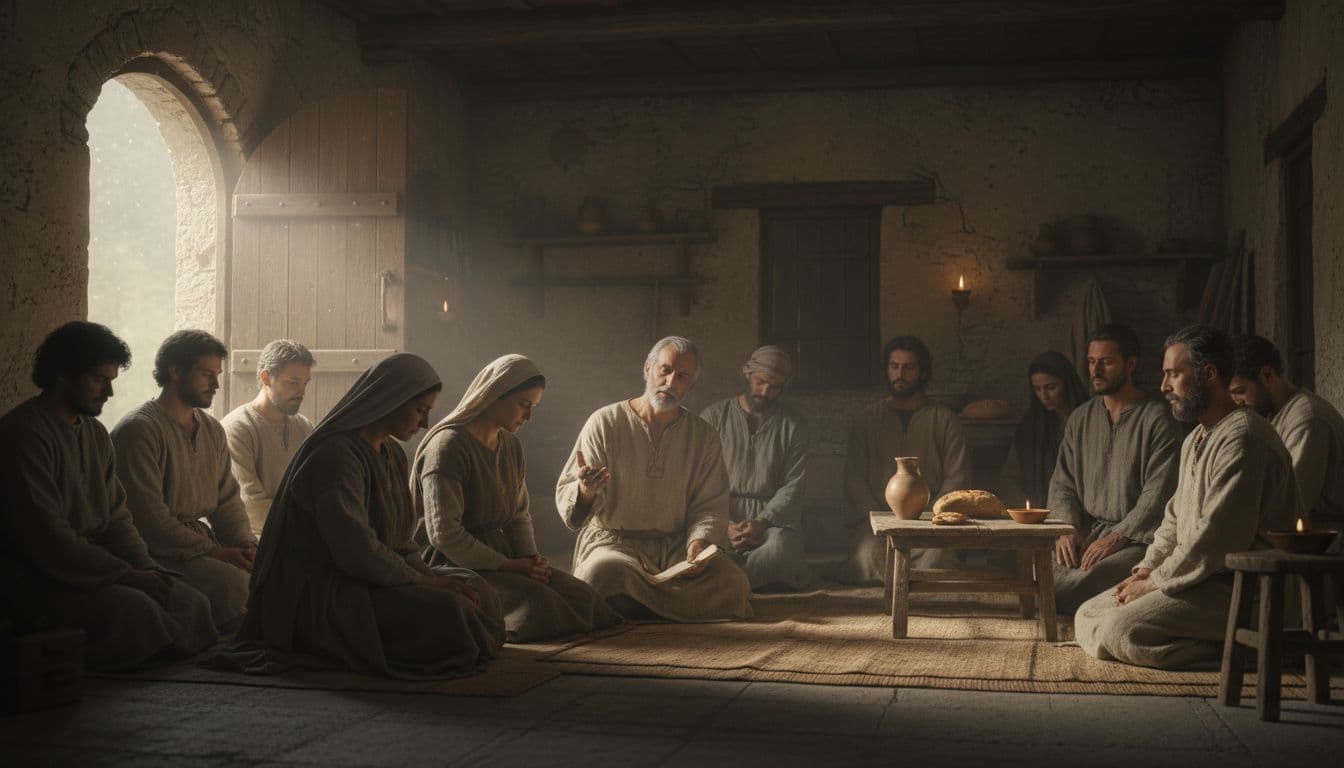
In the early church, the word of wisdom was not a theory on paper. It showed up in real pressure, with real people, and real stakes. Believers needed more than courage. They needed Spirit-given judgment when the church had to choose, correct, wait, or move.
The church was small, watched, and often under pressure. A wise word could settle a dispute before it spread, keep leaders from acting on impulse, or open the right door when fear or confusion wanted the last word. That kind of help did more than solve problems. It gave believers confidence that God was still leading His people.
Guidance during hard choices and church conflict
The early church faced hard calls all the time. Should Gentile believers be required to keep the law of Moses? How should disputes between Jewish and Gentile Christians be handled? Which leaders were trustworthy? These were not classroom questions. They shaped the life of the church.
A word of wisdom could bring calm into that kind of moment. We see this pattern in Acts 15, where the Jerusalem council had to deal with sharp disagreement. The answer was not a power play. It was careful listening, Scripture, testimony, and a decision that protected unity without burying truth.
That same kind of wisdom would have helped in smaller settings too. Imagine a church meeting where two strong personalities are pulling the body in opposite directions. A Spirit-given word can cut through pride, name the real issue, and keep the church from tearing itself apart. Not every disagreement needs a louder voice. Sometimes it needs a wiser one.
It also helped in choosing leaders. The early church could not afford careless appointments. A wise word could confirm character, expose hidden motives, and point the church toward faithful men and women who were ready for responsibility. When the right door opened, the church could move without wasting time or energy trying to force a door shut.
How wisdom strengthened faith and protected the church
The word of wisdom did more than settle logistics. It kept believers anchored when false teaching and pressure tried to move them off course. The early church faced teachers who twisted the Gospel, and wisdom helped believers see the difference between truth and noise.
That matters because deception rarely looks ugly at first. It often sounds reasonable. It borrows Bible words, but drains them of meaning. A wise word helped the church test what they heard, hold fast to sound doctrine, and avoid being dragged into confusion. Paul's warning in 1 Corinthians 12 makes sense in that setting, because the gifts were never meant to compete with truth. They were meant to serve it.
Wisdom also kept love in the picture. The early church did not need gifted people who were harsh, proud, or quick to win arguments. It needed believers who could tell the truth and still care about people. That balance protected the church from both gullibility and cruelty.
A few clear results followed when wisdom was at work:
Faith stayed steady because believers saw God guide them in real time.
Unity held because disputes were handled with discernment, not panic.
False teaching lost ground because the church could test what sounded spiritual.
Love stayed practical because wise correction aimed to restore, not crush.
When that gift moved among believers, it acted like good armor. It did not make life easy, but it made the church harder to deceive and easier to trust.
Did the gifts of the Spirit stop, fade, or stay active all along?
That question sits at the center of a long Christian debate. Some believers say the gifts belonged to the early church in a special way, while others say the Spirit never stopped giving them. The disagreement is not just about theology. It shapes how we read Scripture, how we judge church history, and what we expect God to do now.
Why some Christians say the gifts were only for the early church
The basic argument for cessationism is simple. God gave certain gifts, especially the more dramatic ones, to establish the apostles' witness and confirm the Gospel in the church's earliest days. Once the apostles died and the New Testament was complete, those gifts were no longer needed in the same way.
That view usually leans on a few passages. 1 Corinthians 13 often gets a lot of attention, especially the phrase about "the perfect" coming. Many cessationists say that points to the completion of Scripture or the mature state of the church. They also point to Hebrews 2, where signs and wonders help confirm the message delivered by the Lord and His witnesses.
For that reason, many in this camp do not deny the Holy Spirit. They simply draw a line between sign gifts and the other gifts that still shape church life. Teaching, mercy, service, encouragement, and administration can still continue, even if tongues, prophecy, or healing are seen as no longer normative. For a closer look at that position, a brief case for cessationism lays out the argument plainly.
The concern behind this view is usually order and authority. If the Bible is complete, then no new revelation should compete with it. That concern is not silly. The church does need guardrails, and any claim that sounds like fresh revelation has to be tested hard.
Why others believe the gifts never left the church
The other side says the New Testament gives no clean shutdown date for the gifts. Instead, we read promises of the Spirit's ongoing work, the building up of the body, and the command to test everything rather than ignore it. Paul tells the church to earnestly desire spiritual gifts, and that command does not sound temporary.
Click Our Ad to Support Us!
This view also points to church history. Christians have reported prophecy, healing, and other gifts in many eras, not just the first century. The pattern is uneven, but uneven is not the same as absent. The Spirit is not a machine with one fixed setting. He gives as He wills.
A gift can be rare without being retired.
Many continuationists also argue that the word of wisdom fits this pattern well. The church still faces real decisions, real conflict, and real pressure. Why would the Spirit stop giving wise direction when believers still need it?
We can also connect this to broader teaching on the Spirit's gifts. The overview of the gifts of the Spirit helps us see that wisdom, faith, healing, and prophecy are all part of one larger picture, not isolated tricks. Since the Spirit is still active in sanctifying, teaching, and guiding believers, then it makes sense that He can still give gifts for the common good.
How history can be hard to document without proving absence
Church history is helpful, but it has limits. Just because a miracle or gift was not written down does not mean it never happened. That matters more than people think, especially in times of persecution, scattered house churches, and communities with little access to books or public records.
Many believers in the early centuries lived under pressure. They did not always have time, safety, or ability to preserve detailed accounts. A small church in a village may have seen healing or a wise word from the Lord, then moved on with no formal record at all. History tends to preserve bishops, councils, and famous teachers. It often misses ordinary believers.
We should also remember that persecution can silence testimony. If speaking openly about spiritual gifts brought trouble, many people would keep quiet. A lack of documentation can reflect danger, not absence.
That does not prove every report is true. It does mean we should be careful before saying, "If history did not record it, it did not happen." Silence is a weak ruler. It measures what got saved, not what God may have done.
A fair reading of history leaves room for this truth: the Spirit may have kept working in local churches all along, even when the paper trail went thin. That is enough to make us cautious, humble, and ready to test every claim with Scripture, not fear.
What modern Christian history shows about spiritual gifts today
Modern Christian history does not give us a neat little answer package. It gives us a pattern. The gifts did not stay locked in a museum case, and they did not appear the same way in every century either. Instead, we see periods of quiet, then renewed hunger, then fresh reports of prayer, healing, wisdom, and bold witness.
That history matters because it keeps us from two mistakes. We don't have to treat the gifts like a relic, and we don't have to treat every claim like gold. The church has seen both real renewal and real excess, so we need a sober view with open hands.
First modern waves of renewed interest in the Spirit’s gifts
When Pentecostalism rose in the early 1900s, it brought the gifts back into open church life with unusual force. Believers in places like Topeka and Azusa Street prayed for the baptism of the Holy Spirit, expected tongues, and spoke about healing and prophecy as normal Christian experience. Whether people loved that movement or fought it, they could not ignore it.
That renewal did not stop there. The Charismatic movement spread those same expectations into mainline Protestant, Catholic, and independent churches in later decades. Suddenly, people who never planned to join a Pentecostal church were talking about the Spirit's gifts, praying for the sick, and reading Acts with fresh eyes. For a helpful Biblical connection, Joel 2 and Acts 2 together show why so many believers saw these movements as more than a passing trend.
The key point is simple. Modern Christian history shows that spiritual gifts did not vanish from the conversation. They returned with enough force to reshape worship, ministry language, and expectations in churches across the US and beyond.
What gifts still look like in churches today
Today, the gifts rarely look theatrical in healthy churches. They usually look practical. Someone asks for prayer, and people gather with confidence that God still hears. A sick believer receives anointing, hands laid on them, and steady intercession.
We also see prophetic encouragement in a quieter form. A believer speaks a timely word that brings repentance, clarity, or comfort. A pastor or elder gives wise counsel that fits the moment so well it feels like light entering a dark room. That is where the word of wisdom often shows up, not as a stage performance, but as clear Spirit-led direction when people need it most.
Spirit-led worship is part of this too. Sometimes a church senses an unusual unity in prayer and song. Sometimes a gathering slows down because people sense conviction, gratitude, or joy that nobody planned. We should not force every moment into a miracle story, but we also should not pretend the Spirit is absent when the room changes.
Modern Christians who expect the gifts usually describe them in ordinary church language:
prayer that feels especially directed
healing prayed for with faith, not panic
encouragement that lands with unusual precision
counsel that brings peace and order
worship that feels responsive, not mechanical
That is not showmanship. It is the church asking God to act in real time.
How to test modern claims with Scripture and good judgment
This is where we have to stay sharp. The church should test everything, not because we are cynical, but because Scripture tells us to. We hold fast to what is good, and we reject what is false, inflated, or manipulative. If a claim produces confusion, pride, or control, we should be careful fast.
A few tests help keep us grounded. First, does the claim agree with Scripture? Second, does it point people toward Christ, or toward the speaker? Third, does it build up the church in love, or does it stir up fear and spectacle? Those questions matter because fake signs usually depend on pressure, not truth.
We also need to watch for abuse. Hype can make people accept almost anything. Some leaders use spiritual language to control people, dodge accountability, or manufacture a miracle. The New Testament never asks us to turn off discernment. It asks us to use it.
The strongest churches are not the loudest ones. They are the ones that can test a claim without quenching the Spirit.
Modern history gives us enough evidence to stay humble. The gifts can be real, but not every report is clean. So we keep Scripture in front, prayer in our hands, and judgment in place. That is how we make room for the Spirit without giving a stage to error.
How different faiths and denominations argue against present-day gifts
When we talk about the word of wisdom and other gifts today, we also have to face the pushback. Different faiths and denominations do not reject modern gifts for the same reason, but the arguments usually circle the same few questions: Did the gifts belong only to the apostles? Did Scripture close the door? Did history show them fading away?
Those questions deserve a fair hearing. Some are rooted in a real concern for Biblical authority. Others lean too hard on silence or on a narrow reading of the New Testament.
The main reasons critics give for saying the gifts are gone
The most common objection is cessationism, the belief that certain gifts, like tongues, prophecy, healing, and miracles, ended after the apostolic age. Many critics say those gifts were signs for the church's foundation, not a permanent pattern for every century.
A second argument comes from 1 Corinthians 13. Some read "the perfect" as the completed New Testament, then say partial gifts ended when Scripture was finished. That reading sounds tidy, but it is still an interpretation, not a plain stopwatch verse.
Others argue that prophecy and tongues were tied to new revelation. If that is true, they say, then those gifts should stop once the Bible is complete. On top of that, many churches point to abuse. They have seen pressure, confusion, and bad teaching, so they treat present-day gifts with caution.
A few critics also say church history supports their view. They claim the gifts became rare after the first generations, so their absence proves they were temporary. That argument feels strong at first, but rarity is not the same as termination.
How we can answer those claims without attacking people
We answer best when we stay calm and stay Biblical. Scripture already tells us to test everything, not mock everyone who differs. So we can ask honest questions, read the text closely, and keep Christ at the center.
A few guardrails help us keep our footing:
Start with Scripture. We do not build our view on experience first.
Read church history carefully. Silence in the record is not the same as proof of absence.
Distinguish abuse from abuse of a thing. A bad use of a gift does not erase the gift itself.
Practice humble discernment. The word of wisdom should produce clarity, peace, and obedience, not pressure.
We can also point to the larger Biblical pattern. God has always given wisdom for real moments, not just for one century. That does not mean every claim is real, but it does mean we should not shut the door where Scripture leaves it open.
We do not defend present-day gifts by ignoring caution. We defend them by testing all things and holding fast to what is good.
That posture keeps us from two ditches. We do not become gullible, and we do not become closed off. When we speak that way, we make room for conviction without turning every disagreement into a fight.
What Islam says about Jesus, the apostles, and the Holy Spirit
Islam gives Jesus a high place, but not the place Christians give Him. That difference changes everything, because it also changes how Muslims understand the Holy Spirit, miracles, and the authority of the apostles. If we miss that, we miss the whole argument.
For Christians, the Holy Spirit is God's personal presence, who teaches, convicts, guides, and empowers believers. For Islam, the Holy Spirit is usually identified with Gabriel, the messenger who brings revelation. That is not a small difference. It is the line between indwelling power and delivered message.
Why this view clashes with the Christian idea of ongoing Spirit-empowered miracles
Islam says Jesus was born of Mary, honored as the Messiah, and given miracles by God's permission. The Qur'an even includes signs like healing the blind and raising the dead. But those miracles are not framed as the work of the Holy Spirit indwelling believers, nor as a continuing pattern for the church.
That is where the clash comes in. Christians see the Spirit as active after Pentecost, giving gifts like healing, wisdom, prophecy, and discernment across the life of the church. Islam, by contrast, treats revelation as something brought by a messenger, not a divine Person who lives in believers and still moves with power. The Spirit is not a present helper in the same way, because the framework is different from the start.
In Christianity, the question is often, "What is the Spirit saying now?" In Islam, the question is more often, "What did God reveal through his messenger?"
That means a Christian word of wisdom fits into a living, ongoing relationship with the Holy Spirit. It is not just information from above. It is guidance from the One who is already among God's people. If we want the Biblical picture in sharper focus, who the Holy Spirit is helps draw the line clearly.
Why Christians would call false accusations against the Spirit serious
Because Christians believe the Holy Spirit is God, we do not treat claims about His work lightly. If someone says the Spirit's work is really demonic, that is not a casual disagreement. It is a grave accusation, because it turns light into darkness and calls God's help evil.
That is why Jesus' warning about blasphemy against the Holy Spirit still matters. He warned against speaking against the Spirit's work in a way that hardens the heart and twists the truth. Christians hear that warning and tremble a little, because it shows how serious it is to mislabel God's action.
We can disagree about spiritual gifts without becoming reckless. We can test claims, reject error, and stay cautious. But if we say the Spirit's work is demonic, we are not just disputing a doctrine. We are stepping into dangerous territory.
That is also why the apostles mattered so much in the Christian history. They were witnesses of Christ, sent to proclaim what they had seen and heard. Since their message came by the Spirit, then dismissing the Spirit is not a small correction. It is a direct challenge to the source of the message itself.
Conclusion
The word of wisdom is not a relic sitting in the first century. It is part of the way God has led His people from Scripture, through the early church, and into our own day. We have seen that Biblical wisdom is not mere knowledge, and the gifts of the Spirit were never meant to be locked away after the apostles died.
The harder debate is not whether God can still speak with wisdom, but whether we are willing to test what we hear by Scripture. Some traditions say the gifts ended. History and Scripture do not give us that easy answer. They give us a church that still needs discernment, courage, and the Holy Spirit's help.
So we hold fast to what is true, reject what is false, and keep asking God for wisdom that builds up the body. Since the Spirit gave a word of wisdom then, He is not less able now.
Related Posts
The 9 Gifts of the Holy Spirit: Biblical Truths, Historical Evidence, and Today The gifts of the Holy Spirit reveal the active power of God working in the lives of His people. They aren't just distant historical records or fading Biblical accounts; they're living because the Holy Spirit, He is living and He is God, and His transformative gifts are reaching people even today. Throughout Scripture and centuries of testimonies, we see how…
9 Gifts of the Spirit Explained: Find True Freedom and Peace in Christ Today The gifts of the Spirit hold deep significance for Christians, showcasing God's active presence in our lives. While these gifts are celebrated by many, some Christian denominations deny their existence today, often citing specific Bible verses to support their beliefs. But is this skepticism rooted in Scripture, or does it stem from misinterpretations and doctrinal shifts over time? Unbelief in…
The Gifts of the Holy Spirit in Acts: How They Empower Today’s Church The gifts of the Holy Spirit revealed in the Book of Acts showcase God’s continued power through His church. These gifts — prophecy, healing, miracles, and more — aren’t just historical events. They’re essential tools for believers today, empowering us to fulfill Christ’s mission in a world longing for hope. To see these gifts as still active is to witness…
The Seven Spirits of God stand as one of the most profound and often misunderstood truths in Christian theology. Rooted deeply in Scripture, they aren’t seven separate entities but rather seven attributes of the one Holy Spirit—God revealing Himself in fullness. Isaiah 11:2 describes these [...]
The gifts of the Holy Spirit reveal the active power of God working in the lives of His people. They aren’t just distant historical records or fading Biblical accounts; they’re living because the Holy Spirit, He is living and He is God, and His transformative gifts are reaching people [...]
The phrase “tongues of fire” in Acts 2:3 sparks worldwide curiosity and spiritual wonder. It appears in Scripture to describe the Holy Spirit’s descent during Pentecost, when visible flames rested on the apostles, marking the time when God’s Spirit descended on earth, [...]
The Bible’s take on a reprobate mind isn’t just a warning or a piece of theology. It’s a wake-up call. “Reprobate mind” (from the Greek adokimos, meaning rejected or unapproved) describes what happens when people no longer care about God’s truth—they trade what’s holy for what feels good, grow numb [...]
The upper room, a sacred space in Jerusalem, holds profound significance in Christian history. Acts 2 tells us it is the gathering place for Jesus’ disciples when the Holy Spirit descended upon them during Pentecost. This transformative moment not only empowered those present but also sparked [...]
Pentecost isn’t just a Christian event; its roots stem from the Jewish celebration of Shavuot, the day Moses received the Ten Commandments from God. For Christians, Pentecost marks the moment when God poured out His Spirit and Jesus’ worldwide church empowered by the Holy Spirit and His gifts [...]
Charismatic gifts, often referred to as manifestation gifts, showcase the miraculous power of the Holy Spirit. From healing and miracles to prophecy and discernment, they serve as tangible evidence of God’s presence and transformative work. These gifts, seen throughout Biblical history, have [...]
Revelation 3:7-8 offers a powerful message to the church in Philadelphia, a message that remains relevant today. It speaks of a divine “open door” that no man can shut, given by the one who holds the Key of David. This imagery represents not only an opportunity but also God’s sovereign [...]
Have you ever wondered why the word “anointing” carries so much depth in Scripture? The idea of anointing—of sacred oil poured out on kings, priests, and prophets—echoes through the Old Testament as a symbol of God choosing, empowering, and setting apart. God didn’t leave the details of [...]
The Bible boldly declares the truth that Jesus is both fully God and fully man—a mystery that anchors the Christian faith. But what does it mean, practically, for us as believers? Jesus didn’t perform miracles or operate in the gifts of the Holy Spirit simply as God; He demonstrated how a [...]
The Antichrist
The Apostate Church
The Rapture
Angels
Book of Daniel
Giants
Judgment
Prophecy
The Apostles
Bible Prophecy
Beware of Deception
Sin
Antichrists
Demon Possession
Healing
Millennial Reign
Redemption
The Gospels
The Holy Spirit
American Prophecy
Israel
Armageddon
Forgiveness
Intercession
Prayer
Revival
The Old Testament
The Tribulation
Faith
Kingdom Of God
Bible Interpretation
Free Will
Book Of Jude
Pride
The Afterlife
The Red Dragon
We use cookies so you can have a great experience on our website. View more
Cookies settings
Accept
Decline
Privacy & Cookie policy
Privacy & Cookies policy
Cookies list
Cookie name
Active
Who we are
Our website address is: https://theholyspirit.us.
Comments
When visitors leave comments on the site we collect the data shown in the comments form, and also the visitor’s IP address and browser user agent string to help spam detection.
An anonymized string created from your email address (also called a hash) may be provided to the Gravatar service to see if you are using it. The Gravatar service privacy policy is available here: https://automattic.com/privacy/. After approval of your comment, your profile picture is visible to the public in the context of your comment.
Media
If you upload images to the website, you should avoid uploading images with embedded location data (EXIF GPS) included. Visitors to the website can download and extract any location data from images on the website.
Cookies
If you leave a comment on our site you may opt-in to saving your name, email address and website in cookies. These are for your convenience so that you do not have to fill in your details again when you leave another comment. These cookies will last for one year.
If you visit our login page, we will set a temporary cookie to determine if your browser accepts cookies. This cookie contains no personal data and is discarded when you close your browser.
When you log in, we will also set up several cookies to save your login information and your screen display choices. Login cookies last for two days, and screen options cookies last for a year. If you select "Remember Me", your login will persist for two weeks. If you log out of your account, the login cookies will be removed.
If you edit or publish an article, an additional cookie will be saved in your browser. This cookie includes no personal data and simply indicates the post ID of the article you just edited. It expires after 1 day.
Embedded content from other websites
Articles on this site may include embedded content (e.g. videos, images, articles, etc.). Embedded content from other websites behaves in the exact same way as if the visitor has visited the other website.
These websites may collect data about you, use cookies, embed additional third-party tracking, and monitor your interaction with that embedded content, including tracking your interaction with the embedded content if you have an account and are logged in to that website.
Who we share your data with
If you request a password reset, your IP address will be included in the reset email.
How long we retain your data
If you leave a comment, the comment and its metadata are retained indefinitely. This is so we can recognize and approve any follow-up comments automatically instead of holding them in a moderation queue.
For users that register on our website (if any), we also store the personal information they provide in their user profile. All users can see, edit, or delete their personal information at any time (except they cannot change their username). Website administrators can also see and edit that information.
What rights you have over your data
If you have an account on this site, or have left comments, you can request to receive an exported file of the personal data we hold about you, including any data you have provided to us. You can also request that we erase any personal data we hold about you. This does not include any data we are obliged to keep for administrative, legal, or security purposes.
Where your data is sent
Visitor comments may be checked through an automated spam detection service.