Pre-Born! gives free ultrasounds to women looking to abort their babies and 86% of those women choose to keep their babies!
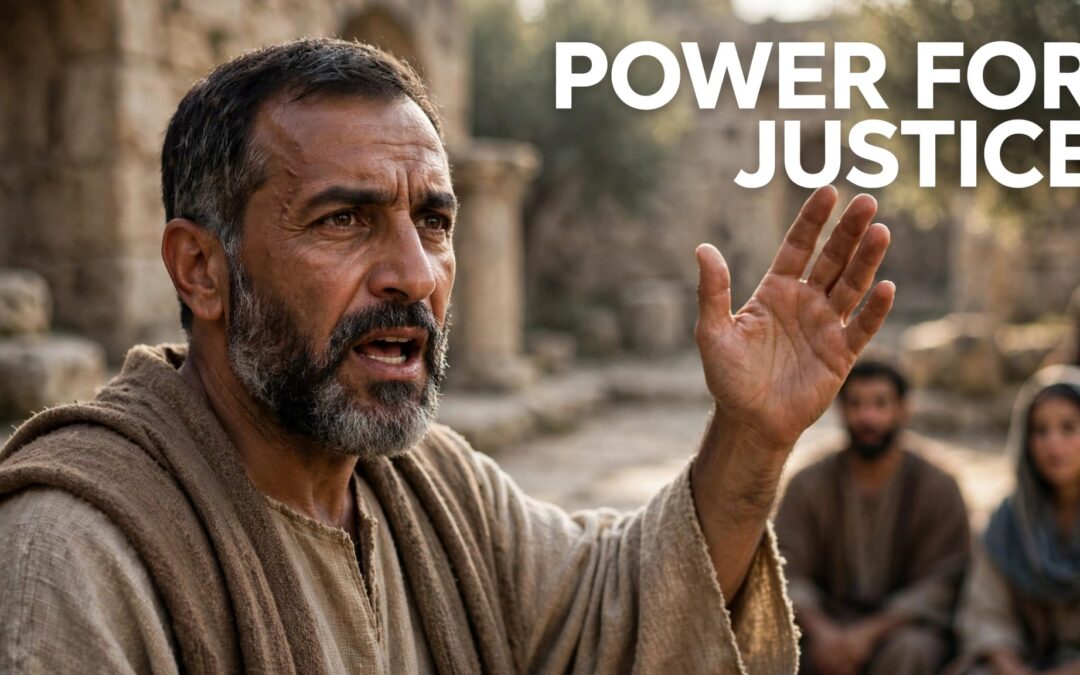
Micah's message is clear: the Holy Spirit gave him power to confront the sin and injustice among God's people. That power had a purpose. Micah was called to speak God's truth when leaders and prophets were leading people astray.
For us, the verse raises an important question about spiritual power. What does it look like when the Holy Spirit strengthens someone to speak, and how do we recognize the difference between His voice and human ambition? Micah's setting helps us understand the answer.
"But truly I am full of power by the Spirit of the Lord, And of justice and might, To declare to Jacob his transgression And to Israel his sin."
Micah identifies the source of his strength as the Spirit of the Lord. He also names the work before him: declaring the transgression and sin of God's people.
Jacob and Israel are names for the people addressed in the prophecy. Micah isn't describing an abstract problem somewhere far away. He's speaking to the community that knows God's name, including leaders who have abused their responsibility.
The words "justice and might" belong together here. Micah needs the courage to deliver a difficult message, but he also needs to understand the wrong he is called to expose. The Spirit gives power for God's purpose, and that purpose includes telling the truth about sin.
This verse doesn't promise that every believer will receive Micah's particular prophetic assignment. It does show us something about the Holy Spirit's character: He empowers people to serve God faithfully, even when the truth is uncomfortable.
The world Micah was called to confront
Micah prophesied concerning Samaria and Jerusalem, the centers of the northern kingdom of Israel and the southern kingdom of Judah. His message addressed the people, but it also brought serious accusations against those entrusted with leadership.
Leaders who should have known justice
Micah confronts rulers who should have understood what was right. Instead, he describes them as people who hate good and love evil. His language is startling because the harm he's describing is serious. Those who should have protected the people have treated them as prey.
That accusation matters when we read his claim to be filled with power. He's not looking for a dramatic sentence to impress a crowd. He's speaking into a situation where people with authority have used that authority against others.
Religion could not hide wrongdoing
The problem wasn't limited to political leadership. Prophets and priests also appear in Micah's accusations. Religious language was being used in a society where justice had been twisted, and some leaders assumed the Lord's presence would protect them regardless of their conduct.
We can read Micah's words alongside the surrounding accusations in Micah 3:8-10. The people who build Zion with bloodshed are the same people who need to hear the truth about their sin.
The BibleProject guide to Micah also places this warning within the book's wider message of judgment and hope. Micah's words have sharp edges because the evil he confronts has real consequences.
Why Micah stands apart from false prophets
Before Micah speaks about the Spirit's power, he describes prophets who mislead God's people. They proclaim peace when they have something to eat, but turn against those who give them nothing. Their message bends toward what benefits them.
That's a troubling picture, isn't it? A person can sound religious and still use spiritual authority to gain comfort, money, or influence. The question isn't only whether someone speaks confidently. We also need to consider what shapes the message and whom it serves.
A message that could not be bought
Micah's declaration begins with a contrast. While other prophets adjust their words for their own advantage, he speaks of being filled by the Spirit of the Lord. His source is God, and his assignment is to expose what others might prefer to conceal.
The contrast doesn't mean that every unpopular message comes from God. A person can be confrontational and still be wrong. Micah's authority rests on the Lord who sent him and the truth he was given to proclaim.
A warning against false assurance
Some leaders claimed the Lord was among them and assumed disaster couldn't reach them. Micah challenged that confidence because their conduct contradicted the justice God required.
We should pay attention to that. Knowing religious language isn't the same as submitting to God. A community can speak often about His presence while refusing to deal honestly with harm in its midst.
The Holy Spirit doesn't support our excuses. He leads us toward the truth, including the truth we may not want to hear.
What it means to be full of the Spirit’s power
Micah says he is full of power by the Spirit of the Lord. The emphasis falls on the source. His ability to speak God's message is connected to the Spirit, not merely to his personality or determination.
The Holy Spirit is more than a feeling
When we hear the word "power," we may think first of a strong emotion or a dramatic moment. God can move in ways that touch our emotions, but the Holy Spirit is more than a feeling. He is God, present and active according to His will.
Micah's words point us toward the Spirit's work in a person's calling. The Lord gives what His servant needs to carry His message. That includes strength, but it also includes a concern for justice.
Our study of the Holy Spirit's work throughout Scripture looks at His work among God's people in both the Old and New Testaments. He is never a tool we control. We depend on Him.
Power has a purpose
Think about the difference between having a loud voice and having something truthful to say. Volume can get attention, but it cannot make a message righteous. Micah needed more than confidence. He needed the Spirit's help to speak what God had given him.
The Spirit's power also doesn't guarantee an easy reception. God's servants may face resistance when they confront sin. Micah's confidence is rooted in the One who sends him, not in a promise that everyone will applaud.
That should encourage us to seek God's help without measuring His presence by how impressive we appear.
Justice and might belong together
Micah names justice and might alongside the Spirit's power. Those words help us understand why his message is so much more than an expression of anger.
Justice recognizes what is wrong
Justice involves making a right judgment. In Micah's setting, that means recognizing the difference between protecting people and exploiting them, between truthful leadership and leadership corrupted by selfish gain.
The prophet doesn't treat wrongdoing as a harmless difference of opinion. He names conduct that violates God's standards and injures other people. His concern for justice is connected to his concern for the people who suffer when leaders abuse their position.
We should resist making justice an empty religious word. If we claim to care about what is right, we must also care about how people are treated.
Might gives courage to speak
Might speaks of strength. Micah's task requires courage because he is confronting people with influence. The Spirit equips him to say what must be said rather than surrendering to fear or pressure.
Yet courage needs direction. Someone can be bold in defending a false accusation, and someone can be forceful while protecting their own interests. Micah's strength is joined to justice because God's message has a moral purpose.
For us, that means asking the Lord for more than the nerve to speak. We need His help to understand the truth, love the people involved, and act with integrity.
Why Micah names sin among God’s people
Micah's message is directed to Jacob and Israel. He's called to declare their transgression and sin, not merely to criticize people outside the community.
That can be uncomfortable for us. It's often easier to recognize corruption at a distance than to acknowledge it among people we know, or in our own conduct. Micah doesn't give his listeners the option of assuming that belonging to God's people places them beyond correction.
Transgression is more than a mistake
The language of transgression points to wrongdoing against God's revealed will. Micah is confronting actions with moral weight, including the misuse of authority and the perversion of justice.
We shouldn't reduce that to a minor misunderstanding. When those entrusted with leadership harm others and then hide behind religious confidence, the problem reaches both the people injured and the community's relationship with God.
God’s people still need correction
We believe correction is part of God's care. That doesn't make every painful accusation true, and it doesn't give anyone permission to shame others. It does mean we should be willing to hear Scripture when it exposes what we would rather excuse.
The Holy Spirit's conviction can lead us to confess and change. His work is honest about sin, but He doesn't ask us to remain trapped in despair. God calls His people to turn toward Him.
The harm behind Micah’s warning
Micah uses vivid images to describe leaders consuming the people they should have protected. His words force us to see the human cost of corruption. The powerful benefit, while others carry the injury.
He also condemns leaders who take bribes, priests who teach for pay, and prophets who speak for money, while claiming the Lord is with them. His concern is not that a person receives support for ministry. His accusation is that money has corrupted the exercise of responsibility.
When influence protects itself
Imagine a court where the person with the most money can secure the decision. The appearance of justice may remain, but the people who need a fair hearing are left exposed. Micah's accusations show what happens when authority is used to benefit those who already possess it.
Religious leadership can face a similar temptation. When reputation becomes more important than truth, the person who reports harm may be treated as the problem. That is a serious failure of care.
Truth should lead to action
Speaking about justice is important, but words alone don't repair what has been damaged. A truthful response may include stopping harmful conduct, listening to those affected, accepting accountability, and making restitution where possible.
The details depend on the situation. We shouldn't pretend one conversation resolves every injury. We can, however, refuse to use prayer or spiritual language as a reason to avoid an honest response.
Why Micah announces judgment
Micah's warning ends with a declaration that Zion will be plowed like a field and Jerusalem reduced to ruins. That is a severe message for people who believed their religious position guaranteed safety.
We don't have to enjoy the warning to understand why it belongs in the book. God takes evil seriously. The people harmed by injustice matter to Him, and religious privilege doesn't give leaders permission to disregard His commands.
Later in the Book of Jeremiah, elders recall Micah's warning and the response of King Hezekiah. They point out that Hezekiah feared the Lord and sought His favor rather than putting Micah to death. That remembrance shows why a warning can serve a merciful purpose: it calls people to recognize danger and turn toward God.
We should be careful about taking Micah's specific judgment and announcing the same outcome over another nation or church. The prophecy was addressed to a particular people in a particular setting. Its seriousness still teaches us to reject false security and listen when God's Word corrects us.
Judgment is never a subject for us to use as entertainment. Micah's words ask for humility, because the Lord sees what human authority may try to hide.
Click Our Ad to Support Us!
Where hope appears in Micah’s message
If we stop with the chapter's warning, we can miss the hope found elsewhere in the book. Micah also speaks of God's future rule, the gathering of His people, and His mercy toward those who have sinned.
The book closes with praise for a God who pardons iniquity and delights in mercy. That doesn't erase the warnings. It shows us that judgment and mercy belong in the larger account of God's dealings with His people.
Hope does not excuse evil
Sometimes we want reassurance before we're willing to face the truth. Micah won't let us use hope that way. God's promise of restoration doesn't turn exploitation into something harmless.
Repentance means agreeing with God about sin and turning toward Him. Where our actions have hurt others, that change should affect how we treat them. A confession that protects the same harmful behavior has missed the point.
Mercy gives us a place to turn
The Lord's mercy is good news for people who know they need forgiveness. We don't have to hide our sin from Him or pretend we can make ourselves clean through religious performance.
For Christians, that hope leads us to Jesus. He calls sinners to repentance, and through His death and resurrection we receive forgiveness and new life by faith. The God who tells the truth about sin is also the God who offers mercy.
How Micah’s message points Christians to Jesus
Micah's calling and Jesus' ministry are not identical. Micah was a prophet sent to confront Israel and Judah. Jesus is the Son of God, the promised Messiah, and the Savior of the world.
Still, Christians can hear themes in Micah that help us appreciate Jesus' ministry. The Lord cares about righteousness, exposes hypocrisy, and defends those who have been mistreated. Jesus reveals that concern in His teaching and in the way He responds to people.
Jesus confronts religious hypocrisy
In the Gospels, Jesus challenges religious leaders who appear righteous outwardly while neglecting what God requires. He doesn't accept religious display as a substitute for justice, mercy, and faithfulness.
That should make us pause before using spiritual activity as proof that everything is healthy. A ministry can be busy, well-known, and impressive while still needing correction. Jesus calls us to truth in the heart as well as obedience in our conduct.
Jesus offers more than a warning
Jesus doesn't only identify sin. He gives Himself for sinners. At the cross, He bears the cost of our redemption, and His resurrection announces His victory over death.
Our study of the Spirit's promise and righteousness in Isaiah considers another prophetic picture of God's Spirit and righteous rule. We believe the Spirit is at work among God's people now, while we continue to look for the fullness of Christ's righteous Kingdom.
The Holy Spirit’s power after Pentecost
Micah's experience reminds us that the Holy Spirit was active before Pentecost. He empowered God's servants for the assignments they received. Micah wasn't the only person in the Old Testament whom the Spirit equipped.
Our study of the Spirit resting on Israel's elders considers another occasion when God provided His Spirit for service. The work looked different from Micah's confrontation, but the source was the same.
Jesus promised power for witness
In Acts 1, Jesus tells His followers that they will receive power when the Holy Spirit comes upon them, and that they will be His witnesses. Their calling centers on proclaiming the risen Christ.
Micah was sent to declare Israel's sin. The disciples were sent to bear witness to Jesus. We shouldn't treat those assignments as interchangeable, but both show our need for God's power to do God's work.
The Spirit’s gifts remain active
At Pentecost, the Holy Spirit came upon the gathered believers, and they spoke in other tongues as He gave them utterance. Peter then proclaimed Jesus, and people who heard the message were called to respond.
We believe the baptism in the Holy Spirit and His gifts are for believers today. Our study of the Spirit's promise at Pentecost follows the connection between Joel's prophecy and that outpouring.
The Spirit's power is never a badge of superiority. He equips us to glorify Jesus and serve others.
How should Christians approach prophecy today?
We believe the Holy Spirit still gives prophetic gifts. Scripture encourages believers to welcome His work, while also teaching the church to weigh what is spoken. Those convictions belong together.
A person may be sincere and still misunderstand what they believe God is saying. Confidence, emotion, or a claim of special revelation doesn't place a message beyond examination.
Welcome the gifts with love
Paul connects prophecy with strengthening, encouragement, and comfort in the church. He also places love at the center of spiritual life. A gift should never become an excuse to treat people as objects or to make the speaker the center of attention.
Micah's message included a hard warning, so comfort doesn't mean that every word will feel pleasant. It does mean we should care about the people receiving a message and about God's purpose for His church.
Test what is spoken
A claimed prophetic word should agree with Scripture and direct people toward Jesus. It should be considered with humility, prayer, and the discernment of other mature believers.
We should also be cautious when someone uses a supposed word from God to control another person's choices, demand money, or silence questions. God's name should never be used to protect human manipulation.
Testing a message isn't a rejection of the Holy Spirit. It is one way we honor Him and take His work seriously.
Speaking truth without using it as a weapon
Micah spoke with courage, but his example doesn't authorize us to say every harsh thought that crosses our minds. Before confronting someone, we need to consider both the truth of what we plan to say and the purpose for saying it.
Listen before making an accusation
An accusation can cause serious harm if it is false or careless. We should listen, distinguish what we know from what we assume, and avoid repeating claims we cannot support.
Listening also matters when someone reports harm. Protecting a leader's reputation should never be our first concern at the expense of a person's safety. Where a situation involves abuse or a possible crime, appropriate civil authorities and qualified support may need to be involved.
Let love shape the conversation
Love doesn't require silence about wrongdoing. It asks us to care about truth and about the people affected by it. Sometimes a private conversation is appropriate. Other situations require a wider response, especially when harm continues or a leader has misused authority.
We can ask God for courage without asking Him to make us cruel. We can seek accountability without pretending we know every motive. And when we have spoken wrongly, we can admit it and make things right.
That kind of humility doesn't weaken a commitment to justice. It helps keep our own hearts open to correction.
What does this passage ask of us?
Micah's words invite us to examine where our confidence comes from. Are we depending on the Holy Spirit, or are we assuming that a strong opinion is the same thing as His direction?
Invite God to examine your heart
Before applying the passage to a public leader or another church, we can let it search us. Are we honest when the truth costs us something? Do we listen to people who have less influence than we do? Have we used religious language to avoid an uncomfortable responsibility?
These questions aren't meant to produce endless self-accusation. They give us a place to bring our lives before God. When He convicts us, we can respond with confession and obedience.
Practice justice where you have responsibility
Most of us have some influence, even if we don't hold a public office. The way we handle a disagreement, treat an employee, respond to a family member, or use our resources can either protect people or harm them.
Ask the Holy Spirit for wisdom in the situation before you. Then take an honest step. That might mean correcting a false statement, listening to someone you've dismissed, or refusing to benefit from another person's mistreatment.
We don't need to claim Micah's title to take God's concern for justice seriously.
A prayer for courage and discernment
Prayer gives us a place to admit that we need the Lord's help. We cannot manufacture His power by working ourselves into a feeling, and we cannot replace obedience with strong religious language.
We can ask Him for a heart that loves truth and for courage that remains tender toward people.
Father, fill us with Your Holy Spirit and teach us to love what is right. Show us where we have excused sin or overlooked harm. Give us courage to speak truth, humility to receive correction, and wisdom to act with love. Keep our eyes on Jesus, and help us serve others faithfully. Amen.
A prayer like that may lead us to speak, listen, confess, or take a practical step. The response will depend on the situation. Our part is to stay open to the Lord and willing to obey what He has already shown us in Scripture.
His power is given for His purposes, and His purposes are always consistent with His character.
Frequently asked questions
What is the main message of Micah’s declaration?
Micah says the Spirit of the Lord fills him with power, justice, and might so he can declare the sin of God's people. His words contrast with the conduct of prophets who mislead others for personal benefit.
Does this verse promise every Christian the gift of prophecy?
The verse describes Micah's particular calling. We believe prophetic gifts remain active in the church, but we shouldn't assume that every believer receives the same assignment or gift. The Holy Spirit equips God's people according to His purposes.
Is speaking boldly always evidence of the Holy Spirit?
No. A person can speak boldly and still be mistaken or motivated by selfish ambition. We need to consider whether the message agrees with Scripture, points toward Jesus, and is expressed with truth and Godly care.
How can believers respond to injustice?
We can pray for discernment, listen to those affected, speak truthfully, and take responsible action where we have influence. In situations involving abuse or possible criminal conduct, seeking appropriate professional help or involving civil authorities may be necessary.
Depend on the Spirit and speak the truth
Micah's confidence rested in the Spirit of the Lord. God gave him strength to name sin and confront injustice when influential people wanted reassurance instead.
We need that same dependence on the Holy Spirit, even though our assignments differ from Micah's. His power calls us toward truth, courage, humility, and love.
Ask the Lord to show you where His truth needs to shape your words and actions. Then trust Him for the courage to obey.
Related Posts
Holy Spirit Scriptures: 21 Century Meaning, Original Words, and God's Purpose What would life be if we never understood the heart behind every movement of God’s Spirit? Every verse that mentions the Holy Spirit points us somewhere deeper—into friendship with God, into His power for living, and into the mystery of His love and presence that started in Eden and keeps going until Jesus rules the earth in the Millennial Reign.…
1 Truth: Blood of Jesus: God's Life in Sinless Flesh What if the very thing running through the veins of Jesus was not just human, but the Blood of Jesus holding the actual life of God Himself, poured out for us? That sounds huge, maybe even hard to take in at first, yet Scripture keeps pulling us back to this one thread: life is in the blood, sin corrupts human…
21st Century Biblical Anointing: Oil, Prophets, and Holy Spirit Baptism Have you ever wondered why the word "anointing" carries so much depth in Scripture? The idea of anointing—of sacred oil poured out on kings, priests, and prophets—echoes through the Old Testament as a symbol of God choosing, empowering, and setting apart. God didn’t leave the details of the anointing oil a mystery: He gave Moses a recipe, specific and holy,…
The Seven Spirits of God stand as one of the most profound and often misunderstood truths in Christian theology. Rooted deeply in Scripture, they aren’t seven separate entities but rather seven attributes of the one Holy Spirit—God revealing Himself in fullness. Isaiah 11:2 describes these [...]
The gifts of the Holy Spirit reveal the active power of God working in the lives of His people. They aren’t just distant historical records or fading Biblical accounts; they’re living because the Holy Spirit, He is living and He is God, and His transformative gifts are reaching people [...]
The phrase “tongues of fire” in Acts 2:3 sparks worldwide curiosity and spiritual wonder. It appears in Scripture to describe the Holy Spirit’s descent during Pentecost, when visible flames rested on the apostles, marking the time when God’s Spirit descended on earth, [...]
The Bible’s take on a reprobate mind isn’t just a warning or a piece of theology. It’s a wake-up call. “Reprobate mind” (from the Greek adokimos, meaning rejected or unapproved) describes what happens when people no longer care about God’s truth—they trade what’s holy for what feels good, grow numb [...]
The upper room, a sacred space in Jerusalem, holds profound significance in Christian history. Acts 2 tells us it is the gathering place for Jesus’ disciples when the Holy Spirit descended upon them during Pentecost. This transformative moment not only empowered those present but also sparked [...]
Pentecost isn’t just a Christian event; its roots stem from the Jewish celebration of Shavuot, the day Moses received the Ten Commandments from God. For Christians, Pentecost marks the moment when God poured out His Spirit and Jesus’ worldwide church empowered by the Holy Spirit and His gifts [...]
Charismatic gifts, often referred to as manifestation gifts, showcase the miraculous power of the Holy Spirit. From healing and miracles to prophecy and discernment, they serve as tangible evidence of God’s presence and transformative work. These gifts, seen throughout Biblical history, have [...]
Revelation 3:7-8 offers a powerful message to the church in Philadelphia, a message that remains relevant today. It speaks of a divine “open door” that no man can shut, given by the one who holds the Key of David. This imagery represents not only an opportunity but also God’s sovereign [...]
Have you ever wondered why the word “anointing” carries so much depth in Scripture? The idea of anointing—of sacred oil poured out on kings, priests, and prophets—echoes through the Old Testament as a symbol of God choosing, empowering, and setting apart. God didn’t leave the details of [...]
The Bible boldly declares the truth that Jesus is both fully God and fully man—a mystery that anchors the Christian faith. But what does it mean, practically, for us as believers? Jesus didn’t perform miracles or operate in the gifts of the Holy Spirit simply as God; He demonstrated how a [...]
The Antichrist
The Apostate Church
The Rapture
Angels
Book of Daniel
Giants
Judgment
Prophecy
The Apostles
Bible Prophecy
Beware of Deception
Sin
Antichrists
Demon Possession
Healing
Millennial Reign
Redemption
The Gospels
The Holy Spirit
American Prophecy
Israel
Armageddon
Forgiveness
Intercession
Prayer
Revival
The Old Testament
The Tribulation
Faith
Kingdom Of God
Bible Interpretation
Free Will
Book Of Jude
Pride
The Afterlife
The Red Dragon
We use cookies so you can have a great experience on our website. View more
Cookies settings
Accept
Decline
Privacy & Cookie policy
Privacy & Cookies policy
Cookies list
Cookie name
Active
Who we are
Our website address is: https://theholyspirit.us.
Comments
When visitors leave comments on the site we collect the data shown in the comments form, and also the visitor’s IP address and browser user agent string to help spam detection.
An anonymized string created from your email address (also called a hash) may be provided to the Gravatar service to see if you are using it. The Gravatar service privacy policy is available here: https://automattic.com/privacy/. After approval of your comment, your profile picture is visible to the public in the context of your comment.
Media
If you upload images to the website, you should avoid uploading images with embedded location data (EXIF GPS) included. Visitors to the website can download and extract any location data from images on the website.
Cookies
If you leave a comment on our site you may opt-in to saving your name, email address and website in cookies. These are for your convenience so that you do not have to fill in your details again when you leave another comment. These cookies will last for one year.
If you visit our login page, we will set a temporary cookie to determine if your browser accepts cookies. This cookie contains no personal data and is discarded when you close your browser.
When you log in, we will also set up several cookies to save your login information and your screen display choices. Login cookies last for two days, and screen options cookies last for a year. If you select "Remember Me", your login will persist for two weeks. If you log out of your account, the login cookies will be removed.
If you edit or publish an article, an additional cookie will be saved in your browser. This cookie includes no personal data and simply indicates the post ID of the article you just edited. It expires after 1 day.
Embedded content from other websites
Articles on this site may include embedded content (e.g. videos, images, articles, etc.). Embedded content from other websites behaves in the exact same way as if the visitor has visited the other website.
These websites may collect data about you, use cookies, embed additional third-party tracking, and monitor your interaction with that embedded content, including tracking your interaction with the embedded content if you have an account and are logged in to that website.
Who we share your data with
If you request a password reset, your IP address will be included in the reset email.
How long we retain your data
If you leave a comment, the comment and its metadata are retained indefinitely. This is so we can recognize and approve any follow-up comments automatically instead of holding them in a moderation queue.
For users that register on our website (if any), we also store the personal information they provide in their user profile. All users can see, edit, or delete their personal information at any time (except they cannot change their username). Website administrators can also see and edit that information.
What rights you have over your data
If you have an account on this site, or have left comments, you can request to receive an exported file of the personal data we hold about you, including any data you have provided to us. You can also request that we erase any personal data we hold about you. This does not include any data we are obliged to keep for administrative, legal, or security purposes.
Where your data is sent
Visitor comments may be checked through an automated spam detection service.