Pre-Born! gives free ultrasounds to women looking to abort their babies and 86% of those women choose to keep their babies!
The church as God's temple means God dwells among His redeemed people through the Holy Spirit. The congregation belongs to Him, and each believer's body also belongs to Him. That makes His presence a wonderful gift, but it also makes our conduct toward one another a serious responsibility.
We believe something beautiful gets overlooked when temple language becomes only a lesson about personal behavior. God is building a redeemed people, the body of Christ, through whom His reconciliation, holiness, and restoring love become visible.
In Paul's temple teaching, the plural "you" addresses the congregation collectively. The church shares one sacred identity through the Spirit.
Jesus Christ is the foundation and cornerstone. Believers are living stones joined together in Him, with responsibility for one another.
Individual holiness and congregational holiness belong together. The Spirit calls believers to bodily purity, truthful relationships, faithful worship, and love.
God's dwelling among His people reaches its fullness in the new creation, where God and the Lamb are the temple.
God’s Desire to Dwell Among His People
Eden introduces the pattern
Before Israel had a tabernacle or a temple, God placed humanity in Eden. The garden introduces an Old Testament pattern that continues throughout Scripture: people living in God's presence, receiving His provision, and answering to His Word.
Eden isn't directly called a temple in Genesis. Still, its connection with God's presence helps explain the sanctuary imagery that follows.
Sin brought alienation, judgment, and exclusion. Humanity needed reconciliation with God. That need runs through Biblical history and helps us understand why access to His presence matters so much.
The tabernacle brought the promise into Israel’s camp
In Exodus 25:8, God commanded Israel to make Him a sanctuary so He could dwell among them. Think about the direction of that promise. God was making provision to live among the people He had rescued.
An illustrative wilderness sanctuary reconstruction.
The tabernacle was portable, but God's presence wasn't a small matter. The glory of God filled it, then filled Solomon's temple, as Exodus 40:34-35 and 1 Kings 8:10-11 describe.
God made the tent a dwelling place among His covenant people and met with them there. That gives us the starting point for understanding the church as His dwelling.
What Sacrifice and the Holy of Holies Taught
The priesthood guarded holy service
God appointed the tribe of Levi for sanctuary service, with the priesthood belonging to Aaron and his descendants. The priests offered sacrifices and carried out responsibilities God had assigned.
Those sacrifices addressed different aspects of Israel's relationship with Him, including atonement, thanksgiving, dedication, and fellowship. Bloodshed made the cost of sin visible.
We shouldn't treat these practices as empty religious activity. They taught Israel about God's holiness, human uncleanness, and the need for an acceptable approach to Him. People couldn't decide for themselves how to enter His presence.
The curtain marked restricted access
The Holy of Holies was the innermost holy place. Within it stood the ark of the covenant, associated with God's covenant testimony and His meeting with Israel.
A curtain separated this sacred space. On the annual Day of Atonement, the high priest entered with sacrificial blood according to God's instructions.
What was the lesson? God graciously dwelt among His people, but sin remained a real barrier. His nearness never made His holiness less serious.
These arrangements prepared us to understand Jesus' work. He provides the cleansing and access that repeated animal sacrifices couldn't bring to completion. The New Testament's temple teaching rests on that finished sacrifice.
Solomon’s Temple Was Holy, but It Wasn’t Security Against Judgment
God’s glory filled the house
When Solomon's temple was dedicated, the cloud of God's glory filled the house. The priests couldn't continue their ministry because of it.
Solomon also acknowledged that even the highest heavens couldn't contain God. The temple was a chosen place of His presence and covenant worship, not a structure capable of enclosing Him.
That distinction matters. God's presence made the temple holy, while God Himself remained greater than everything Israel had built.
Religious confidence couldn’t replace obedience
God warned in 1 Kings 9:8-9 that this magnificent house would become a ruin if His people abandoned Him for other gods.
Jeremiah 7:3-15 later confronted people who repeated their confidence in the Lord's temple while practicing injustice and idolatry. They treated His house as a den of robbers, a refuge where wrongdoing supposedly carried no consequences.
We need that warning too. A beautiful sanctuary, a respected ministry, or a long religious history cannot make disobedience safe.
What good is speaking reverently about God's house while mistreating the people who gather there? The outward place of worship never gave Israel permission to disregard the God they claimed to honor. The same principle searches our congregations today.
Jesus Is the Temple to Which the Earlier Sanctuary Pointed
The Word dwelt among us
John 1:14 says the Word became flesh and dwelt among us. The Greek word skenoo means to dwell, tabernacle, or pitch a tent.
That language reaches back into Israel's wilderness history. God's presence came near in Jesus Christ, the eternal Word made flesh.
Colossians 2:9 says all the fullness of the Godhead dwells in Him bodily. Jesus' relationship to the temple is therefore greater than that of a teacher visiting a sacred building. In Him, God has come among us in human flesh.
His death and resurrection opened the way
In John 2:19-21, Jesus spoke about destroying the temple and raising it in three days. His listeners thought He meant the Jerusalem temple. John explains that He meant His body.
Jesus was announcing His death and resurrection.
The warning in Matthew 23, including His declaration that their house was left desolate, announces judgment. Matthew 27:51 then records the temple curtain tearing at His death.
Together, these passages show the old temple order coming under judgment and the new covenant opening access to God through Christ. We approach the Father through the crucified and risen Savior. His sacrifice is the basis of our welcome.
The Church as God’s Temple in Corinth
The plural “you” changes the emphasis
In 1 Corinthians 3:16-17, the Greek "you" is plural, while "temple" is singular. Paul addresses the believers together as one temple of God.
That means the immediate concern is the congregation's shared life. Paul has already confronted jealousy, rivalry, and competing loyalties to ministers.
Some believers identified themselves with Paul, others with Apollos. Their preferences had become reasons for division. Before calling them God's temple, Paul reminded them that ministers are servants and God gives the growth.
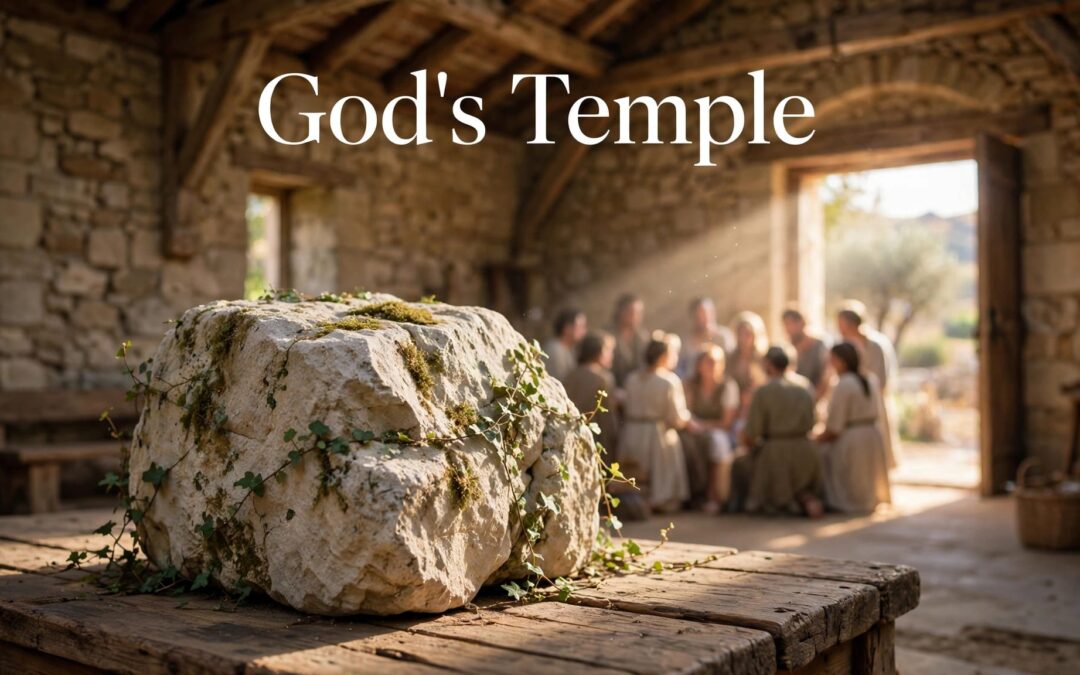
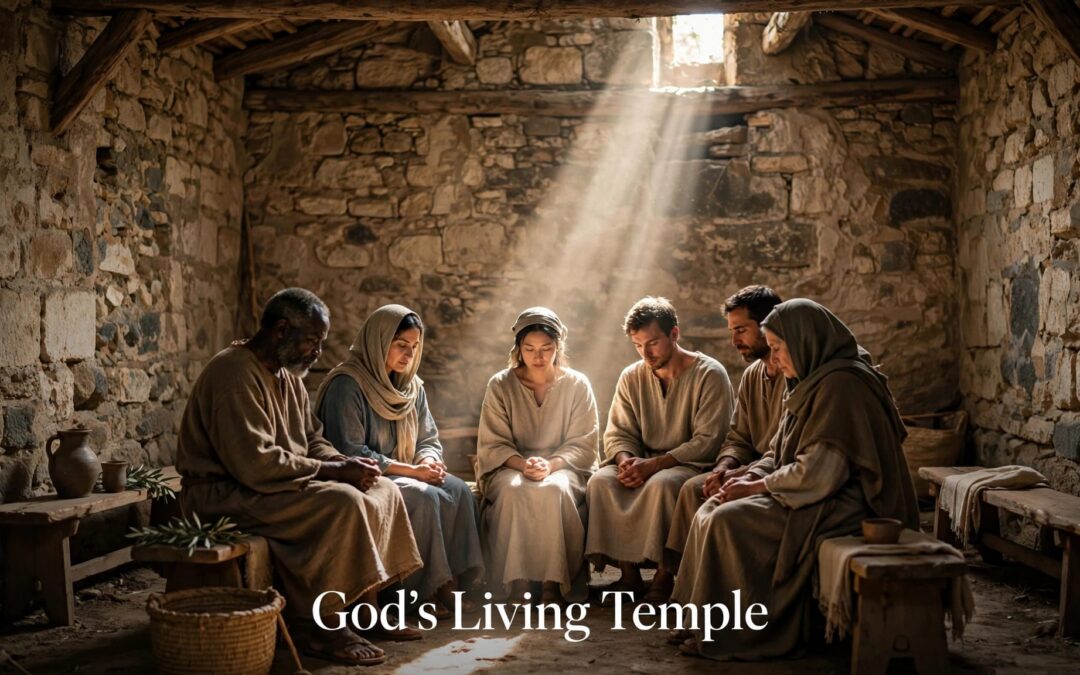
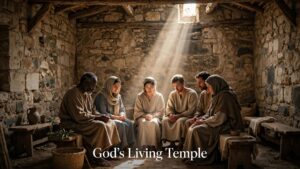
We explain this corporate setting further in our teaching on God's living temple. The context keeps the encouragement and warning together.
God’s ownership makes destructive conduct serious
Paul says Jesus Christ is the foundation. Those who build upon Him are accountable for their work.
Then comes the warning against destroying God's temple. We shouldn't reduce that warning to advice about diet or physical fitness. Paul is confronting conduct that corrupts the church.
False teaching, divisive ambition, and careless treatment of believers matter because these people belong to God.
The warning about harming God's temple must never become a weapon against someone who truthfully exposes harm within the church.
Accountability protects God's people. A leader cannot claim ownership of the congregation or demand protection from correction.
We believe there should be holy fear here. The people sitting beside you are precious to the God whose Spirit dwells among them.
Ephesians Describes a House Built Together
Ephesians places the temple image within the reconciliation of Jews and Gentiles through Jesus. People once separated are brought into one household through Him.
The foundation is the apostles and prophets, with Christ Jesus Himself as the cornerstone. Their foundational witness directs the church to Jesus and the Gospel entrusted to them.
That doesn't compete with Paul's statement that Christ is the foundation in Corinthians. The apostles and prophets establish the church through their faithful testimony to Him. Jesus remains the One upon whom everything depends.
A cornerstone gives alignment to the building. In the same way, the church receives its direction through Christ.
Ephesians 2:21 says the joined building grows into a holy temple in the Lord. Believers are being built together through the Spirit as God's dwelling place.
Notice that word, together. Christian maturity includes learning how to live faithfully alongside other believers. Agreement about doctrine matters, but so do patience, forgiveness, and practical care.
A congregation can have the right statement of faith and still need correction in how its members speak to one another. God's building grows as His people submit to Christ and receive one another under His authority.
Living Stones Become a House, a Priesthood, and a People
Living stones belong together
Jesus is the living stone rejected by people but chosen and precious to God. In 1 Peter 2:5, Peter says believers come to Him and become stones in a spiritual house.
What a thought. God forms His dwelling through redeemed people who can hear Him, answer Him, and grow under His correction.
A stone's place in a wall depends on its relationship with the surrounding stones. Peter's picture challenges spiritual independence. Faith in Jesus brings a person into a people.
That doesn't erase individuality. It gives each believer a place of belonging and service under the same Lord.
A holy priesthood offers spiritual sacrifices
Peter also calls believers a holy priesthood. Through Jesus Christ, they offer sacrifices acceptable to God.
These sacrifices don't repeat His atoning death. They include praise, obedient living, generosity, and doing good. Their acceptance rests on Jesus.
Then 1 Peter 2:9 identifies believers as a chosen race, a royal priesthood, a holy nation, and God's own people. Their calling includes declaring His praises.
The passage gives three connected honors: a dwelling place, a priesthood, and a people belonging to God.
We should receive that with gratitude rather than pride. Priestly access belongs to the whole redeemed community, while pastors and other ministry leaders retain their responsibilities to teach, shepherd, and serve. Every believer has worship to offer.
The Spirit’s Presence Fulfills God’s Covenant Promise
In 2 Corinthians 6:16, Paul identifies believers as the temple of the living God. He connects that identity with God's promise to dwell among His people and walk among them.
Click Our Ad to Support Us!
The covenant background includes Leviticus 26:11-12, where God promises His tabernacle among Israel and fellowship with them as their God.
Ezekiel 37:26-27 carries the promise forward through an everlasting covenant of peace and God's sanctuary among His people. His dwelling expresses His commitment to be their God.
The church's temple identity therefore belongs within God's long purpose of reconciliation and restoration. The Holy Spirit joins believers to Christ and makes His presence a continuing reality among them.
We shouldn't imagine that God becomes interested in His people only when a service becomes emotionally intense. His indwelling is the foundation of their life together.
Joyful worship and manifestations of His power are precious. So are the quieter hours when believers obey Him, forgive an offense, or serve someone who cannot repay them. The same Spirit is present and at work.
The Believer’s Body Is Also the Spirit’s Temple
Does the corporate meaning cancel the personal meaning? Both belong within Paul's teaching.
1 Corinthians 6:19 applies temple language to the believer's body. The surrounding discussion concerns sexual immorality and bodily union, including Paul's warning about becoming one flesh with a prostitute.
The body belongs to the Lord. Salvation doesn't make physical conduct spiritually irrelevant.
We should keep both passages in their settings. The earlier passage addresses harm to the congregation. The later passage addresses bodily holiness, especially sexual purity.
Together, they reach into ordinary life. What you do privately matters to God, and how you treat other believers matters to Him too.
We recommend letting this identity guide decisions before temptation begins making excuses. Sexual conduct, private entertainment, and hidden relationships belong under Christ's authority.
Caring for physical health can also be good stewardship, but Paul's immediate argument goes beyond health advice. The body has been purchased through Christ's sacrifice. It belongs to Him and is meant to honor Him.
Indwelling and the Spirit’s Empowering Fullness
Every believer depends on the indwelling Spirit
We believe everyone who belongs to Jesus receives the Holy Spirit through the new birth. His indwelling isn't reserved for unusually gifted Christians.
The Corinthians needed substantial correction, yet Paul called them God's temple. Their immaturity required repentance and growth. It didn't make God's call upon them meaningless.
This gives encouragement to a believer who is learning, struggling, and responding to correction. Spiritual growth begins with dependence on the Lord who has received you through Christ.
We must never teach that a less dramatic experience automatically means a sincere Christian lacks God's Spirit.
Believers should seek His empowering fullness
As Spirit-filled Pentecostals, we also believe in baptism in the Holy Spirit, continued filling, and spiritual gifts for ministry and witness.
The Spirit who dwells within believers also equips them to speak, serve, pray, and testify through His power. We should welcome His gifts with faith and humility.
Those gifts must remain submitted to Scripture. A prophetic message is to be weighed. A claimed manifestation never excuses disorder, manipulation, or disobedience.
We need His power, and we need His correction. The church should welcome both with willing hearts.
Gathered Worship Should Reflect God’s Presence
Reverence includes participation
When believers gather, God's temple identity gives weight to preaching, prayer, praise, Communion, and ministry to one another.
We believe there is room for joyful expression and attentive silence, for raised hands and bowed hearts. Reverence concerns our response to God, rather than one approved level of volume.
The question is whether worship honors Jesus and builds up His people.
A congregation should make room for the Spirit's gifts while keeping teaching understandable and ministry accountable. Participation carries responsibility for the people receiving it.
The household has a holy way of life
In 1 Timothy 3:15, Paul writes about proper conduct in the house of God, the church of the living God. Belonging to His house affects behavior.
Welcoming a visitor, explaining Communion clearly, praying without pressure, and preaching Scripture faithfully all belong within holy service.
Buildings provide useful places for these things. They deserve responsible care. But a congregation meeting in a rented room doesn't possess less spiritual worth than one meeting in an impressive sanctuary.
The church is God's dwelling through the Spirit wherever His people faithfully gather in Christ.
Protecting God’s Temple Means Caring for People
Temple language should affect congregational decisions, especially where people are vulnerable.
We recommend beginning with ordinary responsibilities. Refuse gossip. Handle money honestly. Provide proper safeguards for children. Give people a clear way to report misconduct.
When someone raises a concern, the first response shouldn't be protecting the ministry's image. Truth and the safety of God's people matter more than appearances.
A report of abuse requires serious attention. Criminal conduct belongs before the appropriate civil authorities. Spiritual language must never obstruct that responsibility.
This is also where unity needs careful definition. Godly unity includes truth, repentance, and correction. Silence about wrongdoing can leave a congregation divided beneath a peaceful surface.
At the same time, ordinary disagreement shouldn't become an excuse for contempt. Believers can discuss worship practices, schedules, and ministry decisions without questioning one another's love for Jesus.
We should ask a plain question before speaking: Will these words help someone walk in truth, or are they meant to make someone smaller?
That question won't solve every conflict. It does place our motives before God.
Protecting His temple includes listening patiently, correcting fairly, and making room for genuine repentance. Sacred identity gives everyday relationships weight.
The Temple Promise Reaches the New Creation
The growing Word gathers a people
Acts 6:7 describes the Word of God spreading as disciples multiply. Acts 12:24 again connects the Word with growth and multiplication. Acts 19:20 describes its mighty growth and prevailing strength.
This language can be read alongside Genesis 1:28, where humanity is commanded to be fruitful and multiply. The connection is thematic: God's purpose advances as people receive His Word and live under His rule.
We shouldn't pretend the passages use identical wording. They do show the Gospel gathering people into God's Kingdom as His mission advances.
God and the Lamb are the temple
Revelation 21:22 says the new Jerusalem has no temple because the Lord God Almighty and the Lamb are its temple.
The goal is unrestricted fellowship with God. The sanctuary's purpose reaches completion in His immediate presence.
Christians differ about future temple prophecies and a possible rebuilt sanctuary in Jerusalem. Those disagreements don't alter the church's present identity or provide another way of salvation.
We affirm God's faithfulness to His promises, including His purposes concerning Israel. We also affirm that reconciliation with Him comes through Jesus Christ.
The final hope places God Himself at the center. His people will dwell with Him without sin or separation.
Frequently Asked Questions
What is the difference between a church and a temple?
In ordinary speech, both words can describe religious buildings. In the New Testament, "church" usually identifies the congregation, while temple language explains its sacred identity as God's dwelling.
A church building provides a meeting place. The Spirit-indwelt people are the temple. A congregation therefore remains God's people when a building closes, a meeting moves, or believers gather in a home.
Does God’s presence make Christians divine?
God's indwelling doesn't turn human beings into gods. The distinction between the Creator and His creation remains.
Believers receive life, holiness, and fellowship through Him. Those gifts produce dependence and worship, rather than personal claims to divinity. We need His mercy every day, and His presence gives no permission to place our opinions beyond correction.
Does the Spirit leave whenever a believer struggles?
An emotional low or a struggle against temptation doesn't prove that God has abandoned a believer. We should direct struggling Christians toward repentance, prayer, Scripture, and fellowship.
At the same time, persistent resistance to God is serious. His indwelling must never become an excuse for deliberate sin. We trust His faithfulness while responding to His conviction and seeking help where obedience has become difficult.
Honor the People God Calls His Dwelling
The church as God's temple begins with His grace. Through Jesus Christ, God receives redeemed people and dwells among them by His Spirit.
That identity calls for holy responsibility. We should welcome His gifts, receive His correction, and treat His people with care.
As you gather with other believers, remember whose household you are entering. Let the way you worship, speak, and serve honor the God who has chosen to dwell among His people.
Related Posts
1 Corinthians 3:16 Explained: God's Living Temple 1 Corinthians 3:16 means the gathered church is God's holy dwelling place because His Spirit lives among His people. Paul addresses the congregation collectively, and that shared identity makes jealousy, division, and careless treatment of other believers serious matters. We believe there's something wonderful here that can get lost when this verse becomes only a statement about personal behavior. God…
Holy Spirit Scriptures: 21 Century Meaning, Original Words, and God's Purpose What would life be if we never understood the heart behind every movement of God’s Spirit? Every verse that mentions the Holy Spirit points us somewhere deeper—into friendship with God, into His power for living, and into the mystery of His love and presence that started in Eden and keeps going until Jesus rules the earth in the Millennial Reign.…
What Is the Spirit of Glory in 1 Peter 4:14? When Peter says the "Spirit of glory and of God" rests on those insulted for Christ, he means the Spirit of God, the Holy Spirit, is present with them in their suffering. Their mistreatment doesn't mean God has left them. Peter assures you that His presence rests upon you, and your faithfulness honors Jesus even when others speak against Him.…
The Seven Spirits of God stand as one of the most profound and often misunderstood truths in Christian theology. Rooted deeply in Scripture, they aren’t seven separate entities but rather seven attributes of the one Holy Spirit—God revealing Himself in fullness. Isaiah 11:2 describes these [...]
The gifts of the Holy Spirit reveal the active power of God working in the lives of His people. They aren’t just distant historical records or fading Biblical accounts; they’re living because the Holy Spirit, He is living and He is God, and His transformative gifts are reaching people [...]
The phrase “tongues of fire” in Acts 2:3 sparks worldwide curiosity and spiritual wonder. It appears in Scripture to describe the Holy Spirit’s descent during Pentecost, when visible flames rested on the apostles, marking the time when God’s Spirit descended on earth, [...]
The Bible’s take on a reprobate mind isn’t just a warning or a piece of theology. It’s a wake-up call. “Reprobate mind” (from the Greek adokimos, meaning rejected or unapproved) describes what happens when people no longer care about God’s truth—they trade what’s holy for what feels good, grow numb [...]
The upper room, a sacred space in Jerusalem, holds profound significance in Christian history. Acts 2 tells us it is the gathering place for Jesus’ disciples when the Holy Spirit descended upon them during Pentecost. This transformative moment not only empowered those present but also sparked [...]
Pentecost isn’t just a Christian event; its roots stem from the Jewish celebration of Shavuot, the day Moses received the Ten Commandments from God. For Christians, Pentecost marks the moment when God poured out His Spirit and Jesus’ worldwide church empowered by the Holy Spirit and His gifts [...]
Charismatic gifts, often referred to as manifestation gifts, showcase the miraculous power of the Holy Spirit. From healing and miracles to prophecy and discernment, they serve as tangible evidence of God’s presence and transformative work. These gifts, seen throughout Biblical history, have [...]
Revelation 3:7-8 offers a powerful message to the church in Philadelphia, a message that remains relevant today. It speaks of a divine “open door” that no man can shut, given by the one who holds the Key of David. This imagery represents not only an opportunity but also God’s sovereign [...]
Have you ever wondered why the word “anointing” carries so much depth in Scripture? The idea of anointing—of sacred oil poured out on kings, priests, and prophets—echoes through the Old Testament as a symbol of God choosing, empowering, and setting apart. God didn’t leave the details of [...]
The Bible boldly declares the truth that Jesus is both fully God and fully man—a mystery that anchors the Christian faith. But what does it mean, practically, for us as believers? Jesus didn’t perform miracles or operate in the gifts of the Holy Spirit simply as God; He demonstrated how a [...]
The Antichrist
The Apostate Church
The Rapture
Angels
Book of Daniel
Giants
Judgment
Prophecy
The Apostles
Bible Prophecy
Beware of Deception
Sin
Antichrists
Demon Possession
Healing
Millennial Reign
Redemption
The Gospels
The Holy Spirit
American Prophecy
Israel
Armageddon
Forgiveness
Intercession
Prayer
Revival
The Old Testament
The Tribulation
Faith
Kingdom Of God
Bible Interpretation
Free Will
Book Of Jude
Pride
The Afterlife
The Red Dragon
We use cookies so you can have a great experience on our website. View more
Cookies settings
Accept
Decline
Privacy & Cookie policy
Privacy & Cookies policy
Cookies list
Cookie name
Active
Who we are
Our website address is: https://theholyspirit.us.
Comments
When visitors leave comments on the site we collect the data shown in the comments form, and also the visitor’s IP address and browser user agent string to help spam detection.
An anonymized string created from your email address (also called a hash) may be provided to the Gravatar service to see if you are using it. The Gravatar service privacy policy is available here: https://automattic.com/privacy/. After approval of your comment, your profile picture is visible to the public in the context of your comment.
Media
If you upload images to the website, you should avoid uploading images with embedded location data (EXIF GPS) included. Visitors to the website can download and extract any location data from images on the website.
Cookies
If you leave a comment on our site you may opt-in to saving your name, email address and website in cookies. These are for your convenience so that you do not have to fill in your details again when you leave another comment. These cookies will last for one year.
If you visit our login page, we will set a temporary cookie to determine if your browser accepts cookies. This cookie contains no personal data and is discarded when you close your browser.
When you log in, we will also set up several cookies to save your login information and your screen display choices. Login cookies last for two days, and screen options cookies last for a year. If you select "Remember Me", your login will persist for two weeks. If you log out of your account, the login cookies will be removed.
If you edit or publish an article, an additional cookie will be saved in your browser. This cookie includes no personal data and simply indicates the post ID of the article you just edited. It expires after 1 day.
Embedded content from other websites
Articles on this site may include embedded content (e.g. videos, images, articles, etc.). Embedded content from other websites behaves in the exact same way as if the visitor has visited the other website.
These websites may collect data about you, use cookies, embed additional third-party tracking, and monitor your interaction with that embedded content, including tracking your interaction with the embedded content if you have an account and are logged in to that website.
Who we share your data with
If you request a password reset, your IP address will be included in the reset email.
How long we retain your data
If you leave a comment, the comment and its metadata are retained indefinitely. This is so we can recognize and approve any follow-up comments automatically instead of holding them in a moderation queue.
For users that register on our website (if any), we also store the personal information they provide in their user profile. All users can see, edit, or delete their personal information at any time (except they cannot change their username). Website administrators can also see and edit that information.
What rights you have over your data
If you have an account on this site, or have left comments, you can request to receive an exported file of the personal data we hold about you, including any data you have provided to us. You can also request that we erase any personal data we hold about you. This does not include any data we are obliged to keep for administrative, legal, or security purposes.
Where your data is sent
Visitor comments may be checked through an automated spam detection service.