Pre-Born! gives free ultrasounds to women looking to abort their babies and 86% of those women choose to keep their babies!
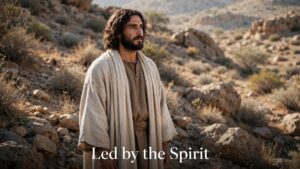
After His baptism at the Jordan, Jesus was full of the Holy Spirit and led into a remote place. He faced the devil during a forty-day fast, ate nothing, and was hungry when the fast ended. That hunger makes the first recorded offer understandable.
The Spirit's leading brought Him into a difficult setting, where the fast introduced a real test. Hardship by itself doesn't mean God is absent. Luke shows how Jesus met the test in obedience to God.
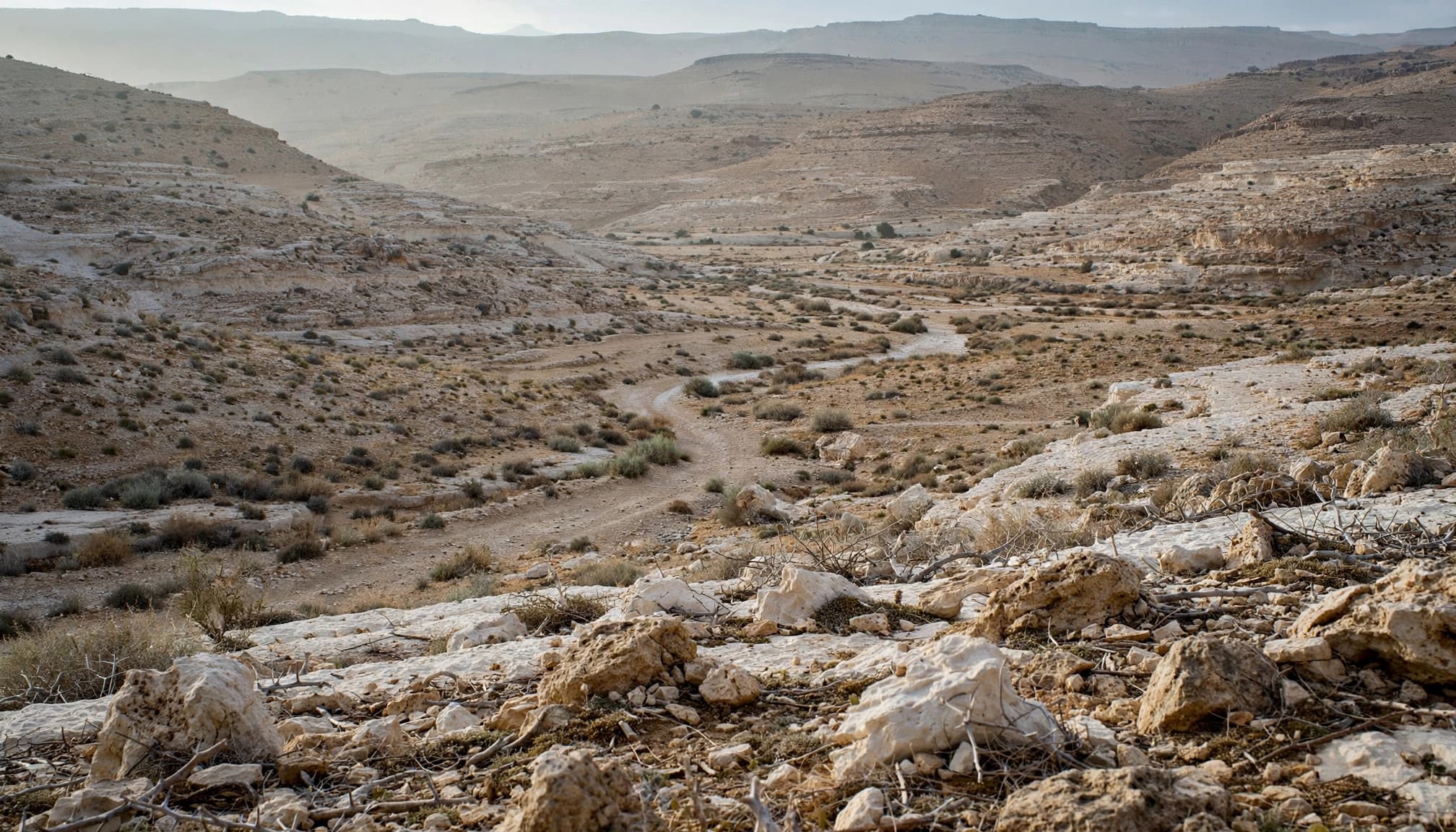
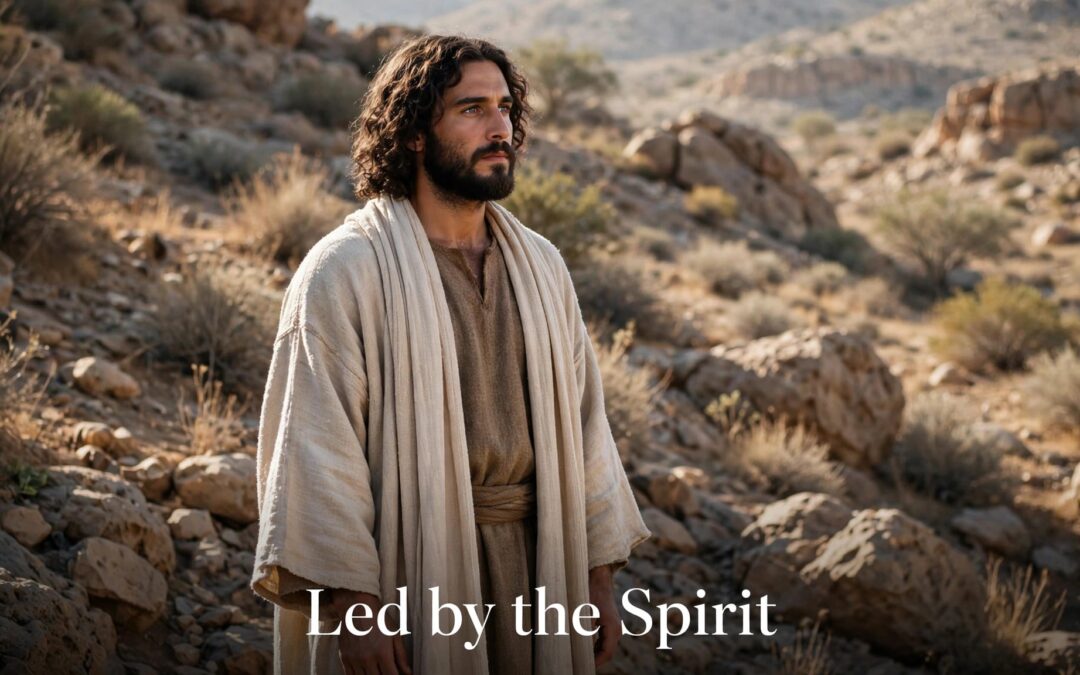
Jesus entered the desert after His baptism, filled with the Spirit and led by the Spirit.
The Greek word behind the account can also mean "tested." The tempter meant to draw Him into disobedience, while God's purpose wasn't to lead Him into sin.
That period recalls other Biblical periods involving Moses, Elijah, and Israel's journey through the desert.
Luke records three trials: bread, the kingdoms of the world, and a test at the temple.
He answered each offer with God's word, drawing His responses from Deuteronomy.
Hebrews says He faced temptation yet without sin, so He understands our weakness and can help us.
The account ends with Him returning to Galilee in the power of the Spirit.
What Luke 4:1-2 Says
Luke's opening connects Jesus' baptism to the testing that follows. The NIV describes Him as full of the Holy Spirit, leaving the Jordan and being led by the Spirit to a place of testing. The devil tempted Him during the fast. He ate nothing, and afterward He was hungry. The full account in Luke 4 continues through the three temptations and His answers.
Full of the Holy Spirit
Luke does not describe Him as entering that setting spiritually empty or abandoned. He says Jesus was full of the Holy Spirit. That phrase belongs at the center of the passage, because the Spirit's presence and the testing happen together.
He was truly hungry and faced real pressure. At the same time, the Spirit was with Him and led Him. The passage does not say the Spirit enticed Him to sin. The Spirit led Him to the place where the test would take place.
Hungry after forty days
Luke states plainly that He ate nothing during the fast. His hunger is not a metaphor. He experienced bodily weakness, and the first recorded offer addressed that physical need.
We should also notice what Luke does not say here. He does not claim that feeling hunger was a sin, or that hunger itself proves a person is spiritually weak. His human need was part of the real pressure of the test.
The Baptism Comes Before the Wilderness
Luke places the account of Jesus' testing immediately after His baptism. The baptism is described in Luke 3:21, where He is baptized as the people are being baptized. Luke has already shown the Spirit's work around His public ministry. After the Jordan, the same Spirit leads Him into a hard place.
This order matters. He isn't wandering away from God or being punished for disobedience. He has just stepped into public ministry, and His first recorded movement afterward is into a place of testing.
A clear statement of identity
At the Jordan, His identity is affirmed before the tempter challenges it. The tempter repeatedly raises the words, "If You are the Son of God." The challenge is aimed at trust and obedience, not at Him needing to prove Himself to the Father.
We can miss the force of this if we read the temptations as three unrelated tricks. The tempter presses against what has just been declared. He doesn't have to seize proof, status, or provision for Himself. He remains faithful to the Father.
The wilderness is not proof of rejection
A difficult season doesn't automatically mean God has rejected or abandoned someone. He is led by the Spirit and still enters a place of hunger and testing. That truth doesn't give us permission to label every hardship a divine lesson. It does remind us that hardship alone can't tell us whether God is near.
The Spirit's presence isn't measured by comfort. His obedience during testing shows that God can lead His people through difficult places without leaving them there alone.
What “Full of the Holy Spirit” Means Here
Luke's wording is stronger than saying the Spirit was nearby. Jesus is full of the Holy Spirit as He enters that setting. The Spirit is actively present in His life and ministry, not a distant influence or a vague religious feeling.
We believe the Spirit is God's Spirit, present and working. Luke's opening chapters show the Spirit leading, empowering, and directing. For more background on who the Holy Spirit is, Luke's account gives a vivid place to begin.
The Spirit’s leading is personal
The Spirit's leading doesn't cancel obedience or turn a person into a passive figure. He enters that setting and faces the tempter. The Spirit isn't a force pushing him against his will. Luke presents the Spirit's direction as part of God's purpose for his ministry.
That matters for believers, too. Walking with the Spirit doesn't mean expecting every step to feel easy. We listen to God's written word, pray, and obey what God has made clear. A spiritual impression that contradicts God's written word isn't a sound reason to disobey God.
Spirit-filled does not mean temptation-free
Jesus is full of the Holy Spirit, and he is tempted. Those two facts appear together in the same passage. That should guard us against treating a test as proof that the Spirit has left us.
Facing a test isn't the same as yielding to sin. Jesus' example shows the difference: the tempter presents an offer, but he answers in obedience. His Spirit-filled life is seen in that faithfulness, not in an absence of pressure.
Why the Spirit Led Jesus into the Wilderness
Luke says the Spirit led Him into that setting. The devil's purpose was to draw Him toward sin, but God's purpose was not to entice Him into evil. The account presents two aims: the tempter opposes God, while the Spirit leads Jesus into a test within the Father's will.
The Bible doesn't give every detail of the landscape or the exact path He took. Luke gives us the setting, the fast, hunger, and a direct encounter with the tempter.
A test before public ministry
His public ministry begins in Galilee after this test. Before He teaches in synagogues or heals the sick, He faces a test and remains obedient. The account makes clear that His mission doesn't begin with self-promotion or an easy route to power.
The Spirit's leading also shows us that God's purposes can take us beyond our preference for comfort. We shouldn't assume every difficult circumstance is a test arranged by God, but Jesus' story shows that the Spirit can lead through a difficult season.
The devil’s purpose is not God’s purpose
It's important to keep the distinction clear. The tempter urges Him to turn from obedience. God doesn't entice Him to sin. Luke's language about the Spirit leading and the tempter testing doesn't make the two agents interchangeable.
This distinction helps us read the passage without accusing God of evil. The Spirit brings Him into a place of testing, and He meets the tempter there with steadfast trust in the Father.
The Significance of Forty Days
This period is more than a passing detail. The Bible uses it in accounts of waiting, dependence, and preparation. Jesus' fast brings those earlier histories to mind, though each has its own setting and purpose.
The number doesn't mean every period in Scripture is identical. These connections place this account within the larger Biblical history of God dealing with His people.
Moses and Elijah
Moses spent this period with the Lord without eating bread or drinking water, as recorded in Exodus 34:28. Elijah traveled for the same length of time to Horeb after receiving food and water, according to 1 Kings 19:8.
These are meaningful parallels, but not exact copies. Moses' time was connected to receiving the covenant tablets. Elijah's journey followed a moment of exhaustion and God's provision. His fast led into direct testing by the tempter.
Israel in the wilderness
Israel spent years in the wilderness after the Exodus. In Deuteronomy, Moses reminded the people that God had humbled and fed them with manna so they would learn that life depends on God's word. He later quotes that passage when the tempter offers bread.
The connection is more than a shared setting. Israel was called to trust God and often failed. He enters the remote setting as the faithful Son, trusting the Father when hunger could have become a reason to seize control. Israel's history helps explain why Deuteronomy is so central to His answers.
“Tempted” Can Also Mean “Tested”
The Greek word translated "tempted" in Luke 4:2 is peirazō. The Greek text analysis for Luke 4:2 shows the word in its form in the verse. It can describe an enticement toward evil or a proving test.
That range helps explain why translations differ in their wording without changing the passage's basic meaning. The devil seeks to draw Jesus into disobedience, and the encounter proves Jesus' faithfulness.
Context determines which sense fits. Jesus is not morally corrupted or drawn into sin. He faces real pressure and remains faithful. The devil's offers are real, and the account shows Jesus' obedience rather than any weakness in His character.
Moses, Elijah, and Jesus in the Wilderness
The forty-day connection to Moses and Elijah gives Luke's brief opening added weight. Both men had significant encounters with God, and both are associated with that setting. His experience shares the time period, but His role is different. He is the Son of God, facing the tempter directly and fulfilling His mission in obedience.
A link to Israel’s lessons
Deuteronomy 8 recalls Israel's hunger and God's provision of manna. God was teaching His people to depend on His word, not only on food. His first answer draws on that very lesson. He doesn't deny that food matters. He refuses to treat His hunger as permission to act apart from the Father.
If you want to explore God's care and instruction during Israel's wilderness years, our study of God's Spirit guiding Israel offers related context.
Similar details, distinct callings
Moses, Elijah, and the Son of God are not interchangeable because they share a forty-day period. Moses receives the covenant tablets. Elijah is strengthened for a journey. Jesus stands against the tempter's direct tests before beginning His public ministry.
We read these connections with care. They enrich our understanding without erasing the unique purpose of His time in that setting. Luke's focus remains on the Son, the Spirit, and the tempter's test.
How Matthew and Mark Tell the Account
Luke is not the only Gospel writer to describe this event. The parallel passages are Matthew 4:1-11, Mark 1:12-13, and Luke 4:1-13. Together, the accounts show the same encounter while emphasizing different details.
Matthew records the three temptations and includes the tempter's departure and the angels ministering to him. Mark gives a much shorter account, noting that the Spirit drove him into that setting, that he remained there for the period, and that angels ministered to him.
Click Our Ad to Support Us!
Luke gives particular attention to the order of the temptations and the journey toward Jerusalem. The details complement one another. Reading the three passages together helps us see the fuller account without forcing each Gospel to use the same emphasis or wording.
Luke’s Order of the Three Temptations
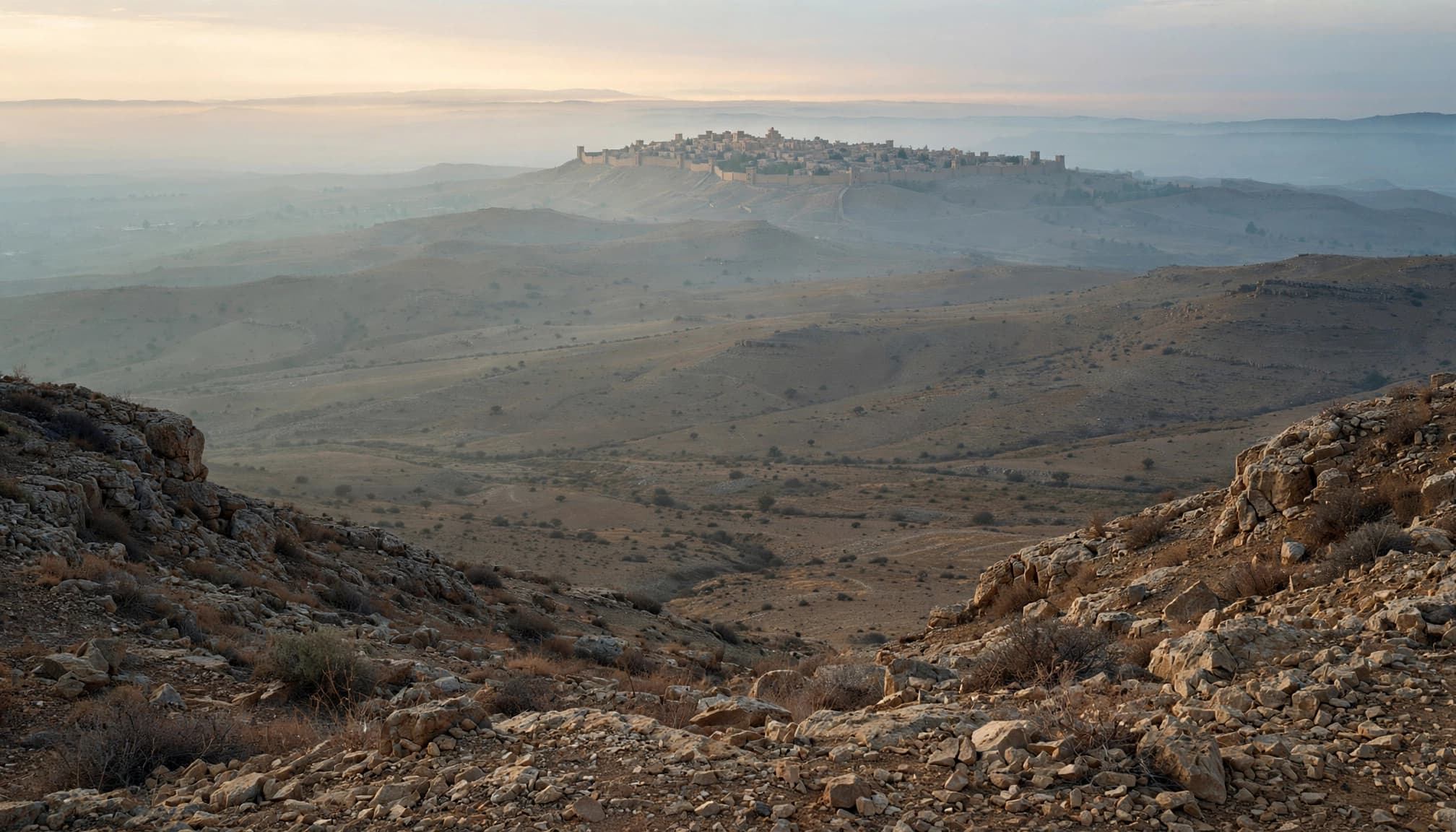
Luke 4:3-12 gives three specific offers. First, the devil tells him to turn a stone into bread. Then he offers him authority over the kingdoms of the world in exchange for worship. Finally, he takes him to Jerusalem and challenges him to throw himself from the temple.
Matthew records the last two in a different order. Matthew places the temple test before the offer of the kingdoms, while Luke places the kingdoms before the temple. The difference doesn't change the meaning of his answers. Luke's arrangement brings the account to Jerusalem, a city that will matter greatly in the rest of his Gospel.
The passage doesn't need to become a puzzle about which order is correct. Each Gospel presents the tests in a purposeful sequence. What remains consistent is his refusal to obey Satan and his reliance on the biblical text.
The First Temptation: Turn Stone into Bread
The tempter begins with his hunger: if he is the Son of God, he should command a stone to become bread. Food is not evil, and his hunger is real. The offer is to use his power independently, outside the Father's direction, to satisfy a genuine need.
He answers, "Man shall not live on bread alone" (Luke 4:4). He draws on Deuteronomy's account of Israel learning dependence in the remote setting. Physical food sustains the body, but life itself depends on God and His word.
This answer doesn't teach believers to ignore ordinary needs. He later teaches his followers to pray for daily bread. The point is that provision must not become an excuse to disobey God. Hunger isn't a permission slip to abandon trust.
The Second Temptation: The Kingdoms of the World
The tempter shows him the kingdoms of the world and offers him authority in exchange for worship. The offer is a shortcut to rule without the cross, but it demands allegiance to Satan. He refuses the bargain.
He answers, "Worship the Lord your God and serve Him only" (Luke 4:8). The words recall Israel's call to covenant faithfulness in Deuteronomy. Worship belongs to God alone. No promise of influence or authority can make idolatry acceptable.
This reaches beyond ancient kingdoms. Money, influence, recognition, or control can become objects of devotion when we value them above obedience to God. He does not treat power as worth having at any cost. His Kingdom comes through the Father's will, not Satan's terms.
The Third Temptation: Prove You Are the Son of God
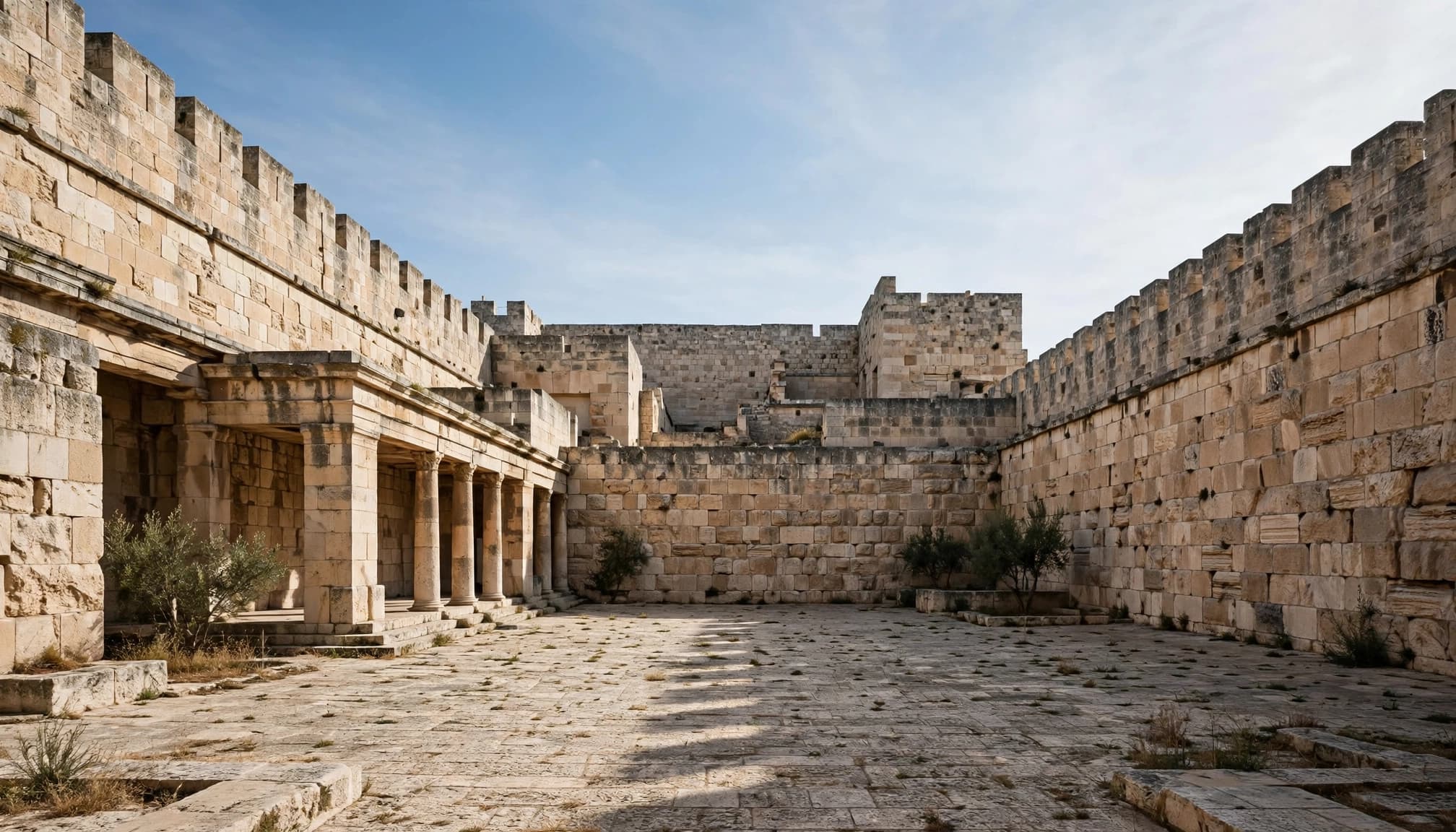
At the temple in Jerusalem, the tempter urges him to throw himself down and prove his identity. He even uses a passage from the biblical text in the challenge. The temptation is not simply to perform a spectacular act. It is to demand that God provide protection on the tempter's terms.
The Son answers, "Do not put the Lord your God to the test" (Luke 4:12). He quotes Deuteronomy again, refusing to turn trust into a demand for a sign. Faith does not require us to manufacture danger so God has to rescue us.
The tempter's use of a biblical passage is an important warning. A verse can be pulled out of context and used to support a disobedient choice. The Son answers with the biblical text in its proper context, rather than using a verse to force God's hand.
Why Jesus Answered with Deuteronomy
Jesus answers each test with Scripture. His words come from Deuteronomy: the response about bread draws on Deuteronomy 8:3, and the answers about worship and testing recall Deuteronomy 6:13 and 6:16.
These are not random quotations. Deuteronomy describes Israel's covenant life and lessons in the wilderness. Jesus responds as the faithful Son, holding fast to God's written word when the tempter offers an easier path.
The phrase "It is written" is not a magic formula. Jesus isn't winning by repeating religious words without understanding them. He knows what God's written word teaches and obeys it. We can follow His example by reading it in context, storing it in our hearts, and letting it correct our desires rather than using it to excuse them.
Jesus Was Tempted Yet Without Sin
Hebrews gives us the theological meaning of Jesus' temptation. He faced testing in every way as we do, yet He was without sin, as Hebrews 4:15 says. Jesus' experience was real, but He never yielded to evil.
This matters when we feel pressure or shame. Temptation itself is not sin. Jesus understands what it means to face a real test, and He did not surrender to the tempter's lies. His sinlessness doesn't make Him distant from our struggle. It makes Him the faithful High Priest who can bring us help.
Hebrews 2:18 says that because Jesus suffered when He faced testing, He can help those who face testing. We don't come to a Savior who has no understanding of human weakness. We come to One who remained obedient through it and can strengthen us.
Scripture and the Armor of God
Ephesians tells believers to be strong in the Lord and to put on the full armor of God. The passage names truth, righteousness, the gospel of peace, faith, salvation, and the sword of the Spirit, which is the word of God. Read Ephesians 6:10-17 alongside Luke's account, and we see that spiritual resistance is rooted in God's provision.
The sword is the word of God
He answers with Scripture because God's word is true and reliable. We shouldn't treat the Bible like a collection of slogans to throw at every problem. We learn it, understand the passage, and speak its truth when lies or the test come.
That may mean remembering what God says about forgiveness when anger wants revenge. It may mean turning away from what feeds lust, telling the truth when lying seems easier, or asking a trusted believer to pray with us. Obedience often begins with a small decision made before the test grows.
Faith is more than a phrase
The armor of God isn't a technique that lets us control every circumstance. Faith means trusting God and standing in what He has provided. We pray, stay close to God's written word, and seek help from the Church rather than trying to fight alone.
His answers also remind us to address the lie beneath the test. When Satan twists truth, we need more than a quick response. We need to know God's character and what the biblical text actually says.
Satan’s Tactics and the Believer’s Authority
The tempter's approach in the wilderness echoes his approach in Eden. He questions what God has said and mixes truth with lies. At the temple, he even quotes God's written word while twisting its use. The pattern is still recognizable: doubt God's goodness, question His word, and make disobedience sound reasonable.
We believe Satan has no rightful ownership over a child of God. When we willingly embrace sin, deception, or bitterness, we give the enemy ground to work. But we should never claim that every hardship proves a believer opened a door. Christ Himself faced a test while obeying the Spirit.
Resist deception without living in fear
Spiritual warfare is real, but the Christian life isn't meant to become an anxious search for a demon behind every problem. We stand in Christ, tell the truth, repent when we sin, pray, and remain in Godly community. He has already won the decisive victory.
Colossians 2:15 says Christ disarmed the powers and authorities and triumphed over them by the cross. That victory doesn't mean Christians never face temptation. It means Satan doesn't have the final authority over those who belong to Christ.
Jesus Returns in the Power of the Spirit
After the tempter finishes tempting Jesus, he leaves Him until an opportune time. Luke then tells us that Jesus returns to Galilee in the power of the Spirit (Luke 4:14). The remote setting is not the end of His ministry. He comes out of it and begins teaching among the people.
The wording is worth noticing. Luke first says Jesus was filled with the Spirit, then says He returned in the power of the Spirit. The Spirit's presence continues as Jesus moves into His public work.
Jesus does not leave the remote setting with the tempter's offer or a new dependence on self. He continues in the Father's purpose. The next passage shows Him reading from Isaiah in the synagogue and announcing His mission.
What This Means When You Face Temptation
Jesus' example doesn't promise that every test will disappear as soon as we quote a verse. It shows us where to turn. We depend on the Spirit, remember God's written word, and refuse to let immediate desire become our authority.
When pressure comes, we can pause and ask what it's asking us to believe about God. Is it suggesting that God won't provide? That obedience is foolish? That we must prove ourselves? Those questions help expose the lie beneath the offer.
Then we can respond with a clear act of obedience. We may need to walk away, end a conversation, confess what we've hidden, pray with another believer, or seek help from a trusted pastor. The Spirit leads us toward truth and obedience, not secrecy and compromise. If we fall, we can repent rather than surrender to shame.
Frequently Asked Questions
Which Scripture tells about Jesus being tested in the desert for forty days?
The account is in Luke 4:1-13, with parallel passages in Matthew 4:1-11 and Mark 1:12-13. Luke says he was full of the Spirit, was led away, and was tested by the devil throughout the forty-day period.
Why was Jesus led into the wilderness after His baptism?
The Spirit led him into a period of testing before his public ministry. The tempter sought to draw him into disobedience, but he remained faithful to the Father. The passage doesn't say the Spirit tempted him to sin.
Does “tempted” mean the same thing as “tested”?
The Greek word peirazō can mean to tempt or to test. Context shows the tempter was trying to move him toward sin. The event also tested and revealed his faithfulness, which is why some translations render the word as "tested."
How did Jesus answer the three temptations?
He answered with words from Scripture. He said, "Man shall not live on bread alone," called for worship and service to God alone, and refused to put God to the test. Each answer draws on Deuteronomy and rejects the invitation to disobey.
How does Jesus help believers facing temptation?
Hebrews says he was tempted yet without sin and can help those who face pressure to sin. We can ask him for help, rely on the Spirit, and use biblical teaching with understanding as we choose obedience.
The Wilderness Shows Faithful Obedience
Luke 4:1-2 shows him entering that setting full of the Spirit, facing real hunger, and meeting the tempter's test without sin. The Spirit's leading did not spare him from pressure, but he remained faithful to the Father and answered with God's written word.
When the test comes, we don't have to rely on our own strength or accept the tempter's version of the truth. We can turn to him, trust the word of God, and take the next obedient step with the help of the Spirit.
Related Posts
Luke 4:1-2 Explained: Led by the Spirit After His baptism at the Jordan, Jesus was full of the Holy Spirit and led into a remote place. He faced the devil during a forty-day fast, ate nothing, and was hungry when the fast ended. That hunger makes the first recorded offer understandable. The Spirit's leading brought Him into a difficult setting, where the fast introduced a real test.…
Holy Spirit Scriptures: 21 Century Meaning, Original Words, and God's Purpose What would life be if we never understood the heart behind every movement of God’s Spirit? Every verse that mentions the Holy Spirit points us somewhere deeper—into friendship with God, into His power for living, and into the mystery of His love and presence that started in Eden and keeps going until Jesus rules the earth in the Millennial Reign.…
Who Is the Holy Spirit? Discover God’s Helper and Friend - Genesis 1:2 The Holy Spirit is one of the most fascinating yet often misunderstood aspects of Christian theology. From the very first pages of the Bible, His presence weaves through history—pointing, guiding, and empowering God’s people. But who exactly is the Holy Spirit? Is He a person, a force, or something else entirely? Spoiler: He’s God, revealed to us as part of…
The Seven Spirits of God stand as one of the most profound and often misunderstood truths in Christian theology. Rooted deeply in Scripture, they aren’t seven separate entities but rather seven attributes of the one Holy Spirit—God revealing Himself in fullness. Isaiah 11:2 describes these [...]
The gifts of the Holy Spirit reveal the active power of God working in the lives of His people. They aren’t just distant historical records or fading Biblical accounts; they’re living because the Holy Spirit, He is living and He is God, and His transformative gifts are reaching people [...]
The phrase “tongues of fire” in Acts 2:3 sparks worldwide curiosity and spiritual wonder. It appears in Scripture to describe the Holy Spirit’s descent during Pentecost, when visible flames rested on the apostles, marking the time when God’s Spirit descended on earth, [...]
The Bible’s take on a reprobate mind isn’t just a warning or a piece of theology. It’s a wake-up call. “Reprobate mind” (from the Greek adokimos, meaning rejected or unapproved) describes what happens when people no longer care about God’s truth—they trade what’s holy for what feels good, grow numb [...]
The upper room, a sacred space in Jerusalem, holds profound significance in Christian history. Acts 2 tells us it is the gathering place for Jesus’ disciples when the Holy Spirit descended upon them during Pentecost. This transformative moment not only empowered those present but also sparked [...]
Pentecost isn’t just a Christian event; its roots stem from the Jewish celebration of Shavuot, the day Moses received the Ten Commandments from God. For Christians, Pentecost marks the moment when God poured out His Spirit and Jesus’ worldwide church empowered by the Holy Spirit and His gifts [...]
Charismatic gifts, often referred to as manifestation gifts, showcase the miraculous power of the Holy Spirit. From healing and miracles to prophecy and discernment, they serve as tangible evidence of God’s presence and transformative work. These gifts, seen throughout Biblical history, have [...]
Revelation 3:7-8 offers a powerful message to the church in Philadelphia, a message that remains relevant today. It speaks of a divine “open door” that no man can shut, given by the one who holds the Key of David. This imagery represents not only an opportunity but also God’s sovereign [...]
Have you ever wondered why the word “anointing” carries so much depth in Scripture? The idea of anointing—of sacred oil poured out on kings, priests, and prophets—echoes through the Old Testament as a symbol of God choosing, empowering, and setting apart. God didn’t leave the details of [...]
The Bible boldly declares the truth that Jesus is both fully God and fully man—a mystery that anchors the Christian faith. But what does it mean, practically, for us as believers? Jesus didn’t perform miracles or operate in the gifts of the Holy Spirit simply as God; He demonstrated how a [...]
The Antichrist
The Apostate Church
The Rapture
Angels
Book of Daniel
Giants
Judgment
Prophecy
The Apostles
Bible Prophecy
Beware of Deception
Sin
Antichrists
Demon Possession
Healing
Millennial Reign
Redemption
The Gospels
The Holy Spirit
American Prophecy
Israel
Armageddon
Forgiveness
Intercession
Prayer
Revival
The Old Testament
The Tribulation
Faith
Kingdom Of God
Bible Interpretation
Free Will
Book Of Jude
Pride
The Afterlife
The Red Dragon
We use cookies so you can have a great experience on our website. View more
Cookies settings
Accept
Decline
Privacy & Cookie policy
Privacy & Cookies policy
Cookies list
Cookie name
Active
Who we are
Our website address is: https://theholyspirit.us.
Comments
When visitors leave comments on the site we collect the data shown in the comments form, and also the visitor’s IP address and browser user agent string to help spam detection.
An anonymized string created from your email address (also called a hash) may be provided to the Gravatar service to see if you are using it. The Gravatar service privacy policy is available here: https://automattic.com/privacy/. After approval of your comment, your profile picture is visible to the public in the context of your comment.
Media
If you upload images to the website, you should avoid uploading images with embedded location data (EXIF GPS) included. Visitors to the website can download and extract any location data from images on the website.
Cookies
If you leave a comment on our site you may opt-in to saving your name, email address and website in cookies. These are for your convenience so that you do not have to fill in your details again when you leave another comment. These cookies will last for one year.
If you visit our login page, we will set a temporary cookie to determine if your browser accepts cookies. This cookie contains no personal data and is discarded when you close your browser.
When you log in, we will also set up several cookies to save your login information and your screen display choices. Login cookies last for two days, and screen options cookies last for a year. If you select "Remember Me", your login will persist for two weeks. If you log out of your account, the login cookies will be removed.
If you edit or publish an article, an additional cookie will be saved in your browser. This cookie includes no personal data and simply indicates the post ID of the article you just edited. It expires after 1 day.
Embedded content from other websites
Articles on this site may include embedded content (e.g. videos, images, articles, etc.). Embedded content from other websites behaves in the exact same way as if the visitor has visited the other website.
These websites may collect data about you, use cookies, embed additional third-party tracking, and monitor your interaction with that embedded content, including tracking your interaction with the embedded content if you have an account and are logged in to that website.
Who we share your data with
If you request a password reset, your IP address will be included in the reset email.
How long we retain your data
If you leave a comment, the comment and its metadata are retained indefinitely. This is so we can recognize and approve any follow-up comments automatically instead of holding them in a moderation queue.
For users that register on our website (if any), we also store the personal information they provide in their user profile. All users can see, edit, or delete their personal information at any time (except they cannot change their username). Website administrators can also see and edit that information.
What rights you have over your data
If you have an account on this site, or have left comments, you can request to receive an exported file of the personal data we hold about you, including any data you have provided to us. You can also request that we erase any personal data we hold about you. This does not include any data we are obliged to keep for administrative, legal, or security purposes.
Where your data is sent
Visitor comments may be checked through an automated spam detection service.