Pre-Born! gives free ultrasounds to women looking to abort their babies and 86% of those women choose to keep their babies!
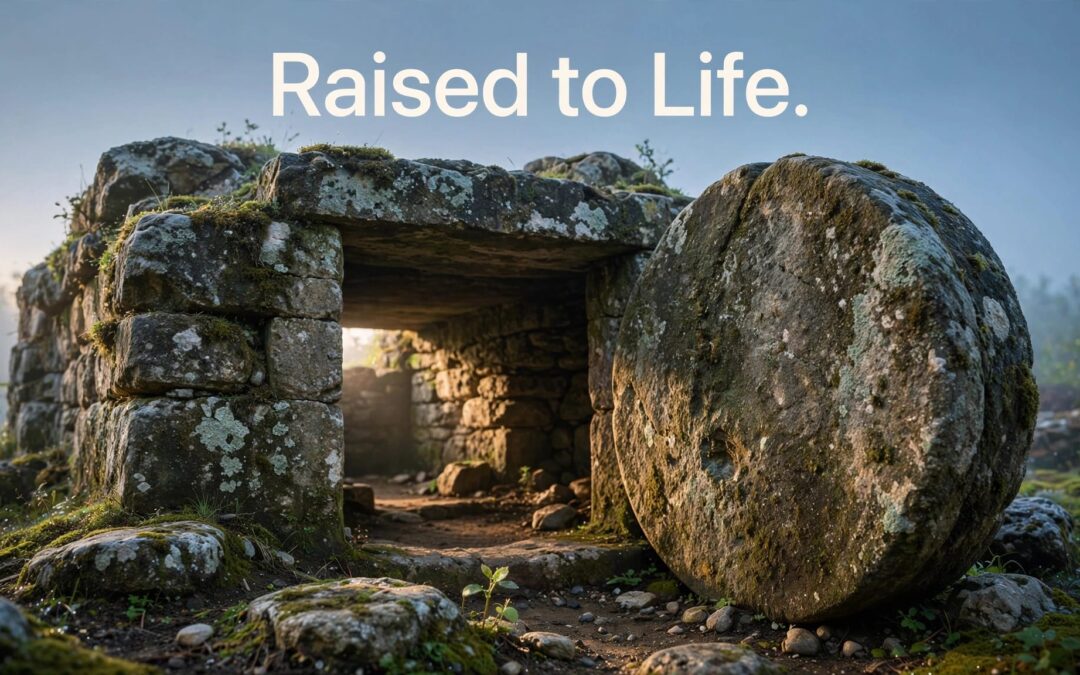
The Holy Spirit gives life, and the God who raised Jesus will also raise those who belong to Him. Scripture credits the Father, declares the Son's authority over His own life, and connects resurrection with the Spirit's life-giving work.
That gives us something solid when our bodies grow tired and death feels painfully close. Our hope rests on God's faithfulness, and the Spirit's presence assures us that His work in us reaches beyond the grave.
To understand His role in resurrection, we need to begin with Paul's promise and follow the passages surrounding it.
The Father, Son, and Holy Spirit act together in Christ's resurrection, with Scripture describing each Person's involvement.
The indwelling Spirit connects believers with Christ's risen life and the promise of future bodily resurrection.
The Spirit gives help for obedience, prayer, witness, and ministry while believers await the redemption of their bodies.
Ezekiel's dry bones concern Israel's restoration first, while revealing God's power to give life where human ability has ended.
The Spirit Who Will Raise Believers
Paul brings Christ's resurrection and our future together in Romans 8:11:
"But if the Spirit of Him who raised Jesus from the dead dwells in you, He who raised Christ from the dead will also give life to your mortal bodies through His Spirit who dwells in you."
Notice how personal that promise is. Paul moves from what God did for Jesus to what He will do for those in whom His Spirit lives.
The Spirit already dwells in believers
Paul speaks about the indwelling of the Spirit in people who belong to Christ. That means His presence belongs to our relationship with Jesus.
We don't receive spiritual life by learning enough religious language or becoming impressive church people. We receive life through faith in the Savior who died for our sins and rose again.
What a thought that is. The Holy Spirit lives within people who still need correction, patience, and help. His presence gives us reason to surrender those needs to God.
The promise reaches beyond present weakness
Paul says God "will also give life" to mortal bodies. The promise looks ahead to bodily resurrection.
Our study of the Spirit's life-giving promise follows that connection more closely. Christ has risen, the Spirit dwells within believers, and their bodies have a future in God's hands.
We shouldn't shrink that promise to having more energy today. God intends to complete His redeeming work in the whole person.
Who Raised Jesus From the Dead?
We believe Jesus Christ's resurrection is the work of the whole Godhead. The Father, Son, and Holy Spirit aren't competing for credit.
There is one God, eternally existing as three distinct Persons, as taught in the biblical doctrine of the Trinity. A Trinitarian approach recognizes Their distinct involvement without dividing God's divine power into separate pieces.
The Father raised the Son
Paul says in Romans 6:4 that Christ was raised through "the glory of the Father." Peter also announces that God raised Jesus when he preaches at Pentecost.
Why did the apostles speak this way? They were declaring that the Father had vindicated the Jesus whom people crucified. Human rejection hadn't overturned God's purpose.
Calling the Father the One who raised Jesus doesn't exclude the Spirit. Paul can name the Father as the One acting and describe His Spirit as the One through whom bodily life comes.
The Son had authority to take up His life
Jesus says in John 10:18, "I have power to lay it down, and I have power to take it again."
Earlier, in the temple discussion recorded in John's second chapter, Jesus promised to raise the temple after its destruction. John explains that He meant His own body, something the disciples understood after His resurrection.
Jesus also says His authority accords with His Father's command. We see unity here. The Son willingly gives His life, the Father raises Him, and the Spirit's life-giving work belongs within that same divine victory.
What “Made Alive by the Spirit” Means
1 Peter 3:18 says Christ suffered for sins, "the just for the unjust," so that He might bring us to God. Peter then describes Him as "being put to death in the flesh but made alive by the Spirit."
That sentence deserves careful attention, especially when we hear different translations.
Christ truly died and truly lives
Peter begins with the reason Jesus suffered. He gave Himself for sinners so that we could be brought to God.
The resurrection belongs to that saving work. Jesus' death was real, and His victory over death was real.
We shouldn't read "made alive" as though Jesus had become sinful or needed spiritual regeneration. He remained the sinless Savior. The passage concerns His death and victorious life, not a moral restoration He needed for Himself.
Why translations differ over “by” and “in”
Some translations say Jesus was made alive "by the Spirit." Others render the phrase as "made alive in the Spirit" or "in spirit."
Christians differ over whether Peter emphasizes the Holy Spirit's agency or contrasts Christ's mortal condition with His resurrection life. We understand the verse in harmony with the Spirit's life-giving work, while recognizing that this wording receives more than one interpretation.
The central claim remains clear: Jesus passed through death into life, and His victory brings sinners to God.
The Spirit of Holiness and the Risen Son
Romans 1:4 describes Jesus as declared to be the Son of God with power, according to the Spirit of holiness, through resurrection from the dead.
Did Jesus become God's Son when He rose? No. Paul describes the resurrection as a powerful declaration and vindication of Jesus as the Son of God. The resurrection didn't begin His existence or Sonship.
The resurrection publicly establishes the crucified Messiah as the living, reigning Lord.
We understand "Spirit of holiness" as a reference to the Holy Spirit. Some interpreters understand the phrase in relation to Christ's holy, divine identity. Either way, Paul's emphasis joins resurrection, holiness, and divine power.
That connection matters for daily faith. We can't separate the Spirit's power from His holiness and then ask Him to strengthen whatever we already want.
The Spirit who bears witness to the risen Son also leads people toward obedience to Him. Our desire for spiritual gifts should belong alongside our desire for a clean heart.
What good would it do to speak passionately about resurrection power while refusing the Lord whose resurrection we celebrate?
Peter Joined Resurrection, Prophecy, and Pentecost
In Acts 2, Peter explains the outpouring of the Spirit by preaching about Jesus' death, resurrection, and exaltation.
In Acts 2:24, Peter declares that God raised Him because death couldn't hold Him. He then turns to David's words in Psalm 16:10: God wouldn't abandon His Holy One to the abode of the dead or allow Him to see corruption.
David himself died and was buried. Peter therefore explains the promise as pointing beyond David to the Messiah.
Jesus' resurrection fulfilled God's purpose. His body wasn't left to decay, and His life wasn't held captive by death.
Then Peter connects the risen Lord to what the crowd was witnessing. Exalted at the Father's right hand, Jesus received the promised Holy Spirit from the Father and poured Him out.
The outpouring directs attention toward the crucified and risen Jesus. Spiritual power has a Gospel purpose.
We believe the Spirit still fills believers, gives gifts, and equips the church for ministry. Pentecost also teaches us what that ministry should proclaim: Jesus is alive, Jesus is Lord, and people must respond to Him.
Ezekiel’s Dry Bones Reveal God’s Life-Giving Power
In Ezekiel 37:1-14, the prophet sees a valley filled with very dry bones. God commands him to speak, and the bones come together.
Bodies form, but they aren't yet breathing. Life comes when breath enters them at God's command.
The vision begins with Israel’s restoration
God identifies the bones as the whole house of Israel. These are people who describe their hope as gone and themselves as cut off.
That explanation must govern how we read the vision. We shouldn't replace Israel with our personal disappointments before hearing what God says about His people.
The imagery declares that Israel's apparent hopelessness cannot defeat God's restoring purpose. He promises to open their graves, bring them into their land, and put His Spirit within them.
The Spirit gives what human effort cannot produce
The vision connects breath, wind, and spirit through its language and imagery. God eventually makes the promise plain: He will put His Spirit within His people, and they will live.
We believe the Holy Spirit is a divine Person. The images of breath and wind help describe His work, but they don't reduce Him to air or an impersonal force.
The connection with resurrection is meaningful. God gives life where there is no remaining human ability to create it.
Still, Ezekiel's vision doesn't describe the mechanics of Jesus' resurrection. It gives us an earlier Biblical witness to the God who restores through His word and Spirit.
Why Jesus Is the Firstborn From the Dead
Colossians 1:18 calls Jesus "the firstborn from the dead." But Lazarus had already been raised. So had people during the ministries of Elijah and Elisha.
How can Jesus be first?
Those earlier acts restored people to ordinary mortal life. They lived again, but they remained subject to death.
Jesus rose into victorious, imperishable life. Death would never claim Him again. His resurrection begins the new order of life His people will share.
"Firstborn" also speaks of His supremacy. He has first place over the church and over the new creation.
This helps us understand the difference between receiving a miracle now and receiving our final resurrection bodies.
We gladly pray for healing and celebrate God's miraculous works. Those gifts belong to His kindness in the present age. The resurrection promise reaches further, to life no longer subject to death.
Our hope doesn't depend on trying to stretch ordinary life forever. It rests in Jesus, the resurrection and the life, who has already entered the life He promises to His people.
The Spirit dwelling within believers connects them to that risen Lord.
What Happens to Believers’ Mortal Bodies?
The word mortal means subject to death. Paul is speaking about the bodies believers actually live in, with their weakness, aging, and vulnerability.
God's redemption doesn't treat those bodies as disposable.
Resurrection includes the body
The Christian hope includes bodily resurrection. The God who saves His people will also redeem their embodied life.
Click Our Ad to Support Us!
This means physical existence matters to Him. The body isn't an unfortunate container that God must discard to finish saving us.
Jesus' own resurrection gives that hope its foundation. The risen Savior is the same Jesus who was crucified, yet His risen life has overcome death.
We cannot explain every detail of that change. We can trust the One who promises it.
Present suffering doesn’t cancel future glory
Paul's discussion of resurrection sits within a chapter that speaks openly about suffering and waiting. Believers have the Spirit and still await the redemption of their bodies.
That explains why His presence and our physical weakness can exist together.
A tired body isn't evidence that the Holy Spirit has left. A believer receiving medical treatment hasn't stepped outside God's care.
We pray for His touch, receive appropriate help, and remain confident about His final promise.
There is something steadying about that. We can acknowledge what hurts without surrendering what God has said.
The Spirit's presence gives us reason to hope while the work of bodily redemption remains ahead.
The Holy Spirit Is God’s Pledge of Redemption
Ephesians 1:13-14 describes believers as sealed with the Holy Spirit of promise. Paul calls Him the guarantee of their inheritance until redemption is complete.
The sealing of the Holy Spirit identifies believers as God's own.
The Spirit is also the pledge of what is still coming. Older translations use "earnest," a word describing a deposit that confirms a larger commitment.
God gives His Spirit as the present assurance of the inheritance He has promised. The gift is personal because the Spirit Himself dwells within His people.
Notice where Paul places the sealing. People hear the Gospel and believe in Christ. The Spirit's presence isn't presented as a reward for becoming spiritually advanced.
We believe Christians should seek the baptism and continuing filling of the Holy Spirit. But we shouldn't make a dramatic experience the requirement for belonging to Jesus.
The seal gives assurance that encourages faithful dependence on Christ. We can approach God with confidence while remaining attentive to His correction.
He has given us more than a promise spoken at a distance. He has given His own Spirit.
The Father’s Promise and the Spirit Within
In Acts 1:4, Jesus commands His followers to wait for the Father's promise. The following discussion identifies that promise with baptism in the Holy Spirit.
Jesus had already told His disciples in His farewell teaching that the Spirit of truth would remain with them and be in them.
Indwelling means the Spirit is personally present
We sometimes speak about spiritual power as though God hands us a supply and then leaves us to manage it.
The promise is far more personal. The Holy Spirit dwells within believers. He teaches, leads, convicts, comforts, and strengthens.
That means dependence belongs at the center of Spirit-filled living. We don't graduate beyond needing Him because we understand more Scripture or have served God for many years.
His presence invites fellowship, willing obedience, and trust.
Filling equips believers for service
We believe baptism in the Holy Spirit and His continuing filling matter for the church today. His gifts, including tongues, remain active according to His will and purpose.
Believers can ask Him to fill them and make them useful in Gospel ministry.
The Spirit who prepares believers for their future also equips them to serve Jesus now.
What Resurrection Power Means in Daily Life
Ephesians 1:19-20 speaks about God's extraordinary power toward believers. Paul points to what God accomplished when He raised Christ and seated Him at His right hand.
The risen and exalted Jesus shows us the strength of the God on whom believers depend.
Power helps believers obey Jesus
What does that look like on an ordinary day?
The surrounding teaching of Romans connects life in the Spirit with putting sinful practices to death. His power meets us where obedience costs something.
We can depend on Him when pride resists repentance, when temptation returns, or when bitterness feels easier than forgiveness.
Our responsibility remains real. We turn away from sin, obey what God has said, and ask for help. The Spirit supplies what our determination alone cannot produce.
Resurrection power should make us more responsive to Jesus.
Power serves the Gospel and other people
We believe God still heals, delivers, and works miracles. We pray with expectation because the Holy Spirit remains active among His people.
Holy Spirit power equips believers to serve others, builds up the church through spiritual gifts, and helps them testify about Christ.
The question isn't merely whether something appears extraordinary. Does it agree with Scripture? Does it honor Jesus? Does it help people follow Him?
The Spirit's power belongs under Christ's lordship. We receive His help as servants who depend on Him, and we leave the results in His hands.
The Spirit Helps While Believers Groan
The whole movement of Romans 8 matters here. Paul speaks about freedom, adoption, suffering, future glory, and prayer.
Creation groans. Believers groan while waiting for bodily redemption. Then Paul says the Spirit helps in their weakness and intercedes when they don't know how to pray.
That places His help within the life believers actually experience.
Sometimes you know what to ask. Sometimes all you can bring before God is the weight of what you cannot explain.
The Spirit's ministry reaches into that weakness. Prayer doesn't depend on your ability to describe every need with perfect words.
We encourage honest prayer because God already knows the condition of His children. There is no spiritual advantage in pretending to feel strong.
You can ask for healing and admit that you're frightened. You can trust His promise while grieving someone who has died.
Christian hope gives grief a future beyond the grave, but it doesn't require us to stop loving the person we miss.
The Spirit who will give life to mortal bodies is already present with believers in their waiting.
That is why the resurrection promise offers present comfort. The One who will complete our redemption also helps us endure until that day.
Questions About the Spirit and Resurrection
Does every believer have the Holy Spirit?
Every person who belongs to Christ has His Spirit. Paul connects the Spirit's indwelling with belonging to Jesus, rather than with reaching a higher level of religious achievement.
We also believe believers should seek baptism in the Holy Spirit and continuing filling for witness and service.
Those truths belong together. The new believer can trust God's presence, and the mature believer can keep asking for fresh help.
Spiritual growth doesn't begin with pretending to possess strength. It begins with dependence on the Lord who has given His Spirit.
Can believers trust this promise when they feel spiritually dry?
Yes. The promise rests on God's work through Jesus and His faithfulness to His people.
Feelings deserve honest attention, but they aren't the foundation of resurrection hope. A season of weariness doesn't overturn Christ's victory.
We encourage you to bring that dryness to God through prayer, Scripture, repentance where needed, and fellowship with other believers.
Seek His filling without trying to manufacture an experience. The Spirit is a Person to trust and obey.
He can sustain faith even when encouragement comes slowly and obedience feels difficult.
Hope That Reaches Beyond the Grave
The Father raised Jesus, the Son had authority to take up His life, and the Holy Spirit belongs to that divine work of resurrection. This is the basis of Holy Spirit resurrection hope: the Spirit's presence in believers assures them of future bodily life.
Our bodies remain mortal, but God's promise reaches beyond their weakness. Bodily resurrection is part of the redemption Jesus secured.
While you wait, depend on the Spirit for obedience, prayer, and service. The God who has given His Spirit hasn't forgotten the future He has promised.
Related Posts
Holy Spirit Scriptures: 21 Century Meaning, Original Words, and God's Purpose What would life be if we never understood the heart behind every movement of God’s Spirit? Every verse that mentions the Holy Spirit points us somewhere deeper—into friendship with God, into His power for living, and into the mystery of His love and presence that started in Eden and keeps going until Jesus rules the earth in the Millennial Reign.…
1 Truth: Blood of Jesus: God's Life in Sinless Flesh What if the very thing running through the veins of Jesus was not just human, but the Blood of Jesus holding the actual life of God Himself, poured out for us? That sounds huge, maybe even hard to take in at first, yet Scripture keeps pulling us back to this one thread: life is in the blood, sin corrupts human…
Who Is the Holy Spirit? Discover God’s Helper and Friend - Genesis 1:2 The Holy Spirit is one of the most fascinating yet often misunderstood aspects of Christian theology. From the very first pages of the Bible, His presence weaves through history—pointing, guiding, and empowering God’s people. But who exactly is the Holy Spirit? Is He a person, a force, or something else entirely? Spoiler: He’s God, revealed to us as part of…
The Seven Spirits of God stand as one of the most profound and often misunderstood truths in Christian theology. Rooted deeply in Scripture, they aren’t seven separate entities but rather seven attributes of the one Holy Spirit—God revealing Himself in fullness. Isaiah 11:2 describes these [...]
The gifts of the Holy Spirit reveal the active power of God working in the lives of His people. They aren’t just distant historical records or fading Biblical accounts; they’re living because the Holy Spirit, He is living and He is God, and His transformative gifts are reaching people [...]
The phrase “tongues of fire” in Acts 2:3 sparks worldwide curiosity and spiritual wonder. It appears in Scripture to describe the Holy Spirit’s descent during Pentecost, when visible flames rested on the apostles, marking the time when God’s Spirit descended on earth, [...]
The Bible’s take on a reprobate mind isn’t just a warning or a piece of theology. It’s a wake-up call. “Reprobate mind” (from the Greek adokimos, meaning rejected or unapproved) describes what happens when people no longer care about God’s truth—they trade what’s holy for what feels good, grow numb [...]
The upper room, a sacred space in Jerusalem, holds profound significance in Christian history. Acts 2 tells us it is the gathering place for Jesus’ disciples when the Holy Spirit descended upon them during Pentecost. This transformative moment not only empowered those present but also sparked [...]
Pentecost isn’t just a Christian event; its roots stem from the Jewish celebration of Shavuot, the day Moses received the Ten Commandments from God. For Christians, Pentecost marks the moment when God poured out His Spirit and Jesus’ worldwide church empowered by the Holy Spirit and His gifts [...]
Charismatic gifts, often referred to as manifestation gifts, showcase the miraculous power of the Holy Spirit. From healing and miracles to prophecy and discernment, they serve as tangible evidence of God’s presence and transformative work. These gifts, seen throughout Biblical history, have [...]
Revelation 3:7-8 offers a powerful message to the church in Philadelphia, a message that remains relevant today. It speaks of a divine “open door” that no man can shut, given by the one who holds the Key of David. This imagery represents not only an opportunity but also God’s sovereign [...]
Have you ever wondered why the word “anointing” carries so much depth in Scripture? The idea of anointing—of sacred oil poured out on kings, priests, and prophets—echoes through the Old Testament as a symbol of God choosing, empowering, and setting apart. God didn’t leave the details of [...]
The Bible boldly declares the truth that Jesus is both fully God and fully man—a mystery that anchors the Christian faith. But what does it mean, practically, for us as believers? Jesus didn’t perform miracles or operate in the gifts of the Holy Spirit simply as God; He demonstrated how a [...]
The Antichrist
The Apostate Church
The Rapture
Angels
Book of Daniel
Giants
Judgment
Prophecy
The Apostles
Bible Prophecy
Beware of Deception
Sin
Antichrists
Demon Possession
Healing
Millennial Reign
Redemption
The Gospels
The Holy Spirit
American Prophecy
Israel
Armageddon
Forgiveness
Intercession
Prayer
Revival
The Old Testament
The Tribulation
Faith
Kingdom Of God
Bible Interpretation
Free Will
Book Of Jude
Pride
The Afterlife
The Red Dragon
We use cookies so you can have a great experience on our website. View more
Cookies settings
Accept
Decline
Privacy & Cookie policy
Privacy & Cookies policy
Cookies list
Cookie name
Active
Who we are
Our website address is: https://theholyspirit.us.
Comments
When visitors leave comments on the site we collect the data shown in the comments form, and also the visitor’s IP address and browser user agent string to help spam detection.
An anonymized string created from your email address (also called a hash) may be provided to the Gravatar service to see if you are using it. The Gravatar service privacy policy is available here: https://automattic.com/privacy/. After approval of your comment, your profile picture is visible to the public in the context of your comment.
Media
If you upload images to the website, you should avoid uploading images with embedded location data (EXIF GPS) included. Visitors to the website can download and extract any location data from images on the website.
Cookies
If you leave a comment on our site you may opt-in to saving your name, email address and website in cookies. These are for your convenience so that you do not have to fill in your details again when you leave another comment. These cookies will last for one year.
If you visit our login page, we will set a temporary cookie to determine if your browser accepts cookies. This cookie contains no personal data and is discarded when you close your browser.
When you log in, we will also set up several cookies to save your login information and your screen display choices. Login cookies last for two days, and screen options cookies last for a year. If you select "Remember Me", your login will persist for two weeks. If you log out of your account, the login cookies will be removed.
If you edit or publish an article, an additional cookie will be saved in your browser. This cookie includes no personal data and simply indicates the post ID of the article you just edited. It expires after 1 day.
Embedded content from other websites
Articles on this site may include embedded content (e.g. videos, images, articles, etc.). Embedded content from other websites behaves in the exact same way as if the visitor has visited the other website.
These websites may collect data about you, use cookies, embed additional third-party tracking, and monitor your interaction with that embedded content, including tracking your interaction with the embedded content if you have an account and are logged in to that website.
Who we share your data with
If you request a password reset, your IP address will be included in the reset email.
How long we retain your data
If you leave a comment, the comment and its metadata are retained indefinitely. This is so we can recognize and approve any follow-up comments automatically instead of holding them in a moderation queue.
For users that register on our website (if any), we also store the personal information they provide in their user profile. All users can see, edit, or delete their personal information at any time (except they cannot change their username). Website administrators can also see and edit that information.
What rights you have over your data
If you have an account on this site, or have left comments, you can request to receive an exported file of the personal data we hold about you, including any data you have provided to us. You can also request that we erase any personal data we hold about you. This does not include any data we are obliged to keep for administrative, legal, or security purposes.
Where your data is sent
Visitor comments may be checked through an automated spam detection service.