Pre-Born! gives free ultrasounds to women looking to abort their babies and 86% of those women choose to keep their babies!
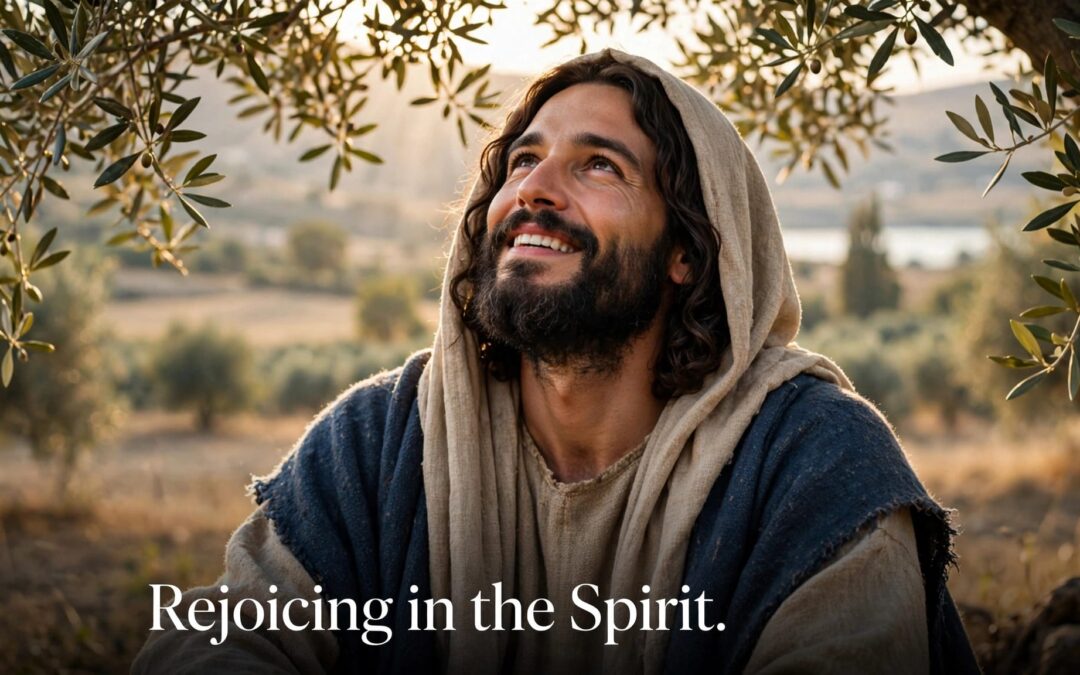
The Luke 10:21 meaning becomes clearer when we read it beside the disciples' return from their mission. Jesus rejoices in the Holy Spirit, praises the Father, and speaks of truth revealed to little children. His joy points beyond a successful day of ministry to God's gracious work of making the Son known.
This verse can sound as if God rejects thoughtful or educated people. That isn't the point. Jesus warns against pride and self-sufficiency, while honoring the humble trust that receives what God reveals. Let's begin with what happened just before He prayed.
Jesus had sent His followers to proclaim the Kingdom of God and minister to people in the towns He would visit. When they returned, they were full of joy. Their report was that even demons submitted to them in Jesus' name. Read the full passage in Luke 10:17-24 to see how their mission, Jesus' response, and His prayer fit together.
The number of disciples varies by translation. The NKJV calls them "the seventy," while the BibleHub text of Luke 10:17 uses "the seventy-two." Either way, Luke's focus is on the group Jesus sent and the authority they exercised in His name.
The disciples saw the Kingdom at work
Their return wasn't a report of personal achievement. The disciples recognized that the evil spirits submitted "in Your name." They had acted under Jesus' authority, not their own. Their experience offered a visible sign that the Kingdom of God was advancing against the works of the enemy.
Luke says Jesus had also instructed them to heal the sick and announce that God's Kingdom had come near. The mission joined words with action. They proclaimed what Jesus had sent them to proclaim, and they saw His authority at work.
Jesus redirects their joy
Jesus doesn't dismiss their report. He tells them He saw Satan fall like lightning and speaks of authority over the power of the enemy. But He also corrects the center of their celebration: they should rejoice most because their names are written in Heaven.
That correction prepares us for verse 21. The disciples are happy about what happened through them. Jesus rejoices in the Father's saving work and the revelation of His Kingdom. Ministry matters, but our deepest joy rests in belonging to God.
What does “in that same hour” tell us?
Luke places Jesus' prayer immediately after the disciples' return and His instruction about where their joy should rest. The phrase "in that same hour" ties His rejoicing to this moment. Jesus has just heard their report and spoken about the authority given to them, then He turns to the Father in praise.
The wording gives us a connected scene, not a detached saying about education or intelligence. The disciples have witnessed the Kingdom at work, and Jesus responds with joy in the Holy Spirit as He prays. He sees God's purpose unfolding through people who depend on Him.
We shouldn't force the phrase to give us an exact minute-by-minute schedule. Luke's point is the close connection between the mission, the return, Jesus' teaching, and His prayer. His joy rises from God's work, not from the disciples' ability to impress Him.
That matters because the disciples' mission was not a display of human skill. They went because Jesus sent them. They returned with a report of what His authority had done. The moment calls for thanksgiving, and Jesus gives thanks to the Father, "Lord of Heaven and earth."
Why does Jesus rejoice in the Holy Spirit?
Luke says Jesus rejoiced "in the Spirit." Some translations express the phrase as "full of joy through the Holy Spirit." The wording connects Jesus' joy with the Spirit's presence and work. His rejoicing isn't merely a reaction to good news. It is Spirit-inspired joy expressed as praise offered to God.
His joy is exultant
The Greek verb agalliaō means to rejoice greatly, exult, or be exceedingly glad. It describes joy that rises with force, not a faint sense of approval. Jesus' prayer carries delight and gratitude.
That does not mean He is celebrating because His followers have become impressive. The disciples' success is a sign of God's Kingdom, but Jesus has already directed them away from boasting in their authority. He is glad because the Father is revealing His purpose and drawing people into the life of the Kingdom.
The Holy Spirit is active in Jesus’ ministry
The phrase "in the Spirit" points to the Holy Spirit as actively present in Jesus' life and ministry. The preposition translated "in" or "through" can express joy inspired by, or caused by, the Spirit. Jesus' praise is not disconnected from the Spirit's work.
We believe the Holy Spirit is God's Spirit, present and working, not a vague feeling or a distant influence. Luke repeatedly shows Him guiding and empowering God's work. For more passages on His work, see our collection of Bible verses about the Holy Spirit.
What does “hidden these things” mean?
Jesus thanks the Father for hiding "these things" from the wise and understanding and revealing them to little children. The contrast can sound troubling if we read "hidden" as though God were playing a cruel game with sincere people. The surrounding verses point to something different: God makes His truth known as a gift, and human pride cannot claim it as a prize.
The "things" include the truth about God's Kingdom and the identity of Jesus. The disciples have seen the Kingdom demonstrated in Jesus' name. Yet the deepest meaning of what they witnessed isn't reached by observation alone. God must reveal it.
Hiddenness exposes self-reliance
Jesus isn't saying that God conceals truth from everyone who thinks carefully. Scripture itself calls people to seek wisdom, and Jesus teaches with reason and clarity. The warning is about a heart that trusts its own status, understanding, or power so fully that it refuses to receive from God.
A person can look at the same signs and draw a different conclusion. Some may explain away God's work because they've already decided that God cannot be acting. In that case, the obstacle isn't a lack of evidence alone. Pride can close the heart before a person is willing to listen.
Revelation is a gift
Jesus says the Father reveals truth to little children. The image isn't of people who lack the ability to think. It's of people who know they need help. They receive rather than boast, listen rather than presume, and trust God rather than treat spiritual understanding as a personal achievement.
This keeps the verse from becoming an excuse for careless thinking. Humility doesn't mean we stop asking questions or testing what we hear against Scripture. It means we come to God willing to be taught, including when His truth corrects what we assumed.
Who are the “wise and understanding”?
Jesus contrasts people who rely on being wise and learned with those who receive spiritual truth dependently. In Jesus' setting, that warning would have landed sharply among those who held religious status or assumed their learning made them secure. Their problem wasn't that they had studied. It was that pride could make them resistant to Jesus.
The language in Luke's verse has been rendered in different ways. The KJV says "wise and prudent," while translations such as the NASB and CSB use "infants" for the contrast that follows. These choices help show the tension between human confidence and dependent trust.
Education isn’t the enemy
We shouldn't turn the verse into a claim that educated people can't believe. Learning isn't the same as pride, and a thoughtful believer can depend fully on God. The Bible's warning is against self-sufficiency, which can appear in people with many kinds of backgrounds.
Some devotional readings observe that education can sometimes encourage a person to trust human explanations more than God. That's a caution about how we use knowledge, not a rule about every educated person. We can study the created world and still honor its Creator.
Human explanations can leave God out
God works within the order He created, and His work may come through ordinary means. Yet a skeptic may look at an event and explain it in a way that leaves God out altogether. That response doesn't prove the explanation is wrong, but it can reveal a decision to exclude God before considering what He might be doing.
Jesus challenges the assumption that human reason is the highest authority. Our minds are gifts from God. They serve us well when they remain open to His truth.
Who are the “little children”?
The term nēpios can refer to an infant or young child. In this verse, Jesus uses the image to describe people who receive God's truth with humility and dependence. He isn't praising ignorance. He is showing the posture of a person who knows they need the Father.
The translations bring out different shades of that picture. The KJV says "babes." The NASB and CSB use "infants," while the NLT says "childlike." The GNT, as quoted in a devotional discussion of the verse, uses "unlearned." These words all point toward low status or dependence, not toward a lack of worth.
A child receives without boasting
A small child depends on a parent for protection, direction, and provision. The child doesn't earn the parent's care by proving superior knowledge. That simple picture helps us understand Jesus' contrast. God's truth is received as a gift, not earned through rank or cleverness.
To be childlike in faith is to trust the Father, not to become childish in judgment. We can ask honest questions, learn carefully, and grow in understanding while still knowing that God is the source of truth.
Humility isn’t self-hatred
Jesus doesn't tell people to think they are worthless. Humility is not denying the gifts God has given us. It is recognizing that our abilities cannot save us or make us the source of truth. We can be confident in what God has given while remaining dependent on Him.
That is why this verse offers encouragement rather than shame. You don't need a title, a perfect record, or a reputation for being clever before you can come to Jesus. God reveals His truth to those who are willing to receive it.
What does the Father reveal about the Son?
The next verse gives a strong clue about what Jesus means by "these things." In Luke 10:22, Jesus says that no one knows who the Son is except God, and no one knows who God is except the Son and those to whom the Son chooses to reveal Him.
The hidden and revealed truth includes Jesus' true identity. The disciples have seen demons submit in His name, but the meaning of that authority reaches beyond a successful mission. Jesus is the Son who reveals God. Knowing who He is is central to understanding the Kingdom.
The Son makes the Father known
Jesus' words show a unique relationship between the Father and the Son. God knows the Son fully, and the Son knows God. People don't arrive at that knowledge through status or human achievement. The Son reveals God to those He has chosen.
This is why the passage isn't simply about the disciples being more humble than other people. Jesus is describing God's own work. God reveals, the Son makes Him known, and the Spirit fills Jesus with joy as He praises God.
Revelation points us to Jesus
Spiritual insight doesn't make a person the center of attention. It directs us toward Christ. When the Holy Spirit helps us understand Scripture, the fruit should be greater trust in Jesus, love for God, and faithful obedience, not a sense of superiority over those who see differently.
The truth revealed here isn't secret information meant to make a select group feel special. It's the good news that God is made known through the Son. Jesus' words invite us to receive Him, not to boast that we possess knowledge others lack.
What do the Greek words add to the meaning?
A word study can clarify Luke's language, but a definition can't replace the surrounding passage. The words help us notice how strong Jesus' joy is and how closely revelation and knowledge are connected in His prayer.
The key terms don't turn the verse into a code. They help us hear its emphasis: Jesus is exultant in the Spirit, the Father reveals what human pride can't claim, and the Son makes the Father known.
Agalliaō describes great joy
As noted above, agalliaō means to exult or rejoice greatly. Its force makes the scene vivid. Jesus isn't giving a polite nod to the disciples' report. He responds with full-hearted joy in the Spirit and thanksgiving to God.
Click Our Ad to Support Us!
That joy isn't shallow excitement about success. Jesus has just told the disciples to rejoice in their salvation above their authority over spirits. His own joy also rests in God's purpose, not in human acclaim.
“In” or “through” the Spirit
Translations differ between "in the Spirit" and "through the Holy Spirit." The small preposition behind the phrase can suggest that the Spirit inspires or causes the rejoicing. We shouldn't reduce the words to a mere description of Jesus' mood.
Luke presents the Holy Spirit as personally active in Jesus' ministry. Jesus' praise in this moment is Spirit-filled, and the Spirit's work is joined to God's revelation of the Son.
What do “reveal” and “know” mean in verses 21-22?
The verb apokalyptō means to reveal, uncover, or disclose. It appears in both verses 21 and 22. The repetition joins God's revealing of truth to Jesus' revealing of the Father. What was hidden is brought into the open by God's action.
That doesn't mean every spiritual question is answered at once. The disciples still have much to learn. Revelation here means that God makes the central truth known: the Kingdom has come near in Jesus, and the Son shows us who God is.
Knowing is more than collecting facts
The verb ginōskō means to know, recognize, or come to know. In Luke 10:22, its setting emphasizes relationship and recognition. Jesus is not describing a detached list of facts about God. He speaks of the unique knowledge between the Father and the Son.
The Son's revelation brings people into a true knowledge of God. This is personal, but it is not private speculation. We receive it through Jesus and measure what we believe by Scripture.
Understanding isn’t spiritual bragging
Luke also uses the Greek word for understanding, sunetos, which can refer to intelligence or discernment. The word itself does not condemn intelligence. Jesus' point comes through the contrast: human ability cannot replace God's revelation.
We may study the words, compare translations, and examine the context. Those are good practices when they serve truth. But they don't give us grounds to boast. God remains the source of what we know about the Son.
Why is the Father pleased to reveal truth this way?
Jesus closes His prayer by saying this was pleasing in the Father's sight, or according to His good pleasure. The verse doesn't give us a full explanation of every reason God reveals truth to some and not others. It does tell us that revelation is God's free choice, not a human entitlement.
That is important. If people could demand knowledge of God as payment for their intelligence, they could treat Him as though He owed them. Jesus instead gives thanks to the Father, "Lord of Heaven and earth." The One who made all things is free to reveal Himself as He chooses.
God's will does not make human response meaningless. Jesus calls people to hear, believe, and follow Him. But we don't save ourselves by being clever enough to discover God. God's gift comes first, and our right response is to receive it with humility and gratitude.
We can bring difficult questions to God without pretending to know more than Scripture says. The verse makes His freedom clear, and it presents His revelation as good pleasure. We can trust His character even where the passage doesn't answer every question we might ask.
How does Luke 10:21 connect to 1 Corinthians 1?
Paul develops a related theme in 1 Corinthians 1:18-26. The message of the cross appears foolish to those who rely on worldly standards of wisdom, yet it is the power of God to those who are being saved. Paul also points out that not many of the called were wise by human standards.
Paul is not saying that Christian faith requires us to reject learning. He shows that human prestige cannot make the cross impressive to a heart committed to self-rule. God's way of saving people overturns the idea that we can earn our place through status or intellect.
The cross changes what counts as wisdom
The cross looked like weakness and defeat to the world. Through Jesus' death and resurrection, God accomplished salvation. What human pride calls foolish, God reveals as the power of salvation.
That echoes Luke 10:21. The disciples may appear ordinary, but Jesus rejoices that the Father has revealed His truth to them. Neither the cross nor the disciples' mission gives human pride a reason to boast. Both point to God's power and grace.
The Spirit leads us toward Christ
We believe the Holy Spirit remains active in believers today. His work isn't to make us appear impressive or give us a reason to look down on others. He helps us see Jesus, understand Scripture, pray, and bear witness to the Kingdom.
Spiritual understanding should lead to worship and service. A claim of revelation that feeds arrogance has missed the spirit of Jesus' praise. The Spirit's work glorifies Christ and turns our attention toward God.
How does John 6 help explain revelation and faith?
Jesus says in John 6:44 and 6:65 that no one can come to Him unless God draws or enables that person. In the same chapter, John 6 records Jesus teaching that His words are Spirit and life, and that some of His hearers did not believe.
This doesn't mean people are machines or that Jesus' invitation is insincere. Faith isn't a self-made achievement. We need God to draw us and the Spirit to give life. He initiates, and we respond to His call.
The Father draws people to the Son
John's Gospel agrees with Luke's emphasis on revelation. The Father is at work in people who come to Jesus. The Son reveals Him and receives those who come.
That truth humbles us. If we believe, we have no basis for pride over those who don't. We can pray for others, speak the Gospel clearly, and trust God to work in hearts. We don't force faith through argument or personality.
The Spirit gives life
Jesus' words about the Spirit and life also keep the passage from becoming a lesson in intellectual ability. A person may understand a set of statements without receiving their spiritual truth. The Holy Spirit gives life and turns the heart toward Jesus.
We should still speak plainly and answer honest questions. God uses words, Scripture, relationships, and ordinary circumstances. The Spirit's work doesn't cancel our responsibility to witness. It reminds us that the results belong to God.
Why did Jesus mention prophets and kings?
Afterward, Jesus turns privately to His disciples and calls their eyes blessed. Many prophets and kings had wanted to see what the disciples were seeing and hear what they were hearing, but they did not. Read Luke 10:23-24 alongside the preceding passage.
The disciples were living through a moment long awaited in Israel's history. The promised King was among them. They were hearing His teaching, watching His authority, and seeing the Kingdom proclaimed in their own time.
Privilege should lead to gratitude
The disciples didn't receive this privilege because they were greater than the prophets and kings who came before them. They were blessed because God had brought them into the moment when Jesus' ministry was unfolding. Their proper response was gratitude, not superiority.
This also gives us perspective. We have the completed witness of Scripture and the good news of Jesus' death and resurrection. We should treasure that gift without imagining that it makes us better than people who have not yet believed.
The Kingdom is both announced and demonstrated
The disciples proclaimed the Kingdom and witnessed spiritual authority in Jesus' name. Luke's passage shows that God's reign was openly announced and demonstrated with power. Their return, Jesus' praise, and His words about the prophets all belong to one movement of revelation.
For a wider study of Jesus' teaching, see what the Bible teaches about the Kingdom of God. Luke 10 reminds us that the Kingdom is not a human project built through reputation. It comes through God's work and is received by faith.
What does Luke 10:21 mean for everyday faith?
This verse invites us to bring both our understanding and our need to God. We can read Scripture carefully, ask questions, and learn from others. At the same time, we should admit when confidence has become self-reliance.
When something good happens in ministry, we can rejoice without making ourselves the center. The disciples were right to be glad that evil spirits submitted in Jesus' name. Jesus reminded them that salvation is a greater reason for joy. We can celebrate answered requests and give thanks to the One who works.
Ask the Spirit to make Jesus clear
When we read a difficult passage, we can seek God's help without expecting the Holy Spirit to contradict Scripture. We can ask Him to expose our assumptions, help us see the text clearly, and shape our response to Jesus.
Speaking with God doesn't replace study. Study doesn't replace communion with Him. They belong together in a life that depends on God. Our guide to praying in the Holy Spirit considers how communion with God can keep us attentive to Scripture and open to the Spirit's help.
Receive truth without looking down on others
If God has helped us understand something, we have no reason to treat others as inferior. The Father reveals by grace. That truth should make us patient, grateful, and willing to explain our hope with humility.
We can also remember that ordinary circumstances don't rule out God's activity. God may work through people, words, and events that appear familiar. We shouldn't label every event supernatural, but we also shouldn't explain God out of every situation before we have listened.
Key takeaways from Luke 10:21
Jesus' praise follows the disciples' return from their mission, where they reported that evil spirits submitted in His name.
Jesus rejoices in the Holy Spirit and gives thanks to the Father, the Lord of Heaven and earth.
The verb agalliaō describes great joy or exultation.
"The wise and understanding" are not simply educated people. Jesus warns about pride and self-sufficiency.
"Little children" describes humble people who receive God's truth with trust and dependence.
God reveals the truth about the Son, and the Son makes the Father known.
Revelation is a gift of grace, so spiritual understanding is a reason for gratitude, not boasting.
Jesus redirects the disciples' joy from spiritual authority to the deeper blessing of belonging to God.
Frequently asked questions about Luke 10:21
Why does Jesus rejoice right after the disciples return?
The disciples have returned with news that demons submit to them in Jesus' name. Jesus sees their mission as part of God's Kingdom work, then gives thanks because God is revealing His truth. His joy is Spirit-filled and centered on God's purpose, not on human achievement.
Does God hide spiritual truth from educated people?
No. Luke 10:21 doesn't condemn education. It warns against trusting status, intellect, or personal ability in place of God. A learned person can receive God's truth with humility, just as an uneducated person can be proud or self-reliant.
Who are the little children in this verse?
Jesus uses the image for humble people who receive truth with dependence. They know they need God and don't treat understanding as something they earned. The phrase describes a posture of trust, not a requirement to be young or unlearned.
What does it mean that no one knows the Son except God?
In Luke 10:22, Jesus describes the unique knowledge between God and the Son. He also says the Son reveals the Father to those He chooses. We know God through Jesus, not by climbing our way to Him through human achievement.
Let Jesus’ joy lead us back to the Father
Luke 10:21 joins the disciples' mission to Jesus' praise. Their authority came from Him, and their deepest joy was belonging to God. Jesus rejoiced because the Father was revealing the Son and making His Kingdom known.
We can study the verse with care and still come to it as little children, ready to receive. The Holy Spirit points us to Jesus, and Jesus makes God known. That is a reason to give thanks.
Related Posts
Humble Hearts, Strong Grace: Abraham’s Faith God’s Power Proverbs 3:34 We all feel that tug of pride when we want to be right, noticed, or in control. And we all know the moment we need help that only God can give. Scripture speaks straight to that tension: “Surely He scorns the scornful, but gives grace to the humble” (Proverbs 3:34), echoed by James, “God resists the proud, but gives grace…
Reprobate Mind: 5 Warning Signs and Hope for Change The Bible’s take on a reprobate mind isn’t just a warning or a piece of theology. It’s a wake-up call. “Reprobate mind” (from the Greek adokimos, meaning rejected or unapproved) describes what happens when people no longer care about God’s truth—they trade what’s holy for what feels good, grow numb to right and wrong, and God lets go. It’s mentioned…
John 16:14 Explained: Why the Spirit Glorifies Jesus The John 16:14 meaning is that the Spirit reveals Jesus' greatness and makes what belongs to Him known to those He taught. That is the heart of this verse, and it gives you a foundation for understanding the Spirit's work. We believe in the Holy Spirit's presence, power, and gifts today; the Holy Spirit glorifies Christ, and knowing Jesus remains…
The Seven Spirits of God stand as one of the most profound and often misunderstood truths in Christian theology. Rooted deeply in Scripture, they aren’t seven separate entities but rather seven attributes of the one Holy Spirit—God revealing Himself in fullness. Isaiah 11:2 describes these [...]
The gifts of the Holy Spirit reveal the active power of God working in the lives of His people. They aren’t just distant historical records or fading Biblical accounts; they’re living because the Holy Spirit, He is living and He is God, and His transformative gifts are reaching people [...]
The phrase “tongues of fire” in Acts 2:3 sparks worldwide curiosity and spiritual wonder. It appears in Scripture to describe the Holy Spirit’s descent during Pentecost, when visible flames rested on the apostles, marking the time when God’s Spirit descended on earth, [...]
The Bible’s take on a reprobate mind isn’t just a warning or a piece of theology. It’s a wake-up call. “Reprobate mind” (from the Greek adokimos, meaning rejected or unapproved) describes what happens when people no longer care about God’s truth—they trade what’s holy for what feels good, grow numb [...]
The upper room, a sacred space in Jerusalem, holds profound significance in Christian history. Acts 2 tells us it is the gathering place for Jesus’ disciples when the Holy Spirit descended upon them during Pentecost. This transformative moment not only empowered those present but also sparked [...]
Pentecost isn’t just a Christian event; its roots stem from the Jewish celebration of Shavuot, the day Moses received the Ten Commandments from God. For Christians, Pentecost marks the moment when God poured out His Spirit and Jesus’ worldwide church empowered by the Holy Spirit and His gifts [...]
Charismatic gifts, often referred to as manifestation gifts, showcase the miraculous power of the Holy Spirit. From healing and miracles to prophecy and discernment, they serve as tangible evidence of God’s presence and transformative work. These gifts, seen throughout Biblical history, have [...]
Revelation 3:7-8 offers a powerful message to the church in Philadelphia, a message that remains relevant today. It speaks of a divine “open door” that no man can shut, given by the one who holds the Key of David. This imagery represents not only an opportunity but also God’s sovereign [...]
Have you ever wondered why the word “anointing” carries so much depth in Scripture? The idea of anointing—of sacred oil poured out on kings, priests, and prophets—echoes through the Old Testament as a symbol of God choosing, empowering, and setting apart. God didn’t leave the details of [...]
The Bible boldly declares the truth that Jesus is both fully God and fully man—a mystery that anchors the Christian faith. But what does it mean, practically, for us as believers? Jesus didn’t perform miracles or operate in the gifts of the Holy Spirit simply as God; He demonstrated how a [...]
The Antichrist
The Apostate Church
The Rapture
Angels
Book of Daniel
Giants
Judgment
Prophecy
The Apostles
Bible Prophecy
Beware of Deception
Sin
Antichrists
Demon Possession
Healing
Millennial Reign
Redemption
The Gospels
The Holy Spirit
American Prophecy
Israel
Armageddon
Forgiveness
Intercession
Prayer
Revival
The Old Testament
The Tribulation
Faith
Kingdom Of God
Bible Interpretation
Free Will
Book Of Jude
Pride
The Afterlife
The Red Dragon
We use cookies so you can have a great experience on our website. View more
Cookies settings
Accept
Decline
Privacy & Cookie policy
Privacy & Cookies policy
Cookies list
Cookie name
Active
Who we are
Our website address is: https://theholyspirit.us.
Comments
When visitors leave comments on the site we collect the data shown in the comments form, and also the visitor’s IP address and browser user agent string to help spam detection.
An anonymized string created from your email address (also called a hash) may be provided to the Gravatar service to see if you are using it. The Gravatar service privacy policy is available here: https://automattic.com/privacy/. After approval of your comment, your profile picture is visible to the public in the context of your comment.
Media
If you upload images to the website, you should avoid uploading images with embedded location data (EXIF GPS) included. Visitors to the website can download and extract any location data from images on the website.
Cookies
If you leave a comment on our site you may opt-in to saving your name, email address and website in cookies. These are for your convenience so that you do not have to fill in your details again when you leave another comment. These cookies will last for one year.
If you visit our login page, we will set a temporary cookie to determine if your browser accepts cookies. This cookie contains no personal data and is discarded when you close your browser.
When you log in, we will also set up several cookies to save your login information and your screen display choices. Login cookies last for two days, and screen options cookies last for a year. If you select "Remember Me", your login will persist for two weeks. If you log out of your account, the login cookies will be removed.
If you edit or publish an article, an additional cookie will be saved in your browser. This cookie includes no personal data and simply indicates the post ID of the article you just edited. It expires after 1 day.
Embedded content from other websites
Articles on this site may include embedded content (e.g. videos, images, articles, etc.). Embedded content from other websites behaves in the exact same way as if the visitor has visited the other website.
These websites may collect data about you, use cookies, embed additional third-party tracking, and monitor your interaction with that embedded content, including tracking your interaction with the embedded content if you have an account and are logged in to that website.
Who we share your data with
If you request a password reset, your IP address will be included in the reset email.
How long we retain your data
If you leave a comment, the comment and its metadata are retained indefinitely. This is so we can recognize and approve any follow-up comments automatically instead of holding them in a moderation queue.
For users that register on our website (if any), we also store the personal information they provide in their user profile. All users can see, edit, or delete their personal information at any time (except they cannot change their username). Website administrators can also see and edit that information.
What rights you have over your data
If you have an account on this site, or have left comments, you can request to receive an exported file of the personal data we hold about you, including any data you have provided to us. You can also request that we erase any personal data we hold about you. This does not include any data we are obliged to keep for administrative, legal, or security purposes.
Where your data is sent
Visitor comments may be checked through an automated spam detection service.