Matthew 27, Resurrection, and the Saints in Abraham’s Bosom
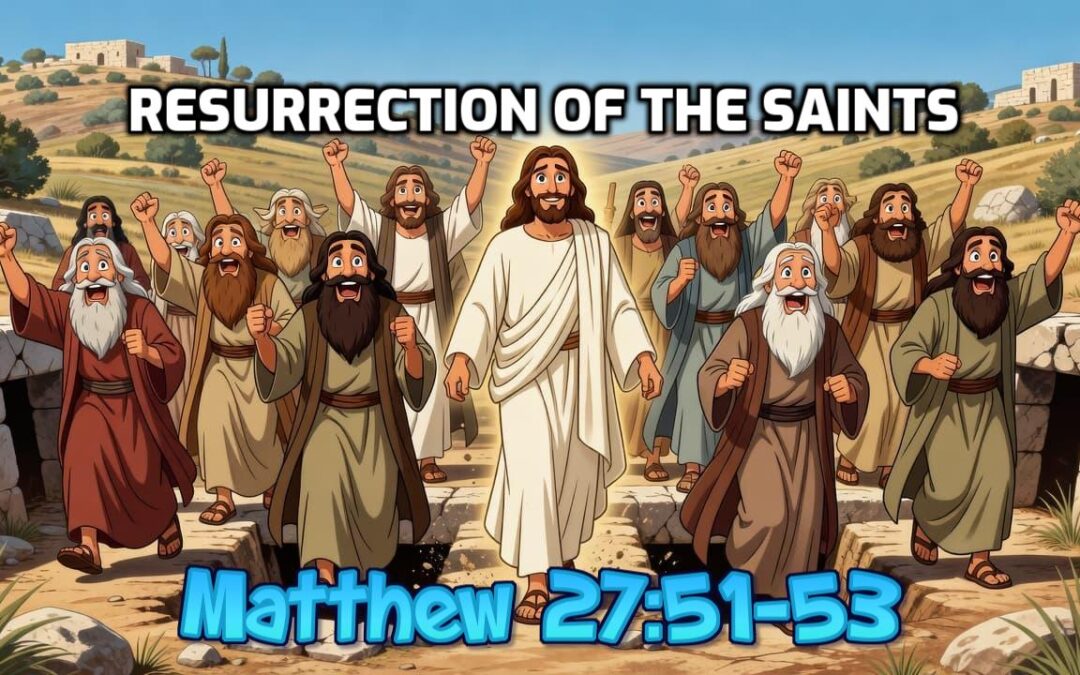
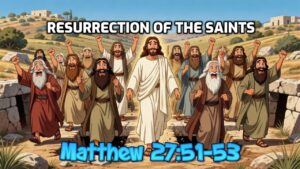
What happened in Matthew 27:51-53, and who were the “saints” that came out of the tombs? When we read the passage in its original context, we see more than an unusual sign, we see Jesus’ death and resurrection fulfilling the oldest promise in Scripture, the promise of Genesis 3:15, where the Seed would crush the serpent and win the victory for His people.
Watch and share our video of this Bible Study to help us spread the Word of God. Be kind and subscribe to our YouTube Channel. Thank You!
We also have to talk about Abraham’s Bosom, because that is where the Old Covenant saints were waiting, in comfort on one side, torment on the other, with the faithful held there until Christ opened the way. If we want the clearest Biblical picture of that hope, we can start with the resurrection hope for saints and then trace how Matthew ties Jesus’ cross, the opened tombs, and the firstfruits of the resurrection together, so the whole passage starts to make sense.
Why Matthew 27:51-53 is one of the most important resurrection passages
Matthew does not give us a quiet scene here. He gives us signs, all packed into one moment, and each one is doing real work. The torn veil, the earthquake, the split rocks, the opened tombs, and the raised saints all belong together, and together they tell us that Jesus’ death changed everything.
This is not just a strange miracle report tucked away at the end of the crucifixion story. Matthew is showing us that when Jesus died, heaven acted, the temple shifted, the ground shook, and death itself began to give way. The timing matters, because these signs happen right as the cross is finished, then they lead us straight toward the resurrection.
What the signs in the temple, earth, and tombs are telling us
Matthew gives us a clear order, and the order matters. First, the veil tears. Then the earth shakes. Then the rocks split and the tombs open. Then the saints are raised and later appear to many people. This is not random drama. It is a chain of signs that point to one truth, Jesus has entered death and broken its hold.
The torn veil is the first clue. In the temple, that veil separated the holy presence of God from ordinary access. When it tears from top to bottom, we see more than damage. We see access. God is opening the way through the death of His Son, and the barrier is gone because Jesus has done what the sacrifices never could. The old separation is not the final word anymore.
The earthquake is next, and it does not feel like background noise. In Scripture, earthquakes often accompany God’s judgment and His power. Here, the ground trembles under the death of Christ, as if creation itself is reacting to what has just happened. The cross is not only mercy, it is also judgment. Sin is being judged, and the power of God is on display.
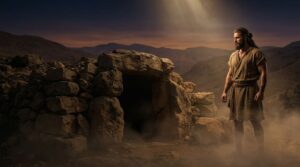
Then come the split rocks and opened tombs. That is the language of life breaking in. Tombs are supposed to stay shut. Rocks are supposed to stay solid. But when Jesus dies, even sealed places can’t stay sealed. Matthew wants us to feel that death has started losing its grip.
The veil says access is open, the earthquake says God has acted, and the opened tombs say death is no longer in charge.
This is why the passage belongs with resurrection language, even before we reach Matthew 28. If we want a helpful parallel, this explanation of resurrected saints also points out how unusual and deliberate Matthew’s wording is. He is not just reporting strange events. He is showing us the first signs of a new world.
Why the wording in Greek matters for how we read the passage
Matthew writes this as one flowing sequence, not as disconnected scenes. The verbs and the timing hold the events together, so we read them as one divine action moving forward. The same hand that tears the veil also shakes the earth and opens the tombs.
That matters because the saints are said to be raised, but Matthew also places their appearance after Jesus’ resurrection. So we should not rush past the order. The raised saints belong to the victory of Christ, yet the text still points us to Jesus as the one who rises first and gives life to others.
In plain terms, Matthew is not saying, “Here is a random miracle beside the cross.” He is saying, “Look what Jesus’ death has set in motion.” The resurrection is already breaking into the history, and the raised saints are evidence that His death has power, not weakness. The chapter is building toward the empty tomb, but these verses show that the victory has already begun.
Who the “saints” were in Matthew’s world
When Matthew speaks of “saints,” he is not introducing a brand-new church category. We are dealing with the holy ones, the people who belonged to God by faith, the ones He set apart for Himself across the Old Testament history. That matters, because it keeps us in Matthew’s world, not ours.
In Scripture, a saint is not someone who earned a halo later on. A saint is someone God claimed. Abraham, Moses, David, Daniel, and the faithful remnant all fit that language because they trusted the God who spoke to them. When Matthew says the tombs opened and the saints were raised, he is pointing us to covenant people who had waited for God’s promise with real hope.
How the Old Testament uses the word “holy ones”
The Old Testament often speaks of God’s people as holy ones. That phrase means they are set apart, not ordinary, not common, and not their own. They belong to the Lord, and their life is marked by His covenant grace.
We see that idea all over the Psalms and the Prophets. God’s holy ones are the people who trust Him, fear Him, and wait on His word. In that sense, “saints” is older than the New Testament church. It reaches back into Israel’s history, where faith is the dividing line, not church membership.
That is why the term fits Old Testament believers so naturally. They were not sinless, and they were not self-made. They were people who looked to God and depended on His mercy. If we want a clean summary, a saint is a set apart one, someone who belongs to God because God has set His covenant love on him.
A simple way to keep that clear is this:
Holy ones are God’s own people.
Saints are people set apart by His promise.
Faith is how they lived as His people.
That is plain Biblical language, and it keeps us from forcing later assumptions back into Matthew’s text.
Why these saints were saved by promise before they saw fulfillment
The Old Testament saints were saved by promise before they saw fulfillment. They did not live after the cross, so they did not look back at an empty tomb the way we do. They looked forward. They trusted God’s word ahead of time, even when the full picture was still hidden.
Abraham believed God, and it was counted to him as righteousness. That pattern never changed. God promised a coming Redeemer, a Seed who would crush the serpent, and His people held on to that word. They may not have known every detail, but they knew enough to wait, trust, and hope.
That is covenant faith. It is not vague optimism. It is confidence in the God who keeps His word. The faithful remnant lived in that tension, promised rescue in hand, visible fulfillment still ahead. Their hope was like a lamp in a dark field, steady even before sunrise.
For a closer look at Abraham’s trust, Paul’s teaching on receiving the Spirit by faith fits this same pattern well. God was already saving people by grace, through faith, long before the resurrection came into view.
The saints in Matthew 27 were not a new class of believers. They were the old covenant people of God, waiting on the promise that Jesus finally brought into the open.
That is why Matthew’s wording matters so much. These saints belong to the long history of promise, hope, and waiting. When they are raised, the resurrection is not starting from scratch. It is reaching back to the people who had trusted God all along.
How Genesis 3:15 starts the whole rescue plan
Genesis 3:15 is where the rescue history begins to speak out loud. Sin has just entered the world, the serpent has done his work, and God answers with a promise that sounds like judgment but carries hope. We are not left with ruin. We are told that the conflict will end, and the serpent will lose.
That matters because the whole Bible keeps circling back to this verse. Every promise after Eden carries the same tension, the same waiting, and the same direction. The Seed is coming, the wound is real, and victory is certain.
The serpent, the woman, and the promised Seed
Genesis 3:15 is simple enough to read, but not shallow enough to exhaust. God speaks to the serpent first, and the words are direct: there will be hostility between the serpent and the woman, between his offspring and hers. That is not a side note. It is the opening line of a long war.
The key word is Seed. Scripture is narrowing the history to one coming offspring, one promised Deliverer, one who belongs to the woman in a way that breaks the curse instead of carrying it forward. The language is personal. It is not just about humanity in general, but about a specific line, a specific person, and a specific victory.
The prophecy also tells us the victory will come through suffering. The serpent will strike the Seed’s heel, which means real pain, real injury, and real conflict. But the Seed will crush the serpent’s head, and that is the end of the serpent’s rule. A heel wound hurts, but a head wound finishes the fight.
Genesis 3:15 does not promise an easy rescue. It promises a wounded victor.
That is why this verse matters so much. It gives us the pattern before the rest of the Bible fills in the details. The promise comes first, then the long waiting, then the final triumph. The serpent gets resistance, but not the last word.
If we want to see how this first promise sits at the center of the Bible’s storyline, this overview of Genesis 3:15 lays out the same basic thread. The details differ from passage to passage, but the shape stays the same, promise, conflict, suffering, victory.
How the Old Testament keeps narrowing the promise line
After Genesis 3:15, the Bible keeps tightening the focus. The promise does not drift. It moves. It passes through real people and real covenants, and each step makes the coming Deliverer easier to recognize.
We start with Abraham, where the promise takes on family shape. God promises blessing through Abraham’s offspring, not just blessing in the abstract. Then the line moves into Israel, the covenant people through whom God preserves His word. After that, the promise narrows again to Judah, the tribe of kings, and then to David, where the hope of an eternal throne comes into view.
That trail is not a random list of names. It is one long spotlight. Each stage says the same thing in a sharper way, the Deliverer is still coming, and He will come through this line, not another one. The Old Testament keeps asking the same question, who is the Seed, and where will He appear?
The answer gets clearer with every generation. Abraham gives us promise, Israel gives us nation, Judah gives us rule, and David gives us kingship. By the time we reach the prophets, the reader is supposed to be watching for one Person, not many.
This is why the rescue plan feels so sturdy. God does not improvise. He keeps His word across centuries, and every covenant line points forward with the same steady aim. The promise in Eden is not replaced later. It is unfolded.
How Matthew 27:1-50 shows the first half of Genesis 3:15 being fulfilled
Matthew 27 puts the heel wound right in front of us. Jesus is handed over, mocked, condemned, beaten, and crucified. The Son of God is not protected from suffering. He is brought through it, and every step fits the promise spoken in Eden.
The false witnesses are part of the wound. So is the rejection by the crowd, the humiliation before the soldiers, the purple robe, the crown of thorns, and the ridicule at the cross. The serpent’s work always looks like accusation, mockery, and death, and Matthew makes sure we see all of it. Jesus is treated like a cursed man, even though He is the promised Seed.
The cross itself is the sharpest blow. The Seed is struck. He bleeds, He suffers, and He dies. That is not failure. That is fulfillment. Genesis 3:15 said the serpent would bruise the heel, and Matthew 27 shows us exactly what that looks like in history.
We should not rush past the darkness in the chapter. Jesus is abandoned by friends, surrounded by enemies, and left in public shame. That is the cost of the rescue. The first promise of victory never said the road would be painless. It said the Seed would be wounded on the way to winning.
When we read the passion account this way, the connection is hard to miss. The cross is not separate from Eden. It is the battlefield where the old promise begins to break open. The serpent lands his blow, but he cannot keep the Son in the grave, and that is where the history turns toward resurrection.
What Abraham’s Bosom was and why it matters here
Abraham’s Bosom is a simple phrase, but it carries a lot of weight in this passage. It points us to the comfort of the righteous dead before Jesus rose, and it helps us see why Matthew 27 is about more than an earthquake and a few opened tombs. We are dealing with waiting, hope, and then release.
Luke 16 gives us the clearest picture. It does not hand us a full map of the afterlife, and we should not pretend it does. It shows a divide, comfort on one side, torment on the other, and Abraham in the picture as a sign of promise kept and rest given.
The comfort side and the torment side in Luke 16
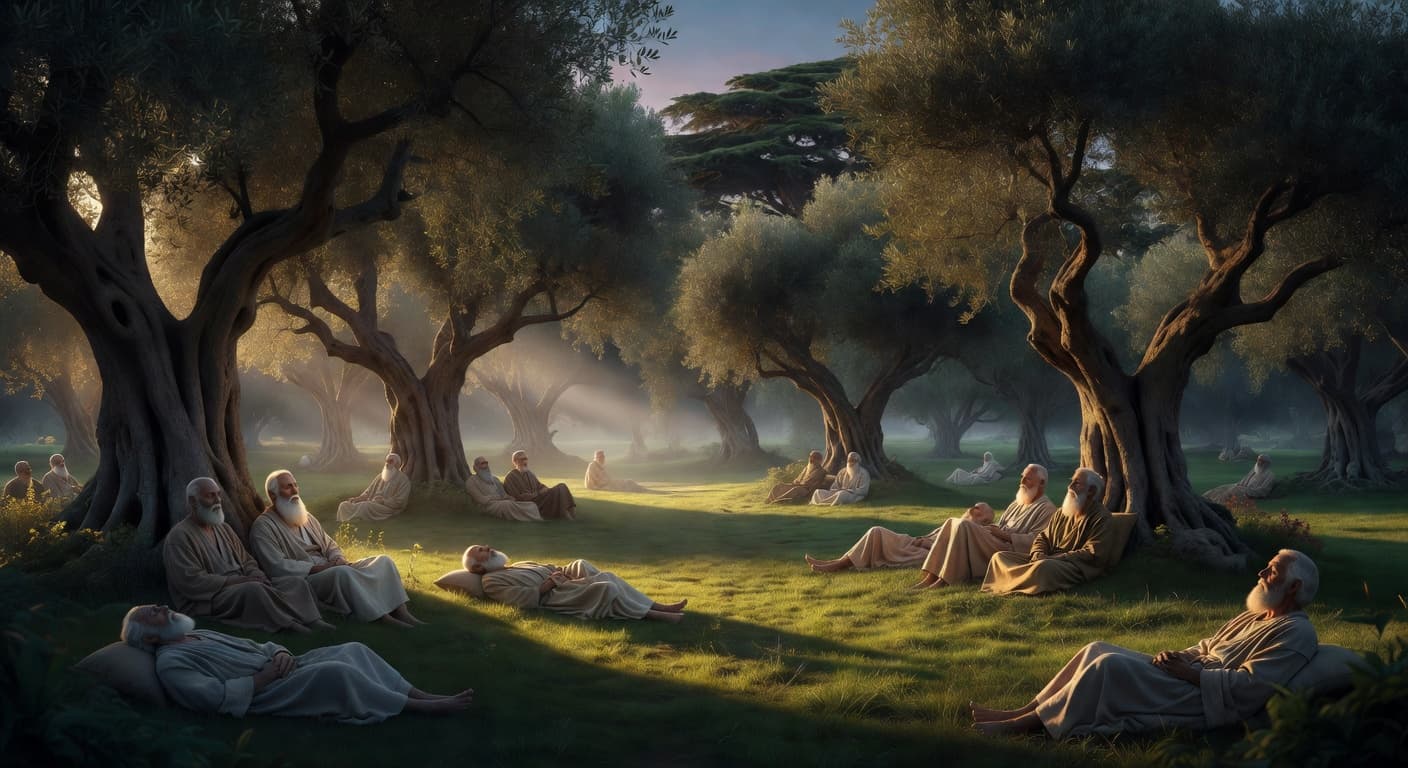
In Luke 16, Jesus tells of a rich man in torment and Lazarus in comfort with Abraham. That contrast is plain. One man is in anguish, the other is at peace, and the gap between them is fixed.
The rich man wants relief, but he does not get it. Lazarus is not pictured as wandering or uncertain. He is received, comforted, and safe. Abraham speaks in this true story Jesus told, and his words make the divide even clearer, because there is a great chasm that cannot be crossed. Luke 16 is not a parable, it is Jesus telling us about something that actually happened in the afterlife.
We should keep the picture simple. Scripture gives us a two-sided scene, not a detailed travel guide for the unseen world. It tells us enough to know that the dead are not in one flat condition. There is separation between comfort and suffering, and that separation matters.
Click Our Ad to Support Us!
Luke 16 does not flatten death into silence. It shows real comfort for the righteous and real torment for the unrighteous.
For a fuller discussion of that holding place, this Biblical explanation of Sheol and the righteous dead fits well with the same framework. The point is not to build speculation. The point is to read the passage the way Jesus gives it.
Why the Old Testament saints were on the paradise side, not yet in Heaven
The faithful dead were in comfort, but they were not yet brought into Heaven’s full presence until Christ finished His work. That is the key distinction. They were safe, they were at rest, but they were still waiting for redemption to be completed.
That waiting makes sense when we remember the whole Old Testament history. The saints believed God’s promise before they saw it fulfilled. They trusted the coming Redeemer, but they did not yet live on the far side of the cross and resurrection. The promise was real, but the completion had not yet arrived.
So Abraham’s Bosom is not a place of punishment. It is the paradise side, the side of rest, honor, and hope. Yet it is still part of the waiting room of redemptive history. Christ had not yet broken through death and opened the way into the Father’s presence in the full, final sense.
We can say it this way:
The righteous dead were comforted.
They were still waiting.
Their hope was always tied to what Christ would finish.
That is why this matters here. Matthew 27 is not just about the saints rising out of tombs. It is about the moment when the long wait starts to end. Abraham’s Bosom helps us see the before and after.
How Jesus’ victory changes the location and condition of the righteous dead
After the resurrection, the situation changes because Christ opens the way into God’s presence. The waiting does not stay the same once Jesus rises. His victory means the promise is no longer ahead of the saints, it is completed in Him.
That is why the New Testament speaks of Christ leading captives free. The language fits a rescue, not a pause. The saints who had been comforted in Abraham’s Bosom were not abandoned there forever. Jesus’ triumph over death means the righteous dead are no longer stuck in a place of waiting for redemption to be finished.
This is where the old covenant history and the resurrection meet. Jesus does not merely survive death. He defeats it, and that victory changes what comes next for His people. The saints in Matthew 27 are a sign of that shift. The tombs open because the King has entered death and come out alive.
If we want to hold the line carefully, we should say this plainly: the Bible shows Abraham’s Bosom as a place of comfort before Christ rose, and it shows Christ as the one who ends that waiting. After that, the righteous dead belong to the completed work of Jesus, not the unfinished hope of earlier days.
That is the difference the resurrection makes. It closes the old chapter of waiting and opens the way into God’s presence with confidence, because Christ has already gone through death and come out the other side.
Which captives Jesus came to set free
When we talk about the captives Jesus came to set free, we should keep the Bible’s own language in front of us. This is not about random souls scattered through history. We are talking about God’s covenant people, the faithful dead, the ones who trusted His promise and waited for redemption to be finished.
That is why Old Testament release language matters so much here. The rescue history keeps speaking about prisoners, the pit, bondage, and liberty because God had already told us what He planned to do. Christ did not improvise a rescue. He came to complete one.
Old Testament texts that point to release from captivity
The Old Testament is full of rescue language, and it keeps pulling our attention toward release. Psalm 142:7 cries, “Bring my soul out of prison,” while Zechariah 9:11 speaks of prisoners of hope being released because of the Blood of the covenant. Isaiah 61:1 adds the familiar promise of liberty to the captives and opening the prison to those who are bound.
These are not separate ideas. They are one rescue thread. God is the one who hears the cry, opens the pit, and brings people out by covenant mercy. That is why Isaiah 61 and Jesus’ freedom for captives fits this theme so well, because the Messiah’s mission is already announced in the prophets before He ever steps into Matthew 27.
We can also trace the same pattern through Psalm 68, where God leads out the prisoners and sets the lonely in families. The words are not only about release from a place. They are about restoration to a people, to a covenant, to a home. That is the shape of Biblical freedom.
The Bible keeps the picture simple:
Prisoners are waiting for release.
The pit is a place of confinement, not final defeat.
Liberty is God’s act of mercy, not human self-help.
The Old Testament rescue history is not about escape on our own terms. It is about God opening the way He promised.
When Jesus comes, He steps right into that storyline. We do not need to stretch the text to make that connection. The prophets already set the table.
How the captivity was real, even for the faithful
The faithful saints were not in torment, but they were still waiting for the door to open. That waiting was real. They belonged to God, they trusted His word, and they were safe in His care, but they had not yet crossed into the finished victory that only Christ could provide.
That is the key point. Captivity, in this sense, does not mean punishment. It means unfinished redemption. The saints were held in hope, not in shame. They were resting in Abraham’s Bosom, but they were still on the old side of the promise, before the resurrection had brought everything into full light.
This is why the language of release matters. A prisoner can be protected and still be waiting for freedom. A captive can be counted among the righteous and still need the final open door. That is where the faithful dead were before Christ’s victory was announced in full.
We should think of it like a sealed room with a promised exit. The room is safe, but it is still sealed. Jesus does not merely visit that room. He opens it from the outside, and He brings His people out with Him.
That is also why this is not about doubt in their faith. Abraham believed. David trusted. Daniel hoped. They were not waiting because they had failed. They were waiting because God’s timetable was still moving toward the cross and empty tomb.
Christ came to do what no saint could do for himself. He came to liberate, restore, and lead His people into the freedom His blood had secured. That is the rescue at the center of Matthew 27, and it is why the righteous dead are better understood as captives waiting for completion than as souls in torment.
If we keep that distinction clear, the passage stays sharp. Jesus did not just raise attention. He raised the bar of redemption, and He brought the waiting saints into the freedom they had hoped for all along.
Why the resurrection makes Jesus the firstfruits
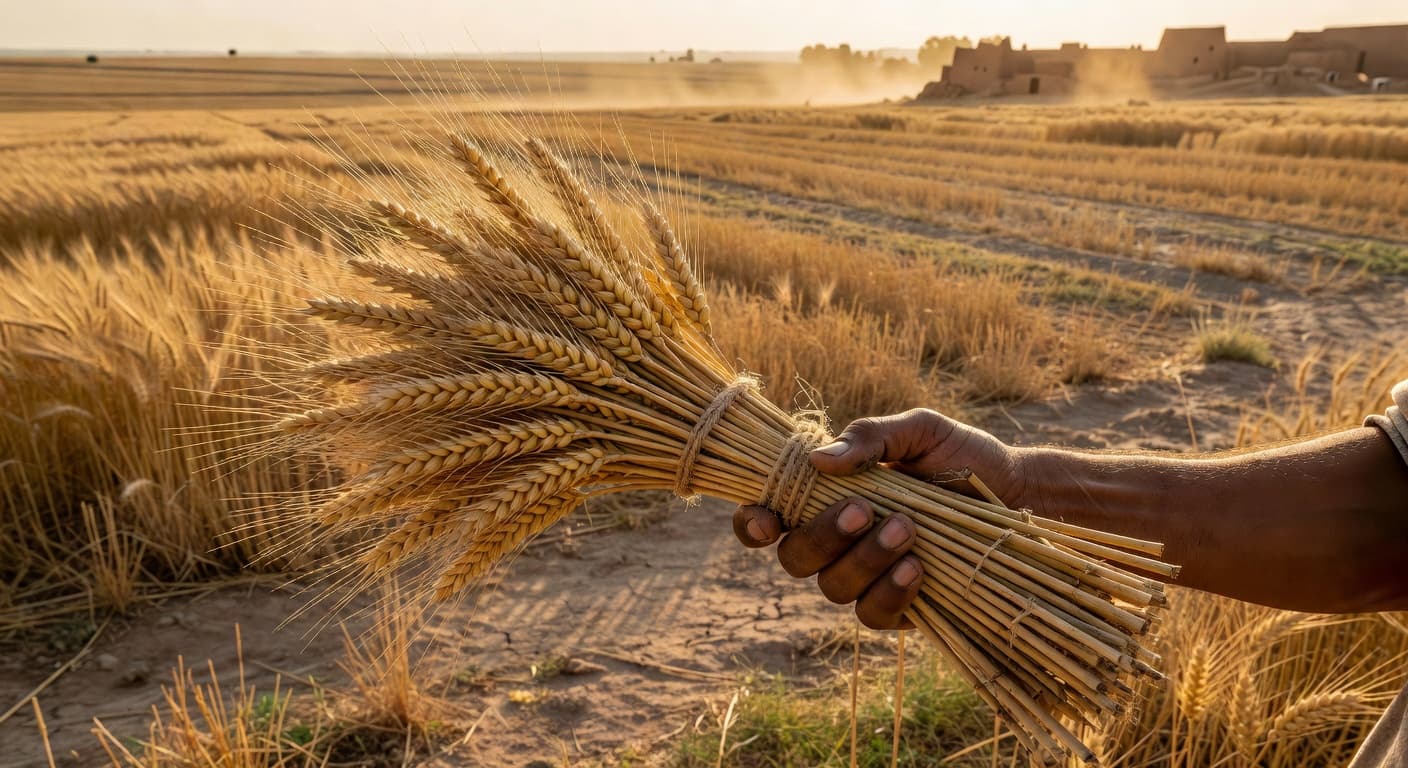
The firstfruits idea is not decoration. It is a harvest promise with teeth. When the first sheaf was offered to God, Israel was saying, “The rest is coming too.” That is exactly why this image fits Jesus so well. His resurrection is not just a miracle in isolation, it is the first yield of a larger resurrection harvest, and Matthew 27 helps us see that harvest breaking in early.
How the Firstfruits offering worked in Israel
In Israel, firstfruits was simple. When the harvest began, the first portion was brought to God as an offering. It was the first part, not the whole field, and that mattered. By giving the first to the Lord, Israel confessed that the rest belonged to Him too.
That is a beautiful picture, because the offering was both thanksgiving and promise. It said, “God has given the beginning, and He will finish what He started.” Harvest logic is built into the feast, and harvest logic is exactly what resurrection language needs.
The image is easy to grasp:
The first part is gathered.
It is presented to God.
It guarantees confidence in the coming full harvest.
That is why this feast points forward so naturally. A single sheaf in the hand is never just a single sheaf. It is a sign that the field is alive, the season is moving, and more grain is on the way. For a concise overview of the feast background, the Feast of Weeks and firstfruits gives the basic Biblical frame well.
Firstfruits is not about a small gift. It is about the first piece proving that the rest is sure.
That is why resurrection fit the feast before we even reach the New Testament explanation. The first part of the crop belongs to God, and the first risen life belongs to God too.
How Jesus fulfills Firstfruits in 1 Corinthians 15
Paul does not leave the symbol hanging in the air. He lands it in 1 Corinthians 15:20 with a straight statement, “Christ has been raised from the dead, the firstfruits of those who have fallen asleep.” That means Jesus is not merely a resurrected man. He is the first one raised into the new order of life that death cannot touch.
The logic is tight. If the firstfruits is accepted, the harvest is coming. If Christ is raised, His people will be raised too. His resurrection is not the end of the story, it is the beginning of the final one.
That is why Matthew 27 matters here. The saints who came out of the tombs are not random side characters. They are a sign that Jesus’ death and resurrection have already started the harvest. Their rising points back to Him, not away from Him. He is still the source, the center, and the guarantee.
Paul’s wording also keeps the focus on those who have fallen asleep. He is talking about the dead in Christ, the people who belong to Him and will share His victory. If we want a short, clear explanation of the feast connection, Ligonier’s overview of firstfruits and Pentecost says it plainly, the firstfruits offering is thanksgiving for the first harvest and confidence in the rest.
So the chain is simple:
Jesus rises first.
His rising is accepted by the Father.
The rest of His people will rise in the same victory.
That is why resurrection hope is never vague in Paul. It is anchored in Christ’s actual, bodily rising.
Why the saints raised in Matthew 27 are a firstfruits sign, not the final harvest
The saints in Matthew 27 are real proof of victory, but they are not the whole harvest. They are a preview, not the full field. We should not flatten the passage and make their raising bigger than Jesus’ own resurrection, because Matthew does not do that. Jesus remains the supreme First Fruit.
Their resurrection is a sign that the grave has started to lose its hold. It is like seeing the first sheaf lifted from the field. You know the harvest is underway, but you also know more is coming later. That is the balance we need here.
Matthew even helps us keep that order straight. Jesus dies, the tombs open, and then saints are raised after Jesus’ resurrection. The saints are a witness to His victory, but they are not the source of it. They point to the King who went through death and came out alive.
This protects the theology from two mistakes:
It keeps us from turning the saints into the main event.
It keeps us from treating Jesus’ resurrection like one miracle among many.
Jesus is the one who inaugurates the new creation life. The saints in Matthew 27 are a firstfruits sign of that Kingdom breaking in. They are the opening bundle, not the full barn.
That balance matters because the resurrection is not just about recovery. It is about a new kind of life, the kind Jesus entered first and His people will share after Him. Matthew 27 gives us the first cracks in the tombs. 1 Corinthians 15 gives us the full harvest promise. Put together, they tell one history, Jesus is alive, and because He is the First Fruit, the rest of the field will not stay silent forever.
Conclusion
Matthew 27 shows us that Jesus did not merely die, He broke death’s claim. Genesis 3:15 gave the first promise, Abraham’s Bosom shows the waiting place, and the cross and resurrection bring the whole history into focus.
That is why the saints in Matthew 27 matter so much. They were the Old Covenant people who believed God’s promise, waited in comfort, and were not forgotten when Christ rose. He is the First Fruit, and because He lives, their release was real, their hope was fulfilled, and the rescue God promised from the beginning came through exactly as He said, with the shepherd leading souls to resurrection.
Related Posts
Religious But Unknown? Your Kingdom Come Matthew 7:21-23 Matthew 7:21-23 is one of Jesus’ most sobering warnings, because the people He speaks to aren’t atheists. They’re religious. They pray, preach, and talk like insiders. Some even point to miracles. And Jesus says, “I never knew you.”
What Does Jesus Mean Today? Yeshua, Savior Matthew 1:21 When we ask, what does Jesus mean, we’re not just chasing a word origin, we’re listening to how God tied a Name to a mission. Matthew 1:21 doesn’t treat "Jesus" like a random label, it reads like Heaven signing the birth certificate with purpose: “you shall call His name,” because “He will save.”
Is Hell Eternal? 1 Truthful Guide to Sheol, Hades, Fire The English word hell carries a lot of weight. It pulls in cartoon flames, horror stories, half-remembered sermons, and deep questions about God’s heart. But in our English Bibles, "hell" often stands in for several very different Hebrew and Greek words: Sheol, Hades, Gehenna, and the lake of fire. No wonder people feel confused. Many believers quietly wrestle with questions.…
The Seven Spirits of God stand as one of the most profound and often misunderstood truths in Christian theology. Rooted deeply in Scripture, they aren’t seven separate entities but rather seven attributes of the one Holy Spirit—God revealing Himself in fullness. Isaiah 11:2 describes these [...]
The gifts of the Holy Spirit reveal the active power of God working in the lives of His people. They aren’t just distant historical records or fading Biblical accounts; they’re living because the Holy Spirit, He is living and He is God, and His transformative gifts are reaching people [...]
The phrase “tongues of fire” in Acts 2:3 sparks worldwide curiosity and spiritual wonder. It appears in Scripture to describe the Holy Spirit’s descent during Pentecost, when visible flames rested on the apostles, marking the time when God’s Spirit descended on earth, [...]
The Bible’s take on a reprobate mind isn’t just a warning or a piece of theology. It’s a wake-up call. “Reprobate mind” (from the Greek adokimos, meaning rejected or unapproved) describes what happens when people no longer care about God’s truth—they trade what’s holy for what feels good, grow numb [...]
The upper room, a sacred space in Jerusalem, holds profound significance in Christian history. Acts 2 tells us it is the gathering place for Jesus’ disciples when the Holy Spirit descended upon them during Pentecost. This transformative moment not only empowered those present but also sparked [...]
Pentecost isn’t just a Christian event; its roots stem from the Jewish celebration of Shavuot, the day Moses received the Ten Commandments from God. For Christians, Pentecost marks the moment when God poured out His Spirit and Jesus’ worldwide church empowered by the Holy Spirit and His gifts [...]
Charismatic gifts, often referred to as manifestation gifts, showcase the miraculous power of the Holy Spirit. From healing and miracles to prophecy and discernment, they serve as tangible evidence of God’s presence and transformative work. These gifts, seen throughout Biblical history, have [...]
Revelation 3:7-8 offers a powerful message to the church in Philadelphia, a message that remains relevant today. It speaks of a divine “open door” that no man can shut, given by the one who holds the Key of David. This imagery represents not only an opportunity but also God’s sovereign [...]
Have you ever wondered why the word “anointing” carries so much depth in Scripture? The idea of anointing—of sacred oil poured out on kings, priests, and prophets—echoes through the Old Testament as a symbol of God choosing, empowering, and setting apart. God didn’t leave the details of [...]
The Bible boldly declares the truth that Jesus is both fully God and fully man—a mystery that anchors the Christian faith. But what does it mean, practically, for us as believers? Jesus didn’t perform miracles or operate in the gifts of the Holy Spirit simply as God; He demonstrated how a [...]
The Antichrist
The Apostate Church
The Rapture
Angels
Book of Daniel
Giants
Judgment
Prophecy
The Apostles
Bible Prophecy
Beware of Deception
Sin
Antichrists
Demon Possession
Healing
Millennial Reign
Redemption
The Gospels
The Holy Spirit
American Prophecy
Israel
Armageddon
Forgiveness
Intercession
Prayer
Revival
The Old Testament
The Tribulation
Faith
Kingdom Of God
Bible Interpretation
Free Will
Book Of Jude
Pride
The Afterlife
The Red Dragon
We use cookies so you can have a great experience on our website. View more
Cookies settings
Accept
Decline
Privacy & Cookie policy
Privacy & Cookies policy
Cookies list
Cookie name
Active
Who we are
Our website address is: https://theholyspirit.us.
Comments
When visitors leave comments on the site we collect the data shown in the comments form, and also the visitor’s IP address and browser user agent string to help spam detection.
An anonymized string created from your email address (also called a hash) may be provided to the Gravatar service to see if you are using it. The Gravatar service privacy policy is available here: https://automattic.com/privacy/. After approval of your comment, your profile picture is visible to the public in the context of your comment.
Media
If you upload images to the website, you should avoid uploading images with embedded location data (EXIF GPS) included. Visitors to the website can download and extract any location data from images on the website.
Cookies
If you leave a comment on our site you may opt-in to saving your name, email address and website in cookies. These are for your convenience so that you do not have to fill in your details again when you leave another comment. These cookies will last for one year.
If you visit our login page, we will set a temporary cookie to determine if your browser accepts cookies. This cookie contains no personal data and is discarded when you close your browser.
When you log in, we will also set up several cookies to save your login information and your screen display choices. Login cookies last for two days, and screen options cookies last for a year. If you select "Remember Me", your login will persist for two weeks. If you log out of your account, the login cookies will be removed.
If you edit or publish an article, an additional cookie will be saved in your browser. This cookie includes no personal data and simply indicates the post ID of the article you just edited. It expires after 1 day.
Embedded content from other websites
Articles on this site may include embedded content (e.g. videos, images, articles, etc.). Embedded content from other websites behaves in the exact same way as if the visitor has visited the other website.
These websites may collect data about you, use cookies, embed additional third-party tracking, and monitor your interaction with that embedded content, including tracking your interaction with the embedded content if you have an account and are logged in to that website.
Who we share your data with
If you request a password reset, your IP address will be included in the reset email.
How long we retain your data
If you leave a comment, the comment and its metadata are retained indefinitely. This is so we can recognize and approve any follow-up comments automatically instead of holding them in a moderation queue.
For users that register on our website (if any), we also store the personal information they provide in their user profile. All users can see, edit, or delete their personal information at any time (except they cannot change their username). Website administrators can also see and edit that information.
What rights you have over your data
If you have an account on this site, or have left comments, you can request to receive an exported file of the personal data we hold about you, including any data you have provided to us. You can also request that we erase any personal data we hold about you. This does not include any data we are obliged to keep for administrative, legal, or security purposes.
Where your data is sent
Visitor comments may be checked through an automated spam detection service.