Where Jesus Came From: The Word, the Messiah, and Israel
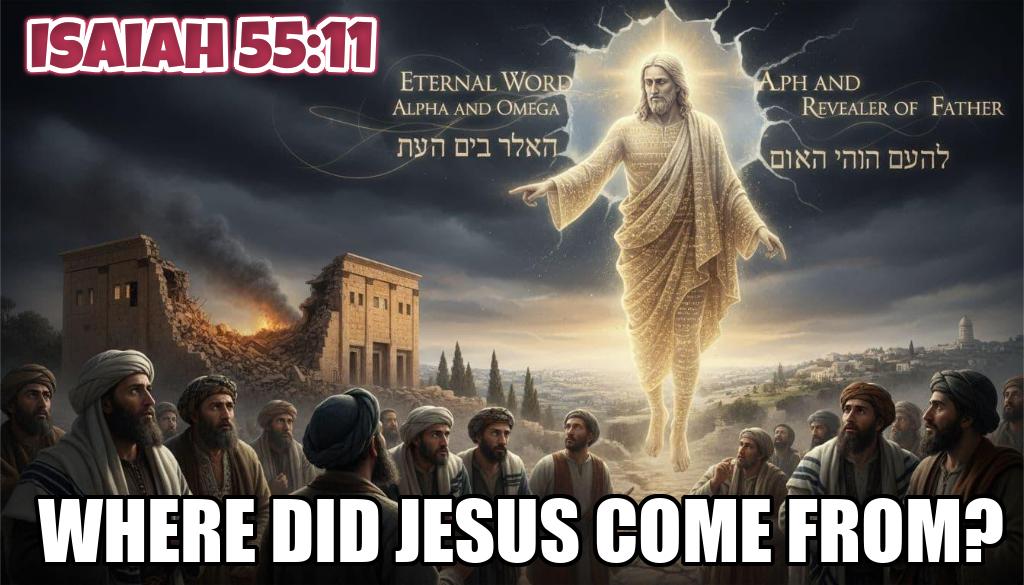
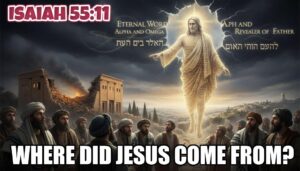
Where did Jesus come from? That question sounds simple, but it cuts straight to the center of Scripture. If Jesus is the Messiah, then His origin is not a side issue. It is the whole story.
The Bible does not present Jesus as a created being who showed up late. It presents Him as the eternal Word of God, sent into history to reveal the Father. That also explains why many Jews do not accept Him, why the Temple judgment of 70 AD matters, and why Christians still expect Israel to see Him clearly one day.
What the Bible means when it calls Jesus the Word of God
John opens his Gospel with one of the strongest claims in the Bible: "In the beginning was the Word, and the Word was with God, and the Word was God" (John 1:1). That is not poetry for decoration. It is a direct claim about who Jesus is.
In Greek, John uses the word Logos, which means word, message, reason, and expression. In Hebrew thought, God's word is active. God speaks, and things happen. Genesis begins that way. Psalm 33:6 says, "By the word of the LORD the heavens were made." Isaiah 55:11 says God's word goes out and does what He sends it to do.
"In the beginning was the Word" does not put Jesus at Bethlehem. It puts Him before Genesis.
John keeps going. "All things were made through him" (John 1:3). That means the Word is not part of the created order. He stands on the other side of creation. Then John 1:14 says, "The Word became flesh and dwelt among us." That is not the start of Jesus. It is the entrance of the eternal Son into human life.
John 1 in the original context, the Word was already there
John is careful with his words. He does not say, "In the beginning the Word was created." He says, "was." The Word already existed when creation began. He was "with God," which shows relationship, and He "was God," which shows divine identity.
That matters. Jesus is not a lesser spirit, and He is not a man adopted later. He is personal, present, and eternal. John 1 is the doorway into the rest of the New Testament.
Why the Word became flesh matters for understanding Jesus
John 1:14 is plain enough if you read it slowly. The Word did not stop being the Word. He took on flesh. He stepped into birth, hunger, grief, suffering, and death without losing His divine origin.
That is why Christians say Jesus was never created. Created things begin to exist. The Word was already there. He came into the world by becoming human, not by coming into being.
Other Bible places that call Jesus the Word
Revelation 19:13 calls the conquering Christ "The Word of God." That title is not random. It connects the man Jesus to the eternal Word of John 1.
1 John 1:1 also points the same way. John writes of "the Word of life," what he had heard, seen, and touched. The apostle is tying the eternal Son to the real Jesus they walked with. The Word is not an idea floating in the sky. He is a person who entered history.
How Scripture shows Jesus was not created, but came out from God
The Bible keeps using family and sending language. Jesus is sent, comes from the Father, and shares glory with the Father before the world existed. That is not the language of a created messenger. It is the language of divine origin.
Jesus was with the Father before the world began
John 17:5 is one of the clearest verses in the New Testament. Jesus prays, "Father, glorify me in your own presence with the glory that I had with you before the world existed." Before the world existed. Not before His public ministry. Not before Bethlehem. Before the world.
John 8:42 says, "I proceeded and came from God." John 16:28 says, "I came from the Father and have come into the world." Jesus speaks like someone who belongs with the Father already.
Hebrews 1:2 says God made the worlds "through" the Son. Hebrews 1:3 calls Him "the exact imprint" of God's nature. Again, the point is simple. Jesus is not made in the same way we are made.
What it means that Jesus came from God
When Jesus says He was sent, Christians do not hear "created." A son sent by a father is not a servant made from nothing. He comes from the same family line. The Bible uses that kind of language on purpose.
Micah 5:2 says the ruler in Bethlehem has "goings forth" from old, from ancient days. Christians have always read that as more than a birth prediction. It points to a Messiah whose life does not start in Bethlehem.
Why believers say Jesus is begotten, not made
The old phrase "begotten, not made" is simple once you strip away the noise. Begotten means unique sonship. It means Jesus comes from the Father in a way no creature does.
That is why Christians call Him the only begotten Son. He is not one son among many. He is the Son who shares the Father's life. That is also why John 10:30 matters: "I and the Father are one."
Why many Jews do not believe Jesus is the Messiah
This part should be handled with care. Many Jews are not refusing Jesus out of stubbornness. They are reading the Messiah through a different set of expectations. Aish explains the Jewish position plainly, the Messiah must bring visible peace, restore Israel, and finish redemption in the open. Aish's summary of the Jewish view says that out loud.
That is the first big divide. Jewish expectation often looks for one arrival that ends war, gathers the exiles, rebuilds what was lost, and brings a public age of peace. Jesus' first coming did not look like that.
The Messiah was expected to bring peace, return exiles, and restore Israel
From a Jewish reading, a failed world is a failed claim. If the Messiah has come, why is war still here? Why is the Temple still gone? Why are the exiles still scattered?
Christians answer that Jesus came first to suffer, redeem, and save, then to return and complete the picture. Jews who reject Him usually do not accept that two-stage pattern.
Why Jewish readers reject the Trinity and Jesus’ divinity
Judaism guards the oneness of God with real seriousness. The Shema says, "The LORD is one." So when Christians say Jesus is God, many Jews hear a challenge to the core of monotheism.
That is not a small disagreement. It shapes how they read every claim about Jesus. If the Messiah cannot be divine, then the New Testament has already lost them.
How prophecy is read differently in Hebrew and in Christian interpretation
The split is not only about theology. It is about reading. The same verse can sound different when it is read in its chapter, in its historical setting, and in the Hebrew text itself.
The Jewish Journal puts the basic objection this way, the world was not redeemed after Jesus' death. Why Jews don't accept Jesus is a short way to describe that whole argument. Christians answer that the prophets can point to both suffering and glory, but many Jewish readers do not accept that split.
Click Our Ad to Support Us!
How Christians argue that some messianic prophecies are being mistranslated or misread
This is where the debate gets sharp. Christians do not just say, "We like Jesus." We say some passages are being read too narrowly, or translated in ways that miss the larger context.
Passages often debated between Jews and Christians
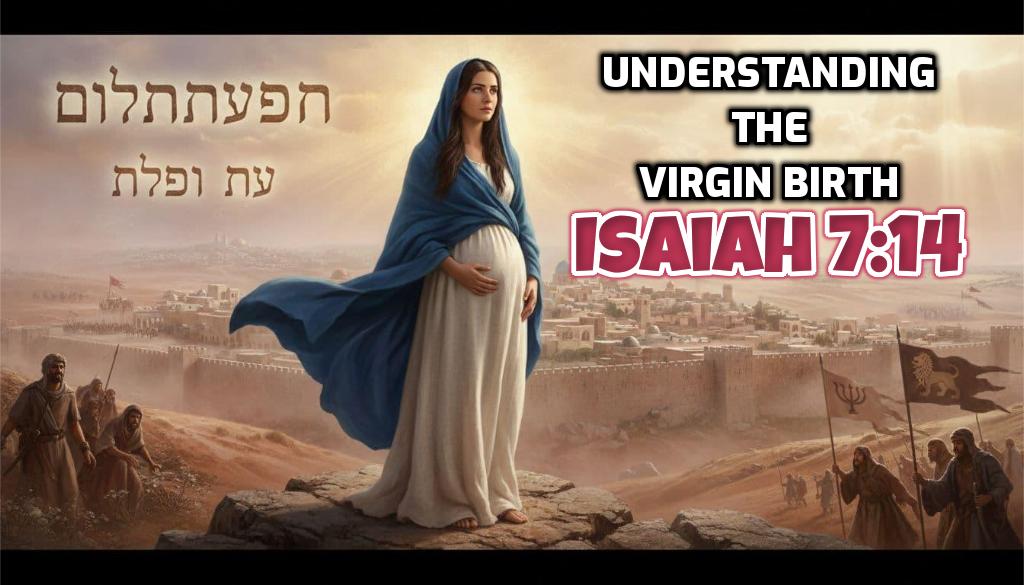
Isaiah 7:14 is one of the most famous. Jewish readers often stress the immediate sign to Ahaz and the Hebrew word almah, which means young woman. Christians point to the Greek Septuagint, which uses a word that means virgin, and to Matthew's use of the verse.
Isaiah 9:6 also divides readers. Christians see divine titles for a coming child. Jewish readers often connect the language to a royal figure in Israel's story.
Isaiah 53 may be the biggest divide of all. Christians see the suffering servant as Jesus. Many Jews read the servant as Israel, or as the righteous remnant of Israel.
Micah 5:2 points to Bethlehem, and Psalm 22 sounds like a suffering king surrounded by mockers. Daniel 9 and its seventy weeks also draw strong Christian attention. The arguments are not random. They are about wording, context, and fulfillment.
Why context and wording matter so much
A verse pulled out of its chapter can look like a clean proof-text. Put it back in context, and it may speak more broadly, or more narrowly, than people first thought.
That is why Christians keep pressing the Hebrew Bible itself. We believe the prophets were pointing to a Messiah who would suffer first, then reign. Jewish readers usually do not accept that reading. The debate is old, and it is still live.
How the Jews who followed Jesus showed the true blessing of Abraham
The first believers in Jesus were Jews. Peter was a Jew. James was a Jew. John was a Jew. Mary was a Jew. The early church began in Jerusalem, not in some distant empire.
At Pentecost, thousands of Jews believed. They did not think they had left Moses behind. They knew they had found the promised fulfillment of Moses and the prophets.
The first Jewish believers in Jesus
The book of Acts shows Jewish believers praying, teaching, breaking bread, and preaching in the Temple courts. They saw Jesus as the Messiah of Israel, not as a break from Israel.
That matters because the early faith in Jesus was not a Gentile invention. It began inside Judaism and then spread outward.
What the blessing of Abraham means in this history
God told Abraham, "In you all the families of the earth shall be blessed" (Genesis 12:3). Paul says that promise reaches the nations through faith in Christ.
That means the blessing of Abraham was never only bloodline. It was faith in God's promise. The Jews who followed Jesus stepped into that blessing. The Jews who rejected Him stayed outside that confession.
What happened to the Jews who rejected Jesus before and during 70 AD
Jesus did not leave Jerusalem without warning. He spoke plainly about the Temple, the city, and the coming judgment. His words in Matthew 24, Mark 13, and Luke 21 are direct.
He said not one stone would be left on another. He warned that armies would surround Jerusalem. He told His followers to flee when they saw the sign.
Jesus’ warnings about Jerusalem and the Temple
Luke 21 is especially sharp. Jesus says Jerusalem will be trampled and that days of vengeance are coming. That is not vague poetry. It is a warning tied to a real historical disaster.
The Roman war, the Temple’s fall, and the scattering of the people
The First Jewish-Roman War began in 66 AD. Jerusalem fell in 70 AD. The Temple was destroyed. The city was torn apart. Many died. Others were sold, scattered, or forced out.
The diaspora did not begin in 70 AD, but 70 AD made it wider and deeper. Jewish life could no longer center on sacrifice at the Temple. That changed everything.
How this changed Jewish life after the disaster
After the Temple was gone, synagogue life, Torah study, and rabbinic leadership became central. The sacrificial system could not continue in the same way.
For Christians, that history also echoes Jesus' warnings. He said judgment was coming. The city heard Him, and the city fell.
How Jesus is expected to reveal Himself to Israel today
The Christian hope is not that Jesus stays hidden forever. The hope is that He will reveal Himself openly to the Jewish people in the end. Zechariah 12:10 says they will look on the one they have pierced and mourn for Him. Matthew 23:39 points to a day when Jerusalem will say, "Blessed is he who comes in the name of the Lord."
Paul says a partial hardening has come upon Israel until the fullness of the Gentiles comes in, and then "all Israel will be saved" in Romans 11. Christians read that as future mercy, not final rejection.
The point is not guesswork. The point is restoration. The same Jesus who came first in humility will return in glory, and Israel will see who He is.
Conclusion
Scripture keeps one answer in front of you. Jesus is the eternal Word of God, not a created being. John places Him before creation, the Gospels show Him coming from the Father, and Revelation names Him again as the Word.
The history does not stop there. Israel's unbelief, the fall of the Temple, and the future hope of recognition all circle back to the same person. Keep reading the Bible in context, and let the text speak for itself.
Related Posts
6 Deep Insights on Anointed and the Rise of Antichrist For some, Christ sounds like a religious label. For others, antichrist sounds like something from an end-times movie. But in the original languages of the Bible, both words are far more personal and practical than that. They touch how we see Jesus, how we read the Hebrew Scriptures, how we relate to the Holy Spirit, and even how we check…
1 Truth: Blood of Jesus: God's Life in Sinless Flesh What if the very thing running through the veins of Jesus was not just human, but the Blood of Jesus holding the actual life of God Himself, poured out for us? That sounds huge, maybe even hard to take in at first, yet Scripture keeps pulling us back to this one thread: life is in the blood, sin corrupts human…
Holy Spirit Scriptures: 21 Century Meaning, Original Words, and God's Purpose What would life be if we never understood the heart behind every movement of God’s Spirit? Every verse that mentions the Holy Spirit points us somewhere deeper—into friendship with God, into His power for living, and into the mystery of His love and presence that started in Eden and keeps going until Jesus rules the earth in the Millennial Reign.…
The Seven Spirits of God stand as one of the most profound and often misunderstood truths in Christian theology. Rooted deeply in Scripture, they aren’t seven separate entities but rather seven attributes of the one Holy Spirit—God revealing Himself in fullness. Isaiah 11:2 describes these [...]
The gifts of the Holy Spirit reveal the active power of God working in the lives of His people. They aren’t just distant historical records or fading Biblical accounts; they’re living because the Holy Spirit, He is living and He is God, and His transformative gifts are reaching people [...]
The phrase “tongues of fire” in Acts 2:3 sparks worldwide curiosity and spiritual wonder. It appears in Scripture to describe the Holy Spirit’s descent during Pentecost, when visible flames rested on the apostles, marking the time when God’s Spirit descended on earth, [...]
The Bible’s take on a reprobate mind isn’t just a warning or a piece of theology. It’s a wake-up call. “Reprobate mind” (from the Greek adokimos, meaning rejected or unapproved) describes what happens when people no longer care about God’s truth—they trade what’s holy for what feels good, grow numb [...]
The upper room, a sacred space in Jerusalem, holds profound significance in Christian history. Acts 2 tells us it is the gathering place for Jesus’ disciples when the Holy Spirit descended upon them during Pentecost. This transformative moment not only empowered those present but also sparked [...]
Pentecost isn’t just a Christian event; its roots stem from the Jewish celebration of Shavuot, the day Moses received the Ten Commandments from God. For Christians, Pentecost marks the moment when God poured out His Spirit and Jesus’ worldwide church empowered by the Holy Spirit and His gifts [...]
Charismatic gifts, often referred to as manifestation gifts, showcase the miraculous power of the Holy Spirit. From healing and miracles to prophecy and discernment, they serve as tangible evidence of God’s presence and transformative work. These gifts, seen throughout Biblical history, have [...]
Revelation 3:7-8 offers a powerful message to the church in Philadelphia, a message that remains relevant today. It speaks of a divine “open door” that no man can shut, given by the one who holds the Key of David. This imagery represents not only an opportunity but also God’s sovereign [...]
Have you ever wondered why the word “anointing” carries so much depth in Scripture? The idea of anointing—of sacred oil poured out on kings, priests, and prophets—echoes through the Old Testament as a symbol of God choosing, empowering, and setting apart. God didn’t leave the details of [...]
The Bible boldly declares the truth that Jesus is both fully God and fully man—a mystery that anchors the Christian faith. But what does it mean, practically, for us as believers? Jesus didn’t perform miracles or operate in the gifts of the Holy Spirit simply as God; He demonstrated how a [...]
The Antichrist
The Apostate Church
The Rapture
Angels
Book of Daniel
Giants
Judgment
Prophecy
The Apostles
Bible Prophecy
Beware of Deception
Sin
Antichrists
Demon Possession
Healing
Millennial Reign
Redemption
The Gospels
The Holy Spirit
American Prophecy
Israel
Armageddon
Forgiveness
Intercession
Prayer
Revival
The Old Testament
The Tribulation
Faith
Kingdom Of God
Bible Interpretation
Free Will
Book Of Jude
Pride
The Afterlife
The Red Dragon
We use cookies so you can have a great experience on our website. View more
Cookies settings
Accept
Decline
Privacy & Cookie policy
Privacy & Cookies policy
Cookies list
Cookie name
Active
Who we are
Our website address is: https://theholyspirit.us.
Comments
When visitors leave comments on the site we collect the data shown in the comments form, and also the visitor’s IP address and browser user agent string to help spam detection.
An anonymized string created from your email address (also called a hash) may be provided to the Gravatar service to see if you are using it. The Gravatar service privacy policy is available here: https://automattic.com/privacy/. After approval of your comment, your profile picture is visible to the public in the context of your comment.
Media
If you upload images to the website, you should avoid uploading images with embedded location data (EXIF GPS) included. Visitors to the website can download and extract any location data from images on the website.
Cookies
If you leave a comment on our site you may opt-in to saving your name, email address and website in cookies. These are for your convenience so that you do not have to fill in your details again when you leave another comment. These cookies will last for one year.
If you visit our login page, we will set a temporary cookie to determine if your browser accepts cookies. This cookie contains no personal data and is discarded when you close your browser.
When you log in, we will also set up several cookies to save your login information and your screen display choices. Login cookies last for two days, and screen options cookies last for a year. If you select "Remember Me", your login will persist for two weeks. If you log out of your account, the login cookies will be removed.
If you edit or publish an article, an additional cookie will be saved in your browser. This cookie includes no personal data and simply indicates the post ID of the article you just edited. It expires after 1 day.
Embedded content from other websites
Articles on this site may include embedded content (e.g. videos, images, articles, etc.). Embedded content from other websites behaves in the exact same way as if the visitor has visited the other website.
These websites may collect data about you, use cookies, embed additional third-party tracking, and monitor your interaction with that embedded content, including tracking your interaction with the embedded content if you have an account and are logged in to that website.
Who we share your data with
If you request a password reset, your IP address will be included in the reset email.
How long we retain your data
If you leave a comment, the comment and its metadata are retained indefinitely. This is so we can recognize and approve any follow-up comments automatically instead of holding them in a moderation queue.
For users that register on our website (if any), we also store the personal information they provide in their user profile. All users can see, edit, or delete their personal information at any time (except they cannot change their username). Website administrators can also see and edit that information.
What rights you have over your data
If you have an account on this site, or have left comments, you can request to receive an exported file of the personal data we hold about you, including any data you have provided to us. You can also request that we erase any personal data we hold about you. This does not include any data we are obliged to keep for administrative, legal, or security purposes.
Where your data is sent
Visitor comments may be checked through an automated spam detection service.