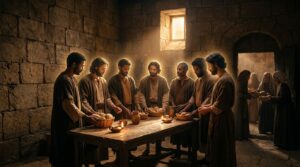
Pentecostal: The Kingdom Within and Pentecost Acts 2
Pentecostal life is more than a tag. Luke 17:21 and Acts 2 guide prayer, invite repentance, and grow a Spirit-filled community shaped from the inside out.

Pentecostal life is more than a tag. Luke 17:21 and Acts 2 guide prayer, invite repentance, and grow a Spirit-filled community shaped from the inside out.
What does “He gave His only begotten Son” really mean? It’s more than a poetic phrase—this word “begotten” carries a deep, original meaning that speaks to God’s heart and His love in action. The begotten Son isn’t just an idea, He’s God’s very own self, sent into our world with a purpose that reaches back to the dawn of creation.

When the Bible talks about blaspheming the Holy Spirit, there’s a unique weight behind those words. It’s more than just a warning, it’s a boundary God doesn’t take lightly. People often imagine it’s just a theological puzzle for scholars or preachers, but the truth sits much closer to the heart. If we want to grasp why blaspheming the Holy Spirit matters so much, we have to meet the ancient words on their own terms—both Hebrew and Greek—and listen for the pulse of meaning that echoes through centuries, all the way to our ordinary lives.

The Bible’s take on a reprobate mind isn’t just a warning or a piece of theology. It’s a wake-up call. “Reprobate mind” (from the Greek adokimos, meaning rejected or unapproved) describes what happens when people no longer care about God’s truth—they trade what’s holy for what feels good, grow numb to right and wrong, and God lets go. It’s mentioned clearly in Romans 1:28, where God gives people over to a depraved mind because they stopped listening and started loving things that can never satisfy.

Discernment might seem rare in a noisy world, but Scripture shows it’s as central to faith today as it was for early believers. The Bible doesn’t just mention discernment; it raises it up as essential for knowing what’s true, what leads to life, and what, quietly, pulls us away from God. Real discernment means more than intuition or a gut feeling—it’s the steady, Holy Spirit given ability to see good and evil for what they really are.

What does it mean to truly repent—and why does the Bible place such weight on this single act of turning? Repentance, in its deepest Biblical sense, isn’t about simply feeling bad or vowing to try harder. At its core, it’s a “change of mind” (Greek: μετάνοια, metanoia) that reaches the heart—a moment when everything inside shifts direction, compelled by God’s grace, not our own strength.