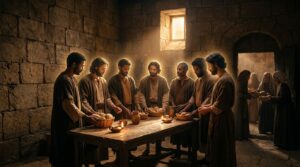
Tongues of Fire in Acts 2:3: Meaning, Biblical Significance and Holy Spirit Power

Tongues of Fire in Acts 2:3: Meaning, Biblical Significance and Holy Spirit Power

The phrase “tongues of fire” in Acts 2:3 sparks worldwide curiosity and spiritual wonder. It appears in Scripture to describe the Holy Spirit’s descent during Pentecost, when visible flames rested on the apostles, marking the time when God’s Spirit descended on earth, fulfilling the prophecy Jesus gave us when He said, “I will ask the Father, and He will give you another Helper, that He may be with you forever; 17 that is the Spirit of truth, whom the world cannot receive, because it does not see Him or know Him, but you know Him because He abides with you and will be in you. 18 I will not leave you as orphans; I will come to you.” View the entire context here.

Prophecy is a promise from God. When God gives us a prophecy, that is God promising us something, and whatever that something is will surely come to pass. What Jesus promises us in John 14 is God will give all who love and know Jesus, all of us, God will give us all, each and every of one us, another person exactly the same as Jesus, the Spirit of Truth, and those who do not know Jesus, they won’t understand us, nor can they understand us.

What Is the Upper Room in Acts 2? Understanding Its Role in Pentecost

What Is the Upper Room in Acts 2? Understanding Its Role in Pentecost

The upper room, a sacred space in Jerusalem, holds profound significance in Christian history. Acts 2 tells us it is the gathering place for Jesus’ disciples when the Holy Spirit descended upon them during Pentecost. This transformative moment not only empowered those present but also sparked the worldwide spread of the Christian faith. The individuals in that room, deeply connected to Jesus through their unique stories, experienced a life-changing event. Pentecost marked the birth of the Church, altering the trajectory of history and continuing to inspire believers today.

Pentecost – 5 Christian Fundamentals and Why Knowing Jesus is God Shapes True Faith

Pentecost – 5 Christian Fundamentals and Why Knowing Jesus is God Shapes True Faith

Pentecost isn’t just a Christian event; its roots stem from the Jewish celebration of Shavuot, the day Moses received the Ten Commandments from God. For Christians, Pentecost marks the moment when God poured out His Spirit and Jesus’ worldwide church empowered by the Holy Spirit and His gifts began, fulfilling promises found throughout Scripture. This isn’t confined to denominations or traditions—it’s a direct encounter with God. Regrettably, many groups claiming Christianity deny Jesus is God and therefore cannot receive the outpouring of the Spirit, diverting from what truly defines a follower of Christ.

Does Christmas Celebrate Christ’s Conception? Discover 1st Origins, Meaning, and Faith Behind the Holiday

Does Christmas Celebrate Christ’s Conception? Discover 1st Origins, Meaning, and Faith Behind the Holiday

Christmas marks more than a season of celebration; it points to the miraculous moment of Jesus’ conception. Many believe our Savior was conceived in Mary’s womb by the Holy Spirit around December 25, and this is the reason we celebrate Christmas when we do, because God has hidden truth in many places to be revealed in His timing. December as the time of God’s conception on earth aligns perfectly with His life and ministry while He was living the life of a human on earth as Jesus. Many believe He was born during the Feast of Tabernacles in Bethlehem, fulfilling prophetic significance near the shepherds’ fields, where lambs for sacrifice were raised by the Levitical shepherds.

The 9 Gifts of the Holy Spirit: Biblical Truths, Historical Evidence, and Today

The 9 Gifts of the Holy Spirit: Biblical Truths, Historical Evidence, and Today

The gifts of the Holy Spirit reveal the active power of God working in the lives of His people. They aren’t just distant historical records or fading Biblical accounts; they’re living because the Holy Spirit, He is living and He is God, and His transformative gifts are reaching people even today. Throughout Scripture and centuries of testimonies, we see how these gifts have brought healing, wisdom, and faith where it seemed impossible. True historic accounts of miraculous interventions—from the early Church to modern believers—demonstrate that God’s Spirit is still moving. Each gift serves a divine purpose, equipping individuals to grow His kingdom and to inspire change.

Prophetic Significance of Jerusalem and Mount Moriah: God’s Promises and Supernatural Interventions

Prophetic Significance of Jerusalem and Mount Moriah: God’s Promises and Supernatural Interventions

Jerusalem stands as one of the holiest cities in human history, revered by Jews, Christians, and Muslims alike. Its golden Dome of the Rock is a striking symbol that captures global attention, marking a site of immense spiritual significance. But for believers, the true depth of Jerusalem’s importance lies well beyond its architectural wonders. It weaves together humanity’s past, the promises of God, and the prophecy of what’s to come.

We use cookies so you can have a great experience on our website. View more
Cookies settings
Accept
Decline
Privacy & Cookie policy
Privacy & Cookies policy
Cookie name Active

Who we are

Our website address is: https://theholyspirit.us.

Comments

When visitors leave comments on the site we collect the data shown in the comments form, and also the visitor’s IP address and browser user agent string to help spam detection. An anonymized string created from your email address (also called a hash) may be provided to the Gravatar service to see if you are using it. The Gravatar service privacy policy is available here: https://automattic.com/privacy/. After approval of your comment, your profile picture is visible to the public in the context of your comment.

Media

If you upload images to the website, you should avoid uploading images with embedded location data (EXIF GPS) included. Visitors to the website can download and extract any location data from images on the website.

Cookies

If you leave a comment on our site you may opt-in to saving your name, email address and website in cookies. These are for your convenience so that you do not have to fill in your details again when you leave another comment. These cookies will last for one year. If you visit our login page, we will set a temporary cookie to determine if your browser accepts cookies. This cookie contains no personal data and is discarded when you close your browser. When you log in, we will also set up several cookies to save your login information and your screen display choices. Login cookies last for two days, and screen options cookies last for a year. If you select "Remember Me", your login will persist for two weeks. If you log out of your account, the login cookies will be removed. If you edit or publish an article, an additional cookie will be saved in your browser. This cookie includes no personal data and simply indicates the post ID of the article you just edited. It expires after 1 day.

Embedded content from other websites

Articles on this site may include embedded content (e.g. videos, images, articles, etc.). Embedded content from other websites behaves in the exact same way as if the visitor has visited the other website. These websites may collect data about you, use cookies, embed additional third-party tracking, and monitor your interaction with that embedded content, including tracking your interaction with the embedded content if you have an account and are logged in to that website.

Who we share your data with

If you request a password reset, your IP address will be included in the reset email.

How long we retain your data

If you leave a comment, the comment and its metadata are retained indefinitely. This is so we can recognize and approve any follow-up comments automatically instead of holding them in a moderation queue. For users that register on our website (if any), we also store the personal information they provide in their user profile. All users can see, edit, or delete their personal information at any time (except they cannot change their username). Website administrators can also see and edit that information.

What rights you have over your data

If you have an account on this site, or have left comments, you can request to receive an exported file of the personal data we hold about you, including any data you have provided to us. You can also request that we erase any personal data we hold about you. This does not include any data we are obliged to keep for administrative, legal, or security purposes.

Where your data is sent

Visitor comments may be checked through an automated spam detection service.  

Save settings
Cookies settings