Pre-Born! gives free ultrasounds to women looking to abort their babies and 86% of those women choose to keep their babies!
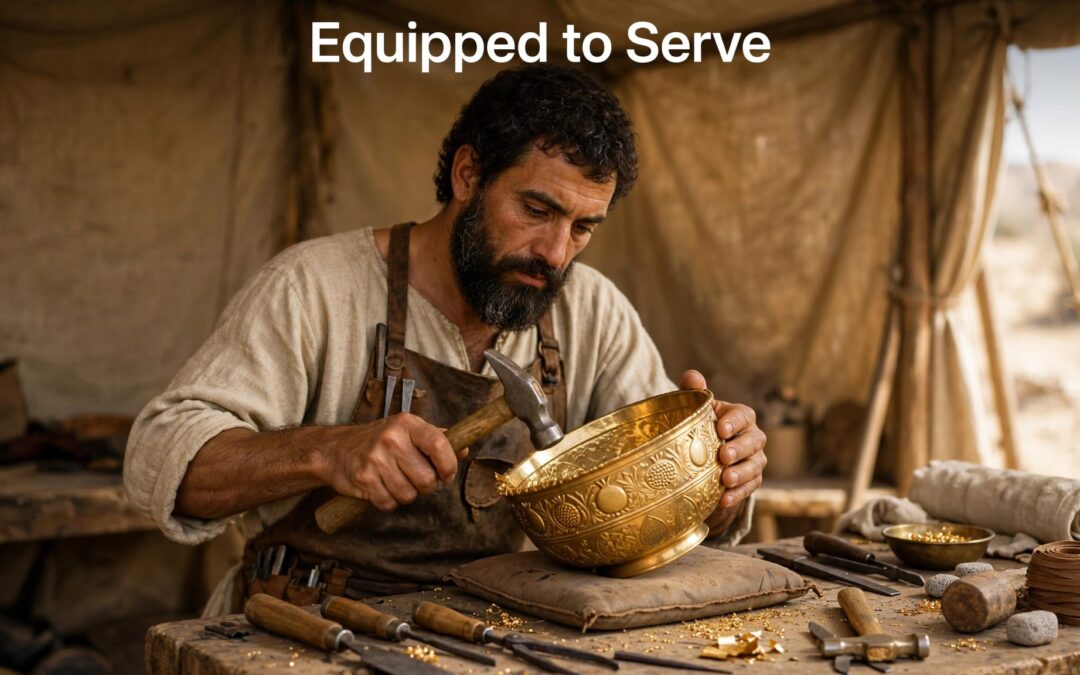
Exodus 31:3 means God filled Bezalel with the Spirit of God and gave him the wisdom and skill needed to build the tabernacle. God cared about the work, and He equipped the person He called to do it.
We often associate the Holy Spirit with preaching, prophecy, and healing, but here His power is expressed through design and skilled hands. To understand what that means for your own service, we need to begin with what God gave the appointed worker.
God filled Bezalel with His Spirit for a particular responsibility, the construction of the tabernacle and its furnishings.
Wisdom, understanding, knowledge, and workmanship describe related abilities that joined sound judgment with practical skill.
The passage encourages dependence on the Holy Spirit while keeping talent, obedience, and service to others together.
We believe the Holy Spirit still empowers believers today. This passage helps us recognize the breadth of His work without assuming every assignment or every spiritual gift is identical. God knows what His people need, and His provision fits His purpose.
The words "I have filled him" put God at the center. He gives the appointed worker wisdom, understanding, knowledge, and craftsmanship for the tabernacle work.
That doesn't make Bezalel an empty instrument with no responsibility. He still has to think, design, make, and work with materials alongside others. The Spirit enables the person who carries out the assignment.
We should hear the humility in that. Whatever ability God entrusts to a person, the credit doesn't begin and end with that person.
The filling produces useful service
What does this filling look like? In the immediate passage, it looks like wise decisions and capable workmanship.
That matters because spiritual usefulness isn't measured only by what happens behind a pulpit. God appointed the craftsman to build the tabernacle and prepare what His people needed for worship.
We shouldn't make ordinary skill the explanation for every supernatural gift. Still, we shouldn't overlook the Holy Spirit's involvement when the work requires tools, materials, and patient attention. The verse names the Spirit as the source of the ability needed for that work.
Where the Verse Fits in the Tabernacle Account
Instructions come before construction
Exodus 25-31 contains God's instructions for the sanctuary, its furnishings, priestly garments, and related worship.
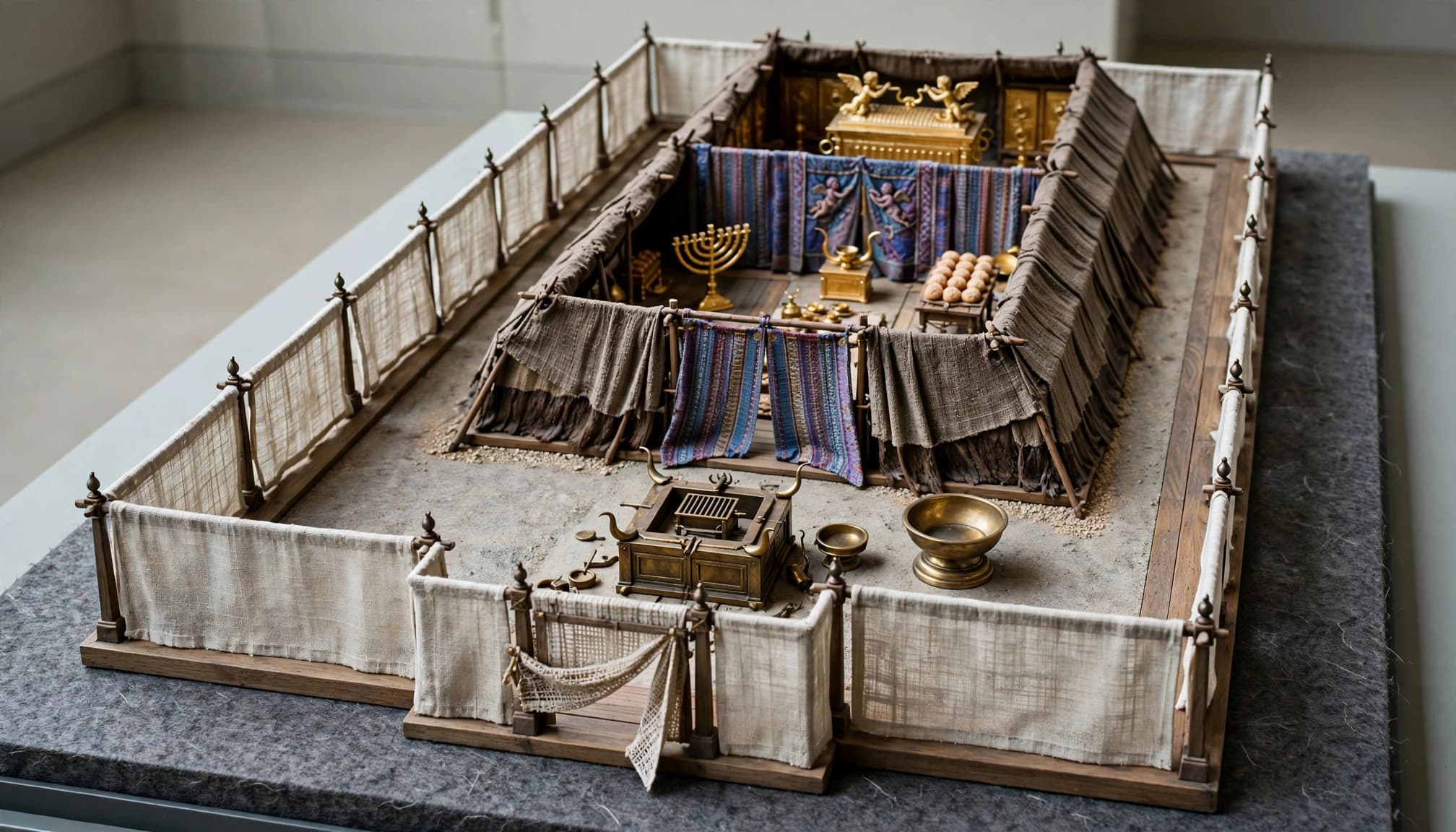
The tabernacle was Israel's portable sanctuary during their wilderness journey. Its construction belonged to God's covenant relationship with His people. This wasn't an artist receiving unlimited freedom to decide how Israel should approach God.
Bezalel's creativity operated within God's directions. That gives us an important boundary: Spirit-given ability serves the Lord's will. A strong impression or an impressive design doesn't give anyone permission to ignore what He has commanded.
The later account records the work
Exodus 35-40 records how those instructions were carried out.
Within that account, Exodus 35:31 repeats his filling with the Spirit of God and the same four qualities. The repetition connects the earlier appointment with the work now beginning among the people.
The first passage gives the commission. The later passage brings that commission before the congregation and describes its fulfillment. We aren't reading about two unrelated gifts or two different craftsmen.
Who Were Bezalel and Oholiab?
Bezalel was the son of Uri, the grandson of Hur, and a member of the tribe of Judah. God called him by name.
We should pause over that. The passage concerns a large communal work, yet God identifies the person who will lead its skilled construction. His concern includes both the sanctuary and the people responsible for making it.
Exodus 31:2-11 also names Oholiab, son of Ahisamach, of the tribe of Dan, as the lead craftsman's assistant and fellow worker. Some translations spell his name Aholiab.
Oholiab works alongside the lead craftsman, and God also gives wisdom to other artisans. The lead craftsman has a leading responsibility, but the work is shared.
Oholiab's role helps correct the idea that being gifted means doing everything yourself. God can appoint a leader and provide capable helpers at the same time. Another person's ability doesn't diminish what He has entrusted to you.
The later account also describes Oholiab and the other artisans teaching others. God-given skill could be shared so more people could participate. We should value that kind of generosity in the Church, where helping another person grow is part of serving the Lord.
How Major Translations Express the Verse
The translations agree that God equips Bezalel, although they express the abilities differently.
Translation
Wording for the abilities
Wording for the work
KJV
"wisdom," "understanding," "knowledge"
"all manner of workmanship"
NKJV
"wisdom," "understanding," "knowledge"
"all manner of workmanship"
NIV
"wisdom," "understanding," "knowledge"
"all kinds of skills"
ESV
"ability," "intelligence," "knowledge"
"all craftsmanship"
The difference is mainly how the translations communicate practical wisdom and skilled work.
For example, "wisdom" may make a modern reader think first about moral advice. "Ability" brings the practical setting into view. Likewise, "workmanship" points toward what a skilled person can produce.
We recommend reading these expressions together rather than treating them as competing descriptions. The craftsman needed judgment, comprehension, knowledge of his work, and the ability to carry it out.
The verse doesn't divide the person into unrelated compartments. These abilities work together. Knowing what should be made, understanding the directions, and possessing the skill to make it all belong to the same responsibility.
This is why the surrounding verses matter so much. They show us what the language means in practice.
What “The Spirit of God” Means in Hebrew
Why some translations say “a divine spirit”
The Hebrew phrase is ruachelohim, commonly translated "Spirit of God."
There is no article in the phrase. Some translators therefore use wording such as "a divine spirit." That difference deserves attention, but the absence of an article doesn't settle every question about how the phrase should be expressed in English.
Hebrew doesn't use articles exactly as English does. We need the grammar, the sentence, and the wider Biblical context together.
The central point remains clear: God Himself is the source of his extraordinary equipment for this assignment.
What being “filled” means here
In this setting, being filled means God has supplied the appointed worker with what he needs for the work. The following descriptions tell us how that filling is expressed.
We understand this as the work of the Holy Spirit, Who is God and remains active among His people. At the same time, the verse doesn't explain every aspect of New Testament teaching about Spirit baptism.
We should allow each passage to speak within its setting. His filling establishes God's empowering involvement in sacred workmanship. Other passages explain the Spirit's work in witness, spiritual gifts, and the life of the Church.
Wisdom and Understanding: Seeing What the Work Requires
Wisdom brings sound creative judgment
The word translated wisdom is chokmah. Its meaning includes skill as well as wisdom.
Here, wisdom involves knowing how to approach the work well. Bezalel must recognize what a faithful and well-executed design requires.
The Treasury of Scripture commentary distinguishes wisdom as the capacity to originate artistic forms, understanding as receiving and appreciating suggestions, and knowledge as familiarity with methods and processes.
These distinctions are useful explanations, although the words overlap. We shouldn't turn them into rigid technical categories that the passage itself never establishes.
Understanding grasps directions and relationships
Understanding translates tbuwnah. It concerns discernment, comprehension, and the ability to see how things belong together.
A person can have an attractive idea and still misunderstand the assignment. He needed to grasp God's instructions and recognize how the parts of the sanctuary related to the whole.
There is something humbling about that. Being gifted doesn't remove the need to listen.
We can ask God for understanding while also receiving instruction, considering correction, and paying attention to details. A teachable heart belongs beside a capable mind. Both are useful when the goal is to do what God has actually asked.
Knowledge and Workmanship: Knowing How to Do It
Knowledge includes methods and materials
Knowledge is daath. In this setting, it includes acquaintance with the materials, methods, and processes needed for the work.
Gold, wood, and stone don't respond in the same way. Knowing the design isn't the whole task. The worker also needs to understand what the material requires.
We should be careful here. The presence of "knowledge" doesn't automatically identify this with the New Testament manifestation called the word of knowledge. The immediate subject is the knowledge required for tabernacle construction.
The same Spirit gives different forms of help for different responsibilities. Context tells us what is being described.
Workmanship carries understanding into action
Workmanship translates melachah, a word connected with work or occupation. Here it describes skilled work across the required crafts.
This is where judgment and knowledge become something useful. The artisan has to produce what the assignment requires.
We sometimes admire an idea before asking whether it has been faithfully carried out. Bezalel's calling reaches all the way to completed workmanship.
The passage gives dignity to practical competence. Careful execution matters to God. Depending on His Spirit doesn't make careless work acceptable, and spiritual language doesn't repair something poorly made.
What These Gifts Looked Like in the Actual Work
The following two verses show all kinds of craftsmanship serving God's design in the tabernacle. They describe artistic design, work in gold, silver, and bronze, cutting stones for setting, and carving wood. The abilities have a concrete purpose.
Click Our Ad to Support Us!
The lampstand required coordinated skill
The gold lampstand had a defined form, with branches and decorative features that belonged together.
Wisdom concerned the sound execution of the whole design. Understanding involved grasping the instructions and relationships between its parts. Knowledge concerned working the material. Workmanship brought those abilities into the finished object.
That is an explanation of how the qualities cooperate, rather than a claim that Scripture assigns one quality to each construction step.
We can appreciate the beauty of the finished lampstand while remembering the thoughtful, demanding work behind it.
The ark and altars required faithful execution
The ark involved wood and gold. The altar of burnt offering involved wood and bronze. These were different objects with different functions, made according to God's directions.
The workers couldn't treat every material or every furnishing alike. They needed attention to purpose as well as appearance.
What good would an impressive object be if it ignored the assignment?
The point reaches beyond artistic admiration. God's equipment enabled people to make what He commanded. The beauty, usefulness, and obedience belonged together. That relationship should shape how we think about excellence in service today.
Other Biblical Passages That Help Explain the Verse
Wisdom belongs to the Spirit’s work
Exodus 28:3 connects God-given wisdom with making the priestly garments. Later, 1 Kings 7:14 describes Hiram's wisdom, understanding, and knowledge for bronze work.
Isaiah 11:2 gives a description often called sevenfold: the Spirit of the LORD, followed by wisdom, understanding, counsel, might, knowledge, and the fear of the LORD.
That prophecy concerns the Messiah. It doesn't make Bezalel equal to Jesus. It helps us recognize wisdom and understanding as qualities associated with the Spirit's work.
God’s power sustains His purposes
Zechariah 4:6 declares, "Not by might nor by power, but by My Spirit."
The immediate setting concerns Zerubbabel and the work of restoration. The passage directs attention toward God's provision rather than confidence in human strength alone.
We need that reminder whenever responsibility feels larger than our ability. Planning and labor have their place, but dependence on God belongs underneath them.
Our study of the Spirit's instruction in Israel follows another part of this same Biblical theme. God equips His people through guidance as well as power.
How This Connects With New Testament Spiritual Gifts
Different gifts serve a shared purpose
1 Corinthians 12:4-7 describes different gifts of the Spirit, ministries, and activities, all given for the benefit of the Church.
That shared purpose helps us understand Bezalel's service. His ability supported the worshiping community. It wasn't given merely to establish his personal importance.
We believe prophecy, healing, tongues, interpretation, and the other gifts of the Holy Spirit remain active today. They reveal God's care and equip the Church for service. Their purpose keeps our attention on Jesus and the people He loves.
The assignments remain different
The craftsman's work shouldn't be forced into every category Paul later describes. A skilled trade and a supernatural manifestation of the Spirit aren't interchangeable terms.
Still, both passages teach dependence on God's provision and responsibility toward others. We receive so that we can serve.
Our teaching on the Holy Spirit's gifts considers those New Testament manifestations more fully.
We also distinguish the Spirit's presence in believers from His empowering work in Spirit baptism. We welcome His power for witness and ministry while remembering that this particular Exodus passage concerns a craftsman's commission. Sound Biblical teaching allows those truths to relate without making them identical.
Is Artistic Talent a Gift From God?
We have good Biblical reason to receive artistic ability with gratitude. Bezalel's work shows that beauty, design, and skilled production can belong within service to God.
John Calvin used this account to argue that Bezalel and Oholiab received their understanding and knowledge through God's Spirit. The passage establishes that God provided for their appointed work.
Other Scriptures broaden our appreciation of God's generosity. Job 32:8 connects understanding with the breath of the Almighty. Isaiah 28:26 describes God instructing the farmer.
God's concern includes work outside the sanctuary.
1 Timothy 4:4-5 teaches that God's creation is good and is to be received with thanksgiving, sanctified through His Word and prayer. Its immediate subject includes food, but its grateful posture also guards against despising God's good creation.
We should distinguish a good ability from every possible use of it. Talent can be directed toward truthful, useful work, or used selfishly and dishonestly.
The gift calls for gratitude. Its use calls for discernment.
What This Means for Work and Godly Character
Offer the actual responsibility to God
You don't have to pretend your job is tabernacle construction to pray about it. You can ask the Holy Spirit for sound judgment, understanding, and help with the responsibility in front of you.
We should resist measuring spiritual value only by visibility. Work done away from a platform can support other people in meaningful ways.
The question is whether you are handling your responsibility faithfully. Are you truthful about what you can do? Are you willing to learn what you don't yet understand?
Those questions bring prayer into contact with the actual work.
Keep ability and character together
A person can be gifted and still need repentance, correction, and growth. We shouldn't treat usefulness as proof that every part of someone's conduct is pleasing to God.
The Spirit's gifts and Godly character belong together. Power doesn't excuse dishonesty, pride, or mistreatment.
We can welcome the supernatural without becoming careless about conduct. The Holy Spirit is holy. Depending on Him should shape the way we speak, receive correction, and treat people who cannot advance our interests.
How to Seek God’s Wisdom in Daily Tasks
We don't need a formula for reproducing Bezalel's assignment. We need a willing dependence on the same God.
Ask for wisdom about the responsibility you actually have. Bring your limitations before God without pretending you already know everything.
Receive instruction and develop the relevant skill. Prayer and learning can belong together, as can dependence and patient practice.
Use what you receive to serve faithfully. Consider the people affected by your decisions, and remain open to correction.
A simple prayer might be: "Holy Spirit, help us understand what this work requires. Give us wisdom to do it faithfully and humility to receive instruction. Let our work honor Jesus and benefit others."
Then give attention to the task itself. Listening carefully, preparing honestly, and correcting a mistake can all be part of a faithful response.
We shouldn't demand that every moment feel extraordinary before obeying. God can help you through clear understanding, wise instruction, and the courage to do what you already know is right. His help remains His gift, rather than something we control.
Frequently Asked Questions
What is the “Spirit of Bezalel”?
People sometimes use that phrase for Spirit-enabled creativity or craftsmanship. The Biblical passage speaks of the Spirit of God filling Bezalel.
We should keep our attention on the Holy Spirit Himself. Bezalel received help for his calling; he didn't become the source of a separate spirit or an empowerment believers must obtain through him.
Was Bezalel the first person filled with God’s Spirit?
He is the first person Scripture explicitly describes as filled with the Spirit of God. That is a statement about the wording of the Biblical record.
It doesn't mean the Spirit had never worked in anyone before him. We should distinguish the first recorded use of an expression from the beginning of God's activity. Bezalel's place in the text highlights the dignity God gives this work.
Does being Spirit-filled remove the need to learn?
The passage doesn't describe every part of Bezalel's learning or tell us exactly how God supplied each ability. It clearly identifies God as the source of his equipment.
The fuller account, Exodus 35:30-35, includes teaching others. We shouldn't use divine empowerment as an excuse to reject instruction. Receiving help, practicing faithfully, and sharing knowledge can belong within obedient service.
Let the Gift Serve God’s Purpose
God filled Bezalel so the work He commanded could be carried out faithfully. The ability had a purpose, and that purpose reached beyond the individual who received it.
We can welcome the Holy Spirit's power and direction in the same spirit of dependence. Whatever God entrusts to you, offer it back through obedient service.
Ask Him for wisdom in the responsibility before you. Then receive instruction, work faithfully, and let the good of others matter more than being noticed.
Related Posts
Holy Spirit Scriptures: 21 Century Meaning, Original Words, and God's Purpose What would life be if we never understood the heart behind every movement of God’s Spirit? Every verse that mentions the Holy Spirit points us somewhere deeper—into friendship with God, into His power for living, and into the mystery of His love and presence that started in Eden and keeps going until Jesus rules the earth in the Millennial Reign.…
1 Truth: Blood of Jesus: God's Life in Sinless Flesh What if the very thing running through the veins of Jesus was not just human, but the Blood of Jesus holding the actual life of God Himself, poured out for us? That sounds huge, maybe even hard to take in at first, yet Scripture keeps pulling us back to this one thread: life is in the blood, sin corrupts human…
21st Century Biblical Anointing: Oil, Prophets, and Holy Spirit Baptism Have you ever wondered why the word "anointing" carries so much depth in Scripture? The idea of anointing—of sacred oil poured out on kings, priests, and prophets—echoes through the Old Testament as a symbol of God choosing, empowering, and setting apart. God didn’t leave the details of the anointing oil a mystery: He gave Moses a recipe, specific and holy,…
The Seven Spirits of God stand as one of the most profound and often misunderstood truths in Christian theology. Rooted deeply in Scripture, they aren’t seven separate entities but rather seven attributes of the one Holy Spirit—God revealing Himself in fullness. Isaiah 11:2 describes these [...]
The gifts of the Holy Spirit reveal the active power of God working in the lives of His people. They aren’t just distant historical records or fading Biblical accounts; they’re living because the Holy Spirit, He is living and He is God, and His transformative gifts are reaching people [...]
The phrase “tongues of fire” in Acts 2:3 sparks worldwide curiosity and spiritual wonder. It appears in Scripture to describe the Holy Spirit’s descent during Pentecost, when visible flames rested on the apostles, marking the time when God’s Spirit descended on earth, [...]
The Bible’s take on a reprobate mind isn’t just a warning or a piece of theology. It’s a wake-up call. “Reprobate mind” (from the Greek adokimos, meaning rejected or unapproved) describes what happens when people no longer care about God’s truth—they trade what’s holy for what feels good, grow numb [...]
The upper room, a sacred space in Jerusalem, holds profound significance in Christian history. Acts 2 tells us it is the gathering place for Jesus’ disciples when the Holy Spirit descended upon them during Pentecost. This transformative moment not only empowered those present but also sparked [...]
Pentecost isn’t just a Christian event; its roots stem from the Jewish celebration of Shavuot, the day Moses received the Ten Commandments from God. For Christians, Pentecost marks the moment when God poured out His Spirit and Jesus’ worldwide church empowered by the Holy Spirit and His gifts [...]
Charismatic gifts, often referred to as manifestation gifts, showcase the miraculous power of the Holy Spirit. From healing and miracles to prophecy and discernment, they serve as tangible evidence of God’s presence and transformative work. These gifts, seen throughout Biblical history, have [...]
Revelation 3:7-8 offers a powerful message to the church in Philadelphia, a message that remains relevant today. It speaks of a divine “open door” that no man can shut, given by the one who holds the Key of David. This imagery represents not only an opportunity but also God’s sovereign [...]
Have you ever wondered why the word “anointing” carries so much depth in Scripture? The idea of anointing—of sacred oil poured out on kings, priests, and prophets—echoes through the Old Testament as a symbol of God choosing, empowering, and setting apart. God didn’t leave the details of [...]
The Bible boldly declares the truth that Jesus is both fully God and fully man—a mystery that anchors the Christian faith. But what does it mean, practically, for us as believers? Jesus didn’t perform miracles or operate in the gifts of the Holy Spirit simply as God; He demonstrated how a [...]
The Antichrist
The Apostate Church
The Rapture
Angels
Book of Daniel
Giants
Judgment
Prophecy
The Apostles
Bible Prophecy
Beware of Deception
Sin
Antichrists
Demon Possession
Healing
Millennial Reign
Redemption
The Gospels
The Holy Spirit
American Prophecy
Israel
Armageddon
Forgiveness
Intercession
Prayer
Revival
The Old Testament
The Tribulation
Faith
Kingdom Of God
Bible Interpretation
Free Will
Book Of Jude
Pride
The Afterlife
The Red Dragon
We use cookies so you can have a great experience on our website. View more
Cookies settings
Accept
Decline
Privacy & Cookie policy
Privacy & Cookies policy
Cookies list
Cookie name
Active
Who we are
Our website address is: https://theholyspirit.us.
Comments
When visitors leave comments on the site we collect the data shown in the comments form, and also the visitor’s IP address and browser user agent string to help spam detection.
An anonymized string created from your email address (also called a hash) may be provided to the Gravatar service to see if you are using it. The Gravatar service privacy policy is available here: https://automattic.com/privacy/. After approval of your comment, your profile picture is visible to the public in the context of your comment.
Media
If you upload images to the website, you should avoid uploading images with embedded location data (EXIF GPS) included. Visitors to the website can download and extract any location data from images on the website.
Cookies
If you leave a comment on our site you may opt-in to saving your name, email address and website in cookies. These are for your convenience so that you do not have to fill in your details again when you leave another comment. These cookies will last for one year.
If you visit our login page, we will set a temporary cookie to determine if your browser accepts cookies. This cookie contains no personal data and is discarded when you close your browser.
When you log in, we will also set up several cookies to save your login information and your screen display choices. Login cookies last for two days, and screen options cookies last for a year. If you select "Remember Me", your login will persist for two weeks. If you log out of your account, the login cookies will be removed.
If you edit or publish an article, an additional cookie will be saved in your browser. This cookie includes no personal data and simply indicates the post ID of the article you just edited. It expires after 1 day.
Embedded content from other websites
Articles on this site may include embedded content (e.g. videos, images, articles, etc.). Embedded content from other websites behaves in the exact same way as if the visitor has visited the other website.
These websites may collect data about you, use cookies, embed additional third-party tracking, and monitor your interaction with that embedded content, including tracking your interaction with the embedded content if you have an account and are logged in to that website.
Who we share your data with
If you request a password reset, your IP address will be included in the reset email.
How long we retain your data
If you leave a comment, the comment and its metadata are retained indefinitely. This is so we can recognize and approve any follow-up comments automatically instead of holding them in a moderation queue.
For users that register on our website (if any), we also store the personal information they provide in their user profile. All users can see, edit, or delete their personal information at any time (except they cannot change their username). Website administrators can also see and edit that information.
What rights you have over your data
If you have an account on this site, or have left comments, you can request to receive an exported file of the personal data we hold about you, including any data you have provided to us. You can also request that we erase any personal data we hold about you. This does not include any data we are obliged to keep for administrative, legal, or security purposes.
Where your data is sent
Visitor comments may be checked through an automated spam detection service.