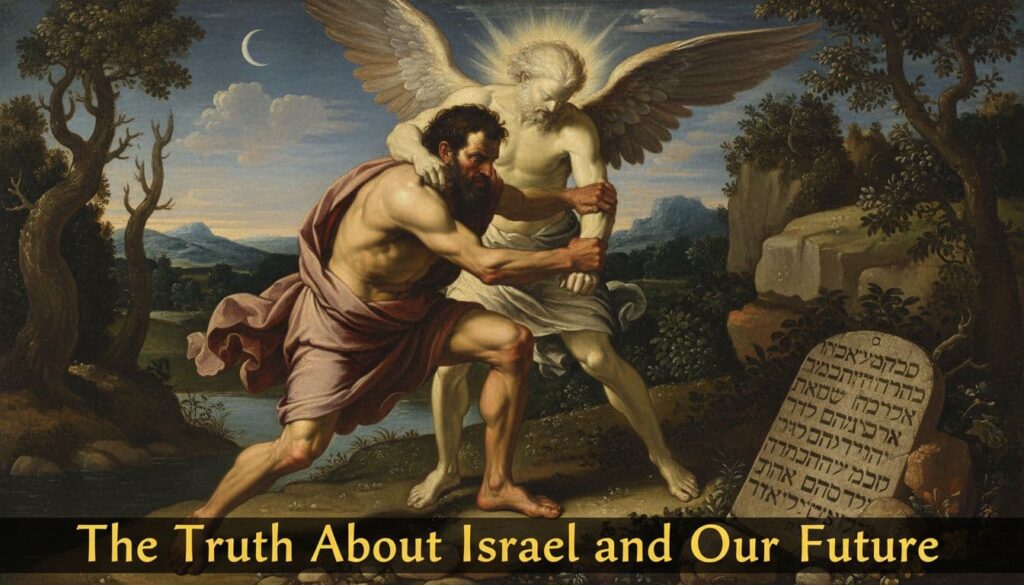
What Is A Zionist? Zion, Herzl, and God’s Plan For Jerusalem
If you scroll social media for five minutes, you will see the word Zionist thrown around like a weapon. For some, it is a badge of honor. For others, it is almost a curse word.
So what is a Zionist really? And how is that different from what we hear in the news?
In this article, we will slow down and look at three layers of this loaded word:
The original Bible meaning of Zion in Hebrew and the history of Jerusalem.
The modern political movement called Zionism, who started it, when it began, and the truth about the “atheist founder” rumor.
What Yahweh says in Scripture about Zion, the land, King David, Messiah, the Millennial Reign, and the role of Christians in all of this.
The goal is simple: to help you hear the word Zionist with more clarity and less confusion, and to understand why the debates around it feel so intense.
What Is Zion in the Bible? The Word, the Place, and the Promise
Before we talk about any modern Zionist, we need to know what Zion itself means. If we skip this, we are arguing about a label while missing the history behind it.
Zion did not start as a hashtag. It started as a hill, then became a city, then a picture of God’s own home with His people.
The Hebrew word “Zion” (Tzion): meaning, roots, and first mentions in Scripture
In Hebrew, Zion is Tzion (צִיּוֹן, often written “Tziyon”).
Jewish sources explain that this word can mean a mark, sign, or landmark, like something that points out a special place. You can see this in explanations such as What Is Zion? and The Meaning of Zion in the Bible.
In the Bible, Tzion first shows up in the history of King David. In 2 Samuel 5, David captures the stronghold of the Jebusites and the text calls it “the stronghold of Zion, that is, the City of David.” At first, Zion is a very real hill on the south side of Jerusalem.
From that moment, Zion and David are linked. David makes it his city. He brings the ark of the covenant up there. Worship, music, and sacrifice all center on that hill.
Over time, the word grows. In the Psalms, you start to hear things like:
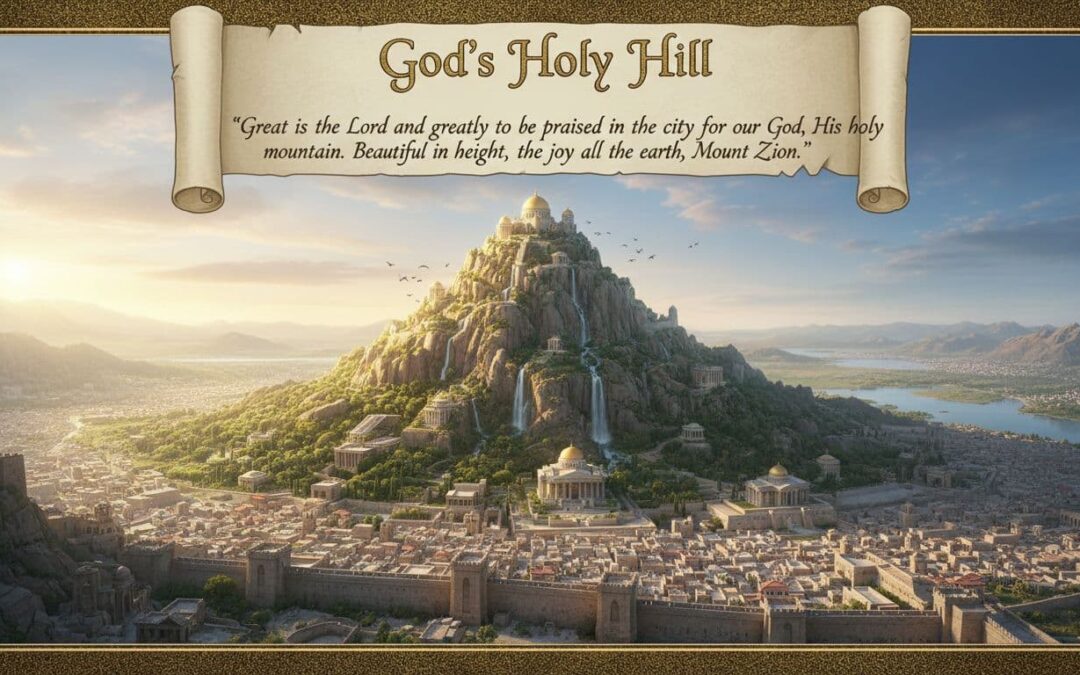
“Great is the Lord and greatly to be praised in the city of our God, His holy mountain. Beautiful in height, the joy of all the earth, Mount Zion” (Psalm 48).
“Out of Zion, the perfection of beauty, God shines forth” (Psalm 50).
Zion moves from being only a hill to being the place where God’s beauty and presence shine out.
How Zion became a name for Jerusalem, God’s presence, and God’s people
As the history of Israel goes on, Zion slowly widens in meaning.
Hill: first, Tzion is that original stronghold in the City of David.
City: then, Zion often stands for Jerusalem as a whole.
Temple area: since the temple is built on the mount, Zion is tied to worship and sacrifice.
All of God’s people and future Kingdom: in the prophets, Zion can mean Israel, the faithful remnant, or even the future Kingdom of God.
For example:
Isaiah speaks to “Daughter Zion” as if Zion is a person who can rejoice or weep.
Micah 4 says, “For out of Zion shall go forth the law, and the Word of the Lord from Jerusalem.” That is both a city and a future spiritual center for the nations.
By the time of the prophets, Zion is a layered word. It points to:
A real place, with stone streets and real people.
A spiritual center, where God’s presence is known.
A future hope, when God will set everything right.
So in a deep Biblical sense, someone with a Zionist heart is not first of all a political activist. They are someone who cares about God’s plan for Zion, for Jerusalem, and for His covenant people.
Zion holds both a physical meaning (land, city, hill) and a spiritual meaning (God’s reign, Messiah, future peace).
The letters of Zion (ציון), King David, and hints of the Messiah in Hebrew
Some Jewish and Messianic teachers enjoy looking at the Hebrew letters of words as a way to reflect on Scripture. Not as magic, not as numerology, but as a way to notice patterns.
Zion is spelled: צ (tzadi), י (yod), ו (vav), ן (final nun).
A few simple points:
Yod (י) is the smallest letter and often seen as a picture of God’s hand or a starting point.
Vav (ו) can mean “and” in Hebrew. In some Bible discussions, vav is also seen as a “nail” or “hook,” a picture of connection.
The name David in Hebrew is דָּוִד (dalet, vav, dalet). You can hear the similar sound: that central vav again.
People who reflect on this word sometimes say that Zion is the place where God’s hand and His covenant work connect with the house of David. It fits the story:
Zion is the City of David.
God promises that a Son of David will rule forever from that place.
The prophets tie Messiah to Zion over and over.
Instead of pushing secret codes, it is better to say it like this: the letters of Zion sit right inside a story where David, Zion, and Messiah belong together. A future King from David’s line will rule from Zion, and that becomes key when we talk about the Millennial Kingdom.
From Ancient Hope to Modern Movement: How Zionism Started and Who a Zionist Is Today
Now we can move from Bible word study into history.
The longing for Zion is very old. The Zionist movement as a political project is quite new.
Jewish longing for Zion before modern times: exile, prayers, and return
The Bible already shows one major exile and return. Judah is taken to Babylon, then brought back. But after the Roman destruction of the Second Temple in 70 AD, the scattering runs far longer.
For many centuries, Jewish people live in exile. They pray facing Jerusalem. They say at Passover, “Next year in Jerusalem.” Synagogue prayers are filled with longing for God to bring them back to Zion.
In that sense, you could call many Jews across history “Zionist” in heart, even before the word existed. They trusted Yahweh to remember His promises to Abraham, Isaac, Jacob, and David, and to restore Zion in His time.
The birth of modern political Zionism in the 1800s and Theodor Herzl’s role
Modern Zionism as a political movement rises in 19th century Europe. Many Jews face violent antisemitism, legal limits, and deep social pressure to give up their identity.
Into this world walks Theodor Herzl (1860–1904), an Austrian Jewish journalist. He watches events like the Dreyfus Affair in France and begins to believe that Jews will never be safe as a scattered minority.
In 1896, he writes Der Judenstaat (“The Jewish State”), where he argues for a publicly recognized homeland for the Jewish people, most clearly in the land of their fathers. You can read more of Herzl’s own words in collections like Herzl on Religion, Freedom, and the First Zionist Congress.
In 1897, he gathers Jews from many nations at the First Zionist Congress in Basel, Switzerland. That meeting starts a movement that aims to create a state where Jews can live as a majority, with self-rule, in their ancestral land.
When people today say “I am a Zionist,” they usually mean they support:
The right of the Jewish people to have a homeland in the land of Israel.
The existence and security of the modern State of Israel.
That is the common political meaning, which sits on top of the older Biblical meaning.
Was Herzl an atheist? The truth about his beliefs and where the rumor came from
Here is a big question: was the founder of modern Zionism an atheist?
Herzl grew up as a secular, Western Jew. He did not receive much traditional Jewish education. His writing focuses on safety, nationalism, and politics, not on Torah or prophets.
Most historians describe him as secular or agnostic, not as a devout believer. Some sources, especially critics, describe him as a man who “did not believe in God” or in traditional Judaism, like in certain political essays about his life such as this profile.
This is where the “atheist” label comes in. Words matter here.
Secular means God and religion are not central to your life.
Atheist means you firmly believe there is no God.
Herzl did not build his Zionism on Bible prophecy. He built it on human need and national survival. Because of that, some religious Jews and later anti‑Zionist writers started calling him an atheist. The goal was to say, “See, this whole project comes from unbelief, not from Torah.”
You can see how the debate continues in modern discussions and even online arguments, such as those linked in questions about the myth that Herzl was an atheist.
So, was he a God-hating enemy of faith? There is no strong evidence for that. He was a secular man who believed a Jewish state was needed. The “atheist” label often functions as a weapon in the argument over whether Zionism is from God or only from man.
Click Our Ad to Support Us!
In Christianity we see this all the time. Secular Christians who believe in God but their life does not revolve around God. Secular Christians still believe in God but they focus more on worldly things or charity and helping other people than their relationship with God, but that does not make them an atheist any more than it made Herzl an atheist.
Why Some People Strongly Oppose Zionism: Main Critics and Their Reasons
Now we come to a hard but important part. Why do some people react so strongly against a Zionist?
The word has become a fault line. To understand that, we need to listen to different groups who reject Zionism for very different reasons.
Religious Jewish critics: why some Orthodox groups reject Zionism
Some ultra‑Orthodox (Haredi) Jewish groups believe that Jews should wait for the Messiah to restore Zion. For them, exile is part of God’s discipline. Any human attempt to build a state before Messiah comes is seen as rebellion.
They quote old rabbinic traditions that warn against “forcing the end.” They look at Herzl and other early Zionist leaders, many of them secular, and say, “This is not the way God will restore Zion.”
At the same time, many other religious Jews became strong Zionists, seeing the return to the land as Yahweh’s work in history. The picture inside the Jewish world is not one voice, but a long family argument.
Secular and political opponents: nationalism, colonialism, and the Palestinian question
Outside of religious debates, many critics see Zionism through a political lens. Some writers in the West have seen it as one more form of ethnic nationalism, or even as a kind of colonial project planted in the Middle East. Some of these arguments are surveyed in works like Israeli Jewish Anti-Zionism.
For many Palestinians and their supporters, the word Zionist is tied to personal and family stories of loss and pain. The creation of the State of Israel in 1948, and later wars, meant that many Arabs in the land lost homes, land, or freedom of movement. So when they hear “Zionist,” they do not think first of David’s city or God’s promises. They think of their own suffering.
Supporters of Zionism hear this and respond with their own history of persecution, pogroms, and the Holocaust. Each side carries deep wounds. The same word carries very different memories.
Christian anti‑Zionism and replacement theology: why some churches say the promises moved to the Church
Inside the church, the word Zionist also divides believers.
Some Christian traditions follow what is called replacement theology or supersessionism. In simple terms, they teach that:
The Church has replaced Israel as God’s people.
All the promises now belong to the Church, not to ethnic Israel.
The land of Israel no longer has a special role in prophecy.
With this view, modern Zionism looks like a distraction at best and an injustice at worst. So some churches strongly resist Christian Zionism and speak against the idea that God has ongoing plans for the Jewish people as a people.
Other Christians read passages like Romans 9–11 and see a different story, where God is not finished with Israel. They gladly call themselves Zionist because they believe God still cares about the land and the descendants of Abraham.
Blessing for all nations through his Seed (Jesus).
An everlasting covenant.
This covenant is repeated to Isaac and Jacob. The land is not a side detail. It is part of the promise from God Himself.
Many Jewish and Christian Zionist believers see the modern return of Jews to the land as at least connected to this ancient covenant. Not the final fulfillment, but a sign that God has not forgotten His Word.
If you have ever wondered whether the Jews living in modern Israel are the same people the Bible talks about, that question sits right in the middle of this covenant history.
The promises to David: a throne in Jerusalem and a coming Son of David
In 2 Samuel 7, God makes another covenant, this time with David. He promises David:
A house (a lasting royal line).
A throne.
A kingdom that will endure.
Psalms like Psalm 89 and Psalm 132 repeat that God will not break this promise. The throne sits in Jerusalem, in Zion, the City of David.
Christians who follow Jesus (Yeshua) see Him as this promised Son of David, the Messiah. The New Testament anchors His birth in Bethlehem, David’s town, which also carries strong prophecy, as explored in studies of Bethlehem as Jesus’ birthplace and prophecy.
For many believers, this is why they call themselves Zionist. They expect their King to reign from Zion, not only in hearts, but also in a restored world.
Prophecies of exile and return: how God scattered Israel and then brought them back
The Torah and the prophets tell a sad and hopeful history:
If Israel turns from God, He will scatter them among the nations.
After judgment, He will remember His covenant and bring them back.
Deuteronomy, Jeremiah, and Ezekiel all speak this way. There is one return from Babylon. But some prophecies talk about a regathering “from all the nations,” larger than the Babylonian return.
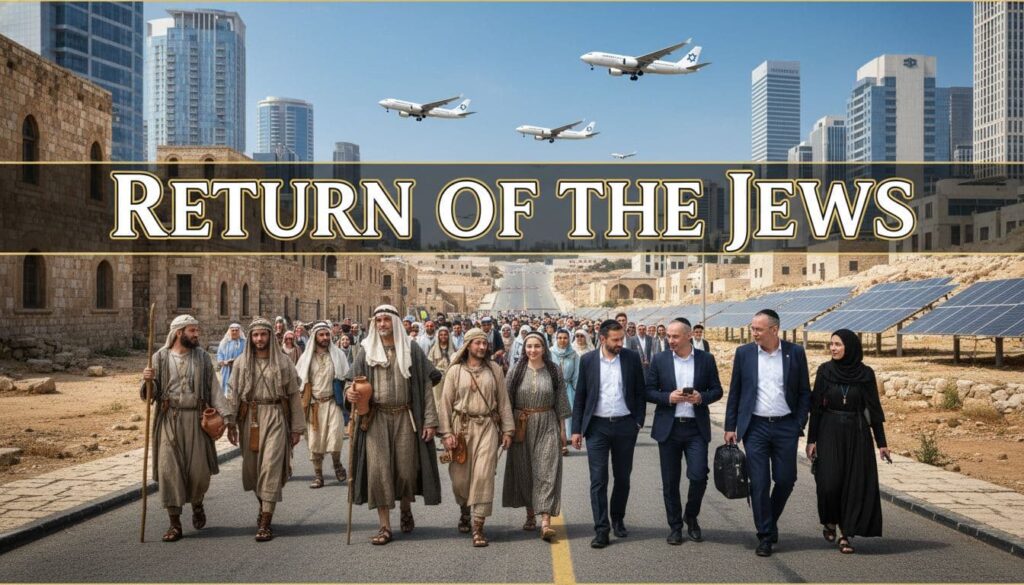
Many Jewish and Christian Zionist readers look at the return of Jews to Israel in the 19th and 20th centuries and say, “This looks like at least a partial fulfillment.” They also agree that the full picture, with national repentance and universal peace, is still ahead.
One major prophecy still ahead: Messiah’s reign from Zion in the Millennial Kingdom
Many Bible readers believe in a coming Millennial Reign, a thousand‑year Kingdom where Messiah rules on earth with justice.
People from many nations will go up to the mountain of the Lord, to Zion.
God will teach them His ways.
Swords will be turned into plowshares.
Zechariah 14 describes the nations coming to Jerusalem to worship the King. In this view, Zionism reaches its deepest meaning when Messiah, the Son of David, reigns from Zion, and peace flows to Israel and to all nations.
The Role of Christians in God’s Plan for Zion: Prayer, Love, and Humble Support
So where do Christians fit in all of this? What does it mean for a follower of Jesus to be a Zionist in a way that honors God and loves people?
How Christians are grafted in yet do not replace Israel
In Romans 9–11, Paul uses a picture of an olive tree.
The tree’s root is the covenant promises.
Natural branches are Jewish people.
Wild branches are Gentile believers who are grafted in by faith in Messiah.
Gentiles share in the promises, but they do not replace the natural branches. Paul even warns the Gentile believers not to become proud or to look down on Israel.
For a Christian Zionist, this means:
Loving Israel does not mean ignoring the Church.
Loving the Church does not mean erasing Israel.
God is faithful to both His ancient people and His new covenant family.
This kind of Zionist heart should feel humble, never arrogant.
Praying for the peace of Jerusalem and loving both Jews and Palestinians
Psalm 122 calls God’s people to “pray for the peace of Jerusalem.” That is not a call to hate anyone. It is a call to care about what God cares about.
A healthy Zionist Christian posture will look like this:
Pray for the Jewish people to know their Messiah and to live in safety.
Pray for Palestinians and all Arabs in the land to know Jesus, find justice, and live in safety.
Support Israel’s right to exist, yet refuse to excuse every policy or act as if any human government is perfect.
Speak blessing, not curses, over all who live between the river and the sea.
In other words, Christian love does not let political labels erase the face of the person in front of you.
Conclusion: Hearing the Word “Zionist” With New Ears
We have covered a lot of ground, but the heart of it is simple.
In the Bible, Zion is about God’s presence, His city, His people, and His coming Kingdom.
Modern Zionism grew out of Jewish suffering, with Theodor Herzl as a mostly secular God believing founder, later painted by some as an atheist to discredit the movement.
Different groups oppose Zionism for religious, political, or theological reasons, and they load the word Zionist with their own stories and pain.
Scripture lays out strong promises about Zion, Israel, the land, David’s throne, and a future reign of Messiah from Jerusalem.
Christians are invited to stand with God’s purposes for Zion in humility, prayer, and deep love for all peoples in the region.
Next time you hear someone called a Zionist, pause. Ask what they mean by that word, and what history sits behind it. Keep opening your Bible, keep listening, and keep asking God to share His heart for Zion and for the nations with you.
Related Posts
I Cried Unto the Lord: Psalm 3 A Life Changing Testimony of God's Power and Unfailing Grace In the heart of every believer lies a powerful testimony waiting to unfold. Tonight, we draw inspiration from Psalms 3:1-4, which speaks to the struggles we face and the power of calling upon God. Verse 1: "Lord, how are they increased that trouble me? Many are they that rise up against me." Verse 4: "I cried unto the Lord with…
What Does Speaking in Tongues Mean for Christians Today? Acts 2 Speaking in tongues sparks curiosity and debate within the Christian faith. Was this miraculous gift only for the Day of Pentecost, or does it still resonate in today’s spiritual experiences? The Bible speaks boldly about tongues as a sign of the Holy Spirit’s power, yet interpretations vary widely. Historical accounts reveal periods of revival, while some prominent Christian leaders today…
Holy Spirit Scriptures: 21 Century Meaning, Original Words, and God's Purpose What would life be if we never understood the heart behind every movement of God’s Spirit? Every verse that mentions the Holy Spirit points us somewhere deeper—into friendship with God, into His power for living, and into the mystery of His love and presence that started in Eden and keeps going until Jesus rules the earth in the Millennial Reign.…
Praying in the Holy Spirit in Jude 20, Explained Simply
Bible Study / Devotional / Discernment / Faith / Holy Spirit Scriptures / Humility / Led by the Spirit / Speaking In TonguesPre-Born! gives free ultrasounds to women looking to abort their babies and 86% of those women choose to keep theirRead more...
Walk in the Spirit: Galatians 5:16 in Daily Life
Bible Study / Devotional / Fruits of the Holy Spirit / Holy Spirit Scriptures / Led by the Spirit / SinPre-Born! gives free ultrasounds to women looking to abort their babies and 86% of those women choose to keep theirRead more...
Filled With the Spirit, Ephesians 5:18 for Daily Life
Bible Study / Devotional / Holy Spirit Power / Holy Spirit Scriptures / Led by the SpiritPre-Born! gives free ultrasounds to women looking to abort their babies and 86% of those women choose to keep theirRead more...
Popular
Seven Spirits of God Explained: Trinity Insights for Your Faith Journey – Isaiah 11:2
The Seven Spirits of God stand as one of the most profound and often misunderstood truths in Christian theology. Rooted deeply in Scripture, they aren’t seven separate entities but rather seven attributes of the one Holy Spirit—God revealing Himself in fullness. Isaiah 11:2 describes these [...]Read more...
The 9 Gifts of the Holy Spirit: Biblical Truths, Historical Evidence, and Today
The gifts of the Holy Spirit reveal the active power of God working in the lives of His people. They aren’t just distant historical records or fading Biblical accounts; they’re living because the Holy Spirit, He is living and He is God, and His transformative gifts are reaching people [...]Read more...
Tongues of Fire in Acts 2:3: Meaning, Biblical Significance and Holy Spirit Power
The phrase “tongues of fire” in Acts 2:3 sparks worldwide curiosity and spiritual wonder. It appears in Scripture to describe the Holy Spirit’s descent during Pentecost, when visible flames rested on the apostles, marking the time when God’s Spirit descended on earth, [...]Read more...
The Antichrist
The Apostate Church
The Rapture
Angels
Book of Daniel
Giants
Judgment
Prophecy
The Apostles
Bible Prophecy
Beware of Deception
Sin
Antichrists
Demon Possession
Healing
Millennial Reign
Redemption
The Gospels
The Holy Spirit
American Prophecy
Israel
Armageddon
Forgiveness
Intercession
Prayer
Revival
The Old Testament
The Tribulation
Faith
Kingdom Of God
Bible Interpretation
Free Will
Book Of Jude
Pride
The Afterlife
The Red Dragon
We use cookies so you can have a great experience on our website. View more
Cookies settings
Accept
Decline
Privacy & Cookie policy
Privacy & Cookies policy
Cookies list
Cookie name
Active
Who we are
Our website address is: https://theholyspirit.us.
Comments
When visitors leave comments on the site we collect the data shown in the comments form, and also the visitor’s IP address and browser user agent string to help spam detection.
An anonymized string created from your email address (also called a hash) may be provided to the Gravatar service to see if you are using it. The Gravatar service privacy policy is available here: https://automattic.com/privacy/. After approval of your comment, your profile picture is visible to the public in the context of your comment.
Media
If you upload images to the website, you should avoid uploading images with embedded location data (EXIF GPS) included. Visitors to the website can download and extract any location data from images on the website.
Cookies
If you leave a comment on our site you may opt-in to saving your name, email address and website in cookies. These are for your convenience so that you do not have to fill in your details again when you leave another comment. These cookies will last for one year.
If you visit our login page, we will set a temporary cookie to determine if your browser accepts cookies. This cookie contains no personal data and is discarded when you close your browser.
When you log in, we will also set up several cookies to save your login information and your screen display choices. Login cookies last for two days, and screen options cookies last for a year. If you select "Remember Me", your login will persist for two weeks. If you log out of your account, the login cookies will be removed.
If you edit or publish an article, an additional cookie will be saved in your browser. This cookie includes no personal data and simply indicates the post ID of the article you just edited. It expires after 1 day.
Embedded content from other websites
Articles on this site may include embedded content (e.g. videos, images, articles, etc.). Embedded content from other websites behaves in the exact same way as if the visitor has visited the other website.
These websites may collect data about you, use cookies, embed additional third-party tracking, and monitor your interaction with that embedded content, including tracking your interaction with the embedded content if you have an account and are logged in to that website.
Who we share your data with
If you request a password reset, your IP address will be included in the reset email.
How long we retain your data
If you leave a comment, the comment and its metadata are retained indefinitely. This is so we can recognize and approve any follow-up comments automatically instead of holding them in a moderation queue.
For users that register on our website (if any), we also store the personal information they provide in their user profile. All users can see, edit, or delete their personal information at any time (except they cannot change their username). Website administrators can also see and edit that information.
What rights you have over your data
If you have an account on this site, or have left comments, you can request to receive an exported file of the personal data we hold about you, including any data you have provided to us. You can also request that we erase any personal data we hold about you. This does not include any data we are obliged to keep for administrative, legal, or security purposes.
Where your data is sent
Visitor comments may be checked through an automated spam detection service.