Holy Prophets, Scoffers, and the Promise of His Coming (2 Peter 3:2 Explained)
Peter’s words in 2 Peter 3 feel like they were written for our news feeds today.
He reminds believers that he is writing a second time to “stir up” our sincere minds. He tells us to remember what God already said through the holy prophets and through the commandment given by the apostles. Then he warns that scoffers will come in the last days, following their own desires and mocking the promise of His coming.
In simple terms, Peter says: “Remember what the prophets said. Remember what Jesus commanded. Know this first: scoffers will show up. Do not be shocked.”
In this study we want to walk through those pieces together. We will look at what “holy prophets” means in the original language, which prophets Peter likely had in mind, what they actually said about the Day of the Lord, and what their world looked like when they spoke. We will also unpack the “commandment” of the apostles, the phrase “knowing this first,” and then camp for a while on that strong word scoffers and what it means for us in our world right now.
Along the way we will connect this to visible signs of the end times, including Israel becoming a nation again in 1948, and how that fits the promise of His coming without setting dates or feeding fear.
Watch and share our video of this article to help us spread the Word of God. Be kind and subscribe to our YouTube Channel. Thank You!
We are not just studying a text. We are letting God read our hearts.
Reading 2 Peter 3:2 in Context: What Is Peter Really Talking About?
Peter writing his second letter, recalling the words of the prophets and preparing believers for mockers in the last days.
If we put 2 Peter 3:1-4 in very simple English, it sounds something like this:
“I am writing you again to wake up your sincere minds. I want you to remember the words spoken before by the holy prophets, and the commandment of the Lord and Savior through your apostles. Know this first: in the last days scoffers will come, following their own desires, and saying, ‘Where is the promise of His coming? Everything has stayed the same since the beginning.’”
Peter is doing at least three things:
He is reminding believers of what God already said.
He is warning that scoffers will show up inside and outside the church.
He is anchoring us in the clear promise that Jesus will come again.
The key phrases we will unpack are:
“Holy prophets”
“The commandment of us, the apostles of the Lord and Savior”
“Knowing this first”
“Scoffers” and “the promise of His coming”
If we miss the context, we might treat the warning about scoffers as a small side note. Peter treats it as a first thing to know. He is saying, “Do not be naïve. When people laugh at the idea of Jesus returning, you are watching a prophecy come true in front of you.”
For a helpful look at the Greek flow of this passage, resources like the 2 Peter 3:2 lexicon on BibleHub can be useful as we study.
Who Are the “Holy Prophets” in 2 Peter 3:2 and What Did They Prophesy?
The Original Greek Meaning of “Holy Prophets” (Hagios Prophētēs)
Hagios means “set apart for God,” dedicated to Him.
Prophētēs means “one who speaks forth,” a spokesman for God.
So “holy prophets” are not just moral role models. They are men God set apart to speak His Words with His Authority. Peter is not talking about random religious thinkers. He is pointing us back to the Old Testament prophets, whose words came before and who warned about judgment, called for repentance, and promised future restoration.
In 2 Peter 1, he already said that “no prophecy of Scripture comes from someone’s own interpretation,” and that men spoke from God as they were carried along by the Holy Spirit. When he says “holy prophets,” he is bringing that same idea into chapter 3.
Peter is saying, in effect, “Do not treat their warnings about the Day of the Lord as optional. God spoke through them.”
If we want a technical breakdown of these terms, we can look at the Greek text analysis of 2 Peter 3:2, but the heart of it is simple: set-apart messengers, speaking God’s words.
Which Old Testament Prophets Does Peter Likely Have in Mind?
Peter does not list names, but the themes point strongly to a group of prophets who spoke about the Day of the Lord and final judgment. They most likely include:
Zephaniah (before the fall of Jerusalem to Babylon)
Each of these prophets dealt with real historical crises. Assyria and Babylon were not fairy tales. Armies were marching. Cities burned. Yet their words often lifted past those local judgments to a final, world-shaking Day of the Lord.
They share patterns:
Warnings of coming judgment
Calls to repent and return to God
Promises of a future Kingdom of peace and righteousness
A good overview of this theme can be found in studies on the Day of the Lord in the prophets, where Joel, Amos, and others are discussed together.
What Did These Holy Prophets Actually Say About the Day of the Lord?
Let’s put some of their key messages into simple language.
Joel 2: Joel describes signs in the sky, blood, fire, smoke, the sun turned to darkness, and the moon to blood before the great and terrible Day of the Lord. Whoever calls on the name of the Lord will be saved.
Amos 5: Amos warns that the Day of the Lord is not a happy day for fake worshipers. For the unrepentant, it is darkness, not light.
Isaiah 13 and 24: Isaiah speaks of the heavens shaking, the earth trembling, and the Lord punishing the world for its evil. This sounds much bigger than one local war.
Jeremiah: Jeremiah talks about the cup of God’s wrath that the nations must drink, and the fall of powerful kingdoms like Babylon. Judgment is not just on Israel. It reaches the whole earth.
Ezekiel: Ezekiel sees fire, scattering, and judgment on both Jerusalem and surrounding nations. Yet he also sees a future restored land and temple.
Zephaniah 1: Zephaniah calls it a day of wrath, distress, and ruin, when God will sweep away everything from the face of the earth with fire.
If we listen to these voices together, they sound very close to Peter when he later says that “the heavens will pass away,” and “the elements will melt with fervent heat” (2 Peter 3:10). They line up as one prophecy.
The Atmosphere When the Holy Prophets Spoke: Crisis, Corruption, and False Security
We sometimes picture the prophets as old men yelling at clouds. Their world was much harsher than that.
Their societies were full of:
Idolatry and occult practices
Injustice in the courts
Leaders who used religion for power
The rich crushing the poor
Widespread sexual sin
A false sense that “we are safe because we have the temple” or a strong army
Assyria and Babylon were looming threats. People heard rumors of invasion. Yet many in Israel chose denial. They treated Isaiah, Jeremiah, and others like drama queens. In other words, they scoffed long before Peter used the word.
Peter is reminding us that this pattern is not new. The same spirit that mocked Joel and Amos is at work in those who mock the promise of Jesus’ return.
The Future Time the Holy Prophets Saw: The Final Day of the Lord
The prophets often spoke with two horizons:
A near judgment, like the fall of Samaria or Jerusalem.
A far judgment, a final Day of the Lord that is global.
That final day is when God judges all evil, shakes heaven and earth, and then restores creation under His rule. This lines up with Peter’s language about:
The Day of the Lord coming like a thief
Heavens passing away with a roar
Elements melting with intense heat
A new heavens and a new earth where righteousness dwells
That future also connects with teaching about Christ’s Kingdom and His reign after His return. For those who want to explore that more, the article on the Millennial Kingdom prophecy in Revelation 20 offers a helpful big-picture view.
Peter’s point is simple: that future is not a myth, and it is not just “symbolic.” It is the finish line of a history the prophets started telling centuries before.
What “The Commandment” and “Knowing This First” Mean in 2 Peter 3:2–3
What Is “The Commandment of the Apostles of the Lord and Savior” and Why Is It Central?
In 2 Peter 3:2, “the commandment” is entolē, a word used for a clear order or charge. Peter says we should remember:
“The commandment of the Lord and Savior through your apostles.”
This likely sums up Jesus’ core teaching:
Repent and believe the Gospel
Love God with all your heart and love your neighbor
Follow Him in holy living
Stay awake and ready for His return
Later in this chapter, Peter asks, “What kind of people ought you to be in holy conduct and Godliness as you look for and hasten the coming of the day of God?” The commandment is not a side rule. It is a call to shape our whole lifestyle around the reality of His coming.
The contrast is sharp: apostles call us to holiness and watchfulness; scoffers call us to relax and live for our cravings.
“Knowing This First”: What Are We Supposed to Know Before Anything Else?
Verse 3 begins with “knowing this first,” or in Greek, touto proton ginōskontes. It is a priority marker. Peter is saying, “Before you start forming opinions, lock this truth into your mind.”
Click Our Ad to Support Us!
What truth? That in the last days scoffers will come, walking according to their own lusts.
This is not a secret code. It is a clear warning that many ignore: the rise of scoffing is itself a sign of the last days. As one helpful article puts it, scoffers in the last days are part of the prophetic picture, not an exception to it.
Peter then explains the “mystery” behind the delay. With God, a thousand years is like a day. The Lord is not slow. He is patient, not wanting any to perish but all to come to repentance. That very patience is what scoffers twist into mockery.
So “knowing this first” becomes a filter. When we hear people sneer at the idea of Christ’s return, we remember, “God told us this would happen. His patience is mercy, not weakness.”
Who Are the Scoffers in 2 Peter 3:3–4 and How Do They Look in Our World Today?
Modern mockers treating Scripture and prophecy as a joke while life goes on around them.
The Original Meaning of “Scoffers”: What Kind of People Is Peter Warning Us About?
The Greek word in 2 Peter 3:3 is empaiktai, often translated scoffers. It carries the idea of mockers, people who speak with open ridicule. They do not just doubt quietly. They turn holy things into a punchline.
A Greek lexicon like this one on 2 Peter 3:3 shows that the word is tied to playful, but poisonous, mocking. These people use sarcasm, clever words, and peer pressure to shame anyone who takes God’s promises seriously. just look around Facebook and you will easily find scoffers.
Peter says they will be very clear in their message:
“Where is the promise of His coming? For since the fathers fell asleep, all things continue as they were.”
We can hear that same tone in many online comments and memes today. The spirit of the scoffers is loud and often proud.
“Walking According to Their Own Lusts”: What Does That Really Mean?
Peter adds that these scoffers are “walking according to their own lusts.” To “walk” that way means they let their desires lead them. They choose their cravings as their compass.
“Lusts” here is broader than sexual sin. It can include:
Sexual immorality
Greed and love of money
Pride and hunger for power
Addiction to comfort and ease
Self-worship and constant self-focus
The key insight is this: they do not reject the promise of His coming because the evidence is bad. They reject it because, if the promise is true, they would need to repent. Their lifestyle is on the line.
So in our time, scoffers may:
Mock Biblical sexuality as hateful or old-fashioned
Use science or philosophy as a weapon against any idea of judgment
Twist grace into a permission slip to sin
Peter says they “willfully forget” that God judged the world before through the flood, and that the present heavens and earth are kept for a coming fire. They forget on purpose, because remembering would disturb their sense of control.
Are These Scoffers Only Unbelievers, or Can They Be Carnal Christians Too?
This hits closer to home. Peter is dealing with false teachers who may still use Christian words. They deny the power of the Lord while living in sin. That means scoffers are not always outside the church.
Carnal Christians, people who claim Christ but live like the world, can slip into a scoffing mindset. It may sound like:
“People have said Jesus is coming back forever. It probably will not happen in our lifetime.”
“Prophecy is confusing. Let’s just focus on being nice.”
“Holiness is legalism. God just wants us happy.”
They may not openly laugh, but their hearts say, “Nothing big is coming. Life will just go on.” They silently agree with the scoffers.
This is where we have to examine ourselves. Do we structure our days as if Jesus could return, or do we quietly live as if He will not? If we feel that sting, the answer is not shame. It is to repent, reset, and ask the Holy Spirit to awaken us.
For a deeper look at how religious groups can even fight against the real work of God, the study on the Synagogue of Satan in Revelation 3:9 can be sobering. It shows how spiritual opposition can wear very religious clothes.
What Is “The Promise of His Coming” and Why Do Scoffers Attack It?
Jesus said He would come again and receive us to Himself (John 14).
Angels said He would return the same way He left, in the clouds (Acts 1).
The apostles taught that He will judge the living and the dead.
Scripture speaks of a resurrection, a final judgment, and a renewed creation.
The word for “coming” is parousia, which means a royal arrival, not a vague spiritual feeling. That is what scoffers attack. If this promise is true, then:
Sin matters.
Justice is coming.
Our choices have eternal weight.
So they say, “Everything has always been the same.” Peter answers, “No. God flooded the world once, and He will shake it again.”
The earlier destruction of Jerusalem in 70 AD, which Jesus predicted in detail, is one strong historical reminder that His words do come true. You can see that connection explored more in this piece on the prophetic fall of Jerusalem in 70 AD.
End Time Signs, Israel as a Nation Again, and How They Relate to Scoffers
Biblical-style picture of cosmic signs that Scripture links to the coming Day of the Lord.
Jesus in Matthew 24 and Luke 21, and the prophets in many places, describe signs that build toward the end:
Wars and rumors of wars
Earthquakes, famines, and plagues
Rising lawlessness and cold love
Worldwide spread of the Gospel
Deception, false christs, and false prophets
Focus on Jerusalem and the land of Israel
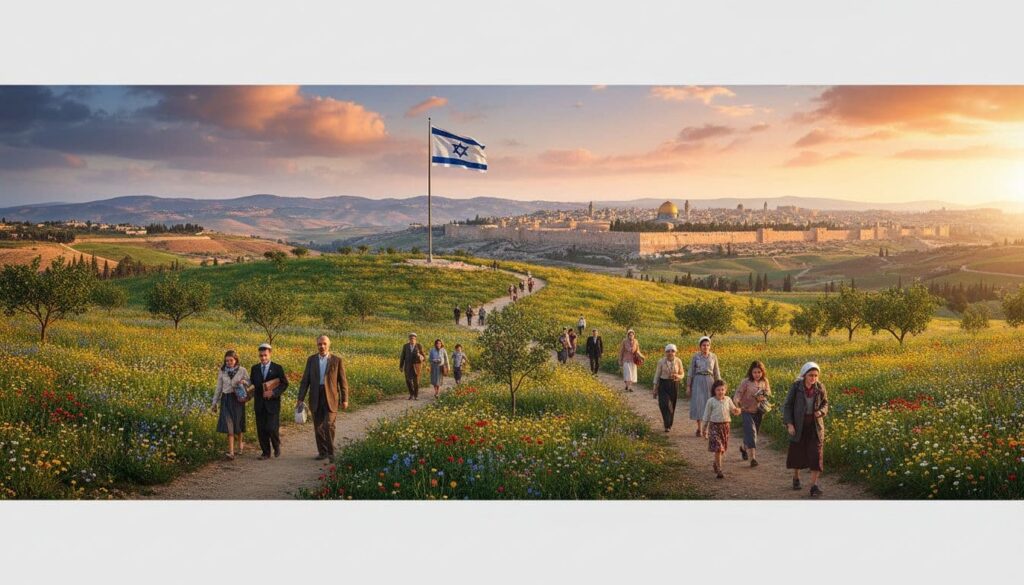
Many Bible students see the rebirth of Israel in 1948 as deeply connected to these prophecies. After centuries without a homeland, the Jewish people returned and a modern state was born. This lines up with passages that speak of God regathering His people to their land in the latter days.
Modern Israel, a living picture of return and restoration after 1948.
We should be careful not to set dates or build whole systems on one event. Yet resources like this balanced Q&A on whether 1948 began the last generation show that many see 1948 as a major stage-setting move in God’s plan.
How do scoffers respond to all this?
They say, “Wars and disasters are normal. Nothing new here.”
They mock anyone who connects prophecy with current events.
They treat Israel’s history as pure politics with no spiritual side.
Peter would say that their reaction is exactly what we should expect “in the last days.” Our call is different. We stay watchful but not paranoid, hopeful but not naïve, anchored in Scripture instead of headlines.
Conclusion: Standing with the Prophets, Not with the Scoffers
If we step back, Peter’s message comes into focus.
The holy prophets spoke of a real Day of the Lord, a time of shaking, fire, judgment, and then restoration. The apostles passed on the commandment of Jesus, calling us to repent, believe, love, and live holy lives while we look for His return. Peter tells us to know first that scoffers will rise, walking after their own lusts and laughing at the promise of His coming.
We have a choice. We can drift with the scoffers, living as if nothing will ever change, or we can stand with the prophets and apostles, shaping our lives around the return of our King.
So we remember Scripture. We check our own hearts. We ask the Holy Spirit to make us ready, not scared. The same God who judged by water is also the God whose patience is mercy.
Jesus will keep His promise. The Day of the Lord will come. Now is the time for us to live awake, not asleep, holding tight to hope in a world full of noise and mockery.
Related Posts
1 Truth: Blood of Jesus: God's Life in Sinless Flesh What if the very thing running through the veins of Jesus was not just human, but the Blood of Jesus holding the actual life of God Himself, poured out for us? That sounds huge, maybe even hard to take in at first, yet Scripture keeps pulling us back to this one thread: life is in the blood, sin corrupts human…
Holy Spirit Scriptures: 21 Century Meaning, Original Words, and God's Purpose What would life be if we never understood the heart behind every movement of God’s Spirit? Every verse that mentions the Holy Spirit points us somewhere deeper—into friendship with God, into His power for living, and into the mystery of His love and presence that started in Eden and keeps going until Jesus rules the earth in the Millennial Reign.…
Difference Between Catholic and Christian: 5 Truths on Faith and Real Unity There’s a lot of confusion around the difference between Catholic and Christian—sometimes it feels like everyone has an opinion, but not everyone has the facts straight. At the core, every true Christian faith centers on this one unshakable truth: Jesus isn’t just a teacher or prophet—Jesus is God. This makes all the difference. Beliefs that deny the full divinity of…
What the Fruit of the Spirit Looks Like in Daily Life
Bible Study / Devotional / Fruits of the Holy Spirit / Holy Spirit Scriptures / Humility / Led by the SpiritPre-Born! gives free ultrasounds to women looking to abort their babies and 86% of those women choose to keep their babies! We all know the ache of reacting the wrong way. We snap at home, tense up at work, or carry quiet envy into church. Yet Galatians 5:22-23 gives us a better picture. The fruit [...]Read more...
Spirit of Adoption in Romans 8:15: Fear, Sonship, and Assurance
Bible Study / Devotional / Faith / Holy Spirit Freedom / Holy Spirit Scriptures / Led by the Spirit / Once Saved Always SavedPre-Born! gives free ultrasounds to women looking to abort their babies and 86% of those women choose to keep their babies! Many of us know the strange feeling of believing the gospel, yet still living as if we’re on probation with God. We pray, repent, and serve, but deep down we wonder [...]Read more...
How to Hear God’s Voice Biblically in John 10:27
Bible Study / Devotional / Discernment / Faith / Follow Jesus / Led by the Spirit / What Does Jesus MeanPre-Born! gives free ultrasounds to women looking to abort their babies and 86% of those women choose to keep their babies! How do we hear God’s voice without guessing? Many of us have asked that in quiet moments, because confusion here can lead to fear, pride, or drift.Jesus gives a steady [...]Read more...
Popular
Seven Spirits of God Explained: Trinity Insights for Your Faith Journey – Isaiah 11:2
The Seven Spirits of God stand as one of the most profound and often misunderstood truths in Christian theology. Rooted deeply in Scripture, they aren’t seven separate entities but rather seven attributes of the one Holy Spirit—God revealing Himself in fullness. Isaiah 11:2 describes these [...]Read more...
The 9 Gifts of the Holy Spirit: Biblical Truths, Historical Evidence, and Today
The gifts of the Holy Spirit reveal the active power of God working in the lives of His people. They aren’t just distant historical records or fading Biblical accounts; they’re living because the Holy Spirit, He is living and He is God, and His transformative gifts are reaching people [...]Read more...
Tongues of Fire in Acts 2:3: Meaning, Biblical Significance and Holy Spirit Power
The phrase “tongues of fire” in Acts 2:3 sparks worldwide curiosity and spiritual wonder. It appears in Scripture to describe the Holy Spirit’s descent during Pentecost, when visible flames rested on the apostles, marking the time when God’s Spirit descended on earth, [...]Read more...
The Antichrist
The Apostate Church
The Rapture
Angels
Book of Daniel
Giants
Judgment
Prophecy
The Apostles
Bible Prophecy
Beware of Deception
Sin
Antichrists
Demon Possession
Healing
Millennial Reign
Redemption
The Gospels
The Holy Spirit
American Prophecy
Israel
Armageddon
Forgiveness
Intercession
Prayer
Revival
The Old Testament
The Tribulation
Faith
Kingdom Of God
Bible Interpretation
Free Will
Book Of Jude
Pride
The Afterlife
The Red Dragon
We use cookies so you can have a great experience on our website. View more
Cookies settings
Accept
Decline
Privacy & Cookie policy
Privacy & Cookies policy
Cookies list
Cookie name
Active
Who we are
Our website address is: https://theholyspirit.us.
Comments
When visitors leave comments on the site we collect the data shown in the comments form, and also the visitor’s IP address and browser user agent string to help spam detection.
An anonymized string created from your email address (also called a hash) may be provided to the Gravatar service to see if you are using it. The Gravatar service privacy policy is available here: https://automattic.com/privacy/. After approval of your comment, your profile picture is visible to the public in the context of your comment.
Media
If you upload images to the website, you should avoid uploading images with embedded location data (EXIF GPS) included. Visitors to the website can download and extract any location data from images on the website.
Cookies
If you leave a comment on our site you may opt-in to saving your name, email address and website in cookies. These are for your convenience so that you do not have to fill in your details again when you leave another comment. These cookies will last for one year.
If you visit our login page, we will set a temporary cookie to determine if your browser accepts cookies. This cookie contains no personal data and is discarded when you close your browser.
When you log in, we will also set up several cookies to save your login information and your screen display choices. Login cookies last for two days, and screen options cookies last for a year. If you select "Remember Me", your login will persist for two weeks. If you log out of your account, the login cookies will be removed.
If you edit or publish an article, an additional cookie will be saved in your browser. This cookie includes no personal data and simply indicates the post ID of the article you just edited. It expires after 1 day.
Embedded content from other websites
Articles on this site may include embedded content (e.g. videos, images, articles, etc.). Embedded content from other websites behaves in the exact same way as if the visitor has visited the other website.
These websites may collect data about you, use cookies, embed additional third-party tracking, and monitor your interaction with that embedded content, including tracking your interaction with the embedded content if you have an account and are logged in to that website.
Who we share your data with
If you request a password reset, your IP address will be included in the reset email.
How long we retain your data
If you leave a comment, the comment and its metadata are retained indefinitely. This is so we can recognize and approve any follow-up comments automatically instead of holding them in a moderation queue.
For users that register on our website (if any), we also store the personal information they provide in their user profile. All users can see, edit, or delete their personal information at any time (except they cannot change their username). Website administrators can also see and edit that information.
What rights you have over your data
If you have an account on this site, or have left comments, you can request to receive an exported file of the personal data we hold about you, including any data you have provided to us. You can also request that we erase any personal data we hold about you. This does not include any data we are obliged to keep for administrative, legal, or security purposes.
Where your data is sent
Visitor comments may be checked through an automated spam detection service.