Believer, Follower, Or Apostate? What It Really Means To Follow Jesus
Some of us feel stuck. We believe the Gospel, we go to church, we know the verses, yet something inside feels dry. We say we want to follow Jesus, but our life does not seem to move.
In the New Testament, the writers used real words from real life: pisteuō (to believe), mathētēs (disciple), akoloutheō (to follow), and apostasia (falling away). These words draw a line between knowing about Jesus and choosing to follow Jesus with our whole life.
Watch and share our video of this article to help us spread the Word of God. Be kind and subscribe to our YouTube Channel. Thank You!
In this article we will look at that line. We will walk through people who told Jesus “no” or “not yet,” the parables where people refused God’s Kingdom, and how those same patterns show up in us today. At the center is a simple but sharp truth: to follow Jesus always includes a clear call to repent of one thing that is blocking us right now. If we refuse that step, our growth usually stops at that very point.
Believer, Follower, Or Apostate: What The Bible’s Original Words Really Mean
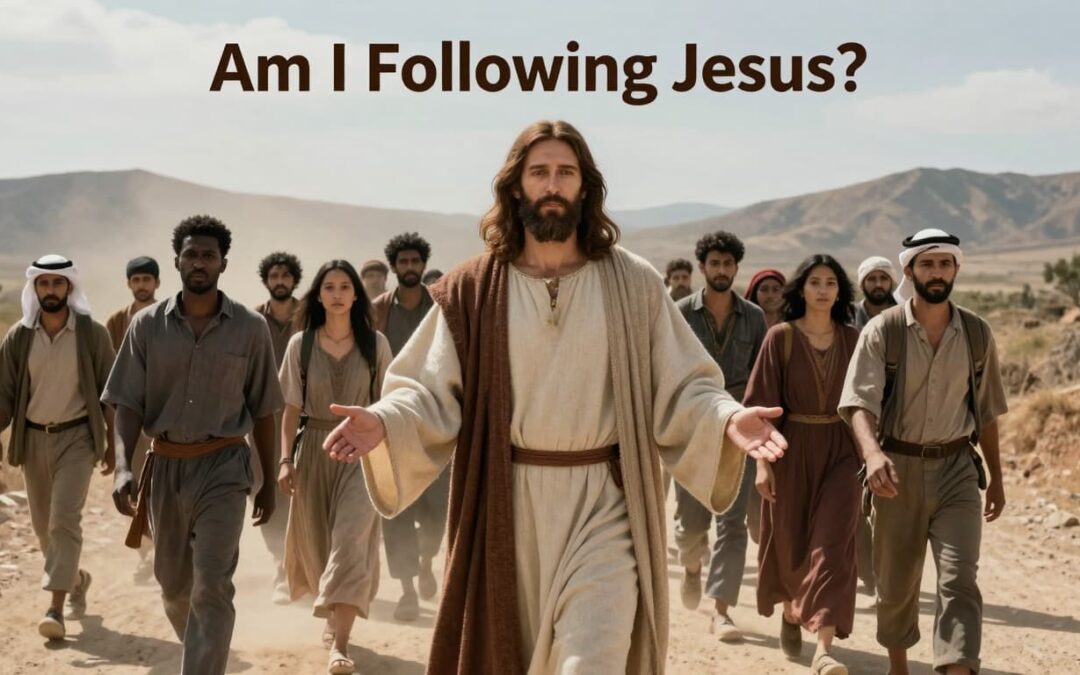
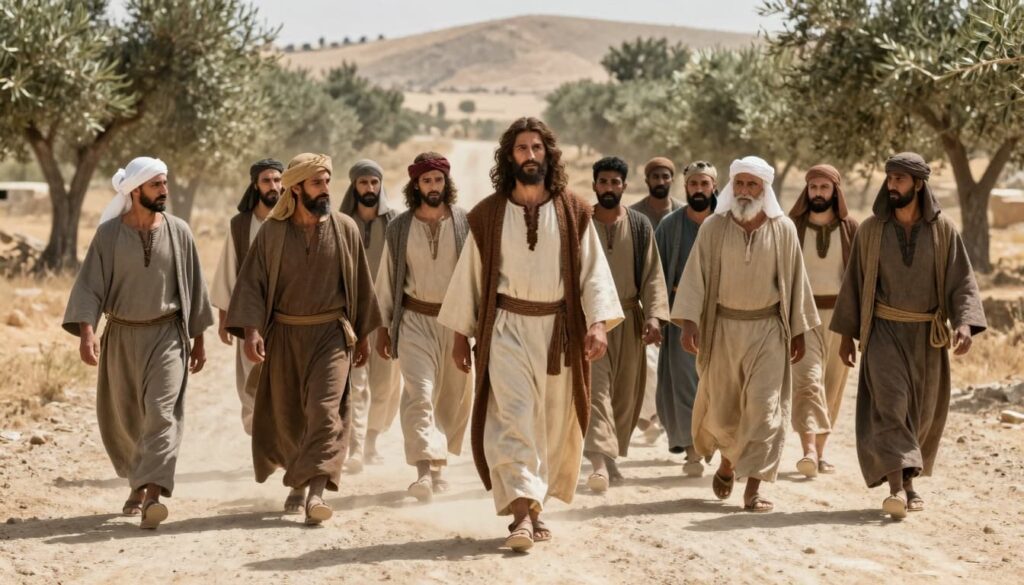
Jesus leading early followers along a dusty road
The Bible does not use our church labels like “saved but not serious” or “on fire.” Instead, it gives us a simple framework. We see those who believe, those who follow, and those who turn away.
Language matters, because if we mix these together we can fool ourselves. We might say we follow Jesus when we are only agreeing with Him in our mind. Or we might fear we are apostate when we are really just struggling and being called back to repentance.
What A “Believer” Is In The New Testament (pisteuō)
The verb pisteuō means “to believe, to trust, to put faith in.” It is used all through John’s Gospel for people who accept that Jesus is from God. They believe He can heal, cast out demons, even raise the dead.
But not all belief in the Gospel According to John leads to deep change. Some people believed Jesus’ signs yet would not confess Him, because they loved the praise of people more than the praise of God. They believed He was powerful, but they would not hand Him the steering wheel of their life.
Many of us live here for years. We believe the cross is real. We believe the Bible is true. We may even pray and see answers. Yet day to day we still quietly run our own schedule, money, body, and relationships. We say we want to follow Jesus, but our belief has not moved into surrender.
Belief is good. It is the door into life. But the New Testament keeps pushing us past bare belief into something deeper.
What A True Follower Or Disciple Is (mathētēs and akoloutheō)
Mathētēs means “learner” or “apprentice.” A disciple in the first century did not just sit in a classroom. They lived with the teacher, copied his way of life, and let his words reshape everything.
To follow Jesus, in that sense, is not only to agree with His teaching. It is to let Him lead our choices, habits, money, relationships, and plans. One writer notes that akoloutheō can even carry the idea of assisting and accompanying, living close enough to be shaped by Him in practice, not just in theory. You can see a helpful short study on this word in this article on “follow”.
Jesus summed this up in Luke 9:23. He said that anyone who wants to come after Him must deny themselves, take up their cross daily, and follow Him. That is for every Christian, not a small elite group.
So a follower is a believer whose faith has moved into action, obedience, and ongoing repentance. To follow Jesus is to keep saying, “You get to be Lord here too,” one area at a time.
What It Means To Become An Apostate (apostasia and apostates)
Apostasia means falling away, rebellion, or desertion. It does not mean a rough week or an honest doubt. It describes someone who knowingly turns away from the faith they once confessed.
Apostasy shows up in many forms. One person throws off the name of Christ and walks away openly. Another keeps the label “Christian” but quietly rejects Christ’s authority and twists His words. Articles like this overview of apostasy or this teaching on apostates can give deeper background.
Warning signs are simple but serious: we stop listening to conviction, we keep making excuses, we call what is evil good, we love our sin more than Jesus and want a religion that blesses it. Over time, the heart grows hard.
The good news is that as long as we still care, as long as we feel the pull to repent and follow Jesus again, we are not past hope. Resources on the reprobate mind and its warning signs show both the danger of a hardened heart and the mercy God still offers. The call is always the same: turn around, come home, follow Jesus again.
When People Told Jesus “No”: Real-Life Stories Of Refusing To Follow Jesus
The Gospels are honest. They do not only show the people who dropped everything to follow Jesus. They also show the ones who almost did, but walked away. In each story, Jesus puts His finger on one specific issue. That issue is their doorway of repentance.
First, a scribe comes to Jesus very eager. “Teacher, I will follow you wherever you go.” It sounds perfect. We might put this man on a ministry team. But Jesus answers, “The Son of Man has nowhere to lay His head.”
Jesus is not just talking about housing. He is exposing the man’s hidden love of comfort and security. To follow Jesus here would mean embracing a life where God, not comfort, sets the path. The question is, “Will you follow Me if it costs you your nest?”
Next, another man wants to follow, but says, “Lord, let me first go and bury my father.” That sounds fair. Jesus replies, “Follow Me, and let the dead bury their own dead.” Again, He is cutting to the heart. This man is saying, “Later, when life settles down, I will follow Jesus.”
We do the same. We say, “Once the kids are older,” “Once work is less crazy,” “Once my health is better,” “Then I will really follow Jesus.” His answer still stands: “Follow Me now.” The need to repent here is delay itself.
A helpful reflection on this scene is found in this short study on Luke 9, where the cost of following is laid out very clearly.
The Rich Young Ruler: When Money Matters More Than The Master
The rich young ruler shows up in Matthew 19, Mark 10, and Luke 18. He comes running, kneels, and calls Jesus “Good Teacher.” He keeps the commandments, at least on the surface. By most church standards he is a success story.
Jesus looks at him and loves him. Then He speaks the one sentence that reveals the man’s heart: “Sell what you have, give to the poor, and you will have treasure in heaven. Then come, follow Me.”
This was not a random hard test. Money was the center of this man’s safety and identity. To follow Jesus, he had to let Jesus become his wealth. The call to repent was focused and clear.
He went away sad. He wanted eternal life, but he did not want it on Jesus’ terms. Today the “one thing” might be status, career, a relationship, a habit, or the image we built online. Jesus does not always ask everyone to sell all they have, but He does always ask for the thing that rivals Him most.
To follow Jesus is to say, “Whatever You put Your hand on, I will lay down.” That one place of surrender is our current point of repentance.
Click Our Ad to Support Us!
The Cost Of Discipleship: Deny Yourself, Take Up Your Cross, And Follow
Jesus sums up all these stories in Matthew 16:24–26. He tells His disciples: deny yourself, take up your cross, and follow Me.
We can think of it like three connected steps.
Deny yourself: We stop acting like we are the owner of our life. We stop telling God what He can and cannot touch.
Take up your cross: We accept that following may cost us comfort, approval, plans, or even our life. A cross is not a small annoyance. It is the place where our will dies so His will can live.
Follow Me: We walk behind Him in daily obedience. We keep saying “yes” to the next thing He shows.
This call is basic Christianity. It is not for “super Christians.” It is the description of what it means to follow Jesus at all.
Parables Of The Kingdom: Why Saying “No” To God’s Kingdom Is Saying “No” To Jesus
Jesus did not only call individuals. He also told stories about God’s Kingdom to show what happens when people receive or refuse His rule. The Kingdom is not just a place in the future. It is the active rule of God in and through Jesus. To refuse that rule is to refuse Jesus Himself.
The Great Banquet And Wedding Feast: Excuses That Keep Us From The Table
A banquet table prepared while invited guests stay away
In Luke 14, a man throws a great banquet. The table is full, the invitation is free, but the guests begin to make excuses. One bought a field. Another bought oxen. Another just got married. Good things, but placed above the feast.
In Matthew 22, a king prepares a wedding banquet for his son. Some guests ignore the messengers. Others insult and attack them. One man even shows up without wedding clothes, treating the king’s honor as a light thing.
These excuses cover most of our lives: business, possessions, relationships, casual religion. The feast pictures life with Jesus in His Kingdom, now and forever. To say “no” to the invitation, or to come on our own terms, is to say “no” to Him.
If we want to study the Great Banquet more, this explanation of the parable shows how it applies to both Israel and us today.
To follow Jesus is to accept both His invitation and His way. We do not design the menu. We do not set the dress code. We come in humility, hungry, ready to be changed.
The Parable Of The Sower: Four Soils And The Difference Between Hearing And Following
Visual picture of the four soils Jesus described
In Matthew 13, Jesus tells of a farmer scattering seed. The same seed falls on four kinds of soil.
The hard path: birds snatch the seed. This is the person who hears but rejects.
The rocky ground: plants spring up fast but wither in the sun. This is the person who receives with joy but falls away when trouble comes.
The thorny ground: plants grow, but thorns choke them. This is the person who hears but gets choked by worries, riches, and pleasures.
The good soil: the word sinks deep, and fruit comes with patience.
Only the last soil truly follows. The others heard. Some even seemed to start well. But they did not keep walking with Jesus when it got costly or when other loves pulled their hearts away.
We can ask the Holy Spirit, “Which soil am I acting like right now?” Where we see hardness, shallowness, or divided hearts, that is where He invites us to repent and follow Jesus in a fresh way.
The Talents And Other Kingdom Parables: Refusing The King’s Rule In Daily Life
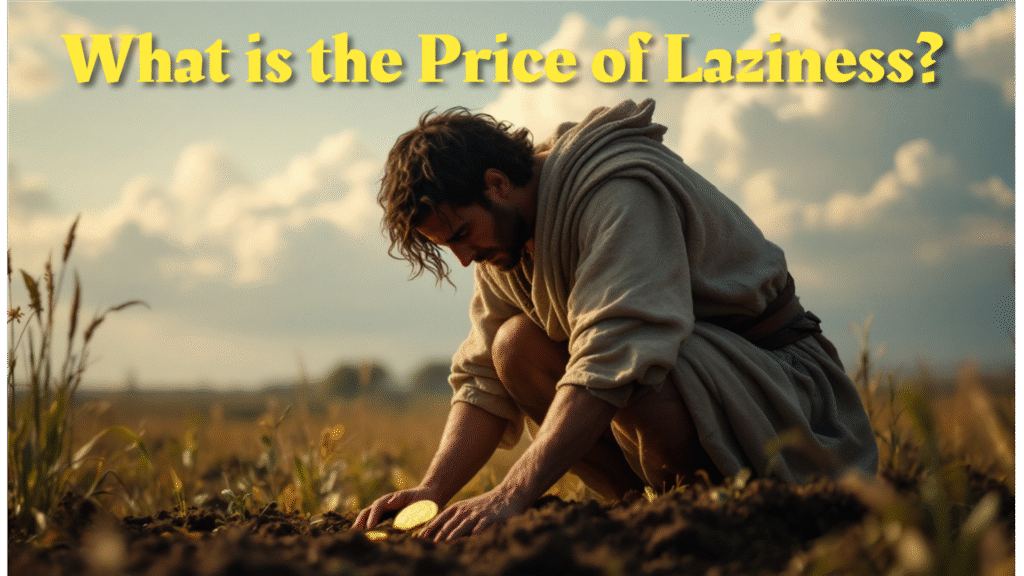
In Matthew 25:14–30, a master gives his servants different amounts of money, then leaves. Two invest and double what they were given. One hides his talent in the ground.
You can read the full text in this Bible passage. Notice what the third servant says. He calls the master harsh. He blames his fear. In the end, his problem is not lack of ability. It is lack of trust and obedience.
This servant represents a heart that will not let the King rule its daily decisions. He wants safety without risk, belief without obedience. That is the opposite of what it means to follow Jesus.
Other parables tell us not to hide our light, not to waste our gifts, not to ignore the master’s return. In every case, the issue is the same. Will we treat Jesus as King in the way we use what He placed in our hands, or will we bury it?
How Jesus Still Calls Us Today: Repent, Follow Jesus, And Keep Growing
The same patterns are alive in us right now. Many of us believe the right things about Jesus, but when He puts His finger on one specific area, we pull back. We would rather stay safe than follow Jesus deeper.
Our growth often pauses at the last clear step of obedience we refused. God is kind enough to wait there with us, but He will not pretend that we have moved on.
Finding “The One Thing” Jesus Is Asking Us To Lay Down Right Now
A simple way to listen is to sit with a few honest questions:
What do we fear losing the most?
What would we quietly refuse if Jesus asked for it?
Where do we keep saying, “Not yet, Lord”?
That place is often our current doorway of repentance. Jesus is not cruel. He does not choose at random. He places His hand on the thing that blocks our heart from being fully His.
We can pray, “Holy Spirit, show me my ‘one thing.’ Help me follow Jesus in that area today.” Resources about the Upper Room and Pentecost remind us that we are not asked to do this alone. The same Spirit who filled the first disciples now lives in us to help us obey.
Why Spiritual Growth Stops When We Refuse To Repent
Many of us have learned the hard way that God often waits at the place we said “no.” We can read more, serve more, sing louder, and still feel stuck, because He is still pointing at that last step.
It might be forgiving someone who hurt us. It might be ending a secret habit. It might be stepping into a call to serve, or carving out real time to be with Him. Articles on the eternal danger of unforgiveness show how one unyielded place can choke our whole walk.
No amount of Bible knowledge or busy church work can replace actual repentance. In the stories we looked at, each person or group stopped exactly where they would not let go. The rich young ruler stopped at money. The banquet guests stopped at comfort and business. The third servant stopped at fear.
Repentance is not a punishment. It is a gift. It is the door back into living fellowship, back into the joy of getting to follow Jesus in real life.
Practical Ways We Can Follow Jesus Daily In Today’s World
So how do we follow Jesus in the middle of phones, bills, meetings, kids, and constant noise?
We start small and honest. Each morning we can simply tell Him, “You are Lord of today. Lead me.” We open Scripture not to tick a box but to listen for one concrete step of obedience, then do that thing. When the Spirit nudges us about sin, we confess quickly and turn.
We choose Jesus over comfort or image in quiet ways: speaking truth with gentleness when gossip starts, turning our eyes from what feeds lust, giving when no one sees, serving when it costs our Saturday. We use our time, money, and gifts as tools to love God and people, not just to build our little kingdom.
We also stay close to other disciples. We need people who are trying to follow Jesus too, who will ask hard questions and remind us of grace. The journey of following is daily, not one big moment at an altar.
Conclusion
When we pull the stories and parables together, a clear picture emerges. A believer accepts that Jesus is Lord. A follower lets that belief reshape their life. An apostate turns away and refuses His rule.
Real people told Jesus “no” when He called them to follow. Others said they wanted the Kingdom yet refused the invitation or came on their own terms. The same choices sit in front of us. To reject the Kingdom is to reject Jesus, because Jesus is the Kingdom, God’s rule in human flesh.
The good news is simple and strong. Today we can ask Him to show us our “one thing,” the place where we need to repent so we can follow Jesus again with a clear heart. He is not finished with us. His table is still set. His road is still open. His Spirit is still ready to walk with us, one surrendered step at a time.
Related Posts
1 Truth: Blood of Jesus: God's Life in Sinless Flesh What if the very thing running through the veins of Jesus was not just human, but the Blood of Jesus holding the actual life of God Himself, poured out for us? That sounds huge, maybe even hard to take in at first, yet Scripture keeps pulling us back to this one thread: life is in the blood, sin corrupts human…
Holy Spirit Scriptures: 21 Century Meaning, Original Words, and God's Purpose What would life be if we never understood the heart behind every movement of God’s Spirit? Every verse that mentions the Holy Spirit points us somewhere deeper—into friendship with God, into His power for living, and into the mystery of His love and presence that started in Eden and keeps going until Jesus rules the earth in the Millennial Reign.…
Difference Between Catholic and Christian: 5 Truths on Faith and Real Unity There’s a lot of confusion around the difference between Catholic and Christian—sometimes it feels like everyone has an opinion, but not everyone has the facts straight. At the core, every true Christian faith centers on this one unshakable truth: Jesus isn’t just a teacher or prophet—Jesus is God. This makes all the difference. Beliefs that deny the full divinity of…
Bible Study / Devotional / Discernment / Faith / Follow Jesus / Led by the Spirit / What Does Jesus MeanPre-Born! gives free ultrasounds to women looking to abort their babies and 86% of those women choose to keep their babies! How do we hear God’s voice without guessing? Many of us have asked that in quiet moments, because confusion here can lead to fear, pride, or drift.Jesus gives a steady [...]Read more...
How to Test the Spirits Biblically in 1 John 4
Bible Study / Devotional / Discernment / Prophecy / Spirit Of Truth / Spiritual Warfare / The Church / The DevilPre-Born! gives free ultrasounds to women looking to abort their babies and 86% of those women choose to keep their babies! Beloved, do not believe every spirit. Not every spiritual voice comes from God. John says that plainly.We hear sermons, prophecies, reels, podcasts, and personal stories every [...]Read more...
The Good Samaritan Explained, Our Gospel Mirror Luke 10
The Good SamaritanMost of us know the Good Samaritan as a simple moral story. Help the person in front of us. Don’t pass by. That’s true, and Jesus meantRead more...
Popular
Seven Spirits of God Explained: Trinity Insights for Your Faith Journey – Isaiah 11:2
The Seven Spirits of God stand as one of the most profound and often misunderstood truths in Christian theology. Rooted deeply in Scripture, they aren’t seven separate entities but rather seven attributes of the one Holy Spirit—God revealing Himself in fullness. Isaiah 11:2 describes these [...]Read more...
The 9 Gifts of the Holy Spirit: Biblical Truths, Historical Evidence, and Today
The gifts of the Holy Spirit reveal the active power of God working in the lives of His people. They aren’t just distant historical records or fading Biblical accounts; they’re living because the Holy Spirit, He is living and He is God, and His transformative gifts are reaching people [...]Read more...
Tongues of Fire in Acts 2:3: Meaning, Biblical Significance and Holy Spirit Power
The phrase “tongues of fire” in Acts 2:3 sparks worldwide curiosity and spiritual wonder. It appears in Scripture to describe the Holy Spirit’s descent during Pentecost, when visible flames rested on the apostles, marking the time when God’s Spirit descended on earth, [...]Read more...
The Antichrist
The Apostate Church
The Rapture
Angels
Book of Daniel
Giants
Judgment
Prophecy
The Apostles
Bible Prophecy
Beware of Deception
Sin
Antichrists
Demon Possession
Healing
Millennial Reign
Redemption
The Gospels
The Holy Spirit
American Prophecy
Israel
Armageddon
Forgiveness
Intercession
Prayer
Revival
The Old Testament
The Tribulation
Faith
Kingdom Of God
Bible Interpretation
Free Will
Book Of Jude
Pride
The Afterlife
The Red Dragon
We use cookies so you can have a great experience on our website. View more
Cookies settings
Accept
Decline
Privacy & Cookie policy
Privacy & Cookies policy
Cookies list
Cookie name
Active
Who we are
Our website address is: https://theholyspirit.us.
Comments
When visitors leave comments on the site we collect the data shown in the comments form, and also the visitor’s IP address and browser user agent string to help spam detection.
An anonymized string created from your email address (also called a hash) may be provided to the Gravatar service to see if you are using it. The Gravatar service privacy policy is available here: https://automattic.com/privacy/. After approval of your comment, your profile picture is visible to the public in the context of your comment.
Media
If you upload images to the website, you should avoid uploading images with embedded location data (EXIF GPS) included. Visitors to the website can download and extract any location data from images on the website.
Cookies
If you leave a comment on our site you may opt-in to saving your name, email address and website in cookies. These are for your convenience so that you do not have to fill in your details again when you leave another comment. These cookies will last for one year.
If you visit our login page, we will set a temporary cookie to determine if your browser accepts cookies. This cookie contains no personal data and is discarded when you close your browser.
When you log in, we will also set up several cookies to save your login information and your screen display choices. Login cookies last for two days, and screen options cookies last for a year. If you select "Remember Me", your login will persist for two weeks. If you log out of your account, the login cookies will be removed.
If you edit or publish an article, an additional cookie will be saved in your browser. This cookie includes no personal data and simply indicates the post ID of the article you just edited. It expires after 1 day.
Embedded content from other websites
Articles on this site may include embedded content (e.g. videos, images, articles, etc.). Embedded content from other websites behaves in the exact same way as if the visitor has visited the other website.
These websites may collect data about you, use cookies, embed additional third-party tracking, and monitor your interaction with that embedded content, including tracking your interaction with the embedded content if you have an account and are logged in to that website.
Who we share your data with
If you request a password reset, your IP address will be included in the reset email.
How long we retain your data
If you leave a comment, the comment and its metadata are retained indefinitely. This is so we can recognize and approve any follow-up comments automatically instead of holding them in a moderation queue.
For users that register on our website (if any), we also store the personal information they provide in their user profile. All users can see, edit, or delete their personal information at any time (except they cannot change their username). Website administrators can also see and edit that information.
What rights you have over your data
If you have an account on this site, or have left comments, you can request to receive an exported file of the personal data we hold about you, including any data you have provided to us. You can also request that we erase any personal data we hold about you. This does not include any data we are obliged to keep for administrative, legal, or security purposes.
Where your data is sent
Visitor comments may be checked through an automated spam detection service.