Pre-Born! gives free ultrasounds to women looking to abort their babies and 86% of those women choose to keep their babies!
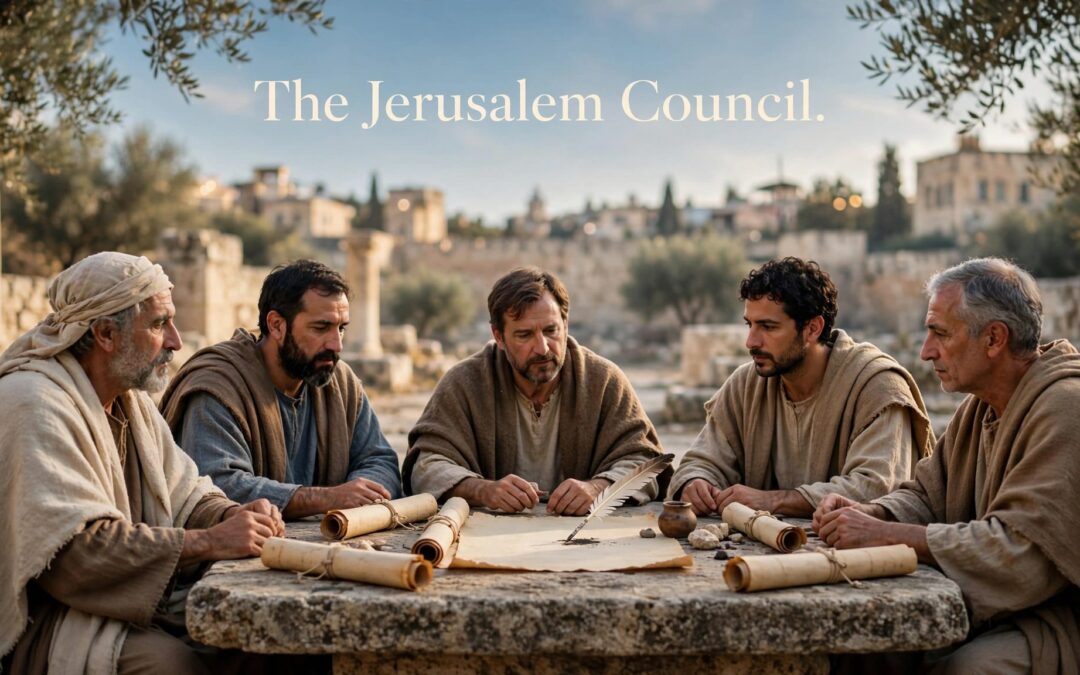
Acts 15:28 records a decision made at a turning point in the early church. The apostles and elders faced a serious question: did Gentiles need circumcision and the Law of Moses to be saved?
The Acts 15:28 meaning becomes clear when we follow the whole discussion. God's Spirit had already been given to Gentile believers, and the council refused to make Jewish customs a condition of salvation. Its four instructions guided believers toward holiness and fellowship, not toward earning God's grace.
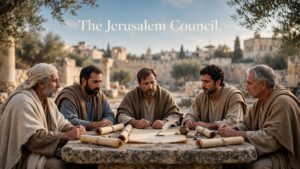
The Jerusalem Council, held around AD 49, settled whether Gentile converts had to be circumcised and keep the Law of Moses to be saved.
Peter testified that God gave His Spirit to Gentiles without distinction and that salvation comes through the grace of the Lord Jesus Christ.
James cited Amos 9:11-12 and judged that the church should not trouble Gentiles turning to God.
The council's letter asked Gentile believers to abstain from food sacrificed to idols, blood, meat from strangled animals, and sexual immorality.
The phrase "it seemed good to the Holy Spirit and to us" expresses a considered, settled judgment, not uncertainty.
The four abstentions were not extra conditions for salvation. They addressed holiness and life together in congregations that included Jewish and Gentile Christians.
The letter closes by saying the church would impose "no greater burden than these necessary things," then adds, "If you keep yourselves from these, you will do well." Read the full wording of Acts 15:28-29 alongside the council's discussion.
The Jerusalem Council and the question of circumcision
What started the dispute?
Men came from Judea to Antioch and taught that Gentiles needed circumcision to be saved. The opening account in Acts 15:1-5 says some believers from the Pharisees argued that Gentile converts should be circumcised and commanded to keep the Law of Moses. Paul and Barnabas opposed the teaching, so the church sent them to Jerusalem to discuss the Gospel dispute with the apostles and elders.
The council is generally dated around AD 49, though some chronologies give AD 48 or 49. This was early in the church's life, when the Gospel was moving beyond Jewish communities into cities and households across the Roman world. The historical overview of the Council of Jerusalem places the meeting in this period.
Why did the question matter?
Circumcision was a sign of Israel's covenant identity. The dispute was not whether Jewish believers could continue their customs. It was whether Gentiles had to take on those customs, along with the Mosaic Law, as a condition for receiving salvation and belonging to God's people.
That would have made faith in Jesus insufficient on its own. The council needed to answer plainly whether Gentiles were welcomed by God as Gentiles, or only after becoming Jewish proselytes. Their decision would shape the life of mixed congregations throughout the church.
Judaizers, circumcision, and salvation by grace
Who were the Judaizers?
The teachers in Acts 15 are often called Judaizers because they urged Gentile Christians to live according to Jewish customs and laws. The Greek verb ioudaizo, used in Galatians 2:14, means to live like a Jew. Paul uses it when he challenges the idea that Gentiles should be compelled to adopt Jewish practice.
The term describes the pressure being applied, not every Jewish believer who valued the Law. Many Jewish Christians continued familiar customs. The problem was insisting that Gentiles needed circumcision and Law observance to be saved or fully accepted.
What does sola fide have to do with the debate?
The council's decision fits the Gospel Paul preached in Pisidian Antioch. He said that everyone who believes is justified through Jesus from what the Law of Moses could not free them from. The single verse, Acts 13:39, states that contrast directly.
Sola fide means justification by faith alone. It does not mean that obedience has no place in a Christian life. It means we are made right with God through faith in Jesus, not by adding circumcision or law-keeping as a payment for salvation. Grace saves us; the Holy Spirit then leads us into a life that honors God.
Peter’s testimony: God gave the Holy Spirit to Gentiles
God made no distinction
After much discussion, Peter reminded the council that God had chosen for Gentiles to hear the Gospel. God, who knows the heart, gave them the Holy Spirit just as He had given the Spirit to Jewish believers. Peter's argument in Acts 15 was grounded in what God had already done, not in a theory about what Gentiles might become.
The Spirit's presence was God's own testimony. These Gentiles had not first been circumcised or placed under the Law of Moses. God received them, cleansed their hearts by faith, and gave them His Spirit. Peter asked why anyone would then place a yoke on their necks that neither their ancestors nor they had been able to bear.
Salvation comes through the Lord Jesus Christ
Peter's conclusion is direct: "we believe that through the grace of the Lord Jesus Christ we shall be saved in the same manner as they." The point is not that Gentiles receive a lesser salvation. Peter says Jewish believers are saved in the same way, by the grace of Jesus.
For us, this is a needed reminder that God's Spirit is not a reward for reaching a certain cultural standard. God gives His Spirit according to His grace. We believe the Spirit remains active in the church today, convicting, teaching, empowering, and directing believers toward Jesus. The Spirit's present work never gives us license to contradict Scripture or replace the Gospel with private rules.
James cites Amos and welcomes Gentiles
God’s promise includes the nations
After Peter spoke, James addressed the council. He agreed that God had visited the Gentiles to take from them a people for His name. Then he connected what was happening with the words of the prophets, especially Amos 9:11-12. Read Amos's prophecy alongside James's words in Acts 15:13-21.
The wording James quotes follows the Greek form of Amos familiar to many in the early church. It speaks of the rest of humanity seeking the Lord and Gentiles being called by God's name. In the Hebrew wording of Amos, the nations are also described as belonging to the Lord. Either way, James sees Gentile inclusion as part of God's promised work, not a disruption of it.
James’s judgment was practical and Biblical
James concludes that the church should not trouble Gentiles who are turning to God. That judgment does not mean holiness is unimportant. It means Gentile Christians should not be burdened with becoming Jews as the price of belonging to Christ.
James also points to Moses being read in synagogues every Sabbath. Jewish believers were spread throughout the cities, and the church would need to live together in a way that did not needlessly offend or divide. The decision had a Biblical foundation and a pastoral purpose: welcome the Gentiles God had welcomed, while giving the churches guidance for shared life.
“It seemed good to the Holy Spirit and to us”
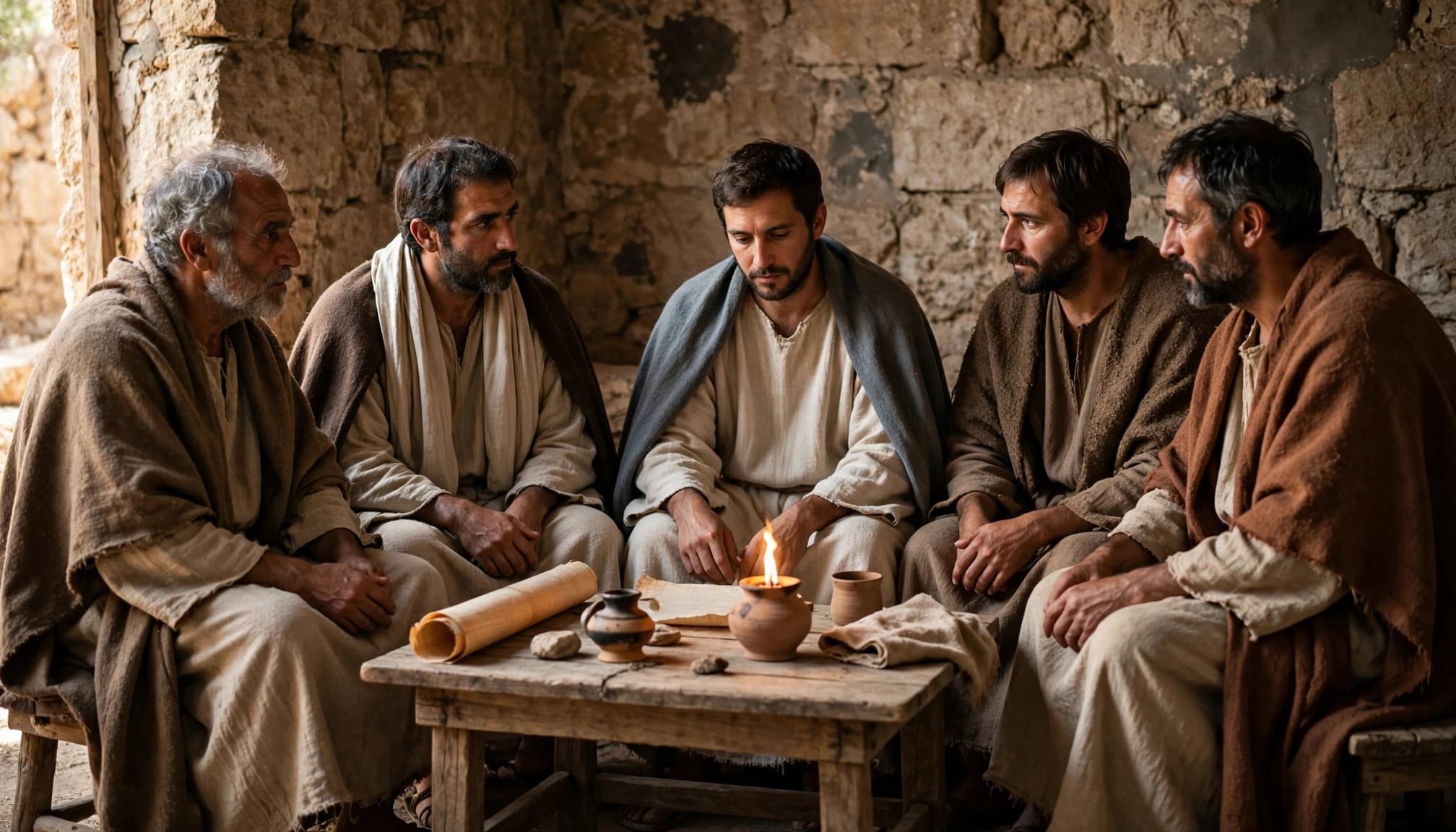
The council's letter says, "it seemed good to the Holy Spirit, and to us." This phrase describes the leaders' considered, shared judgment about Gentile Christians, not uncertainty. The four directions guided faithful conduct and fellowship; they weren't conditions for salvation.
The Greek verb dokeo can mean to think or seem, but in formal decisions it also carries the sense of deciding or resolving. BDAG includes that decision-making sense. In Acts 15, the apostles and elders use the language for their shared conclusion in Acts 15:22, Acts 15:25, and Acts 15:28. Luke also uses the verb when he says it seemed good to him to write an orderly account in Luke 1:3.
The Spirit led the church through discernment
The words don't mean the leaders received a separate message that replaced Scripture or discussion. Luke shows the church listening to testimony, reasoning from the prophets, and weighing the matter together. The council's decision came through the Spirit's work among the gathered believers and through the truth already revealed in Scripture.
We shouldn't use this verse to stamp "the Spirit told us" onto every human preference. The church must pray, search Scripture, hear wise testimony, and remain submitted to Jesus. We believe the Spirit still gives guidance and gifts to the church, but He never contradicts the Word He inspired. Our study of how Joel's prophecy of the Spirit's outpouring connects with Acts explores that continuing work.
The letter and the messengers
The council addressed its letter to "the brethren who are of the Gentiles in Antioch, Syria, and Cilicia." These were real congregations facing real confusion. The letter was not sent to an abstract group of future readers. It answered a dispute that had already unsettled believers in Antioch.
The council sent Judas, also called Barsabbas, and Silas with Paul and Barnabas. Their presence mattered. The church did not send a letter with no witnesses to explain it. Judas and Silas could confirm the decision in person and strengthen the believers who heard it. The whole decree and its delivery appear in Acts 15:22-29.
This method shows care for truth and for people. The apostles and elders did not dismiss the Gentiles' concerns or leave them to sort through conflicting claims alone. They gave a clear answer and sent trusted leaders to speak it.
The four requirements in Acts 15:28-29
The letter names four things Gentile Christians were to avoid. These instructions draw on the Biblical concern for idolatry, blood, and sexual conduct, with important connections to Leviticus 17 and 18.
Food sacrificed to idols.
Blood.
Meat from strangled animals.
Sexual immorality.
The single verse Acts 15:29 gives the list. The wording in Acts 15:28 calls these "necessary things," but the council has already rejected the claim that Gentiles must keep the Mosaic Law to be saved. These were necessary directions for faithful conduct and for life together in the churches, not a second means of justification.
Food sacrificed to idols and a believer’s conscience
The problem in a first-century city
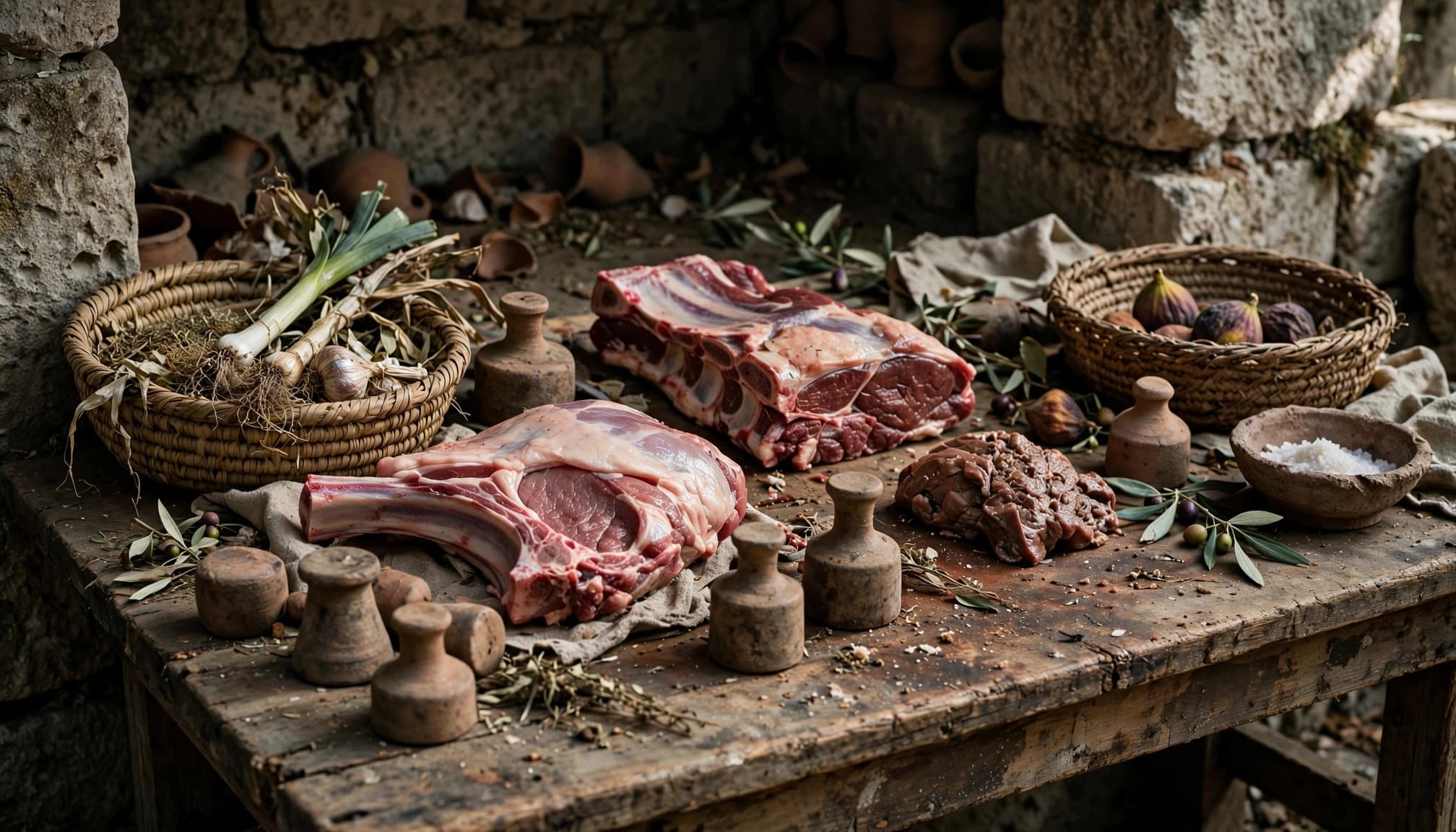
In many cities, meat could be associated with pagan worship. Some meat was eaten in a temple setting, while other portions could reach the public market after being connected with a sacrifice. A Gentile believer might see no problem eating it as ordinary food. A Jewish believer could see the same meal as participation in idolatry or as a painful reminder of pagan worship.
Click Our Ad to Support Us!
Why abstention protected the church
The instruction kept believers from taking part in idolatrous worship. It also helped Jewish and Gentile Christians share meals without asking one group to ignore a serious matter of conscience. The council did not need to declare every piece of market meat inherently sinful to warn against food tied to idol worship.
That distinction still helps us. A Christian's freedom is not a reason to dismiss another believer's conscience, especially when the practice touches idolatry. Freedom in Christ should lead us away from false worship and toward love for the people sitting beside us.
Blood and strangled meat
The connection to Noah and Israel’s law
The prohibition on eating blood reaches back before the Mosaic Law. After the flood, God told Noah that people must not eat flesh with its life, that is, its blood, still in it. See Genesis 9:4. This command, part of the Noahide covenant, was given to Noah and his descendants, not only to Israel, who were to abstain from blood.
Israel's law later applied the prohibition to both Israelites and foreigners living among them. Leviticus 17, especially verses 10-13, forbids eating blood and describes draining it from an animal. The resident foreigner was included in that rule. The outsider living among Israel was not treated as someone outside the reach of God's concern.
Why strangled meat is named separately
An animal killed by strangling would not have its blood drained in the usual way. Naming strangled meat alongside blood makes the practical concern plain. The two instructions overlap: one names the prohibited method of killing, and the other names the blood that remained in the meat.
The command also carried a connection to the sanctity of life. In the Biblical picture, blood represented life, and life belonged to God. The church's instructions therefore had both a covenant background and a practical effect at the shared table. Gentile Christians could honor Jewish believers without being required to take on every Jewish food custom.
Sexual immorality and Leviticus 18
The last instruction is abstaining from sexual immorality. James's list has a close relationship to the subjects addressed in Leviticus 17 and 18, including rules about forbidden sexual unions. The section on prohibited relationships in Leviticus 18:6-18 provides important background.
Does the phrase mean only sex outside marriage?
Some readers understand the term broadly as sexual conduct outside God's design, including adultery and sexual relations outside marriage. Others emphasize the council's links to Leviticus 18 and argue that the instruction particularly addresses forbidden unions, such as close-kin relationships that were accepted in some surrounding cultures.
The verse does not spell out a single case, so we should be careful not to claim more than it says. The wider Biblical witness treats sexual immorality as serious, and Leviticus makes clear that some relationships common among the nations were forbidden to God's people. James's direction would have called Gentile Christians to leave pagan sexual practices behind, not simply to avoid offending Jewish sensibilities.
Grace does not make holiness optional
The council removed circumcision and the Law of Moses as requirements for salvation. It did not tell non-Jewish Christians that every practice was acceptable because they had received grace. The Holy Spirit changes hearts and leads people into Godly living. Holiness is the fruit of belonging to Jesus, not an entrance fee we pay before He will receive us.
This is an important distinction. When we confuse holiness with earning salvation, we burden people with a false Gospel. When we confuse grace with permission to keep sinning, we misrepresent the life the Spirit gives.
“No greater burden” and the Law of Love
The council did not impose a long list of additional rules. It said there would be "no greater burden than these necessary things." That mattered to non-Jewish Christians who had been told they must accept circumcision and the Mosaic Law to be saved.
At the same time, the four instructions were not empty suggestions. They gave these believers boundaries against idolatry, blood consumption, and sexual immorality, while making shared fellowship possible. The letter closed with a simple encouragement: if they kept themselves from these things, they would do well.
Choosing love over personal rights
Commentators such as John Stott and Enduring Word note that the abstentions also asked non-Jewish Christians to lay down some rights out of love for Jewish believers. This is sometimes called the Law of Love. A person may have freedom to eat something, but that freedom does not need to be exercised in a way that wounds another believer or breaks fellowship.
That does not mean one group's preferences should rule every church. It means believers care about more than winning an argument over what they are allowed to do. At a shared table, love asks whether our choices help the whole body remain faithful to Jesus.
The council did not create a salvation checklist
The word "necessary" can trouble readers if we separate it from the council's full discussion. Peter had just said that Jews and Gentiles are saved through the grace of the Lord Jesus Christ. James had judged that non-Jewish Christians turning to God should not be troubled with circumcision. The four abstentions therefore cannot be read as a new set of works that earns salvation.
They were necessary for the situation before the church: rejecting pagan worship, honoring God's commands, and protecting fellowship in congregations that brought different histories and consciences together. The Gospel remained grace through faith, and the Spirit taught the new believers how to live it out.
How the ruling affected Antioch and the church
The church in Antioch had been unsettled by teachers who said circumcision was required for salvation. The Jerusalem letter answered that claim with authority and care. Paul and Barnabas returned with Judas and Silas, who could confirm the decision and encourage the believers.
The ruling let Gentile Christians belong without becoming Jewish proselytes. That did not erase every cultural difference. Jewish believers still had their customs, and Gentile Christians had come from different backgrounds. But the church had a shared foundation: salvation through Jesus, the gift of the Holy Spirit, and a call to live in holiness and love.
What the decision teaches us now
The council gives us a pattern for hard questions in the church. Leaders listened to the dispute, heard testimony about God's work, searched Scripture, and made a decision together. The phrase "to the Holy Spirit and to us" shows dependence on God without pretending the leaders had no need to listen, reason, or take responsibility.
We believe the Holy Spirit still guides the church. He gives gifts, wisdom, conviction, and power for witness. Yet no claim of spiritual guidance should cancel the Gospel or make cultural customs a test of salvation. The Spirit who welcomes people by grace also leads them toward truth and holiness.
Frequently asked questions about Acts 15:28
What does “it seemed good to the Holy Spirit and to us” mean?
It means the council reached a settled decision in agreement with the Holy Spirit's work. The phrase isn't an admission that the leaders were unsure. They had listened, considered Scripture, and recognized what God had already done among Gentile believers.
Why did the Jerusalem Council decide Gentiles did not need circumcision?
Peter testified that God gave Gentiles the Holy Spirit and cleansed their hearts by faith. James then judged that Gentiles turning to God shouldn't be troubled by the demand to become Jewish. The council affirmed that salvation comes through Jesus, not through circumcision or keeping the Law of Moses.
Why did Gentile believers need to avoid food sacrificed to idols?
The instruction guarded against participation in idolatry and helped Jewish and Gentile Christians share meals. In cities where meat could be tied to pagan worship, avoiding it could protect both worship and fellowship.
How does the blood prohibition connect to the Noahide covenant?
The instruction not to eat blood appears in God's command to Noah in Genesis 9:4. Israel's law later applied that rule to foreigners living among the Israelites. Acts 15 carries the concern into the mixed church, where Jewish and non-Jewish Christians were learning to live as one body.
Does sexual immorality refer to sex outside marriage or to Leviticus 18?
The council's wording is broad, while its connection to Leviticus 18 gives readers reason to consider forbidden unions in particular. The safest reading is that Gentile believers were to leave sexual practices contrary to God's standards, including the prohibited relationships addressed in Leviticus.
The lasting meaning of Acts 15:28
Acts 15:28 shows the church refusing to make circumcision or the Law of Moses a condition of salvation. The Holy Spirit had already welcomed Gentile Christians, and the council affirmed that God's grace was enough to bring them into His people.
The four abstentions called for holiness and consideration at the shared table. They did not replace the Gospel. We are saved through the grace of the Lord Jesus Christ, and the Spirit teaches us how to live as one people under His care.
Welcoming the Stranger, Proselyte Grace in Leviticus 19:33-34 God calls Israel to be holy by how they treat the outsider. The Hebrew points us to the ger, the resident foreigner, and it roots the command in memory, since Israel knew the sting of Egypt. This article will trace the original language, the setting, and what it meant in real life.
Jesus Turns Water Into Wine: His 1st Miracle and New Wine Discovered Imagine the dusty village lanes of Cana, echoing with music, laughter, and the hopeful chatter of friends and family. Wedding feasts at the time of Jesus weren't just ceremonies—they were true anchors in Jewish community life, drawing people from miles around. When Jesus turns water into wine at such a gathering, the moment ripples with meaning that still stirs hearts…
The Seven Spirits of God stand as one of the most profound and often misunderstood truths in Christian theology. Rooted deeply in Scripture, they aren’t seven separate entities but rather seven attributes of the one Holy Spirit—God revealing Himself in fullness. Isaiah 11:2 describes these [...]
The gifts of the Holy Spirit reveal the active power of God working in the lives of His people. They aren’t just distant historical records or fading Biblical accounts; they’re living because the Holy Spirit, He is living and He is God, and His transformative gifts are reaching people [...]
The phrase “tongues of fire” in Acts 2:3 sparks worldwide curiosity and spiritual wonder. It appears in Scripture to describe the Holy Spirit’s descent during Pentecost, when visible flames rested on the apostles, marking the time when God’s Spirit descended on earth, [...]
The Bible’s take on a reprobate mind isn’t just a warning or a piece of theology. It’s a wake-up call. “Reprobate mind” (from the Greek adokimos, meaning rejected or unapproved) describes what happens when people no longer care about God’s truth—they trade what’s holy for what feels good, grow numb [...]
The upper room, a sacred space in Jerusalem, holds profound significance in Christian history. Acts 2 tells us it is the gathering place for Jesus’ disciples when the Holy Spirit descended upon them during Pentecost. This transformative moment not only empowered those present but also sparked [...]
Pentecost isn’t just a Christian event; its roots stem from the Jewish celebration of Shavuot, the day Moses received the Ten Commandments from God. For Christians, Pentecost marks the moment when God poured out His Spirit and Jesus’ worldwide church empowered by the Holy Spirit and His gifts [...]
Charismatic gifts, often referred to as manifestation gifts, showcase the miraculous power of the Holy Spirit. From healing and miracles to prophecy and discernment, they serve as tangible evidence of God’s presence and transformative work. These gifts, seen throughout Biblical history, have [...]
Revelation 3:7-8 offers a powerful message to the church in Philadelphia, a message that remains relevant today. It speaks of a divine “open door” that no man can shut, given by the one who holds the Key of David. This imagery represents not only an opportunity but also God’s sovereign [...]
Have you ever wondered why the word “anointing” carries so much depth in Scripture? The idea of anointing—of sacred oil poured out on kings, priests, and prophets—echoes through the Old Testament as a symbol of God choosing, empowering, and setting apart. God didn’t leave the details of [...]
The Bible boldly declares the truth that Jesus is both fully God and fully man—a mystery that anchors the Christian faith. But what does it mean, practically, for us as believers? Jesus didn’t perform miracles or operate in the gifts of the Holy Spirit simply as God; He demonstrated how a [...]
The Antichrist
The Apostate Church
The Rapture
Angels
Book of Daniel
Giants
Judgment
Prophecy
The Apostles
Bible Prophecy
Beware of Deception
Sin
Antichrists
Demon Possession
Healing
Millennial Reign
Redemption
The Gospels
The Holy Spirit
American Prophecy
Israel
Armageddon
Forgiveness
Intercession
Prayer
Revival
The Old Testament
The Tribulation
Faith
Kingdom Of God
Bible Interpretation
Free Will
Book Of Jude
Pride
The Afterlife
The Red Dragon
We use cookies so you can have a great experience on our website. View more
Cookies settings
Accept
Decline
Privacy & Cookie policy
Privacy & Cookies policy
Cookies list
Cookie name
Active
Who we are
Our website address is: https://theholyspirit.us.
Comments
When visitors leave comments on the site we collect the data shown in the comments form, and also the visitor’s IP address and browser user agent string to help spam detection.
An anonymized string created from your email address (also called a hash) may be provided to the Gravatar service to see if you are using it. The Gravatar service privacy policy is available here: https://automattic.com/privacy/. After approval of your comment, your profile picture is visible to the public in the context of your comment.
Media
If you upload images to the website, you should avoid uploading images with embedded location data (EXIF GPS) included. Visitors to the website can download and extract any location data from images on the website.
Cookies
If you leave a comment on our site you may opt-in to saving your name, email address and website in cookies. These are for your convenience so that you do not have to fill in your details again when you leave another comment. These cookies will last for one year.
If you visit our login page, we will set a temporary cookie to determine if your browser accepts cookies. This cookie contains no personal data and is discarded when you close your browser.
When you log in, we will also set up several cookies to save your login information and your screen display choices. Login cookies last for two days, and screen options cookies last for a year. If you select "Remember Me", your login will persist for two weeks. If you log out of your account, the login cookies will be removed.
If you edit or publish an article, an additional cookie will be saved in your browser. This cookie includes no personal data and simply indicates the post ID of the article you just edited. It expires after 1 day.
Embedded content from other websites
Articles on this site may include embedded content (e.g. videos, images, articles, etc.). Embedded content from other websites behaves in the exact same way as if the visitor has visited the other website.
These websites may collect data about you, use cookies, embed additional third-party tracking, and monitor your interaction with that embedded content, including tracking your interaction with the embedded content if you have an account and are logged in to that website.
Who we share your data with
If you request a password reset, your IP address will be included in the reset email.
How long we retain your data
If you leave a comment, the comment and its metadata are retained indefinitely. This is so we can recognize and approve any follow-up comments automatically instead of holding them in a moderation queue.
For users that register on our website (if any), we also store the personal information they provide in their user profile. All users can see, edit, or delete their personal information at any time (except they cannot change their username). Website administrators can also see and edit that information.
What rights you have over your data
If you have an account on this site, or have left comments, you can request to receive an exported file of the personal data we hold about you, including any data you have provided to us. You can also request that we erase any personal data we hold about you. This does not include any data we are obliged to keep for administrative, legal, or security purposes.
Where your data is sent
Visitor comments may be checked through an automated spam detection service.