Pre-Born! gives free ultrasounds to women looking to abort their babies and 86% of those women choose to keep their babies!
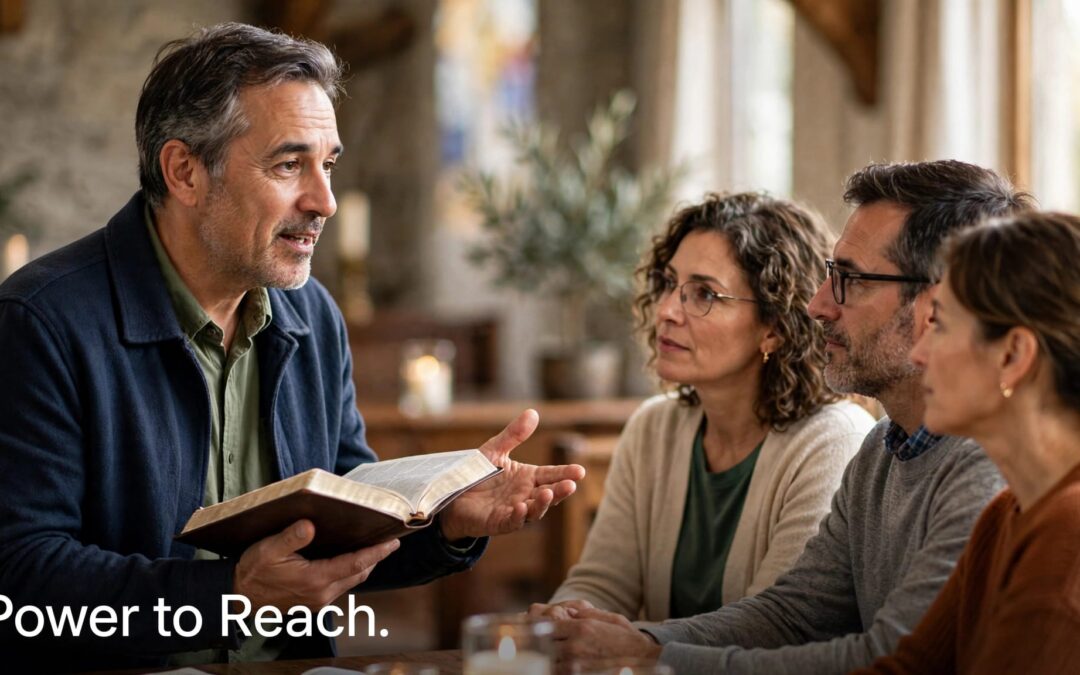
The spirit of evangelism is the Holy Ghost stirring believers to reach people with Jesus. We need His power working through us, and that includes a burden for people who may never walk into church on their own.
In his November 8, 2026 evening message, Pastor Tommy Bates connected that burden with prayer, spiritual gifts, and decades of changed lives. The service began with faith that God was already working, even before anyone could see the answer.
The spirit of evangelism is the Holy Ghost stirring believers to reach people with Jesus and giving them power to testify.
In Acts 8, Philip preached Christ in Samaria, people received ministry, and the city had great joy.
Believers can share the gospel through prayer, church outreach, and conversations at work or in other places they serve.
The church's bus ministry showed how practical care for children and families can bear fruit years later.
Faith Before the Answer Is Visible
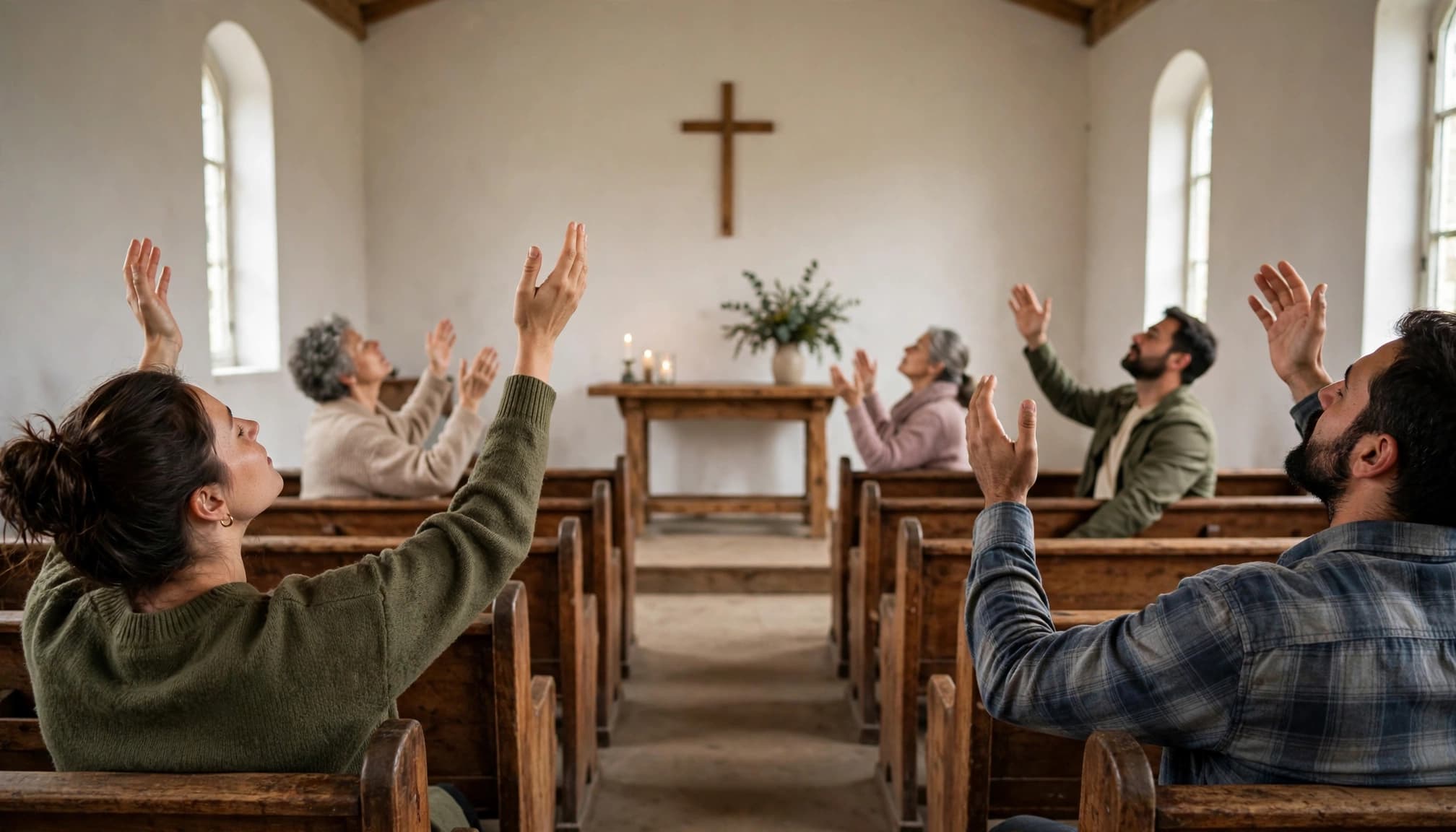
The congregation sang that God could work a miracle "right now." The song recalled the sea opening for Israel, Gideon's victory, Jericho's walls falling, and the Hebrew men protected in the fire.
A message during worship declared that prayers had been heard and what appeared dead could live. Bates connected that encouragement with the royal official whose son recovered before the father reached home (John 4:46-53), and Peter's release while believers prayed (Acts 12:5-17).
"You never know what's happening while you're praying."
Prayer followed for healing in spirit, soul, and body. Michelle shared her healing testimony: after two years of pain and restricted movement following a car accident, she could move her neck after prayer. Bates also prayed for Brendan, who was carrying guilt after an exploding battery caused a fire in his family's home.
Philip Preached Christ, and the City Had Joy
The sermon centered on Acts 8:5-8. Philip preached Christ in Samaria. People listened, unclean spirits came out, and those who were paralyzed or lame were healed.
Bates described Acts as the church in action through the Holy Ghost. Jesus gave His life for our redemption, and the Father's promised Spirit empowered believers to continue His ministry.
Philip preached the good news of Jesus. The gospel brings people to salvation and calls them to repentance. People received ministry, and a city experienced joy.
The Holy Ghost Works Beyond the Worship Service
Bates warned against limiting the Holy Ghost to shaking, falling, or another outward response. He spoke about wisdom, understanding, knowledge, counsel, might, and integrity. He also described the Spirit's influence on speech and daily choices, which shape a believer's witness.
He named fire, wind, oil, river, rain, and dove as Biblical pictures of the Spirit's work. Fire purges. Oil speaks of anointing. The dove became an appeal to give Him freedom rather than confine every response to a program.
Our teaching on tongues of fire at Pentecost follows that connection between God's presence and power for proclamation. This Spirit-empowered ministry gives believers power to testify, as Acts 1:8 teaches.
Bates also urged believers to desire the nine gifts of the Holy Spirit: wisdom, knowledge, faith, gifts of healing, miracles, prophecy, discerning of spirits, tongues, and interpretation. The evangelist's ministry role in Ephesians 4:11 differs from each spiritual gift described here.
These gifts belong to Him. We receive them for His purposes. Bates explained that interpretation communicates meaning rather than functioning as a timed, word-for-word translation. His emphasis throughout was freedom for the Holy Ghost to work through ordinary believers.
Revival Created a Burden for Children
Bates recalled Pentecostal renewal in Topeka and at Azusa Street before turning to his own congregation's history. In 1972, revival touched his sister Vicki and young people attending a Pentecostal youth camp. That move of God stirred a desire for evangelistic outreach.
Jim Macintosh's experience became part of that work. Bates recounted how church members urgently prayed while Jim's helicopter was in danger in Vietnam. The engine restarted, and Jim reached safety.
After returning home and surrendering his life to the Lord, Jim carried a burden for children. He couldn't forget the suffering he had witnessed during the war.
The church's first bus route began September 29, 1974. Nine children came that Sunday. Within four weeks, Bates said, the bus averaged 50 to 60 children.
Additional buses followed. Volunteers knocked on doors, drove routes, taught Sunday school, and kept vehicles running in freezing weather. The bus ministry became one of the church's outreach events, and volunteers showed compassion to children and families.
Click Our Ad to Support Us!
Eventually, the small congregation brought in 160 to 180 children. That was the spirit of evangelism taking shape in people's lives. Someone prayed. Someone visited. Someone made sure a child had a way to church.
The Fruit May Appear Decades Later
Bates remembered Jerry Row arriving as a six-year-old in severe hardship. Church members washed him, found clothes, and provided shoes. Years later, he sang in the choir.
Then a staff member shared another connection. While hearing Jim describe a family he had visited decades earlier, the staff member and a sibling realized he was talking about their mother and her siblings.
Jim had ministered to that family long before this descendant entered ministry and served alongside him.
We don't always get to see what happens after we plant a seed. This testimony showed how the church's care for one household can bear fruit in another generation.
The Gospel Goes Into Homes and Workplaces
Megan, a hospice nurse, shared how a patient asked what happens after death. After she had offered prayer and spoken about the Lord, his fear gave her an opportunity for evangelistic outreach and a bold conversation about the good news.
She testified that he repented and gave his life to the Lord, a conversion that brought salvation. She also prayed with his wife.
That account shows how the Holy Spirit empowers evangelism. People have questions and needs in the places where we already work and serve. The same witness can extend to social media through a personal account of faith.
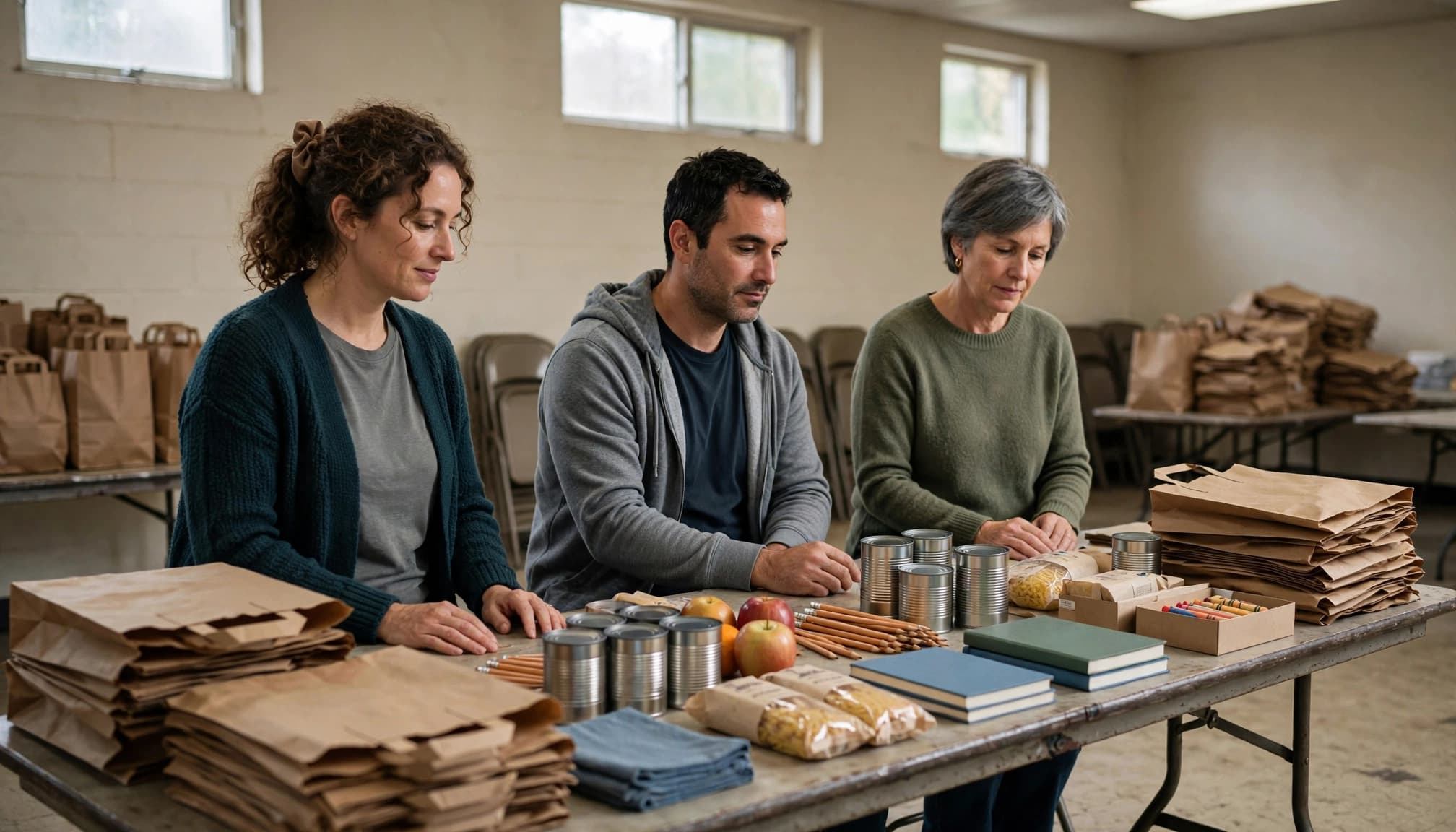
Bates connected Thanksgiving bags and backpacks, practical outreach events, with that same burden. He urged the congregation to pray over what they gave, then prayed for missionaries traveling to Mexico as part of the church's missions work.
The work continued beyond the building. Even a couple's technology work aboard Disney cruises became a reminder that coworkers were watching their lives.
A Renewed Burden for the Harvest
The closing invitation reached beyond those who preach. Bates called forward anyone sensing a desire to pray, serve, or share the gospel. Evangelism is part of every believer's calling, while an evangelist has a distinct ministry role named in Ephesians 4:11. The Great Commission in Matthew 28:19-20 (NKJV) calls believers to make disciples.
A gift of evangelism is one spiritual gift a believer may use to serve. Others may serve as missionaries or support missions. This preparation continues beyond one evening, as witness and discipleship reach people beyond the altar.
We believe the Holy Ghost still equips believers for Spirit-empowered ministry and gives them boldness to serve. That was the prayer at the altar: let the spirit of evangelism fall on us, and let God use us wherever He opens the door.
Frequently Asked Questions
What is the spirit of evangelism?
The article describes it as the Holy Ghost stirring believers to reach people with Jesus. It includes a burden for people who may not come to church on their own.
What happened when Philip preached in Samaria?
Philip preached Christ, and people listened. Unclean spirits came out, people who were paralyzed or lame were healed, and the city had great joy.
How can believers share the gospel in everyday life?
Believers can pray, serve, and speak about Jesus in places where they already work and serve. The article gives the example of a hospice nurse who spoke with a patient about death, prayer, and the Lord.
How did the church’s bus ministry reach children?
Volunteers drove routes, visited homes, taught Sunday school, and kept the buses running. The ministry brought children to church and showed care for families, with effects that continued into later generations.
Related Posts
Holy Spirit Scriptures: 21 Century Meaning, Original Words, and God's Purpose What would life be if we never understood the heart behind every movement of God’s Spirit? Every verse that mentions the Holy Spirit points us somewhere deeper—into friendship with God, into His power for living, and into the mystery of His love and presence that started in Eden and keeps going until Jesus rules the earth in the Millennial Reign.…
21st Century Biblical Anointing: Oil, Prophets, and Holy Spirit Baptism Have you ever wondered why the word "anointing" carries so much depth in Scripture? The idea of anointing—of sacred oil poured out on kings, priests, and prophets—echoes through the Old Testament as a symbol of God choosing, empowering, and setting apart. God didn’t leave the details of the anointing oil a mystery: He gave Moses a recipe, specific and holy,…
Who Is the Holy Spirit? Discover God’s Helper and Friend - Genesis 1:2 The Holy Spirit is one of the most fascinating yet often misunderstood aspects of Christian theology. From the very first pages of the Bible, His presence weaves through history—pointing, guiding, and empowering God’s people. But who exactly is the Holy Spirit? Is He a person, a force, or something else entirely? Spoiler: He’s God, revealed to us as part of…
The Seven Spirits of God stand as one of the most profound and often misunderstood truths in Christian theology. Rooted deeply in Scripture, they aren’t seven separate entities but rather seven attributes of the one Holy Spirit—God revealing Himself in fullness. Isaiah 11:2 describes these [...]
The gifts of the Holy Spirit reveal the active power of God working in the lives of His people. They aren’t just distant historical records or fading Biblical accounts; they’re living because the Holy Spirit, He is living and He is God, and His transformative gifts are reaching people [...]
The phrase “tongues of fire” in Acts 2:3 sparks worldwide curiosity and spiritual wonder. It appears in Scripture to describe the Holy Spirit’s descent during Pentecost, when visible flames rested on the apostles, marking the time when God’s Spirit descended on earth, [...]
The Bible’s take on a reprobate mind isn’t just a warning or a piece of theology. It’s a wake-up call. “Reprobate mind” (from the Greek adokimos, meaning rejected or unapproved) describes what happens when people no longer care about God’s truth—they trade what’s holy for what feels good, grow numb [...]
The upper room, a sacred space in Jerusalem, holds profound significance in Christian history. Acts 2 tells us it is the gathering place for Jesus’ disciples when the Holy Spirit descended upon them during Pentecost. This transformative moment not only empowered those present but also sparked [...]
Pentecost isn’t just a Christian event; its roots stem from the Jewish celebration of Shavuot, the day Moses received the Ten Commandments from God. For Christians, Pentecost marks the moment when God poured out His Spirit and Jesus’ worldwide church empowered by the Holy Spirit and His gifts [...]
Charismatic gifts, often referred to as manifestation gifts, showcase the miraculous power of the Holy Spirit. From healing and miracles to prophecy and discernment, they serve as tangible evidence of God’s presence and transformative work. These gifts, seen throughout Biblical history, have [...]
Revelation 3:7-8 offers a powerful message to the church in Philadelphia, a message that remains relevant today. It speaks of a divine “open door” that no man can shut, given by the one who holds the Key of David. This imagery represents not only an opportunity but also God’s sovereign [...]
Have you ever wondered why the word “anointing” carries so much depth in Scripture? The idea of anointing—of sacred oil poured out on kings, priests, and prophets—echoes through the Old Testament as a symbol of God choosing, empowering, and setting apart. God didn’t leave the details of [...]
The Bible boldly declares the truth that Jesus is both fully God and fully man—a mystery that anchors the Christian faith. But what does it mean, practically, for us as believers? Jesus didn’t perform miracles or operate in the gifts of the Holy Spirit simply as God; He demonstrated how a [...]
The Antichrist
The Apostate Church
The Rapture
Angels
Book of Daniel
Giants
Judgment
Prophecy
The Apostles
Bible Prophecy
Beware of Deception
Sin
Antichrists
Demon Possession
Healing
Millennial Reign
Redemption
The Gospels
The Holy Spirit
American Prophecy
Israel
Armageddon
Forgiveness
Intercession
Prayer
Revival
The Old Testament
The Tribulation
Faith
Kingdom Of God
Bible Interpretation
Free Will
Book Of Jude
Pride
The Afterlife
The Red Dragon
We use cookies so you can have a great experience on our website. View more
Cookies settings
Accept
Decline
Privacy & Cookie policy
Privacy & Cookies policy
Cookies list
Cookie name
Active
Who we are
Our website address is: https://theholyspirit.us.
Comments
When visitors leave comments on the site we collect the data shown in the comments form, and also the visitor’s IP address and browser user agent string to help spam detection.
An anonymized string created from your email address (also called a hash) may be provided to the Gravatar service to see if you are using it. The Gravatar service privacy policy is available here: https://automattic.com/privacy/. After approval of your comment, your profile picture is visible to the public in the context of your comment.
Media
If you upload images to the website, you should avoid uploading images with embedded location data (EXIF GPS) included. Visitors to the website can download and extract any location data from images on the website.
Cookies
If you leave a comment on our site you may opt-in to saving your name, email address and website in cookies. These are for your convenience so that you do not have to fill in your details again when you leave another comment. These cookies will last for one year.
If you visit our login page, we will set a temporary cookie to determine if your browser accepts cookies. This cookie contains no personal data and is discarded when you close your browser.
When you log in, we will also set up several cookies to save your login information and your screen display choices. Login cookies last for two days, and screen options cookies last for a year. If you select "Remember Me", your login will persist for two weeks. If you log out of your account, the login cookies will be removed.
If you edit or publish an article, an additional cookie will be saved in your browser. This cookie includes no personal data and simply indicates the post ID of the article you just edited. It expires after 1 day.
Embedded content from other websites
Articles on this site may include embedded content (e.g. videos, images, articles, etc.). Embedded content from other websites behaves in the exact same way as if the visitor has visited the other website.
These websites may collect data about you, use cookies, embed additional third-party tracking, and monitor your interaction with that embedded content, including tracking your interaction with the embedded content if you have an account and are logged in to that website.
Who we share your data with
If you request a password reset, your IP address will be included in the reset email.
How long we retain your data
If you leave a comment, the comment and its metadata are retained indefinitely. This is so we can recognize and approve any follow-up comments automatically instead of holding them in a moderation queue.
For users that register on our website (if any), we also store the personal information they provide in their user profile. All users can see, edit, or delete their personal information at any time (except they cannot change their username). Website administrators can also see and edit that information.
What rights you have over your data
If you have an account on this site, or have left comments, you can request to receive an exported file of the personal data we hold about you, including any data you have provided to us. You can also request that we erase any personal data we hold about you. This does not include any data we are obliged to keep for administrative, legal, or security purposes.
Where your data is sent
Visitor comments may be checked through an automated spam detection service.