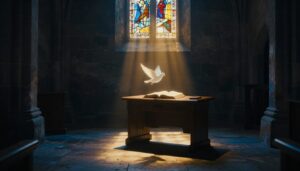
Why Was Jesus Baptized? The Jordan as His Public Anointing as Prophet, Priest, and King
If Jesus had no sin, why was Jesus baptized at all? That question isn’t just a kid’s Sunday school question. It’s a doorway into how Israel thought about kings, priests, prophets, and the moment God publicly “marked” someone for a calling.
When we ask why was Jesus baptized, we’re not mainly asking about water. We’re asking about identity. In Israel’s history, kings were anointed by prophets with oil, then the Holy Spirit empowered them to lead. At the Jordan, we watch that pattern reach its true goal: the Father anoints Jesus, not with oil, but with the Holy Spirit.
Watch and share our video of this article to help us spread the Word of God. Be kind and subscribe to our YouTube Channel. Thank You!
In this article we’re going to connect the original language (Greek baptizō, Hebrew māšaḥ, Greek christos), the royal anointings of Israel, John the Baptist being Spirit-filled from the womb, John as the last Old Testament prophet after centuries of silence, his priestly lineage, and how Jesus stands revealed as Prophet, Priest, and King in one scene.
Why was Jesus baptized? Original language and first-century context
When we ask why was Jesus baptized, we have to start with what baptism meant to first-century Jews. The Greek verb baptizō means to immerse, dip, or overwhelm. It’s not a light sprinkle word. It’s a “go under” word.
John’s baptism wasn’t a random new ritual either. It fits the world of Jewish washings and purification practices (think mikveh-style cleansing, and readiness to approach God). John’s baptism was also a repentance baptism, a public turning.
So why was Jesus baptized if He didn’t need repentance? Because His baptism wasn’t about confessing personal sin. It was about stepping into Israel’s history, identifying with the people He came to save, and being publicly revealed for His mission.
To ask why was Jesus baptized in the Jordan is to ask why this river, this location, this moment.
The Jordan carried memory. Israel crossed the Jordan to enter the land (Joshua). Elijah and Elisha crossed it in prophetic power. The river line feels like a boundary between “old life” and “new beginning.” It’s like God chose a place that already preached a sermon, plus Jesus’ real name is Yeshua (Josh) which is short for Yehoshua (Joshua).
When we watch Joshua lead Israel through the Jordan, we’re not just reading travel notes, we’re seeing a preview of Jesus leading His people home. The first thing that grabs us is the name, because Joshua and Jesus are the same name at the root: Yehoshua (often shortened to Yeshua), meaning “the LORD saves.”
Joshua didn’t invent a new future for them, he brought them where God promised, and that’s the point, salvation is God’s work, not ours. The Jordan stood there like a hard border, the kind we can’t talk our way past, and Israel needed a leader appointed by God to bring them through. In the same way, sin isn’t a small habit we clean up with better effort, it’s a real barrier, and we need Jesus to carry us across what we can’t cross on our own.
Joshua led them out of the wilderness and into inheritance, land they didn’t earn; Jesus leads us out of guilt and death and into a Kingdom we can’t buy. We notice how Joshua’s path went through water, and we can’t miss how Jesus meets us in water too, not as a magic trick, but as a sign that God brings us through judgment into life.
When we say “Jesus saves,” we’re saying what Joshua’s name already preached, the LORD saves, the LORD leads, the LORD keeps His word. And it makes us ask ourselves, are we trying to wade across with our own strength, or are we trusting the true Joshua, the One who doesn’t just get us into a better place, but brings us into Heaven by dealing with sin at the root?
If you want a deeper dive into who Jesus is and what His name means, check out our article below:
So when Jesus steps into the Jordan, it’s not just water. It’s a history reset. The faithful Son is walking where Israel stumbled, and He’s doing it publicly.
“Fulfill all righteousness” means stepping into God’s plan, not confessing sin
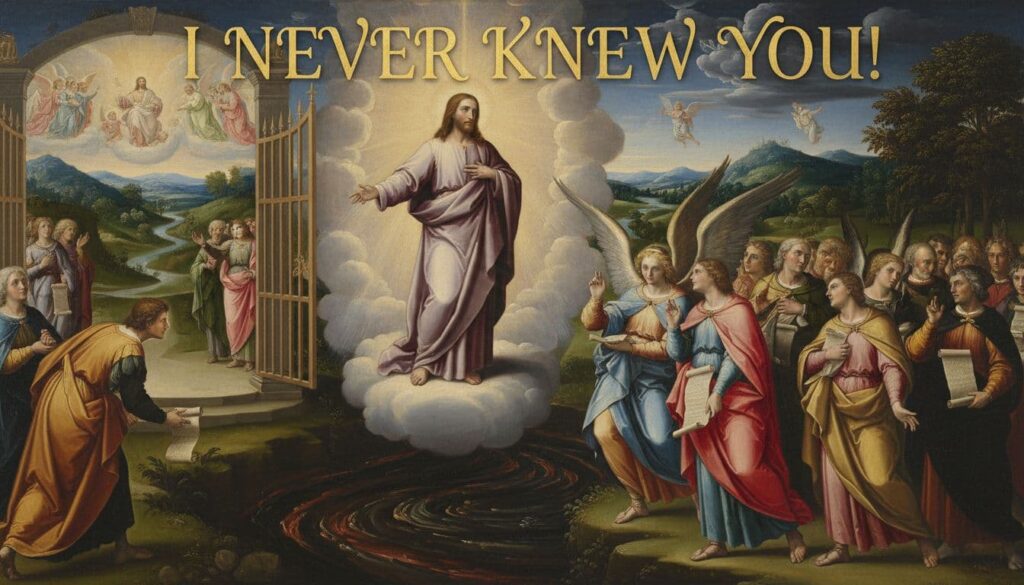
In Matthew 3:15 Jesus tells John, “Let it be so now, for thus it is fitting for us to fulfill all righteousness.” In plain terms, righteousness there is covenant faithfulness, doing what fits God’s plan, and Jesus expects this out of us also. Which is why Jesus said in Matthew 7:21-23,
“Not everyone who says to Me,‘Lord, Lord,’ shall enter the kingdom of heaven, but he whodoes the will of My Father in heaven.Many will say to Me in that day, ‘Lord, Lord, have wenot prophesied in Your name, cast out demons in Your name, and done many wonders in Your name?’Andthen I will declare to them, ‘I never knew you;depart from Me, you who practice lawlessness!”
We break this meaning down in a few different articles like our one below:
So why was Jesus baptized? Not because He needed cleansing, but because He chose obedience. He took His place with Israel, not above Israel. He began His ministry where sinners stood, even though He wasn’t one of them.
And right there, the Father speaks and the Holy Spirit descends. That’s the point. The baptism becomes the public unveiling of the Messiah.
For readers who also wrestle with what baptism means for believers today, you might find our clear and practical resource helpful: Is baptism required for salvation?
Israel’s kings were anointed by prophets, and every anointing pointed to Jesus
To really answer why was Jesus baptized, we need Israel’s anointing pattern on the table.
In the Old Testament, “anoint” is the Hebrew verb māšaḥ (to smear or anoint with oil). From that comes māšîaḥ (Messiah), meaning “Anointed One.” In Greek, that title becomes christos (Christ). So when we say “Jesus Christ,” we’re saying “Jesus the Anointed King.”
Israel’s anointings usually followed a rhythm: God chose, a prophet anointed with oil, then the Holy Spirit empowered for leadership. The oil wasn’t magic. It was a visible sign of God’s appointment and Spirit-giving.
Samuel anointing David as king, a shadow of the greater Anointed One.
How anointing worked in Israel: chosen by God, anointed by a prophet, empowered for rule
God chooses the person, often surprising everyone.
A prophet witnesses the choice, acting as God’s public messenger.
Oil is poured as the outward sign of being set apart.
The Holy Spirit empowers for the calling, whether leadership, courage, wisdom, or prophetic clarity.
Saul is anointed by Samuel, then the Spirit comes upon him in a way that marks his new role. David is anointed by Samuel, and the text says the Spirit of the LORD rushed upon him from that day forward.
This matters because why was Jesus baptized connects to the same “set apart and empowered” storyline, but with one huge difference.
If you want to see how the prophetic tradition shaped Israel’s expectations, Elijah’s ministry is a strong lens, and this overview is useful: Elijah the prophet and his role.
Jesus’ baptism matches the king-anointing pattern, but the Father anoints Him directly
Now we can say it clearly: why was Jesus baptized? Because His baptism functions like His public anointing as Messiah.
Click Our Ad to Support Us!
At the Jordan, John stands in the role of the prophet-witness. The Spirit descends as the true anointing, not oil. And the Father’s voice is the royal announcement, echoing the kind of language Israel used about the king as God’s Son (Psalm 2 themes are hard to miss).
So Jesus isn’t Messiah because a man handed Him a title. He’s Messiah because the Father declared Him, and the Spirit rested on Him.
That’s also why John says Jesus will baptize with the Holy Spirit. Water was never the end. It was a signpost toward Spirit-immersion. For anyone wanting to connect those dots to Acts, this is a strong companion read: Understanding being baptized in the Holy Spirit.
John the Baptist: Spirit-filled from the womb, last Old Testament prophet, and priestly heir
If we keep asking why was Jesus baptized, we eventually have to talk about John. God didn’t pick a random man in a random place. John is a crossroads figure, holding priesthood and prophecy together, while pointing straight at Jesus.
Luke tells us three key things:
John is filled with the Holy Spirit from his mother’s womb (Luke 1:15).
John arrives as the last Old Testament-style prophet, after the long quiet.
John comes from a priestly family line, connected to Aaron.
Anointed before birth: what Luke means by “filled with the Holy Spirit”
Luke doesn’t say John was just a passionate preacher. He says John would be “filled with the Holy Spirit, even from his mother’s womb.”
That sounds like a prophetic anointing before birth, like Jeremiah being set apart in the womb, but even more direct in wording. When Mary greets Elizabeth, John leaps, and Elizabeth prophesies.
Some readers also wonder about a deeper possibility: since the Son is eternal (the Word), could Jesus have been involved in setting John apart even before the incarnation? We can hold that as a theological thought experiment, but we should anchor ourselves in what Scripture actually says. The text clearly credits the Holy Spirit filling John in the womb. The scene is saturated with God’s initiative, not human planning.
And it sets up why was Jesus baptized by John: the forerunner who is already Spirit-marked to recognize the One he’s announcing.
The last Old Testament prophet after about 400 years of silence, and why that gap mattered
John doesn’t just show up as a preacher. He breaks a long quiet.
Many Christians summarize the period between Malachi and John as about “400 years of silence.” The point isn’t that God did nothing. The point is that Israel didn’t have new, widely recognized prophets in the classic “Thus says the LORD” mode.
So what did people do during the quiet? They leaned hard on Scripture, temple worship, priests, and teachers of the law. They argued, waited, prayed, and sometimes compromised. The hunger for deliverance grew.
That’s why John’s voice hit like thunder in the desert. When we ask why was Jesus baptized, part of the answer is that God chose the end of the silence to publicly unveil His Messiah.
John’s priestly lineage, and how he could have been eligible for high priest service
Luke 1:5 is specific: John’s father Zechariah is a priest in the division of Abijah, and Elizabeth is “of the daughters of Aaron.” That means John is priestly on both sides.
By lineage, John had a real priestly claim. In earlier periods, by God’s standard, that kind of ancestry mattered deeply for priestly service. In John’s day, the high priesthood was also tangled with politics under the Herodian and Roman system, by man’s standard, so we shouldn’t pretend lineage alone guaranteed the office by the time of John the Baptist.
It’s striking: the man calling Israel to cleansing is not only the last Old Testament prophet, he’s a priestly son. That priestly-prophetic witness is the one God uses in answering why was Jesus baptized. The right kind of man, from the right kind of line, publicly presents the true Anointed One.
Jesus as the Word of God, and how His baptism reveals Prophet, Priest, and King
By the time we reach this point, why was Jesus baptized starts to feel bigger than a single verse explanation. It’s the meeting point of Israel’s hopes.
Jesus is the Word (Logos), the true Prophet from Deuteronomy 18:18, the final Priest, and the rightful King. And at the Jordan, Heaven basically introduces Him.
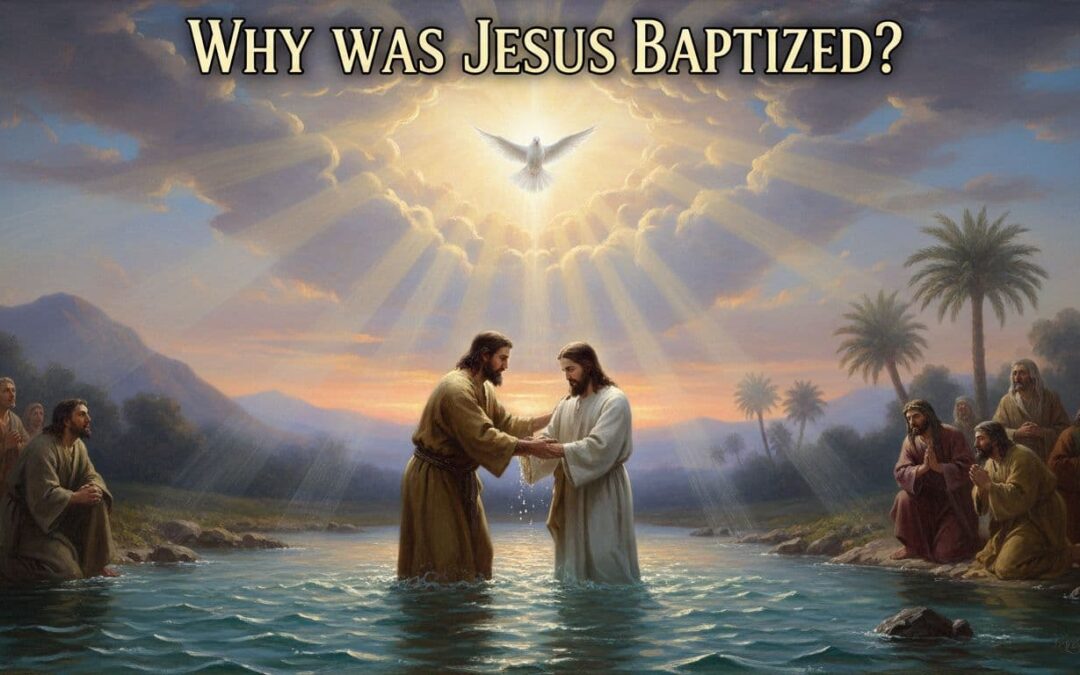
Jesus baptized in the Jordan as the Holy Spirit descends, a visual reminder of His public anointing.
Jesus is the Word (Logos), God’s message in a Person, and the Voice behind the prophets
John 1 says the Word was with God, the Word was God, and the Word became flesh. “Word” (Logos) isn’t just “sound.” It’s self-expression. It’s God making Himself known.
That’s why Christians have long said Jesus didn’t only speak God’s words, He is God’s Word.
So when Old Testament prophets spoke, who was behind that message? Scripture says that the Spirit of Christ was at work in the prophetic witness (see 1 Peter 1:10-11). We can say it like this: the Son, as God’s living Word, has always been the Father’s communicator, the One who makes God’s thoughts known to humans.
This doesn’t mean the prophets were puppets. It means their message was sourced in God, and Jesus is the fullest and final revelation of that same God.
At the Jordan we see the full picture: the Father speaks, the Spirit anoints, the Son begins
Now we can tighten it up. Why was Jesus baptized?
At the Jordan we see:
The Father speaks (public approval and royal declaration).
The Spirit descends (true anointing and empowering).
The Son stands revealed (the obedient Messiah launching His mission).
And the three offices come into focus.
Jesus is King: like David, but without David’s limits, anointed not by oil but by the Holy Spirit.
Jesus is Priest: not from Levi in genealogy, yet appointed by God to offer the final sacrifice, starting His public path by standing with sinners instead of away from them.
Jesus is Prophet: the Word Himself, the final spokesman, not another messenger in the line, but the One the line was pointing toward.
That’s the heart of it. Why was Jesus baptized? To be publicly revealed and anointed as the Messiah, and to begin His saving work in full view of Israel.
Conclusion
When we keep asking why was Jesus baptized, we end up standing in a long hallway of anointings. Saul, David, Solomon, priests, prophets, all of them were shadows. At the Jordan, the Father anoints Jesus with the Holy Spirit, and John, Spirit-filled from the womb, priestly in lineage, and last in the prophetic line, points and says, “This is Him.” Jesus is the Word of God, and the true Prophet, Priest, and King. Are we willing to let His identity define our repentance, our trust, and our hopes, or do we still want a Messiah on our terms? And since Heaven has already spoken over Him, what are we waiting for?
Related Posts
1 Truth: Blood of Jesus: God's Life in Sinless Flesh What if the very thing running through the veins of Jesus was not just human, but the Blood of Jesus holding the actual life of God Himself, poured out for us? That sounds huge, maybe even hard to take in at first, yet Scripture keeps pulling us back to this one thread: life is in the blood, sin corrupts human…
Unlocking the Word of Knowledge Through the Holy Spirit - John 4:16-19 The Bible boldly declares the truth that Jesus is both fully God and fully man—a mystery that anchors the Christian faith. But what does it mean, practically, for us as believers? Jesus didn't perform miracles or operate in the gifts of the Holy Spirit simply as God; He demonstrated how a Holy Spirit empowered life could look for any believer.…
Difference Between Catholic and Christian: 5 Truths on Faith and Real Unity There’s a lot of confusion around the difference between Catholic and Christian—sometimes it feels like everyone has an opinion, but not everyone has the facts straight. At the core, every true Christian faith centers on this one unshakable truth: Jesus isn’t just a teacher or prophet—Jesus is God. This makes all the difference. Beliefs that deny the full divinity of…
Bible Prophecy / Bible Study / Devotional / Faith / Heart of Stone / SinPre-Born! gives free ultrasounds to women looking to abort their babies and 86% of those women choose to keep theirRead more...
Who Is the Helper in John 14:16? The Holy Spirit
Bible Study / Holy Spirit Scriptures / Spirit Of Truth / The Upper RoomPre-Born! gives free ultrasounds to women looking to abort their babies and 86% of those women choose to keep theirRead more...
John 14:26 Explained: The Holy Spirit as Teacher
Bible Study / Devotional / Holy Spirit Scriptures / Spirit Of TruthPre-Born! gives free ultrasounds to women looking to abort their babies and 86% of those women choose to keep theirRead more...
Popular
Seven Spirits of God Explained: Trinity Insights for Your Faith Journey – Isaiah 11:2
The Seven Spirits of God stand as one of the most profound and often misunderstood truths in Christian theology. Rooted deeply in Scripture, they aren’t seven separate entities but rather seven attributes of the one Holy Spirit—God revealing Himself in fullness. Isaiah 11:2 describes these [...]Read more...
The 9 Gifts of the Holy Spirit: Biblical Truths, Historical Evidence, and Today
The gifts of the Holy Spirit reveal the active power of God working in the lives of His people. They aren’t just distant historical records or fading Biblical accounts; they’re living because the Holy Spirit, He is living and He is God, and His transformative gifts are reaching people [...]Read more...
Tongues of Fire in Acts 2:3: Meaning, Biblical Significance and Holy Spirit Power
The phrase “tongues of fire” in Acts 2:3 sparks worldwide curiosity and spiritual wonder. It appears in Scripture to describe the Holy Spirit’s descent during Pentecost, when visible flames rested on the apostles, marking the time when God’s Spirit descended on earth, [...]Read more...
The Antichrist
The Apostate Church
The Rapture
Angels
Book of Daniel
Giants
Judgment
Prophecy
The Apostles
Bible Prophecy
Beware of Deception
Sin
Antichrists
Demon Possession
Healing
Millennial Reign
Redemption
The Gospels
The Holy Spirit
American Prophecy
Israel
Armageddon
Forgiveness
Intercession
Prayer
Revival
The Old Testament
The Tribulation
Faith
Kingdom Of God
Bible Interpretation
Free Will
Book Of Jude
Pride
The Afterlife
The Red Dragon
We use cookies so you can have a great experience on our website. View more
Cookies settings
Accept
Decline
Privacy & Cookie policy
Privacy & Cookies policy
Cookies list
Cookie name
Active
Who we are
Our website address is: https://theholyspirit.us.
Comments
When visitors leave comments on the site we collect the data shown in the comments form, and also the visitor’s IP address and browser user agent string to help spam detection.
An anonymized string created from your email address (also called a hash) may be provided to the Gravatar service to see if you are using it. The Gravatar service privacy policy is available here: https://automattic.com/privacy/. After approval of your comment, your profile picture is visible to the public in the context of your comment.
Media
If you upload images to the website, you should avoid uploading images with embedded location data (EXIF GPS) included. Visitors to the website can download and extract any location data from images on the website.
Cookies
If you leave a comment on our site you may opt-in to saving your name, email address and website in cookies. These are for your convenience so that you do not have to fill in your details again when you leave another comment. These cookies will last for one year.
If you visit our login page, we will set a temporary cookie to determine if your browser accepts cookies. This cookie contains no personal data and is discarded when you close your browser.
When you log in, we will also set up several cookies to save your login information and your screen display choices. Login cookies last for two days, and screen options cookies last for a year. If you select "Remember Me", your login will persist for two weeks. If you log out of your account, the login cookies will be removed.
If you edit or publish an article, an additional cookie will be saved in your browser. This cookie includes no personal data and simply indicates the post ID of the article you just edited. It expires after 1 day.
Embedded content from other websites
Articles on this site may include embedded content (e.g. videos, images, articles, etc.). Embedded content from other websites behaves in the exact same way as if the visitor has visited the other website.
These websites may collect data about you, use cookies, embed additional third-party tracking, and monitor your interaction with that embedded content, including tracking your interaction with the embedded content if you have an account and are logged in to that website.
Who we share your data with
If you request a password reset, your IP address will be included in the reset email.
How long we retain your data
If you leave a comment, the comment and its metadata are retained indefinitely. This is so we can recognize and approve any follow-up comments automatically instead of holding them in a moderation queue.
For users that register on our website (if any), we also store the personal information they provide in their user profile. All users can see, edit, or delete their personal information at any time (except they cannot change their username). Website administrators can also see and edit that information.
What rights you have over your data
If you have an account on this site, or have left comments, you can request to receive an exported file of the personal data we hold about you, including any data you have provided to us. You can also request that we erase any personal data we hold about you. This does not include any data we are obliged to keep for administrative, legal, or security purposes.
Where your data is sent
Visitor comments may be checked through an automated spam detection service.





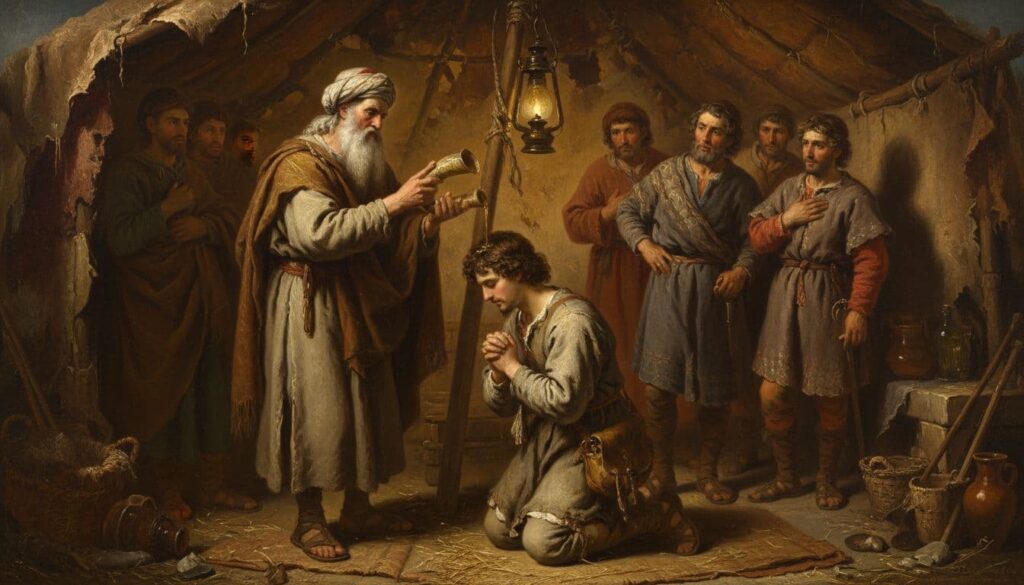 Samuel anointing David as king, a shadow of the greater Anointed One.
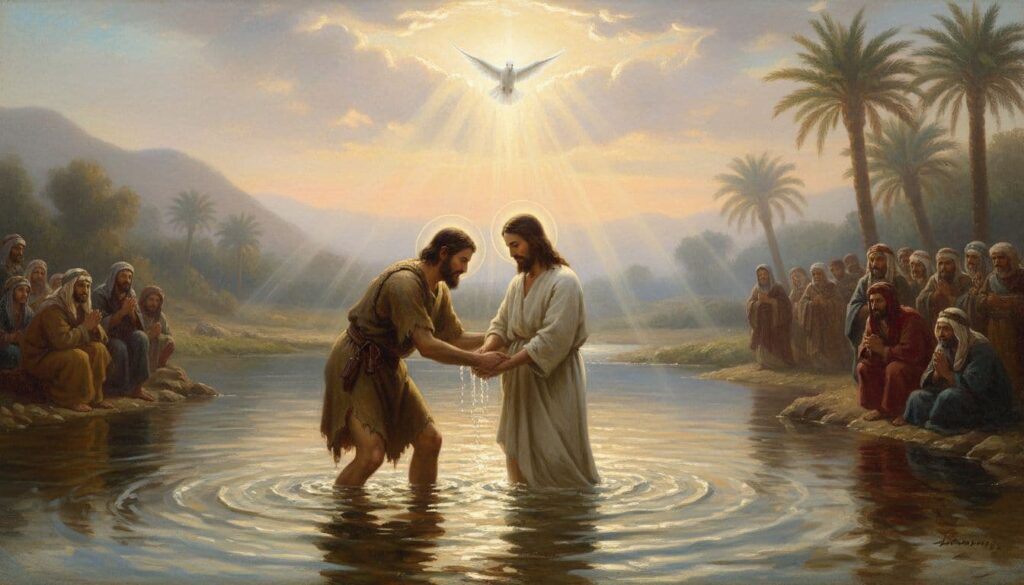 Jesus baptized in the Jordan as the Holy Spirit descends, a visual reminder of His public anointing.