Fruit That Remains: How the Spirit’s Life in Us Compares to the Heroes of Scripture
We talk about Holy Spirit fruits a lot, but many of us still wonder what they really are. Are they just Christian virtues, or are they something only God can grow in us?
In this article, we want to look at the nine fruits in Galatians 5 in their original Greek, link them to Old Testament stories, and then ask a bold question: are we, with the Holy Spirit living inside us, actually more empowered than the greatest heroes of faith who only had the Spirit resting on them at times?
By the end, we will see when that shift happened in salvation history, what Jesus promised, and how we can walk in this same life today.
What Are the Holy Spirit Fruits in Galatians 5 and Why Do They Matter?
Paul talks about the fruit of the Spirit right after he lists the works of the flesh in Galatians 5:16‑26. The flesh is our old, sinful nature that pulls us away from God. The Holy Spirit draws us toward Christ.
The word “fruit” points to something living that grows over time. Fruit does not appear in a moment. It grows slowly as the tree stays rooted and watered. In the same way, Holy Spirit fruits grow as we stay connected to Jesus.
Paul lists nine qualities in Galatians 5:22‑23: love, joy, peace, patience, kindness, goodness, faithfulness, gentleness, and self-control. These are not traits we can create by willpower. They are evidence that the Spirit is active in us.
In Galatians 5, Paul does something very on purpose with his words, in Greek he calls it the “fruit” of the Spirit, karpos in the singular, then he talks about the “works” of the flesh, erga in the plural, and that shift is not just grammar, it carries a story about what life looks like when the Spirit leads and what it looks like when the flesh calls the shots.
The fruit is one, because it is really the life of one Person, the Spirit of Christ, showing up in many colors inside you, so love, joy, peace, patience, kindness, goodness, faithfulness, gentleness, and self-control are not nine separate trophies you collect, they are nine angles of one life, one character, one root.
In the original setting, Paul is arguing against a split, torn kind of faith in Galatia, where people want to mix law, old badges of belonging, and the Gospel of grace, so he shows that when the Holy Spirit works, the result is whole and pulled together, not scattered and at war with itself. He uses “fruit,” not “fruits,” because the Spirit does not hand you a little bit of love today, a random piece of patience next year, and maybe some peace if you earn it, the Spirit grows one organic, living unity inside you, like a single tree with many branches, all fed by the same sap.
In contrast, “works of the flesh” comes out in the plural, because the flesh never gives you a whole and steady life, it throws out acts, pieces, fragments, things that might not even seem connected at first, sexual sin here, anger there, envy over in the corner, but when you trace them back, you see they come from one broken source, the self turned in on itself.
Paul also shifts from fruit, which is something that grows from a life within, to works, which are things you grind out, as if you are clocking in for sin, and that fits the context of a church tempted to trust human effort more than the Holy Spirit. Fruit is received and grown as you stay in step with the Spirit, works are produced as you give in to the pull of the flesh, and the Greek grammar quietly reinforces that story in the background.
The singular fruit also guards us from pride, because if you see one trait grow faster, like patience, you do not get to brag, since it is just one facet of Christ’s life shining a bit clearer through us, and the Spirit is still working on the other parts. The plural works remind us that sin is messy and never stays in one lane, we like to think we can keep one private habit in a little box, but flesh breeds more flesh, one “work” drags out another, and the list grows.
When you sit with the text in its first language, you can feel Paul pulling you away from a checklist view of faith (“I have three fruits but not the others yet”) and into a union view (“The Holy Spirit is forming the life of Jesus in me as one whole”).
The question that lingers is simple and sharp, which pattern matches my life today, the single, growing fruit of the Spirit, or the scattered works of the flesh that never agree and never rest?
The Context of Galatians 5: Walking by the Spirit vs. Walking by the Flesh
Galatians 5 describes a real war inside us. Paul says, “Walk by the Spirit, and you will not gratify the desires of the flesh.” The two are against each other.
When we walk by the flesh, ugly things show up: anger, sexual sin, envy, division, and more. When we walk by the Spirit, Holy Spirit fruits begin to show through our words, choices, and relationships.
Fruit takes time. There are seasons of pruning and seasons of visible growth. But as we stay in step with the Spirit, our lives start to look more like Jesus, because the fruit is really His character in us.
The Original Greek Meaning of “Fruit” and Why It Is Singular
In Galatians 5:22 the Greek word for “fruit” is karpos, and it is singular. Paul does not say “Holy Spirit fruits” in Greek, but “fruit.”
This picture helps us. The Spirit is not growing nine separate Holy Spirit fruits that we chase one by one. He is producing one united Christlike life that has many faces.
When the Spirit lives in us, the whole cluster of Holy Spirit fruits begins to form. Some parts may seem stronger than others at first, but over time He shapes a whole, steady character that reflects Jesus.
A Simple Word Study: Each of the Nine Holy Spirit Fruits in the Original Greek
Before we compare old and new covenant, we can look at each word briefly and see how God was already growing the same qualities in His people when His Spirit rested on them.
Love (Agapē): God’s Covenant Love Seen in David and Others
Agapē is self-giving love that seeks another’s good at a cost to ourselves. It is covenant love.
When God’s Spirit rested on David, he did not only fight giants. He also showed deep loyal love. In 1 Samuel 18, David and Jonathan form a covenant bond that reflects God’s own faithfulness. In 2 Samuel 9, David cares for Mephibosheth, a powerless relative of Saul, for Jonathan’s sake.
This kind of love stands at the head of all Holy Spirit fruits and shapes every other quality.
Joy (Chara): Spirit-Given Gladness in God’s Presence
Chara is joy rooted in God, not in comfort. David dancing with all his might before the ark in 2 Samuel 6:14‑16 is a wild picture of Spirit-filled joy.
His Psalms are full of this same chara, delight in God’s salvation and presence. That joy came when God drew near to His people, which points ahead to our joy as the Spirit lives in us.
Peace (Eirēnē): God’s Shalom Working Through His People
Eirēnē is peace, the Greek word that echoes Hebrew shalom. It means wholeness and rest in God that spreads into our relationships.
When the Spirit came on Saul in 1 Samuel 10, God used him to bring a season of order and peace to Israel. The priestly blessing in Numbers 6 asks God to give His people peace. When that happened, it was the Holy Spirit’s work, using human leaders to quiet fear and restore unity.
Patience (Makrothymia): Long-Suffering Strength Seen in Moses
Makrothymia is long-suffering patience. It is slow to anger and steady under pressure.
Moses shows this again and again as he leads a complaining people. Numbers 12:3 calls him very meek, yet he keeps standing in the gap for Israel. In Exodus 34:6, God reveals Himself as “slow to anger,” and Moses mirrors that same heart as the Spirit works through him.
Kindness (Chrēstotēs): Gentle Help for the Weak in Ruth and Boaz
Chrēstotēs is kindness that does something. It is not just a warm feeling.
Boaz shows this fruit as he protects and provides for Ruth in Ruth 2. He goes beyond the law in generous care. His kindness puts God’s heart for the poor and foreigner on display. This is one of the Holy Spirit fruits that always bends toward the vulnerable.
Goodness (Agathōsynē): Doing What Is Right for God and Others
Agathōsynē is moral goodness that moves. It does what is right, even when costly.
Joseph in Genesis 39 resists sexual sin in Egypt, then later forgives his brothers and provides for them in Genesis 45 and 50:20‑21. His goodness brings life to a whole nation. That is Spirit-shaped goodness, not just a nice personality.
Faithfulness (Pistis): Loyal Trust in God Shown by Daniel and Others
Pistis is trust and loyalty, faith that stays put.
Daniel in the lions’ den (Daniel 6) keeps praying even when it may cost his life. He is steady and reliable. Prophets like Samuel are known because “none of his words fell to the ground.” God advanced His Kingdom through people who kept faith when it was hard.
Gentleness (Prautēs): Humble Strength in Moses and God’s Servants
Prautēs is gentle strength. It is not weakness. It is power that is under God’s control.
Click Our Ad to Support Us!
Moses carries huge authority, yet in Numbers 12 he falls on his face when attacked and prays for those who oppose him. This spirit of gentleness points forward to Jesus, who calls Himself “gentle and lowly in heart.” The same Spirit grows this in us.
Self-Control (Enkrateia): Spirit-Given Power to Say No to Sin
Joseph again is a clear example when he runs from Potiphar’s wife in Genesis 39. The Old Testament does not use this exact Greek word, yet we recognize the quality. The Spirit strengthens a human heart to resist sin so God’s purposes can move forward.
How the Holy Spirit Worked in the Old Testament: Resting On vs. Living In
In the Old Testament, the Holy Spirit usually came upon certain people at certain times for special tasks. He rested on judges, kings, prophets, and even craftsmen.
Prophets, Priests, and Kings: Empowered by the Spirit Resting on Them
We see the Spirit on Moses and the seventy elders in Numbers 11, on Joshua in Numbers 27:18, on Gideon, Samson, and other judges, and on kings like Saul and David in 1 Samuel 10 and 16.
The Spirit gave wisdom, courage, prophetic words, and even physical strength. Yet many of these people still fell into serious sin. They had great power, but not always steady Holy Spirit fruits.
Did Old Testament Heroes Show the Holy Spirit Fruits in Their Lives?
At the same time, we recognize the same kind of fruit we see in Galatians 5. Moses shows patience and gentleness. David shows love, joy, and deep repentance. Joseph shows goodness and self-control. Daniel shows faithfulness.
So yes, those qualities were present as the Spirit worked with and on them. But they came in a history marked by ups and downs, with no promise yet of permanent indwelling for all God’s people.
Are We More Empowered Today Than Old Testament Heroes? A Biblical Comparison
We carry the same Holy Spirit as they did. The same holy character, the same purpose to spread God’s Kingdom. What changed is the covenant.
What Changed With the New Covenant: New Hearts and the Spirit Within
Jeremiah 31:31‑34 promises a new covenant where God’s law is written on hearts, not just stone. Ezekiel 36:26‑27 is even more direct: God will give a new heart and put His Spirit within His people.
This is different from the Spirit coming mainly on leaders. Now the Spirit lives in every believer. That inner change is the soil where Holy Spirit fruits grow long term, not just in rare moments.
When Did the Spirit Begin Living Inside Believers? Jesus’ Promise and Pentecost
Jesus explained the shift. In John 14:16‑17 He says the Spirit is “with you and will be in you.” In John 7:37‑39, John adds that the Spirit had not yet been given in this new way, because Jesus had not yet been glorified. In John 16:7, Jesus even says it is better that He go, so the Helper will come.
Acts 2 is the turning point. At Pentecost, the Spirit fills the disciples from within and the church is born. From that day, all who trust in Christ receive the Spirit as a seal, as Paul says in Ephesians 1:13‑14.
Can Someone Show Holy Spirit Fruits Without the Spirit Living Inside?
In the Old Testament, people could reflect God’s character as He worked with and on them. We see love, joy, peace, and patience in real histories.
But the steady, lifelong growth Paul describes, the whole pattern of Holy Spirit fruits, belongs to those who are joined to Christ and have the Holy Spirit living in them. Good behavior alone is not the same. Fruit is the overflow of a new heart, not a moral clean-up job.
In What Sense Are We “More Empowered” Today Than the Greatest Heroes of Faith?
We are not better than them in worth. We simply live in a greater covenant.
Jesus says in Matthew 11:11 that the least in the Kingdom of Heaven is greater than John the Baptist. In John 14:12 He says those who believe in Him will do greater works, because He goes to the Father and sends the Spirit.
When Jesus says in John 14:12 that those who believe in Him will do “greater works,” He uses the Greek word meizona (from megas), which simply means “greater,” not “flashier” or “more dramatic,” and the context does the heavy lifting for what kind of “greater” He means. He ties it directly to, “because I go to the Father,” which in John’s Gospel is shorthand for His death, resurrection, exaltation, and then the sending of the Holy Spirit.
In other words, the “greater” flows from a new stage in God’s plan, not from believers outshining Jesus. The works are greater in scope and impact, because now the risen Christ works through a global body, not just one Jewish man walking in a small strip of land.
Jesus healed bodies and raised a few dead people in a limited region; after Pentecost, Spirit-filled believers preach a finished atonement, see people made new creations, and watch the Gospel jump from Jerusalem to the nations. That is not a downgrade, it is an upgrade in reach and in depth of what is offered.
Some of us believers often see miracles that look like what Jesus did, and sometimes God does that in unexpected places and is about to start doing that a lot more as the Acts 29 church rises, but John 14 links “greater works” mainly to the overflow of the Holy Spirit in the church, where countless ordinary believers carry the life, presence, and message of the crucified and risen Son into places Jesus never physically walked.
Today, every believer is anointed, not just a few. We have fuller revelation of Christ and His cross. We are sealed with the Spirit, as Ephesians 1:13‑14 says. This greater access should lead us to humble awe, not pride.
How We Can Actively Grow in the Holy Spirit Fruits Today
We live in the time the prophets longed to see. The Spirit does not just visit us for a task. He lives in us when we belong to Jesus.
Growth in Holy Spirit fruits is not automatic, though. We learn to cooperate with Him.
Abiding in Christ: The Vine and Branches as the Secret of Lasting Fruit
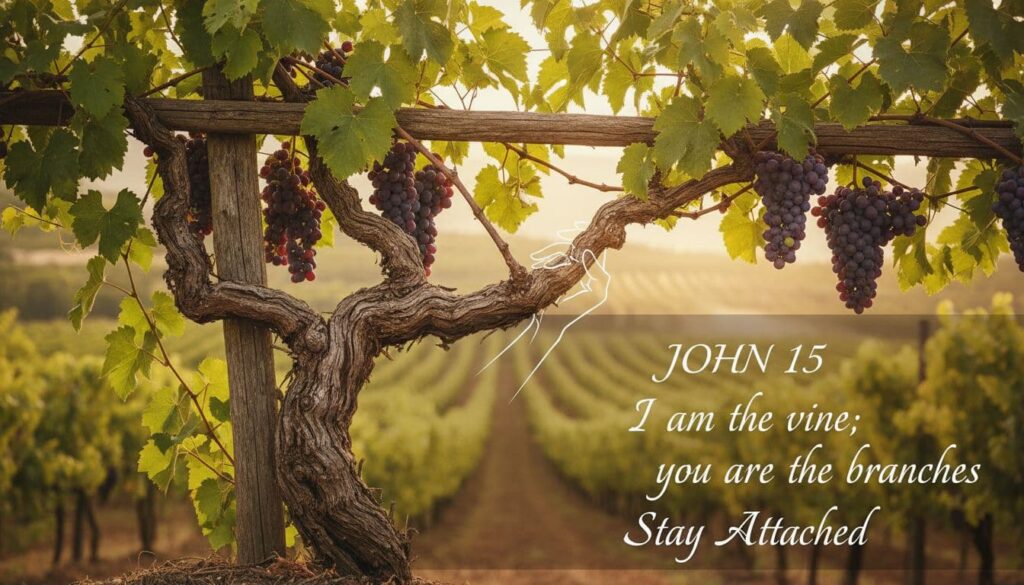
In John 15, Jesus calls Himself the vine and us the branches. Our job is not to strain out grapes; our job is to stay attached.
We abide in Him through prayer, Scripture, obedience, and honest dependence. As we stay close to Him, the Spirit quietly produces fruit we could never fake for long: real love, real joy, real peace.
Walking by the Spirit Each Day: Small Choices That Shape Our Hearts
Galatians 5:16‑25 talks about walking by the Spirit. That sounds big, but it shows up in small daily choices.
We confess sin quickly instead of hiding it. We ask the Spirit for help before a hard conversation. We let Scripture correct us. We choose love instead of winning an argument. We serve when no one sees.
Over time, these small yeses make room for Holy Spirit fruits to ripen. The same Spirit who rested on Moses and David now lives in us all the time.
Conclusion
When we step back, we see one history. The Spirit who hovered over creation, who came upon prophets, priests, and kings, is the same Spirit who now lives in us and grows Holy Spirit fruits from the inside out.
Old Testament heroes tasted this fruit as the Spirit rested on them, yet often in uneven ways. In Christ, after Pentecost, we carry a greater gift: new hearts, permanent indwelling, and shared access to God’s presence. In that sense, Scripture says we really are more empowered than they were, not because we are greater, but because Jesus has finished His work.
So we can ask with confidence: Holy Spirit, grow Your fruit in us. Let love, joy, peace, and the whole cluster of Your life ripen in our everyday choices, so that our small stories fit inside Your great Kingdom story.
Check out our other article:
Related Posts
Holy Spirit Scriptures: 21 Century Meaning, Original Words, and God's Purpose What would life be if we never understood the heart behind every movement of God’s Spirit? Every verse that mentions the Holy Spirit points us somewhere deeper—into friendship with God, into His power for living, and into the mystery of His love and presence that started in Eden and keeps going until Jesus rules the earth in the Millennial Reign.…
Who Is the Holy Spirit? Discover God’s Helper and Friend - Genesis 1:2 The Holy Spirit is one of the most fascinating yet often misunderstood aspects of Christian theology. From the very first pages of the Bible, His presence weaves through history—pointing, guiding, and empowering God’s people. But who exactly is the Holy Spirit? Is He a person, a force, or something else entirely? Spoiler: He’s God, revealed to us as part of…
21st Century Biblical Anointing: Oil, Prophets, and Holy Spirit Baptism Have you ever wondered why the word "anointing" carries so much depth in Scripture? The idea of anointing—of sacred oil poured out on kings, priests, and prophets—echoes through the Old Testament as a symbol of God choosing, empowering, and setting apart. God didn’t leave the details of the anointing oil a mystery: He gave Moses a recipe, specific and holy,…
Galatians 6:8 Explained: What It Means to Sow to the Spirit
Bible Study / Devotional / Fruits of the Holy Spirit / SinPre-Born! gives free ultrasounds to women looking to abort their babies and 86% of those women choose to keep theirRead more...
Praying in the Holy Spirit in Jude 20, Explained Simply
Bible Study / Devotional / Discernment / Faith / Holy Spirit Scriptures / Humility / Led by the Spirit / Speaking In TonguesPre-Born! gives free ultrasounds to women looking to abort their babies and 86% of those women choose to keep theirRead more...
Walk in the Spirit: Galatians 5:16 in Daily Life
Bible Study / Devotional / Fruits of the Holy Spirit / Holy Spirit Scriptures / Led by the Spirit / SinPre-Born! gives free ultrasounds to women looking to abort their babies and 86% of those women choose to keep theirRead more...
Popular
Seven Spirits of God Explained: Trinity Insights for Your Faith Journey – Isaiah 11:2
The Seven Spirits of God stand as one of the most profound and often misunderstood truths in Christian theology. Rooted deeply in Scripture, they aren’t seven separate entities but rather seven attributes of the one Holy Spirit—God revealing Himself in fullness. Isaiah 11:2 describes these [...]Read more...
The 9 Gifts of the Holy Spirit: Biblical Truths, Historical Evidence, and Today
The gifts of the Holy Spirit reveal the active power of God working in the lives of His people. They aren’t just distant historical records or fading Biblical accounts; they’re living because the Holy Spirit, He is living and He is God, and His transformative gifts are reaching people [...]Read more...
Tongues of Fire in Acts 2:3: Meaning, Biblical Significance and Holy Spirit Power
The phrase “tongues of fire” in Acts 2:3 sparks worldwide curiosity and spiritual wonder. It appears in Scripture to describe the Holy Spirit’s descent during Pentecost, when visible flames rested on the apostles, marking the time when God’s Spirit descended on earth, [...]Read more...
The Antichrist
The Apostate Church
The Rapture
Angels
Book of Daniel
Giants
Judgment
Prophecy
The Apostles
Bible Prophecy
Beware of Deception
Sin
Antichrists
Demon Possession
Healing
Millennial Reign
Redemption
The Gospels
The Holy Spirit
American Prophecy
Israel
Armageddon
Forgiveness
Intercession
Prayer
Revival
The Old Testament
The Tribulation
Faith
Kingdom Of God
Bible Interpretation
Free Will
Book Of Jude
Pride
The Afterlife
The Red Dragon
We use cookies so you can have a great experience on our website. View more
Cookies settings
Accept
Decline
Privacy & Cookie policy
Privacy & Cookies policy
Cookies list
Cookie name
Active
Who we are
Our website address is: https://theholyspirit.us.
Comments
When visitors leave comments on the site we collect the data shown in the comments form, and also the visitor’s IP address and browser user agent string to help spam detection.
An anonymized string created from your email address (also called a hash) may be provided to the Gravatar service to see if you are using it. The Gravatar service privacy policy is available here: https://automattic.com/privacy/. After approval of your comment, your profile picture is visible to the public in the context of your comment.
Media
If you upload images to the website, you should avoid uploading images with embedded location data (EXIF GPS) included. Visitors to the website can download and extract any location data from images on the website.
Cookies
If you leave a comment on our site you may opt-in to saving your name, email address and website in cookies. These are for your convenience so that you do not have to fill in your details again when you leave another comment. These cookies will last for one year.
If you visit our login page, we will set a temporary cookie to determine if your browser accepts cookies. This cookie contains no personal data and is discarded when you close your browser.
When you log in, we will also set up several cookies to save your login information and your screen display choices. Login cookies last for two days, and screen options cookies last for a year. If you select "Remember Me", your login will persist for two weeks. If you log out of your account, the login cookies will be removed.
If you edit or publish an article, an additional cookie will be saved in your browser. This cookie includes no personal data and simply indicates the post ID of the article you just edited. It expires after 1 day.
Embedded content from other websites
Articles on this site may include embedded content (e.g. videos, images, articles, etc.). Embedded content from other websites behaves in the exact same way as if the visitor has visited the other website.
These websites may collect data about you, use cookies, embed additional third-party tracking, and monitor your interaction with that embedded content, including tracking your interaction with the embedded content if you have an account and are logged in to that website.
Who we share your data with
If you request a password reset, your IP address will be included in the reset email.
How long we retain your data
If you leave a comment, the comment and its metadata are retained indefinitely. This is so we can recognize and approve any follow-up comments automatically instead of holding them in a moderation queue.
For users that register on our website (if any), we also store the personal information they provide in their user profile. All users can see, edit, or delete their personal information at any time (except they cannot change their username). Website administrators can also see and edit that information.
What rights you have over your data
If you have an account on this site, or have left comments, you can request to receive an exported file of the personal data we hold about you, including any data you have provided to us. You can also request that we erase any personal data we hold about you. This does not include any data we are obliged to keep for administrative, legal, or security purposes.
Where your data is sent
Visitor comments may be checked through an automated spam detection service.