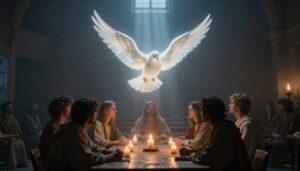
The Blood of Jesus: God’s Own Life in Sinless Human Flesh
What if the very thing running through the veins of Jesus was not just human, but the Blood of Jesus holding the actual life of God Himself, poured out for us? That sounds huge, maybe even hard to take in at first, yet Scripture keeps pulling us back to this one thread: life is in the blood, sin corrupts human blood, and God promised a different kind of blood that would finally deal with sin and death forever. This is not a side topic in the Bible, it is right at the center of God’s history with us.
In this article, we are going to walk slowly and carefully through that history. We will trace what God says about blood from Genesis to Revelation, from the first animal sacrificed to cover Adam and Eve, to the final picture of a Lamb who was slain yet lives. Along the way, we will see how the Hebrew word dam and the Greek word haima both carry the same simple truth, that blood is life, and that human blood, tied to Adam, is soaked with sin and death.
From there we will look at how the Bible shows that Jesus is 100% God and 100% man at the same time, yet the Blood of Jesus is not ordinary human blood. Human blood carries the stain of Adam, but the Blood in Christ is the very life of Yahweh, God’s own sinless life in a real human body. This is why the cross has power, why repentance is not just a feeling but a doorway into a new life covered by the Blood of Jesus and its power to cover sin.
We will also see how Father, Son, and Holy Spirit are not three different Gods, but one Yahweh from all eternity, working together in our salvation. The Holy Spirit overshadowed a virgin, the Father prepared a body, and the Son stepped into that body so that God Himself could shed His own Blood for us. If your heart longs to understand why the Blood of Jesus matters so much, and why it is unlike any other blood, this journey through Scripture is for you.
What the Bible Really Says About Blood and Life From Genesis to Revelation
When you start to trace the history of blood through Scripture, you begin to see a steady line that runs straight to the Blood of Jesus. From the garden of Eden all the way to the cross, God keeps repeating the same message in different ways: sin brings death, life is in the blood, and only God can provide the Blood that truly deals with sin. The history is simple, but it is also weighty.
This section walks through that history in stages, so you can feel how the Bible itself builds the expectation for a better blood, a holy blood, that would one day be poured out for us.
The first shed blood in Genesis: sin, death, and covering
In Genesis, everything starts clean, bright, and alive. There is no death yet, no graves, no blood on the ground. God gives Adam a clear warning in Genesis 2:17 about the tree of the knowledge of good and evil: if he eats, he will surely die. Not “maybe,” not “eventually in some vague way,” but a real judgment tied to real disobedience.
Once Adam and Eve eat, something breaks inside the human history. God speaks the sentence in Genesis 3:19, “you are dust, and to dust you shall return.” Their bodies will now move toward death. The life that once flowed unthreatened in their veins is now under a curse. The shadow of death enters the human bloodstream.
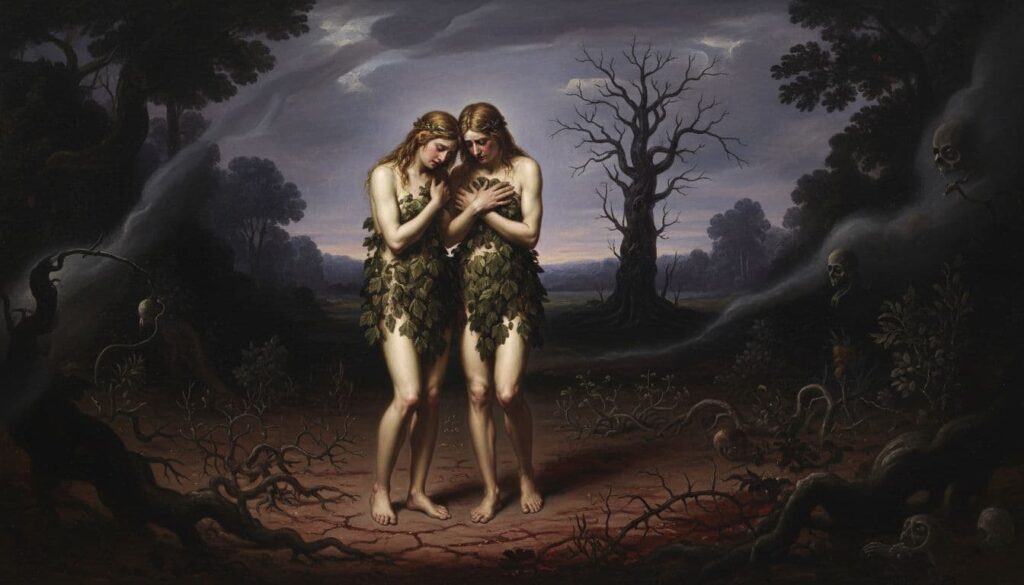
Then something subtle but huge happens. Adam and Eve try to cover their shame with fig leaves. God does not accept their attempt. Instead, He clothes them with “garments of skins.” Skins mean an animal died. To cover their shame and nakedness, blood had to be shed.
We are not told what kind of animal or how the act looked, but the message is clear:
Sin leads to death.
Innocent life is taken to cover guilty people.
Human efforts to cover sin are not enough.
The first blood in the Bible is not a battle wound or a murder. It is a sacrifice, given so that sinners can be covered. From the start, blood is joined to sin, guilt, judgment, and mercy all at once.
Genesis 4 shows how fast sin spreads. Cain kills his brother Abel, and this time God speaks about blood in a new way. He tells Cain, “The voice of your brother’s blood is crying to Me from the ground” (Genesis 4:10). Abel’s blood is not silent. It cries out for justice.
So in just a few chapters we see two sides of blood:
Blood as a covering for sinners.
Blood as a witness against sin.
This sets the stage for why the Blood of Jesus will later be called “the Blood that speaks a better word than the blood of Abel.” Abel’s blood cries for judgment. The Blood of Jesus cries for mercy bought with judgment already carried.
“Life is in the blood”: the meaning of the Hebrew word dam
By the time we reach Leviticus, God begins to explain more directly what blood means. The Hebrew word for blood is dam. It is not just a medical word. In the way Scripture uses it, dam is tied to life itself.
In Leviticus 17:11 God says, “the life of the flesh is in the blood.” You can see the wording and different translations unpacked in resources like this Leviticus 17:11 overview. God does not say life is in the brain or in the breath, even though those matter too. He chooses blood. He ties life and blood together so tightly that He can speak of them almost as one.
Then He adds something even deeper: “I have given it to you upon the altar to make atonement for your souls.” That means blood is not just a symbol of life. God Himself chose blood to be the price for sin. As one writer puts it, God made blood His “ordained means” for dealing with guilt, which you can see explained in more detail in a study like this one on life in the blood and atonement.
God gave blood on the altar as the payment for sin.
Atonement is not invented by humans. It is assigned by God.
Because life is in the blood, and because sin rules in human hearts, that means human blood is now under death. Human life is still a gift, but it is a damaged gift. Our blood carries our history, and that history includes sin, corruption, and the certainty of physical death.
This is why we need a different blood. The Blood of Jesus is not just more human blood laid on top of a long pile of sacrifices. His Blood is tied to a sinless life. It is the life of God the Son in human flesh, and that makes His Blood a different kind of payment.
Animal sacrifices and Passover: pictures pointing to a greater blood
Once we understand that life is in the blood and that God chose blood for atonement, the sacrificial system starts to make more sense. It is not random violence. It is a picture book that teaches with real lives and real deaths.
In Exodus 12, God tells Israel to take a lamb without blemish, kill it, and put its blood on the doorposts and lintel of their houses. When the Lord passes through Egypt to strike the firstborn, He says, “When I see the blood, I will pass over you.” The blood is a sign that judgment has already fallen on a substitute. The firstborn lives because the lamb died. You can see a helpful reflection on this picture in a piece like The power of the blood of the Lamb.
Passover shows us several things at once:
The lamb must be spotless.
The blood must be applied, not just shed.
Where God sees the blood, wrath passes over.
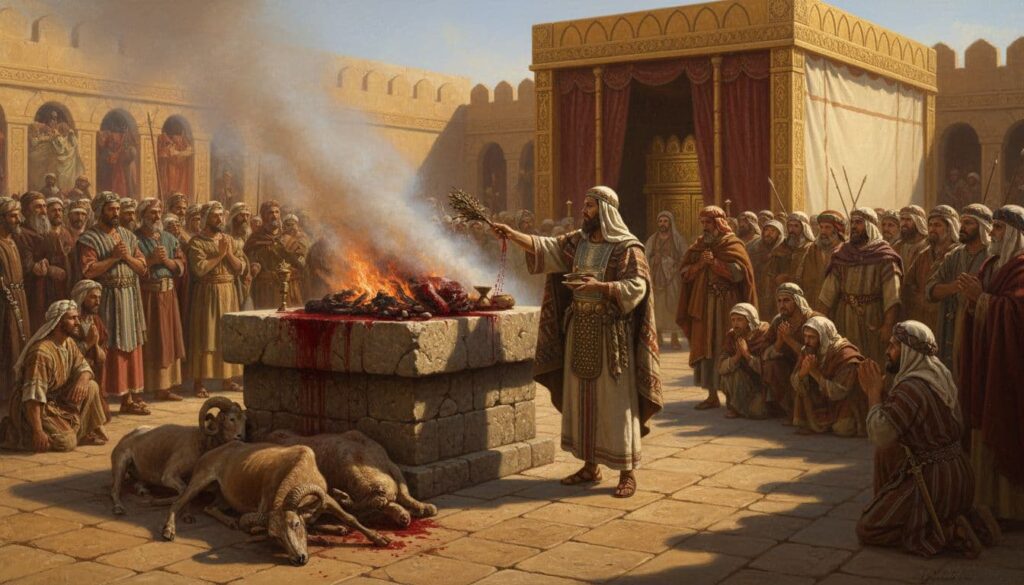
From there, Leviticus builds a whole system of offerings. Sin offerings, burnt offerings, guilt offerings, the Day of Atonement in Leviticus 16, all of them involve blood poured out, sprinkled, or smeared in God’s presence. This constant flow of animal blood preaches a hard but honest message: human sin is deep, constant, and costly.
Yet these sacrifices also reveal their own limits. The fact that they must be offered again and again shows that animal blood cannot finally remove sin. It can cover and push judgment back for a time, but it cannot cleanse the conscience in a permanent way.
All of this points forward. Every lamb, every bull, every goat is like an arrow that aims at one future day, when a single offering would be enough. The Passover lamb hints at a greater Passover. The blood on wooden doorframes whispers of a better Blood on a wooden cross.
When we speak of the Blood of Jesus, we are not adding a new symbol to an old history. We are watching the history reach the scene it has been moving toward from the start.
Prophets and promises: a coming covenant sealed in blood
The prophets step into this flow of sacrifices and begin to speak of something new. Not a new ritual, but a new covenant, a new way God will bind Himself to His people.
Jeremiah 31:31–34 promises, “I will make a new covenant,” not like the one made when God brought Israel out of Egypt. In that new covenant, God says He will write His law on hearts and remember sins no more. No more half-covered guilt. No more constant fear of slipping back outside the camp. That kind of complete forgiveness hints at a better sacrifice and a better blood. You can see how some teachers trace this hope in summaries like this topical overview of God’s provision for atonement.
Ezekiel 36:25–27 adds more detail. God promises, “I will sprinkle clean water on you, and you shall be clean,” and then, “I will give you a new heart and a new spirit.” Cleansing from the outside is joined with transformation on the inside. The problem is not only guilt, but also the kind of heart we carry. That calls for more than animal blood. It calls for a Holy Blood that can both cleanse and create.
Then Isaiah 53 draws the picture of a single Person, the Servant of the Lord, who will suffer for many. He is “wounded for our transgressions” and “crushed for our iniquities.” Isaiah says He will “pour out His soul unto death” and “bear the sin of many.” The language sounds like sacrifice, but this time the sacrifice walks and speaks and chooses to suffer. For a rich comparison of Isaiah’s Servant with Jesus, you can look at resources like Isaiah’s Suffering Servant fulfilled in Jesus of Nazareth.
Put the prophetic pieces together and you get a clear expectation:
A new covenant that really deals with sin.
A cleansing that reaches the heart.
A Servant who suffers and dies as a sacrifice for many.
All of that implies blood. Not the blood of bulls and goats, but the Blood of a righteous Servant, a spotless One whose life is worth more than the whole world.
That is why, when we talk about the Blood of Jesus, we are standing at the center of God’s long, patient plan. Every warning in Genesis, every instruction in Leviticus, every promise in the prophets, is gathering around one truth: only God’s own life, poured out in sinless human flesh, could bring the kind of forgiveness and new birth our hearts ache for.
How Human Blood Contains Sin and Death According to Scripture
When we talk about the Blood of Jesus, we are not just talking about a spiritual symbol. We are comparing His holy, sinless Blood with our own fallen, tired, Adam-shaped blood. Scripture is blunt about this. Human life is beautiful, but it is also broken, and that brokenness runs in our veins.
This section looks at how the Bible ties human blood to sin, death, and guilt, so we can feel the weight of why we need a different kind of blood, the Blood of Jesus, to save us.
Adam’s fall, inherited sin, and why all human life is under death
Romans 5:12 opens a door that many people would rather keep shut: “Sin came into the world through one man, and death through sin, and so death spread to all men because all sinned.” Paul does not treat Adam as a myth or a side note. Adam is the head of the human family. When he fell, we fell with him.
If you want to see how many teachers unpack this passage, you can look at a resource like the Romans 5:12 commentaries on BibleHub. Over and over, the point is the same. Sin did not start with you, but it lives in you.
Paul explains that through one man’s disobedience “the many were made sinners” (Romans 5:19). That little phrase “made sinners” speaks of a condition, not just a record. We are not neutral people who sometimes slip up. We are born in Adam, which means we share his bent heart. We inherit more than hair color and eye shape. We inherit a nature that leans toward self, pride, and rebellion.
David feels this in his bones. In Psalm 51:5 he says, “Behold, I was brought forth in iniquity, and in sin did my mother conceive me.” He is not blaming his mother. He is confessing that sin has been part of his history from the very start. No one had to teach him how to be selfish or deceitful. It rose from inside.
Paul uses different words but the same idea in Ephesians 2:1–3. He says we were “dead in trespasses and sins,” walking according to the spirit of the age, “by nature children of wrath.” By nature, not just by habit. That is tough to hear, but it matches what we see in our own hearts.
At a physical level, our life is in our blood. It carries oxygen, nutrients, energy. It keeps us moving. Yet that same life is under a death sentence because it is tied to Adam. Our blood keeps us alive for a while, but it cannot escape the curse over Adam’s race. Every heartbeat is a mercy, but every heartbeat also moves us closer to the grave.
This is part of why Romans 5 is so powerful. As one writer explains in a reflection on How Romans 5 addresses sinful nature, the same passage that shows how far Adam’s fall spread also shows that the gift in Christ is greater than the trespass. Human blood carries Adam’s death. The Blood of Jesus carries God’s life.
Blood guilt and defilement: why human blood cries out for justice
The Bible does not treat blood as a cold medical fluid. It treats blood as a witness. When human hands shed blood, that blood speaks.
In Genesis 4:10, after Cain murders Abel, God says, “The voice of your brother’s blood is crying to Me from the ground.” That is a haunting picture. Abel is dead, yet his blood cries out like a legal charge in God’s court. Innocent blood does not go unnoticed. It calls for justice.
Numbers 35:33 makes it even more direct: “You shall not pollute the land in which you live, for blood pollutes the land, and no atonement can be made for the land for the blood that is shed in it, except by the blood of the one who shed it.” Shed blood does not just stain hands. It stains places. It defiles the land itself. Commentaries on this passage, such as the Numbers 35 study on Precept Austin, show how serious God is about this idea of blood guilt.
The prophets pick up this theme. In Isaiah 59:3 God tells Israel, “Your hands are defiled with blood and your fingers with iniquity.” The picture is not only of murder, but of all the ways sin flows through what we do, touch, and choose. In Isaiah 1:15, God says He will hide His eyes and not listen to prayer because “your hands are full of blood.” Worship sounds nice, but their lives leak injustice and violence.
Here is the hard truth behind all this. Human blood is not morally neutral. It belongs to lives under sin, judgment, and death. Our actions, our hatred, our selfish choices, all of it clings to us. In God’s eyes, it clings even to our blood.
This is why the Bible speaks later of “bloodguilt,” a word that wraps together guilt, violence, and responsibility. If you want to trace the idea, you can look at a study like Understanding bloodguilt. It shows how serious God is about every drop of blood shed on earth.
When we stack this next to the Blood of Jesus, the contrast hits even harder. Our blood can cry out for justice, but it can never wash guilt away. His Blood satisfies justice and brings mercy at the same time.
Why the blood of animals and sinful humans can never fully cleanse
If human blood is stained by sin and guilt, maybe animal blood can fix it. That was the question under the whole Old Testament sacrificial system. For centuries, priests killed bulls, goats, and lambs. Blood flowed on the altar day after day.
Hebrews 10:1–4 gives God’s own verdict on that system. The law had “a shadow of the good things to come,” but “it is impossible for the blood of bulls and goats to take away sins.” Those sacrifices were like a mirror that kept reminding Israel of sin every year. They could cover, they could point ahead, but they could not clean the heart.
You can see this explained in a simple way in a short piece like What animal blood cannot accomplish. The key idea is this: animal blood is not equal in value to a human life, so it cannot finally deal with human guilt. It works as a symbol and as a temporary covering, but not as a full answer.
Hebrews 9:13–14 draws a sharp contrast. If the blood of goats and bulls could make people outwardly clean, “how much more will the Blood of Christ, who through the eternal Spirit offered Himself without blemish to God, purify our conscience from dead works to serve the living God.” Animal blood touched the body. The Blood of Jesus reaches the conscience.
We also need to be clear about another side. Human blood, because of Adam and our own sins, cannot atone for sin either. People sometimes speak of “giving their lives” to make up for wrongs. That may show love, but it does not erase guilt before a holy God.
Put it in simple words:
Sinful blood cannot wash away sin.
Guilty life cannot pay for guilty life.
For sin to be truly cleansed, the offering has to be spotless, inside and out. The blood has to come from a life that never shared Adam’s rebellion, never loved darkness, never twisted truth. Only then can that Blood stand in for us.
That is the Bible’s setup for the Blood of Jesus. His Blood does what animal blood never could and what human blood never will. It does not just cover sin, it removes it. It does not only delay judgment, it satisfies it. It does not simply quiet the conscience for a season, it brings a new heart that can finally live for God.
The Blood of Jesus in the New Testament: Life of God in Real Human Flesh
By the time we reach the New Testament, the history of blood is loaded. Sacrifices, Passover, covenant, all of it is sitting there like dry wood. Then something happens that has never happened before. The New Testament starts talking about the Blood of Jesus with a kind of finality that does not show up anywhere else in Scripture.
The writers use one simple Greek word, haima, but they use it to describe the most powerful thing God has ever done with human flesh and blood.
The Greek word haima and how the New Testament talks about Jesus’ blood
The Greek word for blood is haima. It is the word you would use for ordinary human blood, but the New Testament fills it with a glory that is anything but ordinary when it speaks about the Blood of Jesus.
In the Last Supper, Jesus takes the cup and says in Matthew 26:28, “for this is My blood (haima) of the covenant, which is poured out for many for the forgiveness of sins.” Luke 22:20 uses the same word when Jesus calls it “the new covenant in My blood.” Here the Blood of Jesus brings:
Forgiveness of sins
A new covenant relationship with God
This is not blood that just covers for a year. This is covenant-making blood, the kind that closes the door on the old way of relating to God and opens a new one forever.
In John 6:53–56, Jesus goes even deeper. He says, “unless you eat the flesh of the Son of Man and drink His blood, you have no life in you.” He is not talking about literal chewing or some dark ritual. He is talking about a total, personal receiving of His life, His death, His Blood of Jesus poured out on the cross. The effects in that passage are strong:
Real spiritual life
Abiding in Christ and Christ in us
Where our own blood is tied to Adam and death, His blood is tied to God’s life and union.
Paul picks up this language and refuses to let it go. In Romans 3:25, he says that God put Christ forward as “a propitiation by His blood.” That means the Blood of Jesus satisfies God’s righteous anger against sin. It is not a sentimental picture. It is legal, holy, and complete.
In Ephesians 1:7, Paul writes, “In Him we have redemption through His blood, the forgiveness of our trespasses.” The word haima here carries two main gifts:
Redemption (buying us back from slavery to sin)
Forgiveness (canceling the record of our sins)
Colossians 1:20 takes it even wider: God makes “peace by the blood of His cross.” Not only peace inside your heart, but peace between God and creation itself. The Blood of Jesus is the way God reconciles what sin tore apart.
The book of Hebrews ties together everything the Old Testament was hinting at. Hebrews 9:12–14 says that Jesus entered the holy place “by means of His own blood,” not the blood of goats and calves, and that His Blood of Jesus does what no animal blood could ever do. It:
Finally, Revelation opens with a simple worship line that says everything: Jesus “loves us and has freed us from our sins by His blood” (Revelation 1:5). His haima is the key to freedom, not just a symbol of love.
When you step back and look at all these texts together, something clear emerges:
Click Our Ad to Support Us!
The Blood of Jesus brings forgiveness
The Blood of Jesus brings redemption
The Blood of Jesus brings cleansing
The Blood of Jesus brings peace with God
The Blood of Jesus seals a new covenant
The Blood of Jesus wins final victory over sin and death
No other blood in the Bible is talked about like this. Abel’s blood cries for justice. Animal blood covers for a time. Human blood spreads guilt. Only the Blood of Jesus is spoken of as a finished, final, saving answer that will never need to be repeated.
Jesus is 100% God and 100% man: why His blood is not ordinary human blood
To feel the weight of the Blood of Jesus, you have to be clear about who Jesus is. The New Testament will not let us say He is just a good man who died bravely. It keeps insisting on two truths at the same time: He is fully God, and He is fully man.
John opens his Gospel with this claim: “In the beginning was the Word, and the Word was with God, and the Word was God” (John 1:1–3). Then in John 1:14 he says, “the Word became flesh and dwelt among us.” The same eternal Word who was with God and was God took on real human flesh and blood.
Jesus Himself speaks this way. In John 8:58 He says, “before Abraham was, I am.” That “I am” echoes God’s own name. In John 10:30 He says, “I and the Father are one.” Paul joins in with Colossians 1:15–20. He calls Jesus “the image of the invisible God” and says that in Him “all the fullness of God was pleased to dwell.” Hebrews 1:3–8 goes even further, calling the Son “the radiance of the glory of God” and “the exact imprint of His nature,” then openly calling Him God.
At the same time, Scripture is just as clear that Jesus is truly human. John 1:14 says the Word “became flesh.” Luke 2:7 describes a real baby born from a real woman. Philippians 2:7–8 says He “emptied Himself, taking the form of a servant,” and was “born in the likeness of men.” Hebrews 2:14–17 says that He shared “in flesh and blood,” and was made like His brothers “in every respect,” so that He could be a faithful High Priest.
So we hold both truths together:
Truly God
Truly man
One Person, Jesus Christ
This means the Blood of Jesus is real human blood. It flows, clots, spills, and dries like any other. He gets tired. He sweats. He bleeds. But there is one huge difference. His human life is without sin. Hebrews 4:15 says He was tempted in every respect as we are, “yet without sin.”
Then Acts 20:28 puts a bright spotlight on His Blood. Paul tells the elders to care for “the church of God, which He obtained with His own Blood.” That little phrase “God’s own blood” is staggering. The person who shed that blood is God the Son in human flesh. So Scripture is not afraid to call it God’s Blood, even as it is truly human blood.
So we can say it this way:
Every drop is truly the Blood of Jesus
Every drop is truly the blood of God
All of it is holy and sinless
This is why no other human death can do what His death does. The Blood of Jesus is human enough to stand in our place and divine enough to carry the worth of God Himself. For a simple walk through how the Bible holds both together, you might find this summary on Jesus fully God and fully man helpful.
How the virgin birth and the Holy Spirit show the divine origin of Jesus’ blood
Now the question naturally rises: if the Blood of Jesus is real human blood, yet not stained by Adam’s line, how did God do that? The New Testament points us straight to the virgin birth.
Matthew 1:18–23 explains that before Mary and Joseph came together, she “was found to be with child from the Holy Spirit.” Joseph plans to leave quietly, but an angel appears in a dream and says the child in her is conceived “from the Holy Spirit.” The angel quotes Isaiah, “Behold, the virgin shall conceive and bear a son, and they shall call His name Immanuel,” which means “God with us.”
Luke gives a slower, more personal view. In Luke 1:26–35, the angel Gabriel comes to Mary and tells her she will conceive and bear a son. Mary asks the natural question, “How will this be, since I am a virgin?” The answer in Luke 1:35 is the key: “The Holy Spirit will come upon you, and the power of the Most High will overshadow you, therefore the child to be born will be called holy, the Son of God.”
So Mary provides real human flesh, real human DNA, real human blood. Jesus is not a ghost or some kind of illusion. He is her true Son. At the same time, He is not conceived by a human father. He is not a “son of Adam” in the normal way.
Instead:
The Father, by the Holy Spirit, is the source of His human life
His blood does not sit under Adam’s guilt and corruption
From conception, He is holy, “the Son of God”
Writers have often pointed out that this guards both His true humanity and His sinlessness. Without this, His Blood would be just more Adam-blood on the pile. With this, His Blood is in a different category. It is human, but not fallen. It is in our world, but not under our curse.
If you want a simple explanation of why this matters so much, Why is the virgin birth so important? lays out how the virgin birth protects the truth that Jesus is fully God and fully man at the same time.
The Blood of Jesus is holy because the One who prepared that body is God, and the One who filled that body is God, and the One who walked in that body is God the Son. The virgin birth is not a side detail. It is God telling us, right from the start, that this blood is different.
Yahweh Himself shed His own blood in the person of Jesus
Now we come to the deepest part. Who was it that hung on that cross and bled out in the dark? Scripture keeps pushing us to face a hard but beautiful answer. It was Yahweh, the God of Israel, present in human flesh.
Acts 20:28 already called the Blood of Jesus “God’s own blood.” John 1:14 said that the eternal Word who was God became flesh. Isaiah 9:6 had promised that a child would be born, a son given, whose name would be “Mighty God” and “Everlasting Father.” Not a helper of God. Not a bright angel. True God.
The New Testament also takes Old Testament passages that clearly speak about Yahweh and applies them to Jesus. Joel 2:32 says, “everyone who calls on the name of the Lord (Yahweh) shall be saved.” Paul quotes that in Romans 10:9–13 and ties it straight to confessing “Jesus is Lord.” The saving name of Yahweh and the saving name of Jesus are one.
Isaiah 40:3 speaks of a voice crying in the wilderness, “prepare the way of the Lord (Yahweh).” Mark 1:2–3 uses that verse to describe John the Baptist preparing the way for Jesus. In other words, when Jesus walks onto the scene, Yahweh is walking into human history in person!
So when we picture the cross, we are not looking at God punishing some distant third party. We are looking at God, in the person of the Son, carrying His own judgment in His own body, with His own Blood. Yahweh Himself steps into our history, takes our flesh, fills it with His holy life, and then lets that Blood of Jesus be poured out.
This means:
The cross is God personally paying the price
The cross is God’s own life laid down
The Blood of Jesus is God’s blood, shed for us
There is nothing cheap about this. There is nothing cold or distant about it. When that soldier’s spear opened Christ’s side, it was not the borrowed blood of a random man. It was the Blood of Jesus, the Blood of Yahweh in human flesh, running down a Roman cross into the dust He once spoke into being.
If your heart feels a pull to worship as you think about that, that is right. This is the center of the Gospel. God did not send a messenger to fix what we broke. He came Himself, and in the Blood of Jesus, He wrote our forgiveness in His own life.
Father, Son, and Holy Spirit: One Yahweh God Working Through the Blood of Jesus
When you look at how Scripture talks about God, you start to see something both simple and deep at the same time. There is one Yahweh, not a committee of gods, yet this one God shows Himself as Father, Son, and Holy Spirit working together in perfect unity.
The mystery of the Trinity is not a side topic. It sits right at the center of how the Blood of Jesus saves you. The same Yahweh who spoke in Genesis is the One who took on flesh, walked among us, and shed His own Blood for our redemption.
Yahweh in the Old and New Testaments: one God, three Persons
The Old Testament is fiercely clear about one God. “Hear, O Israel: The Lord our God, the Lord is one” (Deuteronomy 6:4). Yet, tucked into that strong confession, you can already see hints that this one God is more than a single Person.
In Genesis 1:26, God says, “Let Us make man in Our image.” He does not say “Let Me make man in My image.” The plural language is not an accident. It is like a small window that will one day open into the fuller light of Father, Son, and Spirit.
You see something similar in Isaiah. In Isaiah 48:16, the speaker says, “The Lord God has sent Me, and His Spirit.” In one breath you hear “the Lord God,” “Me,” and “His Spirit.” There is one Yahweh, yet within Yahweh there is a sending and a being sent, and the Spirit is right there in the middle of it.
Isaiah 63:9–10 gives another glimpse. Yahweh saves His people, “the angel [Messenger] of His presence” delivers them, and then they “rebelled and grieved His Holy Spirit.” Again, one God, yet the Spirit is spoken of as Someone who can be grieved, not just a force. A number of teachers trace these threads in collections like these Trinity Bible verses and explanations, and the pattern keeps showing up.
Then the New Testament turns on the lights. At Jesus’ baptism in Matthew 3:16–17, you see:
The Son in the water
The Spirit descending like a dove
The Father’s voice from heaven saying, “This is My beloved Son”
Three distinct Persons, one scene, one God. No one is acting like a lesser deity here.
Jesus then sends His followers in Matthew 28:19 to baptize “in the name of the Father and of the Son and of the Holy Spirit.” Notice that word name, not names. One name, three Persons. Paul closes 2 Corinthians with a blessing that holds the same pattern: “The grace of the Lord Jesus Christ and the love of God and the fellowship of the Holy Spirit be with you all” (2 Corinthians 13:14). If you want a simple, clear summary of this doctrine, this overview of what the Bible teaches about the Trinity is helpful.
So what does this mean for the Blood of Jesus? It means the God who planned salvation in the Old Testament is the same God who hung on the cross in the New. Christians do not worship three gods. We worship one Yahweh, and this one Yahweh carried out redemption as:
The Father who sends
The Son who takes on flesh and sheds His Blood
The Spirit who empowers, sanctifies, and applies the benefits of that blood
The same God who spoke “Let Us make man” is the God whose own life flows in the Blood of Jesus for your new creation.
The Holy Spirit as the Father of Jesus’ body and the power behind the cross
Since the Blood of Jesus is holy and set apart from Adam’s line, then we have to ask a very simple question: where did that body, with that Blood, come from? Scripture points straight to the Holy Spirit.
In Matthew 1:20, the angel tells Joseph, “that which is conceived in her is from the Holy Spirit.” Joseph is not the father of Jesus in the normal way. Something different is happening. Luke gives even more detail. In Luke 1:35, Gabriel tells Mary, “The Holy Spirit will come upon you, and the power of the Most High will overshadow you, therefore the child to be born will be called holy, the Son of God.”
Mary supplies true humanity, but the active agent is the Spirit of God. The body that will one day hang on the cross, the veins that will carry the Blood of Jesus, are formed under the direct, holy work of the Spirit. If you want to see how this has been taught through the years, this essay on the virgin birth of Jesus lays out the basics in a clear way.
That same Spirit who conceives Jesus’ body also rests on Him in life and ministry. In Luke 4:18, Jesus reads from Isaiah and applies it to Himself: “The Spirit of the Lord is upon Me, because He has anointed Me.” Every healing, every deliverance, every word spoken with authority, flows from this anointing. This is the same Spirit who fills believers for spiritual warfare, and He first filled Christ Himself without measure.
Then Hebrews 9:14 pulls it all together at the cross. It says that Christ “through the eternal Spirit offered Himself without blemish to God.” The Son is the One who dies, but He does not walk that road alone. The eternal Spirit is present in the offering. The Father receives the sacrifice.
So from the very start to the very end, the Holy Spirit is guarding and guiding:
At conception, the Spirit forms a holy body for the Son
In ministry, the Spirit rests on Jesus as He heals, teaches, and casts out demons
At the cross, the Spirit is the power in the final offering of that holy body
This is why the Blood of Jesus can be called spotless. It never carried a moment of sin. The Spirit who conceived that body also kept that life clean in every temptation. Now that Christ is risen, the same Spirit takes what Jesus did with His blood and presses it into your heart. He makes the cross more than a story. He makes it your story, applying forgiveness, cleansing, and strength in real time.
The Father’s plan, the Son’s obedience, and the Blood that seals the new covenant
If you only picture Jesus acting alone at the cross, you miss the richness of how Father, Son, and Spirit work together. The Blood of Jesus is not an accident, and it is not a backup plan. It flows right out of the heart of the Father.
John 3:16–17 is so familiar that it can start to sound soft, but the words are strong: “For God so loved the world, that He gave His only Son.” The Father gave the Son. He sent Him “into the world, not to condemn the world, but that the world might be saved through Him.” Love is not a feeling here. Love takes action. It costs the Father the life of His beloved Son.
Romans 8:3 adds another layer. Paul says, “God has done what the law, weakened by the flesh, could not do. By sending His own Son in the likeness of sinful flesh and for sin, He condemned sin in the flesh.” The Father sends. The Son comes in real flesh, yet without sin. In that flesh, God judges sin itself. The tool He uses is the cross, and the price is the Blood of Jesus.
Hebrews lets you hear this plan from the Son’s side. In Hebrews 10:5–10, the writer puts words from Psalm 40 on the lips of Christ: “a body have You prepared for Me.” Then, “Behold, I have come to do Your will, O God.” The Father prepares a body. The Son says yes to that body, yes to that will, yes to the road that will end with His Blood on the wood.
Look at what happens in that passage:
The old sacrifices could never take away sins
The will of the Father is that there be one true offering
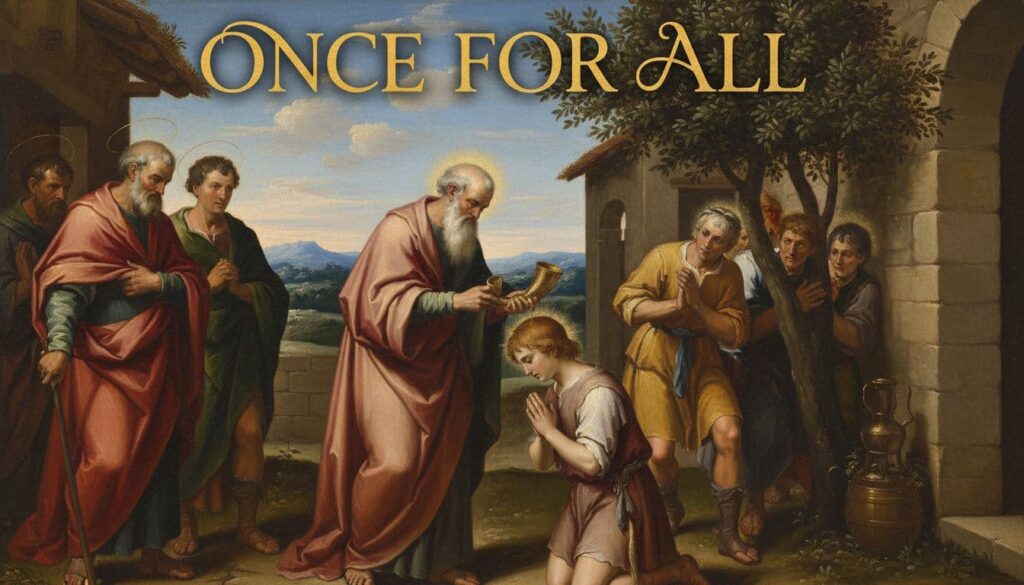
The Son obeys, offering His body once for all
The result is that “we have been sanctified through the offering of the body of Jesus Christ once for all.” That offering is soaked in the Blood of Jesus. His Blood is the seal on the new covenant that the prophets longed for. If you want to see how many threads connect here, this reflection on the blood of the new and everlasting covenant walks through several of those texts.
Hebrews 13:20 calls God “He who brought again from the dead our Lord Jesus, the great Shepherd of the sheep, by the Blood of the eternal covenant.” Notice the pieces:
The Father raises the Son
Jesus is the great Shepherd who laid down His life
The Blood is called “the Blood of the eternal covenant”
The covenant is eternal because the life behind it is eternal. The Blood of Jesus is not just human life drained out. It is the very life of the Son of God, offered in human flesh, received by the Father, and applied by the Spirit.
So when you trust in Christ, you are not just asking for a clean slate. You are stepping into a covenant that Father, Son, and Holy Spirit shaped together before time. The Father planned it in love. The Son walked it out in obedience. The Spirit brings it home to you, writing the work of that Blood on your heart.
What the Blood of Jesus Means for You Today
The history of the Blood of Jesus is not just about something that happened long ago on a hill outside Jerusalem. It is about what God is doing with your heart, your past, and your future right now.
Since the Blood in His veins held the very life of God, then what He poured out did more than “cover the paperwork.” It reached all the way into conscience, shame, fear, and the hidden places you do not talk about. This is where the Gospel gets very personal.
Forgiveness, cleansing, and bold access to God through the Blood of Jesus
1 John 1:7 says that “the Blood of Jesus His Son cleanses us from all sin.” Not some sin. Not the light mistakes. All sin. John ties that promise to walking in the light. That means we stop hiding, we stop pretending, and we bring ourselves into honest agreement with God.
In the next verses, he gets even more direct. If we say we have no sin, we are lying to ourselves. But “if we confess our sins, He is faithful and just to forgive us our sins and to cleanse us from all unrighteousness” (1 John 1:9). That little pair of words, faithful and just, rests squarely on the Blood of Jesus. God is not looking for a reason to push you away. The cross already gave Him a righteous reason to pull you close.
Hebrews explains what kind of cleansing this is. Hebrews 9:14 says that the Blood of Jesus “purify[ies] our conscience from dead works to serve the living God.” Dead works are all the things we do to try to make ourselves feel clean, accepted, and spiritual. They are the efforts that still leave us lying awake at night, replaying our failures. The blood of bulls and goats never reached that deep. The Blood of Jesus does. It reaches the place where you feel dirty, not just where you look dirty.
You see the same theme in Hebrews 10:19–22. We are told that we have “boldness to enter the holy places by the Blood of Jesus.” That is a shocking thing to say to people who knew the fear of the temple, the veil, the Holy of Holies. The writer is telling us that the safest place for a forgiven sinner is not outside, but right in the presence of God.
He adds that our hearts are “sprinkled clean from an evil conscience” and our bodies washed with pure water. Picture a heart that no longer flinches when it thinks about the presence of God. Not because the heart is perfect yet, but because it is honestly covered. When the Father looks at you, He does not see a pile of unforgiven filth. He sees the Blood of Jesus, God’s own life poured out in sinless human flesh.
If you grew up singing hymns, you might hear those lines, “What can wash away my sin? Nothing but the Blood of Jesus.” That old song, which you can find in collections like “Nothing But the Blood of Jesus” on Hymnary, was not exaggerating. It was simply saying what 1 John and Hebrews already said.
It can help to name what this means in plain language. When you come to God with real repentance and faith in the Blood of Jesus:
Your forgiveness is legal and final, not fragile and vague.
Your conscience can breathe, because God Himself calls you clean.
Your access is bold, because you come covered, not exposed.
No sin you have done is stronger than the Blood of Jesus, because that Blood is tied to the very life of Yahweh, offered in a human body that never once agreed with sin. You may feel like your story is heavy, twisted, or beyond help. God answers that feeling with one clear picture, a cross covered in the Blood of Jesus, and He says, “Come in anyway.”
Freedom from fear, condemnation, and the power of sin
Forgiveness is not the only gift that flows from the Blood of Jesus. Forgiven people still wrestle with fear, shame, and old habits that feel like chains. The New Testament refuses to leave us there. It keeps tying the cross to real freedom in daily life.
Romans 8:1 opens the chapter with a strong line: “There is therefore now no condemnation for those who are in Christ Jesus.” Condemnation is that inward voice that says, “You are done. You are dirty. You are out.” Paul says that voice no longer speaks with God’s authority if you are in Christ. Why? Because, as he explains, “the law of the Spirit of life has set you free in Christ Jesus from the law of sin and death” (Romans 8:2). The Spirit is applying what the Blood of Jesus already won.
God did what the law could not do. The law could expose sin, but it could not kill it. Romans 8:3–4 tells us that God sent His own Son “in the likeness of sinful flesh and for sin,” and in that flesh He “condemned sin.” The sentence that should have landed on you landed on sin itself, in the body of Christ. When you feel condemned, you are hearing a verdict that already fell, and it did not fall on you. It fell on Jesus, and His Blood carried it away.
Revelation 12:11 gives another angle. It speaks of believers who “overcame [the accuser] by the Blood of the Lamb and by the word of their testimony.” The devil is called “the accuser of our brothers.” He throws your past in your face, and he tries to drag you back under old shame. You do not argue with him based on your willpower or your progress this week. You answer with the Blood of Jesus and with your testimony about what that Blood has done in you.
Here is the pattern Scripture paints:
The Blood of Jesus silences condemnation.
The Holy Spirit makes that victory personal.
Your own testimony agrees with what God has said.
But freedom is not only about the courtroom. It is also about the chains in the heart. Titus 2:14 says that Jesus “gave Himself for us to redeem us from all lawlessness and to purify for Himself a people for His own possession who are zealous for good works.” The same Blood of Jesus that redeems also purifies. It pulls you out of slavery, then starts changing what you want.
You are not left stuck in the same sins, just with a cleaner file in Heaven. The Spirit uses the truth of the cross to break the grip of sin. Desire shifts. Old patterns lose some of their pull. Sometimes that change comes like a sudden break, like chains shattering under bright light. Sometimes it feels slower, more like a long walk out of a dark room into fresh air. Either way, the power behind it is not your effort. It is the Blood of Jesus, carried into your inner life by the Spirit of God.
Many believers have found it helpful to speak out their faith in what the Blood has done. Prayers that thank God for the Blood of Jesus and its power to sanctify show up in many places, like this honest reflection in a shared prayer on thanking God for the Blood of Jesus. Spoken out loud, these kinds of truths can steady your heart when old fears rise up.
So if you are in Christ and trusting the Blood of Jesus, you can say, on the authority of Scripture:
I am not condemned.
I am not helpless under sin.
I am not alone in this fight.
Your story is now tied to a different bloodline. You are no longer only a child of Adam, trapped under the law of sin and death. You are someone whose life is joined to the Blood of Jesus, and that Blood speaks a better word over you than any voice of fear or accusation ever could.
Conclusion
When you step back from all these passages, a clear thread runs through Scripture. God taught Israel that life is in the blood and that blood is His chosen way to deal with sin. Our own blood, tied to Adam, carries death and cannot wash us clean, no matter how hard we try or how sincere we feel. That is why God promised a different life, a different Blood, long before you and I were ever here.
In the fullness of time, the eternal Son took on real human flesh through a virgin’s womb, yet His life was holy from the first moment. The Bible speaks with shocking boldness and calls the Blood of Jesus the very Blood of God, poured out to buy the church and seal a new covenant that never expires. Father, Son, and Holy Spirit were not working in separate stories, they moved as one, from the Father’s plan, to the Son’s obedient cross, to the Spirit applying that work to your heart.
So the next step is not complicated, but it is deep. Turn to God with honest repentance. Put your trust, not in your promises, but in the Blood of Jesus. Lift your voice in worship, even if it trembles a little, and agree with what God has already said: every drop of that blood speaks a better word than your sin, and it offers you complete cleansing and a brand‑new life.
Related Posts
Jesus Is That Only Begotten Spirit of God John 6:63 Truth What does "He gave His only begotten Son" really mean? It’s more than a poetic phrase—this word "begotten" carries a deep, original meaning that speaks to God’s heart and His love in action. The begotten Son isn’t just an idea, He’s God’s very own self, sent into our world with a purpose that reaches back to the dawn of creation.
Unlocking the Word of Knowledge Through the Holy Spirit - John 4:16-19 The Bible boldly declares the truth that Jesus is both fully God and fully man—a mystery that anchors the Christian faith. But what does it mean, practically, for us as believers? Jesus didn't perform miracles or operate in the gifts of the Holy Spirit simply as God; He demonstrated how a Holy Spirit empowered life could look for any believer.…
Holy Spirit Scriptures: 21 Century Meaning, Original Words, and God's Purpose What would life be if we never understood the heart behind every movement of God’s Spirit? Every verse that mentions the Holy Spirit points us somewhere deeper—into friendship with God, into His power for living, and into the mystery of His love and presence that started in Eden and keeps going until Jesus rules the earth in the Millennial Reign.…
Bible Prophecy / Bible Study / Devotional / Faith / Heart of Stone / SinPre-Born! gives free ultrasounds to women looking to abort their babies and 86% of those women choose to keep theirRead more...
Who Is the Helper in John 14:16? The Holy Spirit
Bible Study / Holy Spirit Scriptures / Spirit Of Truth / The Upper RoomPre-Born! gives free ultrasounds to women looking to abort their babies and 86% of those women choose to keep theirRead more...
John 14:26 Explained: The Holy Spirit as Teacher
Bible Study / Devotional / Holy Spirit Scriptures / Spirit Of TruthPre-Born! gives free ultrasounds to women looking to abort their babies and 86% of those women choose to keep theirRead more...
Popular
Seven Spirits of God Explained: Trinity Insights for Your Faith Journey – Isaiah 11:2
The Seven Spirits of God stand as one of the most profound and often misunderstood truths in Christian theology. Rooted deeply in Scripture, they aren’t seven separate entities but rather seven attributes of the one Holy Spirit—God revealing Himself in fullness. Isaiah 11:2 describes these [...]Read more...
The 9 Gifts of the Holy Spirit: Biblical Truths, Historical Evidence, and Today
The gifts of the Holy Spirit reveal the active power of God working in the lives of His people. They aren’t just distant historical records or fading Biblical accounts; they’re living because the Holy Spirit, He is living and He is God, and His transformative gifts are reaching people [...]Read more...
Tongues of Fire in Acts 2:3: Meaning, Biblical Significance and Holy Spirit Power
The phrase “tongues of fire” in Acts 2:3 sparks worldwide curiosity and spiritual wonder. It appears in Scripture to describe the Holy Spirit’s descent during Pentecost, when visible flames rested on the apostles, marking the time when God’s Spirit descended on earth, [...]Read more...
The Antichrist
The Apostate Church
The Rapture
Angels
Book of Daniel
Giants
Judgment
Prophecy
The Apostles
Bible Prophecy
Beware of Deception
Sin
Antichrists
Demon Possession
Healing
Millennial Reign
Redemption
The Gospels
The Holy Spirit
American Prophecy
Israel
Armageddon
Forgiveness
Intercession
Prayer
Revival
The Old Testament
The Tribulation
Faith
Kingdom Of God
Bible Interpretation
Free Will
Book Of Jude
Pride
The Afterlife
The Red Dragon
We use cookies so you can have a great experience on our website. View more
Cookies settings
Accept
Decline
Privacy & Cookie policy
Privacy & Cookies policy
Cookies list
Cookie name
Active
Who we are
Our website address is: https://theholyspirit.us.
Comments
When visitors leave comments on the site we collect the data shown in the comments form, and also the visitor’s IP address and browser user agent string to help spam detection.
An anonymized string created from your email address (also called a hash) may be provided to the Gravatar service to see if you are using it. The Gravatar service privacy policy is available here: https://automattic.com/privacy/. After approval of your comment, your profile picture is visible to the public in the context of your comment.
Media
If you upload images to the website, you should avoid uploading images with embedded location data (EXIF GPS) included. Visitors to the website can download and extract any location data from images on the website.
Cookies
If you leave a comment on our site you may opt-in to saving your name, email address and website in cookies. These are for your convenience so that you do not have to fill in your details again when you leave another comment. These cookies will last for one year.
If you visit our login page, we will set a temporary cookie to determine if your browser accepts cookies. This cookie contains no personal data and is discarded when you close your browser.
When you log in, we will also set up several cookies to save your login information and your screen display choices. Login cookies last for two days, and screen options cookies last for a year. If you select "Remember Me", your login will persist for two weeks. If you log out of your account, the login cookies will be removed.
If you edit or publish an article, an additional cookie will be saved in your browser. This cookie includes no personal data and simply indicates the post ID of the article you just edited. It expires after 1 day.
Embedded content from other websites
Articles on this site may include embedded content (e.g. videos, images, articles, etc.). Embedded content from other websites behaves in the exact same way as if the visitor has visited the other website.
These websites may collect data about you, use cookies, embed additional third-party tracking, and monitor your interaction with that embedded content, including tracking your interaction with the embedded content if you have an account and are logged in to that website.
Who we share your data with
If you request a password reset, your IP address will be included in the reset email.
How long we retain your data
If you leave a comment, the comment and its metadata are retained indefinitely. This is so we can recognize and approve any follow-up comments automatically instead of holding them in a moderation queue.
For users that register on our website (if any), we also store the personal information they provide in their user profile. All users can see, edit, or delete their personal information at any time (except they cannot change their username). Website administrators can also see and edit that information.
What rights you have over your data
If you have an account on this site, or have left comments, you can request to receive an exported file of the personal data we hold about you, including any data you have provided to us. You can also request that we erase any personal data we hold about you. This does not include any data we are obliged to keep for administrative, legal, or security purposes.
Where your data is sent
Visitor comments may be checked through an automated spam detection service.