Pre-Born! gives free ultrasounds to women looking to abort their babies and 86% of those women choose to keep their babies!
The firstfruits of the Spirit are God's present gift of His Spirit, assuring believers that the raising of our bodies and complete redemption are still coming. In Romans 8:23, the apostle connects the Holy Spirit living within us today with the future redemption of our bodies.
That means you can belong to Jesus, know His presence, and still feel the weight of a suffering body. We don't have to pretend otherwise, because God's promise reaches beyond what you feel right now.
To understand that promise, we need to begin with the first portion of a crop, the image behind this passage.
The Holy Spirit is the beginning of the life and glory God has promised His people.
Firstfruits points toward a coming fullness, including the body's future raising and the full expression of belonging in God's family.
The fruit of the Spirit describes Christlike character, while firstfruits emphasizes the beginning of something greater.
Spiritual gifts remain active, but neither dramatic experiences nor strong emotions are the foundation of our assurance.
Believers can pray for healing and seek the Spirit's filling while honestly acknowledging suffering.
What the firstfruits of the Spirit mean
The apostle chose a word that would have meant something concrete to people familiar with farming and Israel's worship.
The first portion points toward more
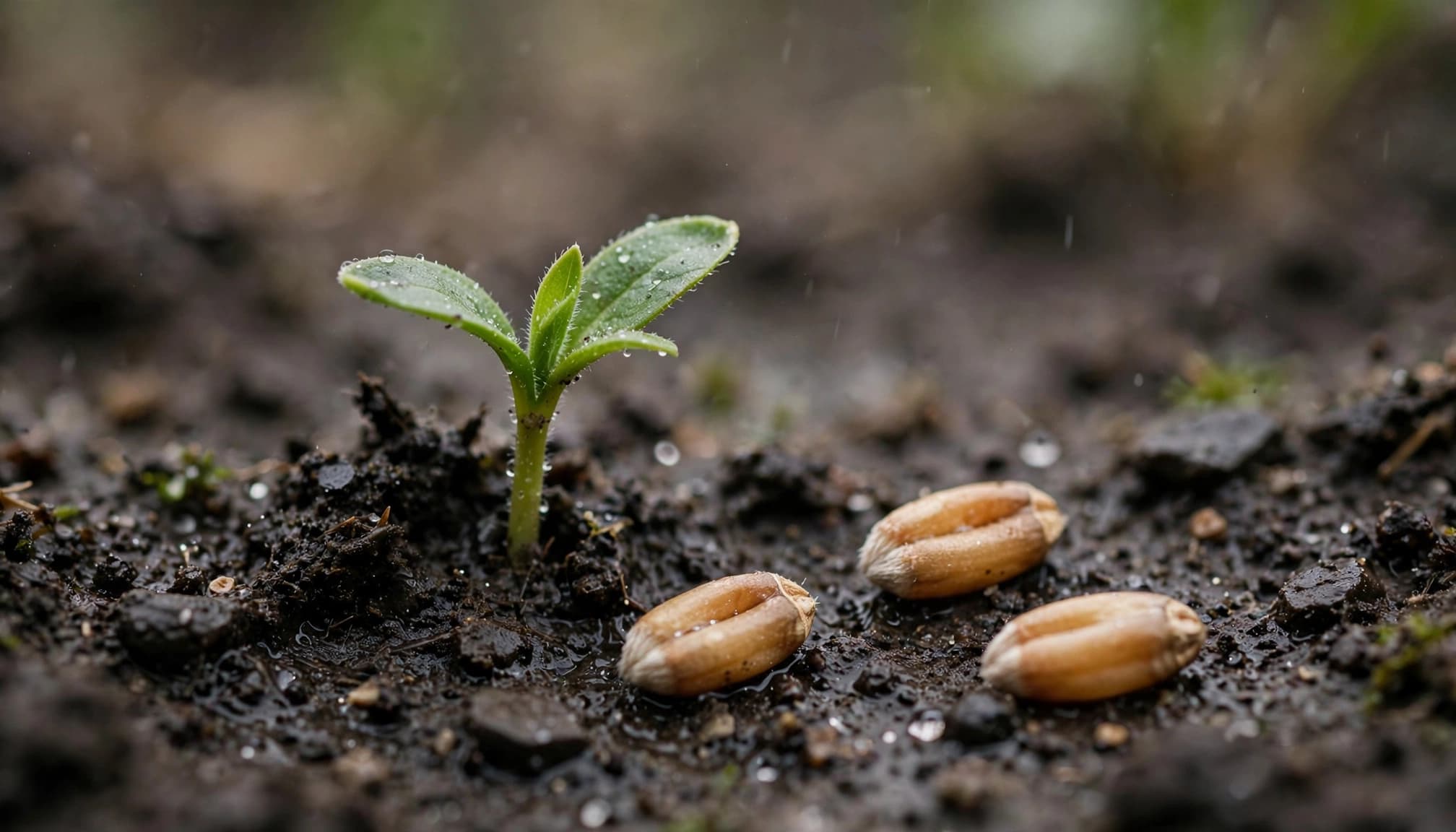
The Greek word aparche refers to the first portion of a harvest, the firstfruits set apart for God. This aparche was the beginning of the crop, offered in recognition that the harvest belonged to Him.
Imagine what that meant to someone whose family depended on the field. The first gathered grain was something you could hold. More remained in the field, but the crop had begun.
BibleHub's overview of firstfruits brings together the offering passages and their later spiritual applications. The common thread is a first portion connected to something larger.
The promise concerns a real future
In his application, believers already possess the Spirit while awaiting the fullness of redemption. The Spirit's presence brings the life of God's coming Kingdom into our present lives.
We should be careful here. God hasn't given Christians a fraction of the Spirit, as though He could be divided into pieces. The Spirit Himself dwells within His people. What remains incomplete is our experience of salvation's promised fullness, including the raising of our bodies.
The Old Testament offering behind Paul’s picture
Giving God the beginning and the best
Under the Law, firstfruits were the first and best portion of the harvest, presented to God. Leviticus 2:12 mentions firstfruits offerings, and Leviticus 23:10 commands Israel to bring the first sheaf to the priest. Deuteronomy 18:4 lists firstfruits among the provisions given to the priests.
The offering acknowledged God's provision before the whole harvest was gathered. It expressed gratitude and trust.
BibleHub's firstfruits encyclopedia entry traces the connection between Israel's offerings and the New Testament use of the image. The apostle draws on a form of worship his readers could understand.
The basket carried Israel’s history
Deuteronomy 26:1-11 describes how to present the offering. The worshiper brought a basket to the priest, who placed it before the altar. The confession recalled Israel's beginnings, oppression in Egypt, deliverance, and entrance into the land God had promised.
That basket connected an ordinary harvest to God's faithfulness across generations.
Firstfruits belonged within a relationship already established by God's saving action. Israel remembered what He had done and honored Him with what He had provided. When the apostle uses this image, the same faithful God gives His people reason to trust what He will complete.
Why creation and believers groan together
The setting of Romans 8 keeps us from turning firstfruits into a promise of effortless living.
Creation waits for deliverance
In Romans 8:19-22, creation waits for the revealing of God's children. The apostle describes its present condition with the image of childbirth.
Childbirth involves real pain, but the pain looks toward an arrival. That is the direction of the illustration.
The created world is subject to corruption, and God's purpose reaches beyond repairing an individual's feelings. Creation awaits renewal as a new creation, and the children of God will share in eternal glory. God's redeeming purpose is larger than the troubles we can see immediately around us.
Believers wait with the Spirit already present
Then he includes Christians in the groaning. Romans 8:23 describes people who possess the Spirit and still long for the body's future raising.
We need to let both truths remain in the sentence.
The presence of the Holy Spirit doesn't make a believer incapable of grief, fatigue, or physical pain. His presence gives that believer a reason to hope while those things remain. Our study of groaning with resurrection hope follows that connection through the apostle's argument.
Adoption already belongs to believers
The apostle says believers await the full expression of their place in God's family, yet earlier he says they have received the Spirit who brings them into that family. How do those statements fit together?
Belonging to the Father is present
Romans 8:15-17 describes believers approaching God as Father. The Spirit bears witness with our spirit that we are God's children, and children are also heirs.
That relationship has already begun through Jesus. Christians aren't standing outside God's family until their bodies become perfect.
We understand the Spirit of adoption as God's gracious work of bringing believers into the freedom and belonging of His family. Obedience grows within that relationship. It doesn't purchase the right to call Him Father.
The full expression of adoption is future
Romans 8:23 looks toward the completion of what believers already possess. The apostle identifies that promised completion with the redemption of the body.
Our bodies still experience the consequences of life in a fallen world. They weaken, become sick, and die. God intends to overcome that condition.
Belonging to the Father is real now, and its full expression will come when His redeeming work reaches our bodies. The family relationship is real today, even while its promised inheritance remains ahead.
Does firstfruits mean the Spirit or His gifts?
Two explanations commonly appear in discussions of this phrase. One identifies the Spirit Himself as the firstfruits. Another emphasizes the first blessings and effects of His presence.
These ideas overlap, but we shouldn't blur the question. Is the apostle directing attention primarily toward the divine Giver who dwells within believers, or toward what believers receive through Him?
Some grammatical discussions call the identifying interpretation an "objective genitive." The description "the Spirit as the firstfruits" expresses that same basic conclusion in ordinary English. Those two descriptions aren't competing interpretations merely because their wording differs.
We understand the Spirit Himself as central to the apostle's assurance. God has given His own Spirit, and His indwelling presence brings the beginnings of the life believers will experience fully in glory.
His gifts and transforming work belong within that reality. Yet we shouldn't reduce the promise to a collection of spiritual experiences. A gift operates according to the Spirit's will, while the apostle's assurance concerns the Spirit's presence among those who belong to Christ.
The surrounding passage directs our attention toward bodily redemption. Whatever emphasis we give the grammar, the promised harvest must remain in view.
The Spirit is God’s seal and down payment
Paul uses another picture to explain the same confidence. Alongside harvest language, he uses the language of a pledged payment.
A deposit commits to completion
The Greek word arrabon comes from commerce. It refers to a deposit or down payment that pledges the full payment to follow.
Paul uses this language in 2 Corinthians 1:22 and 2 Corinthians 5:5. Older translations sometimes use "earnest," meaning a pledge that confirms a larger commitment.
The comparison has limits, of course. The Spirit is a divine Person, not money. But the point is clear: God gives the Spirit as a down payment and present assurance of what He has promised to complete.
A seal identifies God’s possession
Ephesians 1:13-14 connects hearing the Gospel, believing in Christ, and being sealed with the promised Spirit. Paul then calls Him the guarantee of our inheritance until the redemption of God's possession.
The seal speaks of belonging. The deposit speaks of the inheritance ahead.
Our study of the Holy Spirit's seal develops that assurance. We can seek fresh filling and greater usefulness without treating God's acceptance as something we must earn through an impressive experience.
Christ’s resurrection shows what the harvest means
In 1 Corinthians 15:20-23, Paul calls the risen Christ the firstfruits of those who have fallen asleep. He then gives the order: Christ first, followed at His coming by those who belong to Him.
Here the promised outcome is unmistakably believers being raised.
Jesus rose bodily, and His being raised establishes the pattern and certainty of what His people await. The firstfruits image connects His risen life with believers' future bodily redemption.
That helps us read Paul's promise in Romans. The Spirit's presence belongs to the same saving work accomplished through the crucified and risen Lord.
Romans 8:11 makes the connection directly: the God who raised Jesus will give life to believers' mortal bodies through His indwelling Spirit. Our study of the Spirit's role in resurrection considers that promise more closely.
We shouldn't shrink this hope to having more energy or a better attitude. Those may be things we pray about today, but being raised bodily reaches much further. Death itself will surrender those who belong to Christ.
Click Our Ad to Support Us!
Other firstfruits passages clarify the pattern
The New Testament applies firstfruits language in several ways. The surrounding passage tells us what kind of beginning is meant.
The first believers in a region
Romans 16:5 describes Epaenetus as a first convert to Christ in his region. Some translations read Achaia there, while others read Asia because of a textual difference.
In 1 Corinthians 16:15, the household of Stephanas is called the firstfruits of Achaia.
In these passages, people are the firstfruits. They belong to the early gathering of believers in a place. Paul isn't listing their character qualities or describing a spiritual gift. The image identifies a beginning within the spread of the Gospel.
Believers within God’s renewing purpose
James 1:18 describes believers as a kind of firstfruits of God's creatures. God brings them forth by His word of truth, and their new life belongs within His larger purpose.
These passages help us avoid assigning every use of firstfruits an identical meaning.
Sometimes the firstfruits are early converts. In the passage about Christ being raised, Christ is the firstfruits. In Romans, Paul connects the Spirit believers already possess with the redemption they still await. The shared picture is a beginning related to a greater fullness.
Firstfruits and the fruit of the Spirit differ
The phrases sound similar, so it's easy to treat them as interchangeable. Paul uses different words because he is emphasizing different things.
This comparison keeps the distinction clear:
Phrase
Greek word
Main emphasis
Firstfruits of the Spirit
Aparche
The first portion connected to the coming fullness
Fruit of the Spirit
Karpos
The character the Spirit produces in believers
The two ideas belong together, but each answers a different question.
Galatians 5:22-23 names love, joy, peace, patience or longsuffering, kindness, goodness, faithfulness, gentleness, and self-control. These qualities describe life under the Spirit's direction.
Paul uses the singular word "fruit." We understand these qualities as connected expressions of Christlike life, rather than separate achievements that leave the rest of our character untouched.
The singular form supports that picture, though we shouldn't ask grammar alone to carry everything Scripture teaches about spiritual growth.
What does this mean practically? A believer may become more patient while still needing correction in gentleness. Growth can be uneven, but the Spirit's purpose concerns the whole person.
The fruit shows His transforming work in our character. The firstfruits image directs our hope toward the fullness still coming. Present transformation and future redemption belong to the work of the same Spirit.
How the Spirit’s present work shapes daily life
We don't recognize the Spirit's work by searching for a feeling intense enough to guarantee tomorrow. Scripture directs our attention toward Christ and the kind of life His Spirit produces.
Growth reaches ordinary relationships
Love becomes more than something we admire when obedience requires forgiveness. Self-control matters when anger seems justified. Gentleness matters when we have enough influence to speak harshly and get away with it.
These are places where the fruit described in Galatians becomes visible.
We can't manufacture the Spirit's life through determination alone. Still, dependence doesn't excuse disobedience. Walking by the Spirit involves yielding when He confronts what we would rather defend. Sometimes the most necessary response is simply admitting that our reaction was sinful and making it right.
The source matters more than a score
Jesus' teaching in John 15:1-5 connects fruitfulness with abiding in Him. A branch depends on the vine for life.
That picture keeps our attention on relationship with Jesus. Prayer, Scripture, repentance, and obedience belong within that dependence.
We shouldn't turn the nine qualities into a spiritual ranking system. The question is whether we are responding to the Lord who is changing us. Genuine growth gives us reason for gratitude, while remaining weakness gives us reason to keep depending on Him.
Spiritual gifts belong within the promise
We believe the gifts of the Holy Spirit remain active in the church. We also believe Christians should seek baptism in the Spirit and His continuing filling for witness and service.
Acts 1:8 connects the Spirit's coming with power to bear witness to Jesus. In 1 Corinthians 12:4-7, different gifts and ministries come through the same Spirit, and His manifestations are given for the benefit of others.
We should welcome His work with faith.
At the same time, firstfruits in Romans doesn't mean every believer must display the same gift to have assurance of belonging to Christ. Romans 8:9 connects belonging to Jesus with having His Spirit.
Indwelling, filling, gifts, and fruit are related, but they aren't interchangeable terms. Confusing them can leave sincere believers measuring God's faithfulness by someone else's experience.
A spiritual gift also doesn't remove the need for correction. Paul addresses gifted believers who still needed instruction about love, unity, and conduct.
That should keep us humble. We need His power for ministry and His correction in our character. We can earnestly desire spiritual gifts while remembering that the promised inheritance rests on God's faithfulness through Jesus.
Waiting faithfully includes prayer and practical care
Hope changes how we wait, even when it doesn't immediately change what hurts.
Bring weakness honestly before God
Romans 8:26-27 places the Spirit's help within the same chapter that describes creation's groaning and believers' longing for redemption. He helps in weakness and intercedes according to God's will.
You don't have to hide exhaustion behind polished religious language. The Father already knows what you carry.
Our reflection on the Spirit's help in prayer considers this comfort. We can pray with confidence when words come easily, and we can depend on Him when they don't. Weakness doesn't make prayer unwelcome.
Pray for healing without denying the body
We pray for healing because we believe God acts in the present. We also receive appropriate medical care and refuse to shame someone whose suffering continues.
Romans doesn't give us permission to measure another person's faith by the condition of their body.
In 2 Corinthians 5:1-5, Paul describes an eternal dwelling from God and longs for mortality to be swallowed up by life. He identifies the Spirit as God's guarantee of that future.
The final promise includes a transformed body. Until then, prayer, compassionate care, and patient trust belong together.
The people who groan in Romans 8:23 are the same people who already possess the Spirit. Physical suffering cannot, by itself, prove that He has departed.
Frequently asked questions
Is the Holy Spirit only a temporary beginning?
The Spirit is fully God, and His presence with believers is personal and real. Firstfruits describes the relationship between His present gift and the fullness of redemption still ahead.
The incompleteness concerns our present condition. God will complete His saving purpose, including bodily resurrection, through the same divine power already at work among His people.
Does this promise mean everyone will be saved?
Paul speaks about people who have the Spirit and belong to Christ. Romans 8:23 doesn't teach that every person automatically receives the inheritance described.
Our hope is received through Jesus. That gives us both assurance in Him and a reason to share the Gospel with others. Religious appearance and human effort cannot replace faith in the Savior.
Is the Christian’s final hope a bodiless existence?
Paul's emphasis is the redemption of the body. In 1 Corinthians 15:42-44, he describes a body raised in incorruption, glory, and power.
His expression "spiritual body" still describes a body, one suited to resurrection life. Being with the Lord in Heaven is precious, and the promise of being raised bodily remains part of God's completed purpose for His people.
The harvest God has promised
The firstfruits of the Spirit assure us that God's redeeming work has begun and will reach the body that still waits. The Spirit's presence gives us reason to trust Him without pretending that suffering has disappeared.
We can seek His filling, yield to His correction, and pray boldly while holding to His faithfulness. Our confidence rests in the risen Jesus and the Spirit He has given.
Bring your present weakness before the Father. The fullness He has promised reaches beyond what your body can bear today.
Related Posts
Romans 8:23 Explained: Groaning With Resurrection Hope Romans 8:23 means that believers already have the Holy Spirit, yet still await the resurrection and complete redemption of their bodies. His presence assures us that the suffering you see now won't have the final word. God's saving work reaches the whole person, including the body that grows tired, becomes sick, and eventually dies. We believe this verse gives us…
Romans 8:23 Explained: Groaning With Resurrection Hope Romans 8:23 means that believers already have the Holy Spirit, yet still await the resurrection and complete redemption of their bodies. His presence assures us that the suffering you see now won't have the final word. God's saving work reaches the whole person, including the body that grows tired, becomes sick, and eventually dies. We believe this verse gives us…
Romans 8:11 Explained: The Spirit Who Gives Life Romans 8:11 tells us that the Spirit who raised Jesus lives in those who trust Him, and the Father will also give them bodily life beyond death. That promise gives us hope, along with help to follow Him while we wait. We can read those words and still wonder how they fit a body that gets tired, a recurring struggle,…
The Seven Spirits of God stand as one of the most profound and often misunderstood truths in Christian theology. Rooted deeply in Scripture, they aren’t seven separate entities but rather seven attributes of the one Holy Spirit—God revealing Himself in fullness. Isaiah 11:2 describes these [...]
The gifts of the Holy Spirit reveal the active power of God working in the lives of His people. They aren’t just distant historical records or fading Biblical accounts; they’re living because the Holy Spirit, He is living and He is God, and His transformative gifts are reaching people [...]
The phrase “tongues of fire” in Acts 2:3 sparks worldwide curiosity and spiritual wonder. It appears in Scripture to describe the Holy Spirit’s descent during Pentecost, when visible flames rested on the apostles, marking the time when God’s Spirit descended on earth, [...]
The Bible’s take on a reprobate mind isn’t just a warning or a piece of theology. It’s a wake-up call. “Reprobate mind” (from the Greek adokimos, meaning rejected or unapproved) describes what happens when people no longer care about God’s truth—they trade what’s holy for what feels good, grow numb [...]
The upper room, a sacred space in Jerusalem, holds profound significance in Christian history. Acts 2 tells us it is the gathering place for Jesus’ disciples when the Holy Spirit descended upon them during Pentecost. This transformative moment not only empowered those present but also sparked [...]
Pentecost isn’t just a Christian event; its roots stem from the Jewish celebration of Shavuot, the day Moses received the Ten Commandments from God. For Christians, Pentecost marks the moment when God poured out His Spirit and Jesus’ worldwide church empowered by the Holy Spirit and His gifts [...]
Charismatic gifts, often referred to as manifestation gifts, showcase the miraculous power of the Holy Spirit. From healing and miracles to prophecy and discernment, they serve as tangible evidence of God’s presence and transformative work. These gifts, seen throughout Biblical history, have [...]
Revelation 3:7-8 offers a powerful message to the church in Philadelphia, a message that remains relevant today. It speaks of a divine “open door” that no man can shut, given by the one who holds the Key of David. This imagery represents not only an opportunity but also God’s sovereign [...]
Have you ever wondered why the word “anointing” carries so much depth in Scripture? The idea of anointing—of sacred oil poured out on kings, priests, and prophets—echoes through the Old Testament as a symbol of God choosing, empowering, and setting apart. God didn’t leave the details of [...]
The Bible boldly declares the truth that Jesus is both fully God and fully man—a mystery that anchors the Christian faith. But what does it mean, practically, for us as believers? Jesus didn’t perform miracles or operate in the gifts of the Holy Spirit simply as God; He demonstrated how a [...]
The Antichrist
The Apostate Church
The Rapture
Angels
Book of Daniel
Giants
Judgment
Prophecy
The Apostles
Bible Prophecy
Beware of Deception
Sin
Antichrists
Demon Possession
Healing
Millennial Reign
Redemption
The Gospels
The Holy Spirit
American Prophecy
Israel
Armageddon
Forgiveness
Intercession
Prayer
Revival
The Old Testament
The Tribulation
Faith
Kingdom Of God
Bible Interpretation
Free Will
Book Of Jude
Pride
The Afterlife
The Red Dragon
We use cookies so you can have a great experience on our website. View more
Cookies settings
Accept
Decline
Privacy & Cookie policy
Privacy & Cookies policy
Cookies list
Cookie name
Active
Who we are
Our website address is: https://theholyspirit.us.
Comments
When visitors leave comments on the site we collect the data shown in the comments form, and also the visitor’s IP address and browser user agent string to help spam detection.
An anonymized string created from your email address (also called a hash) may be provided to the Gravatar service to see if you are using it. The Gravatar service privacy policy is available here: https://automattic.com/privacy/. After approval of your comment, your profile picture is visible to the public in the context of your comment.
Media
If you upload images to the website, you should avoid uploading images with embedded location data (EXIF GPS) included. Visitors to the website can download and extract any location data from images on the website.
Cookies
If you leave a comment on our site you may opt-in to saving your name, email address and website in cookies. These are for your convenience so that you do not have to fill in your details again when you leave another comment. These cookies will last for one year.
If you visit our login page, we will set a temporary cookie to determine if your browser accepts cookies. This cookie contains no personal data and is discarded when you close your browser.
When you log in, we will also set up several cookies to save your login information and your screen display choices. Login cookies last for two days, and screen options cookies last for a year. If you select "Remember Me", your login will persist for two weeks. If you log out of your account, the login cookies will be removed.
If you edit or publish an article, an additional cookie will be saved in your browser. This cookie includes no personal data and simply indicates the post ID of the article you just edited. It expires after 1 day.
Embedded content from other websites
Articles on this site may include embedded content (e.g. videos, images, articles, etc.). Embedded content from other websites behaves in the exact same way as if the visitor has visited the other website.
These websites may collect data about you, use cookies, embed additional third-party tracking, and monitor your interaction with that embedded content, including tracking your interaction with the embedded content if you have an account and are logged in to that website.
Who we share your data with
If you request a password reset, your IP address will be included in the reset email.
How long we retain your data
If you leave a comment, the comment and its metadata are retained indefinitely. This is so we can recognize and approve any follow-up comments automatically instead of holding them in a moderation queue.
For users that register on our website (if any), we also store the personal information they provide in their user profile. All users can see, edit, or delete their personal information at any time (except they cannot change their username). Website administrators can also see and edit that information.
What rights you have over your data
If you have an account on this site, or have left comments, you can request to receive an exported file of the personal data we hold about you, including any data you have provided to us. You can also request that we erase any personal data we hold about you. This does not include any data we are obliged to keep for administrative, legal, or security purposes.
Where your data is sent
Visitor comments may be checked through an automated spam detection service.