Pre-Born! gives free ultrasounds to women looking to abort their babies and 86% of those women choose to keep their babies!
Beloved, do not believe every spirit. Not every spiritual voice comes from God. John says that plainly.
We hear sermons, prophecies, reels, podcasts, and personal stories every day. Some sound moving, some sound deep, and some even use the name of Jesus. Still, test the spirits is not a suggestion. It is a loving command for the church. We need that spiritual discernment now as much as the early church did.
John did not write 1 John 4:1-6 to stir panic. He wrote as a pastor to believers facing false prophets from within the broader Christian setting. These voices claimed spiritual insight, yet they twisted the truth about Jesus.
That historical setting matters. John’s churches were dealing with teachers who separated “spiritual” experience from the real Christ. Some denied that Jesus Christ had truly come in the flesh. In other words, they rejected the incarnation, the truth that the Son of God truly became man. John treats that as a gospel issue, not a side dispute.
This fits with his larger warnings about deception and the spirit of the antichrist. His concern echoes what we see in 1 John warnings on false teachers. A message can sound elevated and still be false if it cuts Jesus loose from the apostolic witness.
Paul warned in 1 Timothy 4:1 that some would depart from the faith through deceitful spirits and doctrine of demons. Moses said something similar in Deuteronomy 13. Even if a sign or wonder happens, if the message pulls God’s people after other gods, it must be rejected. That means spiritual power, by itself, proves nothing.
So when John tells us to test the spirits, he is not asking us to hunt for demons behind every sentence. He is teaching us to examine spiritual claims, teachings, and teachers with open Bibles and steady hearts. Checking teachers against the word of God is necessary for maintaining sound doctrine. Discernment is not fear wearing church clothes. It is love that refuses to hand the sheep over to wolves.
The biblical tests in 1 John 4:1-6
“Beloved, do not believe every spirit, but test the spirits to see whether they are from God.”
John gives us a clear path. First, we test what a message says about Jesus Christ. In 1 John 4:2-3, the Spirit of God confesses Jesus Christ has come in the flesh. That means the true Jesus, not an invented version. He is fully man, fully Lord, the promised Christ, not a vague spiritual guide.
Second, we test whether the teaching listens to the apostolic word. John says, “Whoever knows God listens to us” (v. 6), marking the spirit of God as the spirit of truth in contrast to the spirit of error. For us, that means the teaching must agree with Scripture. Acts 17:11 gives us the same pattern. The noble Bereans listened eagerly, then examined the Scriptures daily. Open hearts and careful testing belong together.
Third, we test the source and direction of the message. John says false teachers are “from the world,” and the world listens to them. A teaching may use Christian words while feeding pride, greed, self-rule, or a false view of God. Testing the spirits defines the goal of objective testing through biblical truth. Jesus also warns in Matthew 7:15-23 that false prophets are known by their fruit, not their volume, platform, or charisma.
Here is a simple way to hold the passage in mind:
Click Our Ad to Support Us!
What we test
Key question
Main text
The claim
Does it match Scripture?
Acts 17:11, 1 Thessalonians 5:21
The message about Jesus
Does it confess the true Christ?
1 John 4:2-3
The teacher and ministry
What fruit does it produce?
Matthew 7:15-23
The takeaway is simple. We do not test by goosebumps. We test by truth. We also should not shut the door on the real work of the Spirit. Scripture still speaks of discerning of spirits, but that gift always serves the truth of Christ.
How we test the spirits today without becoming harsh
Modern examples make this plain. A preacher may claim divine revelation by saying, “God showed me,” but then teach a gospel with no repentance, no cross, and no obedience. A viral clip may stir our feelings while shrinking Jesus Christ into a life coach. A ministry may talk about “higher spirituality” while mixing Christ with self-made beliefs, which is why careful readers often benefit from comparing Biblical Spirituality vs World Religions when these lines get blurry.
How do we respond? Not with suspicion as a hobby. Not with a proud spirit that enjoys calling everyone wrong. Instead, we test patiently.
A few questions help us slow down:
What Jesus is being preached? Is He the eternal Son who came in the flesh, died for sin, and rose again?
What gospel is being offered? Does it call us to faith, repentance, and trust in Christ, or to self-exaltation?
What fruit follows? Do we see humility, holiness, and truth, or control, confusion, and moral compromise?
First Thessalonians 5:21 says, “Test everything; hold fast what is good,” a call to try the spirits that keeps us balanced. We do not swallow everything. We also do not spit out everything. We weigh it, keep the good, and reject the false.
This matters in ordinary church life too. If someone shares a prophecy, we compare it with Scripture. If a teacher gains influence, we look at doctrine and fruit over time. If a testimony sounds dramatic, we still ask where it leads. Deuteronomy 13 reminds us that signs alone cannot settle the issue. The real question is always loyalty to the true God and His revealed word.
Testing the spirits is a lot like checking currency. Bank tellers do not become experts by staring at counterfeits all day. They learn the real bill so well that the fake feels wrong in their hands. As we know Christ better in Scripture, falsehood loses some of its shine. These tests help believers avoid influences from a demonic source and eventually overcome the world. We must always guard the truth.
A steady heart for discernment
John’s command is not for experts only. It is for ordinary believers who love Jesus and want to walk in truth. When we know the true Christ, stay under the Word, and watch the fruit, we can test the spirits and distinguish between true and false prophets without drifting into fear or harsh judgment.
So let’s keep our Bibles open, our hearts soft, and our minds awake, beloved. Discernment is not a cold habit. It is one way we honor the Holy Spirit, by refusing to call darkness light or a false christ the Lord, ensuring the church stays grounded in sound doctrine while remaining sensitive to the movement of the Holy Spirit.
Related Posts
Seven Spirits of God Explained: Trinity Insights for Your Faith Journey - Isaiah 11:2 The Seven Spirits of God stand as one of the most profound and often misunderstood truths in Christian theology. Rooted deeply in Scripture, they aren't seven separate entities but rather seven attributes of the one Holy Spirit—God revealing Himself in fullness. Isaiah 11:2 describes these aspects as wisdom, understanding, counsel, might, knowledge, and the fear of the Lord, all unified…
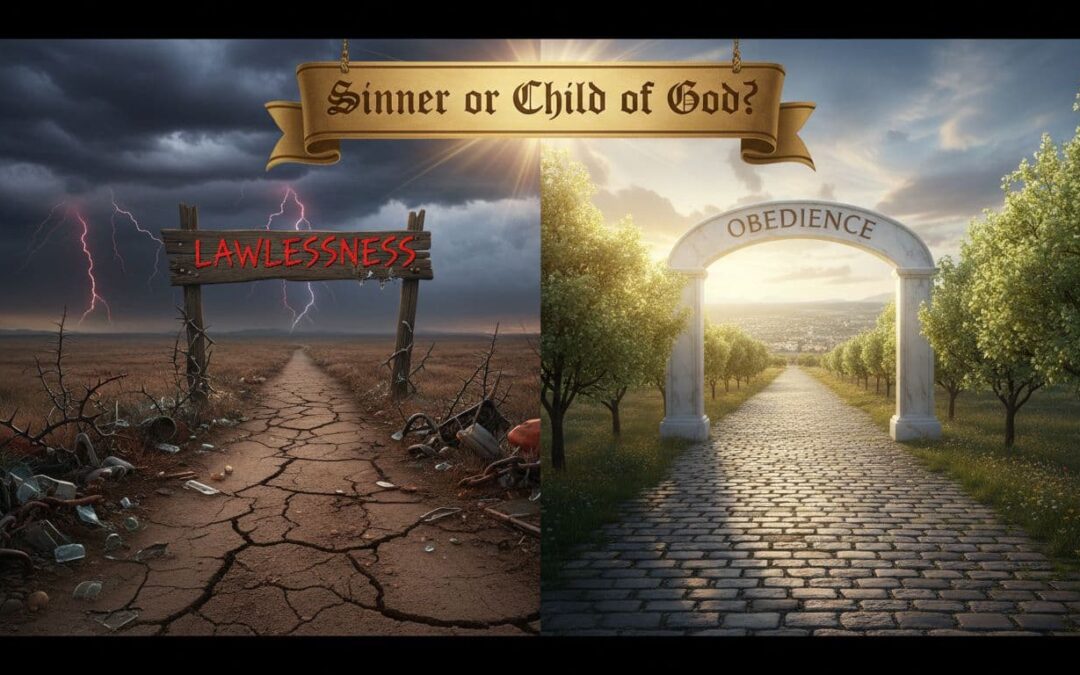
Am I a Sinner or Child of God? 1 John 3 Our Future Glory Many of us grew up hearing, “I’m just a sinner saved by grace.” That sounds humble, but it often leaves our hearts confused. Are we still a sinner at the core, or are we something new in Christ? Why do we still struggle, yet read verses that say a child of God does not keep on sinning? In 1 John…
Sin, Truth, and a Reprobate Mind: Inside 1 John 1:8-10 with Jesus In this post we will look at 1 John 1:8-10 in the original Greek, connect it to Jesus as the Truth and the Word of God, and then wrestle with hard questions. What about a reprobate mind? What about people who seem very religious but live in secret sin? Are the people in Matthew 7:21 the ones who never had…
The Seven Spirits of God stand as one of the most profound and often misunderstood truths in Christian theology. Rooted deeply in Scripture, they aren’t seven separate entities but rather seven attributes of the one Holy Spirit—God revealing Himself in fullness. Isaiah 11:2 describes these [...]
The gifts of the Holy Spirit reveal the active power of God working in the lives of His people. They aren’t just distant historical records or fading Biblical accounts; they’re living because the Holy Spirit, He is living and He is God, and His transformative gifts are reaching people [...]
The phrase “tongues of fire” in Acts 2:3 sparks worldwide curiosity and spiritual wonder. It appears in Scripture to describe the Holy Spirit’s descent during Pentecost, when visible flames rested on the apostles, marking the time when God’s Spirit descended on earth, [...]
The Bible’s take on a reprobate mind isn’t just a warning or a piece of theology. It’s a wake-up call. “Reprobate mind” (from the Greek adokimos, meaning rejected or unapproved) describes what happens when people no longer care about God’s truth—they trade what’s holy for what feels good, grow numb [...]
The upper room, a sacred space in Jerusalem, holds profound significance in Christian history. Acts 2 tells us it is the gathering place for Jesus’ disciples when the Holy Spirit descended upon them during Pentecost. This transformative moment not only empowered those present but also sparked [...]
Pentecost isn’t just a Christian event; its roots stem from the Jewish celebration of Shavuot, the day Moses received the Ten Commandments from God. For Christians, Pentecost marks the moment when God poured out His Spirit and Jesus’ worldwide church empowered by the Holy Spirit and His gifts [...]
Charismatic gifts, often referred to as manifestation gifts, showcase the miraculous power of the Holy Spirit. From healing and miracles to prophecy and discernment, they serve as tangible evidence of God’s presence and transformative work. These gifts, seen throughout Biblical history, have [...]
Revelation 3:7-8 offers a powerful message to the church in Philadelphia, a message that remains relevant today. It speaks of a divine “open door” that no man can shut, given by the one who holds the Key of David. This imagery represents not only an opportunity but also God’s sovereign [...]
Have you ever wondered why the word “anointing” carries so much depth in Scripture? The idea of anointing—of sacred oil poured out on kings, priests, and prophets—echoes through the Old Testament as a symbol of God choosing, empowering, and setting apart. God didn’t leave the details of [...]
The Bible boldly declares the truth that Jesus is both fully God and fully man—a mystery that anchors the Christian faith. But what does it mean, practically, for us as believers? Jesus didn’t perform miracles or operate in the gifts of the Holy Spirit simply as God; He demonstrated how a [...]
The Antichrist
The Apostate Church
The Rapture
Angels
Book of Daniel
Giants
Judgment
Prophecy
The Apostles
Bible Prophecy
Beware of Deception
Sin
Antichrists
Demon Possession
Healing
Millennial Reign
Redemption
The Gospels
The Holy Spirit
American Prophecy
Israel
Armageddon
Forgiveness
Intercession
Prayer
Revival
The Old Testament
The Tribulation
Faith
Kingdom Of God
Bible Interpretation
Free Will
Book Of Jude
Pride
The Afterlife
The Red Dragon
We use cookies so you can have a great experience on our website. View more
Cookies settings
Accept
Decline
Privacy & Cookie policy
Privacy & Cookies policy
Cookies list
Cookie name
Active
Who we are
Our website address is: https://theholyspirit.us.
Comments
When visitors leave comments on the site we collect the data shown in the comments form, and also the visitor’s IP address and browser user agent string to help spam detection.
An anonymized string created from your email address (also called a hash) may be provided to the Gravatar service to see if you are using it. The Gravatar service privacy policy is available here: https://automattic.com/privacy/. After approval of your comment, your profile picture is visible to the public in the context of your comment.
Media
If you upload images to the website, you should avoid uploading images with embedded location data (EXIF GPS) included. Visitors to the website can download and extract any location data from images on the website.
Cookies
If you leave a comment on our site you may opt-in to saving your name, email address and website in cookies. These are for your convenience so that you do not have to fill in your details again when you leave another comment. These cookies will last for one year.
If you visit our login page, we will set a temporary cookie to determine if your browser accepts cookies. This cookie contains no personal data and is discarded when you close your browser.
When you log in, we will also set up several cookies to save your login information and your screen display choices. Login cookies last for two days, and screen options cookies last for a year. If you select "Remember Me", your login will persist for two weeks. If you log out of your account, the login cookies will be removed.
If you edit or publish an article, an additional cookie will be saved in your browser. This cookie includes no personal data and simply indicates the post ID of the article you just edited. It expires after 1 day.
Embedded content from other websites
Articles on this site may include embedded content (e.g. videos, images, articles, etc.). Embedded content from other websites behaves in the exact same way as if the visitor has visited the other website.
These websites may collect data about you, use cookies, embed additional third-party tracking, and monitor your interaction with that embedded content, including tracking your interaction with the embedded content if you have an account and are logged in to that website.
Who we share your data with
If you request a password reset, your IP address will be included in the reset email.
How long we retain your data
If you leave a comment, the comment and its metadata are retained indefinitely. This is so we can recognize and approve any follow-up comments automatically instead of holding them in a moderation queue.
For users that register on our website (if any), we also store the personal information they provide in their user profile. All users can see, edit, or delete their personal information at any time (except they cannot change their username). Website administrators can also see and edit that information.
What rights you have over your data
If you have an account on this site, or have left comments, you can request to receive an exported file of the personal data we hold about you, including any data you have provided to us. You can also request that we erase any personal data we hold about you. This does not include any data we are obliged to keep for administrative, legal, or security purposes.
Where your data is sent
Visitor comments may be checked through an automated spam detection service.