Born Again Christian: What Jesus Meant, What Changes in Us, and Why the Spirit Makes It Real
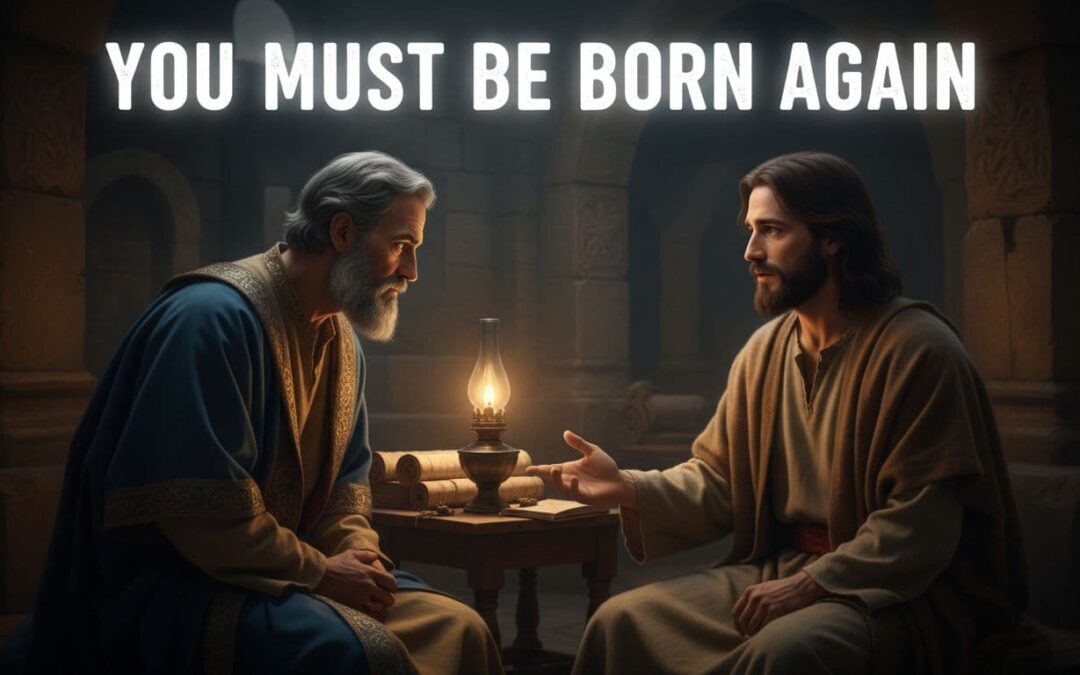
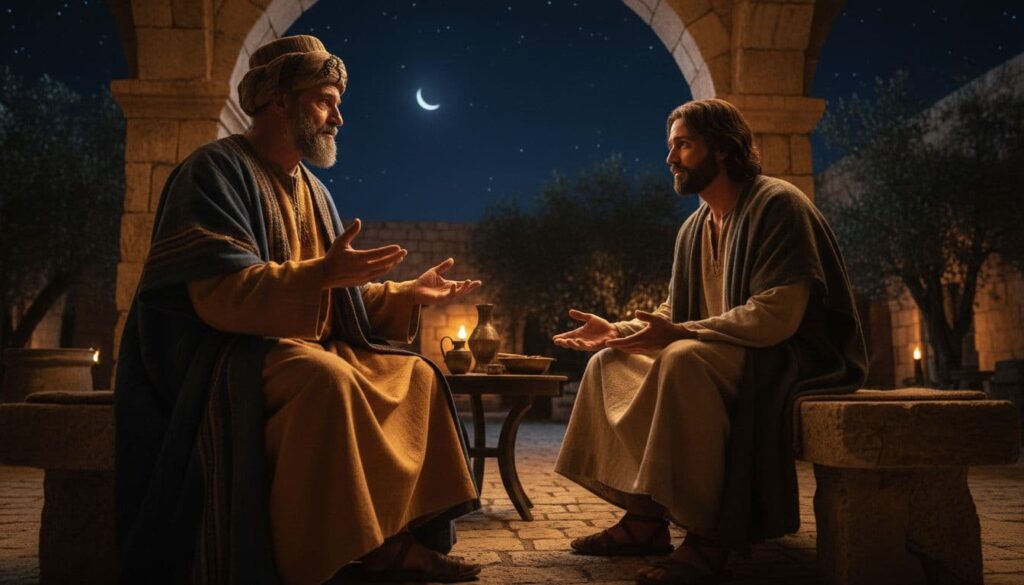
Nicodemus shows up at night in John 3. He’s not an atheist, not a wild sinner, not clueless. He’s a teacher of Israel, a serious religious man, and he comes to Jesus with respect. Then Jesus says something that would’ve landed like a thunderclap: “Unless one is born again, he cannot see the Kingdom of God” (John 3:3).
That line still hits us. What does Jesus mean? What does a Born Again Christian actually become? In this article, we’re using “Born Again Christian” to mean a person who has received spiritual life from God through Jesus, by the Holy Spirit, not just a person who agrees with Christian ideas.
We’re going to walk through the “from above” new birth, the Holy Spirit’s work, Adam’s first calling and choice, what sin really is (in plain Bible terms), why spiritual truth stays hidden to the natural mind, and how salvation (new birth) relates to Holy Spirit baptism (empowerment).
Watch and share our video of this article to help us spread the Word of God. Be kind and subscribe to our YouTube Channel. Thank You!
What Jesus meant by “born again” in John 3 (and why Nicodemus got confused)
When Jesus says “born again,” the key word in Greek is ἄνωθεν (anōthen). That word can mean “again,” but it also means “from above,” “from on high,” or “anew.” Nicodemus hears “again” and thinks physical. Jesus means “from above,” meaning from God.
That’s why Nicodemus replies with the obvious question, “How can a man be born when he is old?” (John 3:4). He’s stuck in the natural frame. Jesus pulls him into a spiritual frame.
Jesus keeps going: “Unless one is born of water and the Spirit, he cannot enter the Kingdom of God” (John 3:5). Then He draws a hard line: “That which is born of the flesh is flesh, and that which is born of the Spirit is spirit” (John 3:6). In other words, human effort can only produce human results. Religious effort can’t produce spiritual life.
Then Jesus gives the wind picture: the Spirit is like wind, real but not controllable (John 3:8). We can see the effects, but we don’t command the source. That’s why a Born Again Christian doesn’t start with “I fixed myself,” but with “God gave me life.”
“From above” not “try harder,” this new birth is God’s work by the Holy Spirit
Jesus doesn’t give Nicodemus a new checklist. He describes a new origin. This is regeneration, God giving life where we didn’t have it.
Ezekiel promised this long before Jesus: God would give a new heart and put His Spirit within His people, causing them to walk in His ways (Ezekiel 36:26-27). Notice the order. God acts first, then obedience becomes possible.
Paul says the same thing in Romans 8: “Anyone who does not have the Spirit of Christ does not belong to Him” (Romans 8:9). So if we’re a Born Again Christian, the Holy Spirit isn’t optional equipment. He’s the sign of belonging.
This is also why repentance isn’t just us gritting our teeth. It’s God turning us. If we want a deeper reflection on that, we can read Why Repentance Is God’s Work.
Why people who are not born again cannot understand it
Paul says it plainly: “The natural person does not accept the things of the Spirit of God… and he is not able to understand them because they are spiritually discerned” (1 Corinthians 2:14).
That’s not an insult. It’s a diagnosis. It’s like trying to explain music to someone who can’t hear, or color to someone born blind. The problem isn’t intelligence. Nicodemus is brilliant. The problem is life source. Without new birth, we don’t have the inner “eyes” for spiritual reality.
So when we talk about being a Born Again Christian, we’re not saying, “We’re smarter.” We’re saying, “God made us alive.” That’s why the Gospel can sound like nonsense until the Holy Spirit opens the heart.
New birth means a new origin, God’s life in us, and a real change in what we are
Let’s talk about the phrase “Bloodline of God,” carefully and Biblically. Scripture doesn’t teach that we get God’s genetics. It does teach that we receive God’s life and become God’s children.
John says those who receive Jesus are given the right to become children of God, “born… of God” (John 1:12-13). That’s family language, origin language, life-source language. A Born Again Christian can say, “My deepest origin is no longer just Adam, it’s now God’s gift of life in Christ.”
This is why the Bible uses adoption and inheritance words too. In Christ we’re brought into the family, not by natural descent, but by grace (Galatians 4:4-5). That’s not poetry only. It’s identity.
If we want a practical angle on how Jesus frees us and pays the price, we can also connect this to Understanding Redemption in Christianity. Redemption is the family rescue, the price paid to bring us home.
Born Again Christians are “new creations,” our old life ends and a new life begins
Paul’s words are blunt: “If anyone is in Christ, he is a new creation” (2 Corinthians 5:17). The old has passed away, the new has come.
We’re not just human anymore. We’re still fully human in body. We still eat, sleep, cry, and grow. But we’re no longer only “flesh,” meaning no longer trapped in the old life-source. We have the Spirit of God living inside us, just like Ezekiel prophesied would happen. Our life source now comes from God, not from our flesh.
When we read, “If anyone is in Christ, he is a new creation” (2 Corinthians 5:17), the key phrase in Greek is kainē ktisis (new creation), and that word ktisis (“creation”) doesn’t mean we just picked up a few better habits. Ktisis can mean the act of creating or the created thing itself, and in Paul’s letters it often points to God’s creative work, the kind only God can do (think “Let there be light,” not “try harder”).
Paul pairs "creation" with kainē, “new” in the sense of new in kind or quality, not just “recent,” so he’s talking about a new sort of reality, not a cleaned-up version of the old one. That fits the flow of 2 Corinthians 5:14-21, where Paul’s been talking about Christ’s death and resurrection, a whole new way of seeing people, and God reconciling the world to Himself. So “new creation” isn’t mainly about a private inner makeover, it’s about being brought into God’s new order where sin’s record doesn’t rule our story anymore.
When Paul says, “the old has passed away; behold, the new has come,” he’s describing a decisive change of status and belonging, like being transferred into a new family and learning to live from that new name. We’re not our own DIY project, we’re God’s handiwork, and the word “creation” keeps the spotlight on the Creator. This also explains why Paul can move straight into “ministry of reconciliation,” because a “created” person is meant to bear the marks of the One who made them.
Since we’re in Christ, we don’t just get new feelings, we get a new identity that reshapes how we judge, forgive, and hope. And if we’re honest, that raises a searching question for us, are we treating “new creation” like a slogan, or like the start of a whole new world God’s already begun in us?
Jesus said, “Spirit gives birth to spirit” (John 3:6). Paul says if Christ is in us, “the Spirit is life” (Romans 8:10), and the Spirit will even give life to our mortal bodies (Romans 8:11). So a Born Again Christian is a human being now animated by a new inner life, God’s Spirit.
From Stone to Flesh: How God Turns Cold Religion Into Living Relationship
Romans 6 describes it like death and resurrection. Our old self was crucified with Christ, and we walk in “newness of life” (Romans 6:4-6). That’s not pretend. It’s a real transfer of ownership.
“Born of God” and “partakers of divine nature,” what Scripture actually promises
Peter says we become “partakers of the divine nature” (2 Peter 1:4). Again, that doesn’t mean we become gods. It means God shares His life with us, and His Spirit changes what we love, what we hate, and what we desire.
When we’re a Born Again Christian, we don’t just get forgiveness like a legal stamp. We get presence. We get God-with-us, and then God-in-us.
That’s why inheritance language matters. Children inherit. Heirs receive what belongs to the family. We don’t inherit God’s DNA, but we inherit belonging, promises, and a future that rests on God’s faithfulness.
If we want to picture this in a simple way, think of a branch grafted into a living tree. The branch doesn’t turn into the trunk, but it now shares the same life flowing through it.
Adam, free will, and why sin is choosing our way over God’s will
Adam didn’t start as “just another animal.” He was made in God’s image (Genesis 1:26-27), and God breathed into him the breath of life (Genesis 2:7). Adam’s original “bloodline,” in the sense of life-source, was meant to be God-breathed life in fellowship with God, not sourced from the flesh like the animals before him. Adam has no earthly father. His Dad is God Himself.
In Genesis 2:7 the Hebrew slows us down, because it says the LORD God (Yahweh) formed Adam from the dust of the ground, then breathed into his nostrils the “breath of life,” nishmat chayyim. That word nishmah isn’t the common word for “wind” (ruach), it’s more like a close, personal in-breath, the kind you feel when someone is near enough that their breath reaches you. The text also uses chayyim, “life,” in a plural form, which can sound odd in English, but it hints that this isn’t just bare survival, it’s a fullness of living that comes from God.
We also shouldn’t miss the verb, God “breathed” (vayyippach), a hands-on act, like a potter leaning in over clay, not shouting life from a distance. Before that breath, the man is formed, shaped, real dust with real structure, but not yet a living nephesh, a “living being” or “living creature,” the same term used for animals in Genesis. That’s important, because it tells us the “breath of life” isn’t a poetic extra, it’s the moment God turns a body into a person who lives, moves, and relates, but relates to what?
When we keep the original context in view, the point isn’t that humans have air in their lungs, it’s that our life is received, dependent, and constantly upheld by the Giver. If our life source is coming from our flesh, we are not connected to God. We are connected to this world. We’re not self-made, we’re God-breathed, and that should humble us more than the way dust on our hands humbles us after yard work.
So when we read “breath of life,” we’re hearing about God sharing life at the most intimate range, close enough to animate dust with His own gift. If we’re honest, it presses a question on us that won’t go away, are we living like our breath is earthly, and are we letting that belief shape how we treat God, our bodies, and the people around us?
When we’re born again, Jesus says we’re “born from above” (John 3:3), and the Greek word anōthen points to an origin shift, our life starts to flow from God’s side, not just our own. Before we’re born again, our default setting is the sarx (flesh), not just our skin and bones, but the old corruption of the self that runs on survival, pride, fear, and payback (Romans 8:5 -7).
After we’re born again, the Spirit gives us a new center, and Scripture starts talking about the pneuma (Spirit) shaping what we want and how we choose. That’s why Paul doesn’t just tell us to “act better,” he tells us to be “transformed” by the “renewing” of the mind (Romans 12:2), and those words matter, metamorphousthe is real change, and anakainōsis is a fresh re-make, like a worn room getting rebuilt from the studs.
When we’re born again, repentance isn’t mere regret, it’s metanoia, a changed mind, a new way of seeing God, ourselves, and our neighbor. We stop calling evil “normal” and start calling it what God calls it, because being born again trains our inner math, the way we “count” things, what Paul calls logizomai (to reckon) (Romans 6:11).
We also feel the tug-of-war, because being born again doesn’t erase memory or habit overnight, but it does break the old boss’s authority, so sin stops being our “can’t help it” and becomes our “we can say no” (Romans 6:14). In that new context, “earthly thinking” looks like reflex, like sticking scissors in an outlet because we want a quick spark, while “Godly thinking” looks like wisdom, we pause, we test it, we remember where that path ends (Proverbs 14:12).
When we’re born again, we become a “new creation” (kainē ktisis, 2 Corinthians 5:17), not a patched-up version of the old us, but a new kind of us with new desires taking root. Over time, being born again moves our thought patterns from self-first to Christ-first, and we learn to “set our minds” (phroneō) on things above (Colossians 3:1-2), not because earth stops being real, but because God finally becomes more real to us than our cravings.
When we read Genesis 2:7 in Hebrew, we hear God forming the human from dust and then breathing into his nostrils the breath of life, the text uses nishmat chayyim (breath of life) and says the man became a nephesh chayyah, a living being. That word nephesh doesn’t mean a ghost floating inside a body, it points to the whole living person, a breath filled, embodied life. God’s breath there isn’t a metaphor for good vibes, it’s the direct gift that turns clay into someone who can speak, love, and obey.
When we flip to 2 Timothy 3:16-17, the key term shifts to Greek, theopneustos, usually rendered “God-breathed,” and it describes Scripture, not because the pages inhale air, but because God is the source behind the words, just like He is the source behind Adam. Paul’s point is practical, the God-breathed writings are “profitable” for teaching, reproof, correction, and training in righteousness, so the man or woman of God is equipped for every good work.
We’re meant to notice the family likeness between the two scenes, in Genesis God’s breath animates a person, in Timothy God’s breath animates the text that shapes the person. Life comes from God’s mouth, and Scripture comes from God’s mouth, and both are meant to produce something living, not just something impressive. However, the person must be born again to understand Scripture. That is why so many can read Scripture without being born again and miss God talking to them.
Click Our Ad to Support Us!
When we read Scripture in its original tongue and setting, we start to hear how God speaks in a way that makes us born again all over again. In Hebrew, a key word is dabar, which can mean word, message, or even an acted-out event, so God’s speech isn’t just sound, it’s a living Person that does what He says, and that’s the kind of voice that keeps the born again heart awake.
In Greek, the Bible often uses logos for God’s Word as the full message and rhema for a spoken Word pressed home in a moment, and born again people learn to honor both without mixing them up. The rhema word isn’t random, it comes from the written text, but the Holy Spirit applies it to our exact need, like a sentence we’ve read a hundred times that suddenly reads us, and that “suddenly” is part of the born again life.
Context matters because God doesn’t contradict Himself, so we watch who’s speaking, who’s listening, what’s happening, and how the line fits the whole book, since born again faith grows best in truth, not in wishful reading. We also remember that in the Bible God’s Voice comes with clarity, conviction, and comfort, not confusion, and a born again conscience can feel the difference between Spirit-led correction and raw fear.
A rhema word will line up with Jesus’ character, the Gospel, and the plain meaning of the passage, so born again hope stays anchored even when our feelings swing. Sometimes it’s as simple as the Spirit bringing a verse to mind at the right second, like a guardrail before we touch the hot stove, and that gentle warning is God caring for the born again child. Other times it’s a quiet push toward obedience, forgiveness, or courage, and we find that born again hearing gets sharper when we actually do what we’ve already heard.
We test what we think is rhema by Scripture, wise counsel, and the fruit it produces, because born again people don’t need hype, we need truth that holds up in the light. When we keep showing up, reading with care, praying with humility, and staying teachable, we learn that God still talks through Scripture, and the born again heart recognizes His voice like family.
That understanding helps us read the Bible less like a trophy on a shelf and more like oxygen for faith, it’s how God keeps forming us after the first forming through being born again and into sanctification. And it keeps us humble, because if our life began with His breath, then our born again growth still depends on His breath, we don’t self-create holiness. So when we say Scripture is God-breathed, we’re not saying it’s a dead letter with a religious label, we’re saying the same God who breathed life into Adam breathes truth in Scripture that makes us wise, steady, and ready to do what’s right.
But God didn’t make Adam a robot. God gave a real command and a real choice: “You may surely eat… but… you shall not eat” (Genesis 2:16-17). Love requires choice, and choice creates the possibility of rebellion.
Adam listened to another voice (Genesis 3:1-6). He trusted his own desire over God’s Word. After that, sin and death spread through humanity (Romans 5:12). So when we say “all humans always choose sin over God’s will,” we’re naming the pattern the Bible exposes: left to ourselves, we drift. We pick self-rule.
Some will ask, “If God knew they’d sin, why create them?” People have wrestled with that for centuries, and summaries like this Billy Graham answer about free will and the fall show how Christian teaching frames it: real love, real choice, and a real rescue plan in Christ.
Adam began with God’s life and calling, but he chose another voice
The tragic part of Eden is not that Adam was tricked like a child. It’s that Adam chose. The command was clear. The consequence was clear. Yet another voice offered a story where disobedience looked like wisdom.
That’s still how temptation works. Sin rarely announces itself as “evil.” It comes dressed as “you deserve this,” or “God’s holding out,” or “it won’t matter.”
So the “bloodline” theme matters here too. Adam’s line after the fall becomes marked by sin and death. That’s why Jesus teaches a birth “from above.” We don’t need better habits first. We need a new origin.
A Born Again Christian is a person who can say, “I’m no longer stuck with Adam as my only source.”
The Bible’s definition of sin: breaking God’s way, not just “being imperfect”
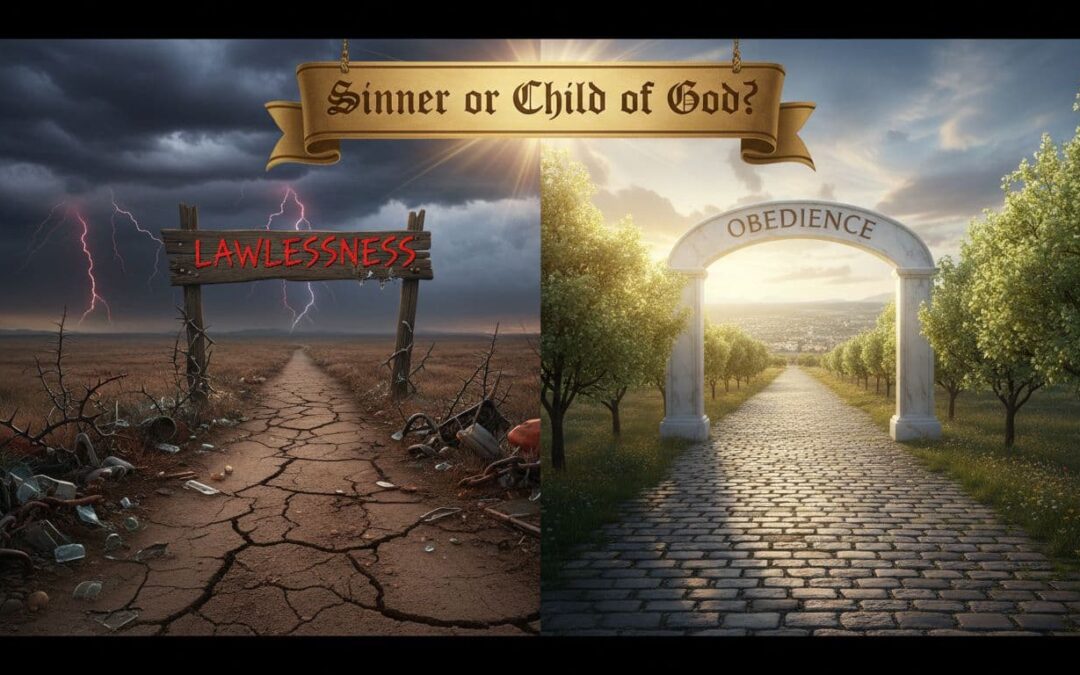
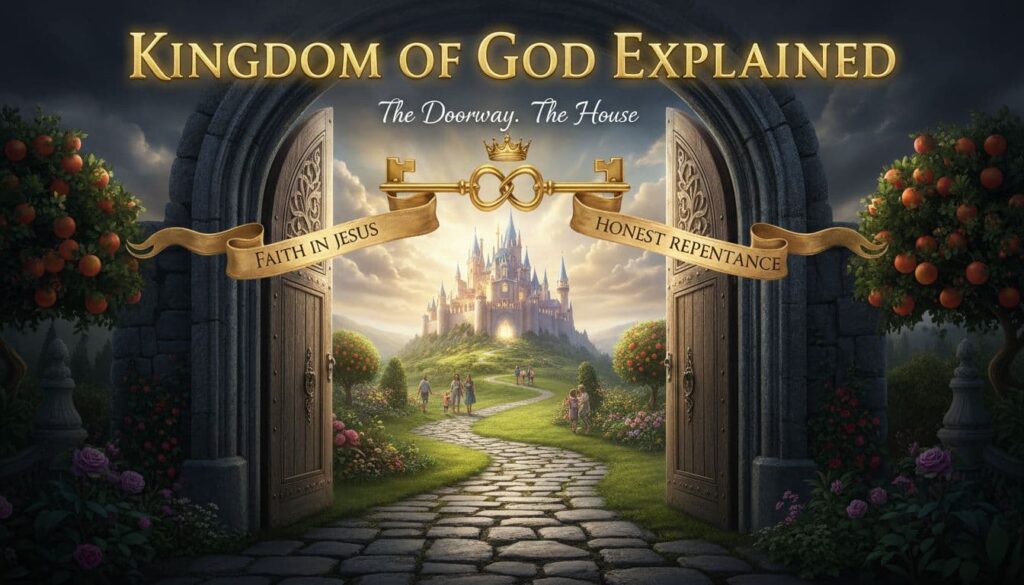
The Bible defines sin in a way that’s sharper than “messing up.” “Sin is lawlessness” (1 John 3:4). It’s living as if God has no right to rule us, which is where those who teach Christians are saved by grace and can be as bad as they want and still make it to Heaven because they have accepted Jesus as Lord and Savior are teaching false doctrine. Being born again, which happens the moment we believe Jesus is Messiah who died for our sins and rose from the dead defeating death for us, is only walking through the door of salvation.
In its simplest form, being saved means the person is saved from going to hell. That is what Jesus saved us from, hell. Religions who claim to be Christian but don't believe in hell have got it all wrong. Hell is what Jesus saved us from: an eternity of hellfire.
A person must be born again to see the Kingdom of God. (John 3:3) Yes, but that does not mean the person will make it into Heaven. Jesus was very clear about this when He said in Matthew 7:21-23,
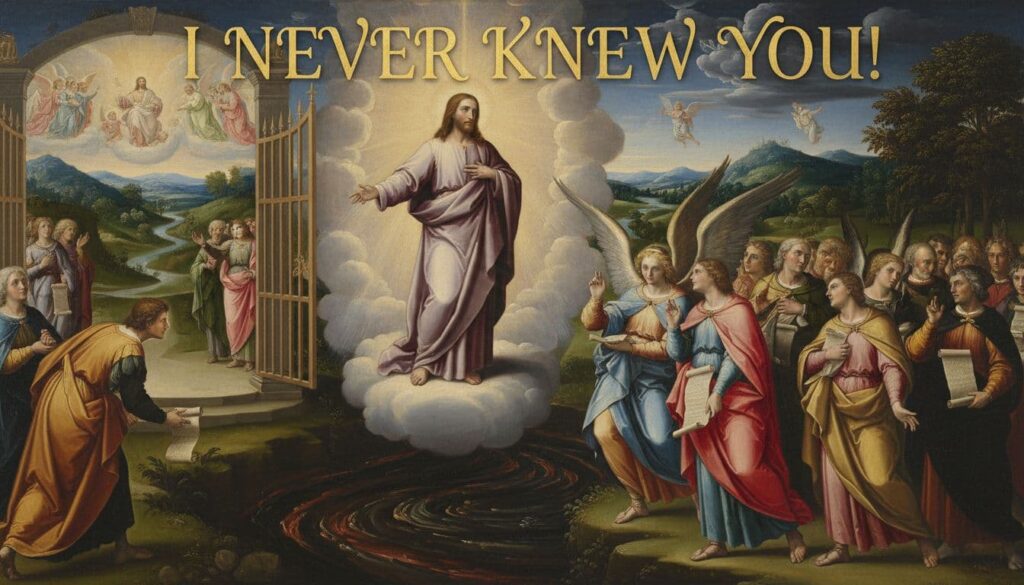
“Not everyone who says to Me,‘Lord, Lord,’ shall enter the kingdom of heaven, but he whodoes the will of My Father in heaven.Many will say to Me in that day, ‘Lord, Lord, have wenot prophesied in Your name, cast out demons in Your name, and done many wonders in Your name?’Andthen I will declare to them, ‘I never knew you;depart from Me, you who practice lawlessness!”
Lawlessness is sin, living a life practicing sin instead of practicing righteousness. We explain this scene Jesus talked about in detail in our article below:
We can also say it this way: sin is going against God’s will.
Cain was warned by God about sin crouching at the door, but he chose anger and murder anyway (Genesis 4:6-8). Sin was not “oops.” It was a refusal to submit.
David knew God’s law, yet he chose adultery, deception, and murder to cover it (2 Samuel 11). Sin is often a chain, one choice pulling the next.
James makes it painfully practical: “Whoever knows the right thing to do and fails to do it, for him it is sin” (James 4:17). That’s sin as willful resistance, not just weakness.
People often assume those who Jesus told to get away from Him because He never knew them where not believers at heart. they will argue with you that these are people who think they are saved by works. We explain those people Jesus told to get away from Him are believers in our article here.
This is why Jesus says the Kingdom isn’t for those who only say “Lord,” but for those who do the Father’s will (Matthew 7:21). If we want to sit with that warning and its context, Entering the Kingdom of Heaven is a sobering read.
How Jesus saves us from sin, and where Holy Spirit indwelling and Spirit baptism fit
The deeper meaning of being saved is Jesus saves us from sin in a full, layered way. This happens after being born again, but further down the road on our walk with God. This requires work on our part. Salvation is a free gift from God to believers through His grace. We have no control over our salvation and we only need to believe in Him to be saved from hell.
First, He forgave guilt. He took the penalty we deserved when He sacrificed Himself on the cross for our sins. Second, He gives new birth, where the Holy Spirit comes to live within us when we become born again. Third, He changes us over time (sanctification) as we walk by the Spirit (consecration). We need to choose to walk by the Spirit, this is the required work on our part. Fourth, many believers also experience a powerful event called Holy Spirit Baptism, which equips us for bold witness and deeper surrender.
Some people get baptized in the Holy Spirit by Jesus at the same time they become born again. This is up to Jesus, when a believer gets baptized in the Holy Spirit, because Jesus is the one who baptizes believers in the Holy Spirit.
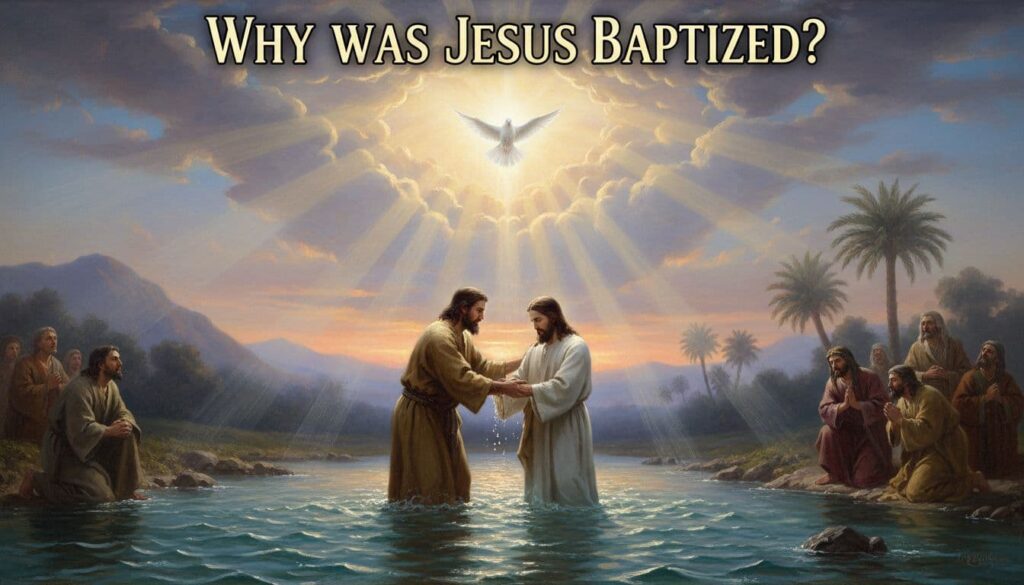
We heard from John the Baptist in Matthew 3:11, "I indeed baptize you with water unto repentance, but He who is coming after me [Jesus] is mightier than I, whose sandals I am not worthy to carry. He will baptize you with the Holy Spirit and fire."
Later, we hear from Jesus Himself about being baptized in the Holy Spirit when He told His apostles in Acts 1:4-5, "You haveheard from Me; for John truly baptized with water,but you shall be baptized with the Holy Spirit not many days from now.” His apostles were already born again believers at this point, but they were not baptized in the Holy Spirit. The Holy Spirit was not even indwelling them yet.
The Holy Spirit indwelling believers is the promise from Jesus in John 14:15-31, and the Holy Spirit being poured out on all flesh, being Baptized in the Holy Spirit, is the promise from the Father in Joel 2:28-32. When Jesus made that promise, His apostles were like Old Testament figures who had the Holy Spirit resting on them. They were in the process of the transition from the Old Covenant to the New Covenant (Jeremiah 31:31-34), where the Holy Spirit moves from resting on a few chosen people to indwelling all believers.
The only person up to this point besides Jesus that was filled with the Holy Spirit continually was John the Baptist, who was filled with the Holy Spirit even before he was born. (Luke 1:15) We explain how the transfer of the stewardship of the Kingdom of God passed from mankind through John the Baptist back to God Himself here, and back to His Spirit filled church at Pentecost.
Many teach the Spirit indwelling us when we become born again is the same thing as being baptized in the Holy Spirit. They teach it is one event, but that's not the truth. It is two separate events. Only those who have never been baptized in the Holy Spirit by Jesus believe it is a single event because you have to experience it to understand. You can read all about the truth of it in our article below:
So where does the desire to sin get broken? We should speak honestly: a Born Again Christian may still feel strong temptation, but the Holy Spirit begins a new hunger for righteousness and a new resistance to sin after we are baptized in the Holy Spirit. It is after we get baptized in the Holy Spirit that our desire for holiness begins to overtake our desire to sin. This is explained in Zechariah 4, specifically, "Not by might nor by power, but by My Spirit,’" says the Lord of hosts. We will break this down in a later article because it's going to take a lot to explain.
New birth is when the Holy Spirit comes to dwell within us as part of our life
Ezekiel 36:26-27 says God puts His Spirit within. Romans 8:9 says if we don’t have the Spirit, we don’t belong to Christ. And 1 Corinthians 6:19 says our bodies are temples of the Holy Spirit.
That’s indwelling. It means God is not only around us or with us. He’s in us.
A Born Again Christian doesn’t just follow teachings, we carry a Presence. The Holy Spirit becomes part of our inner life, shaping conscience, strengthening faith, and pulling us toward Jesus. We study the Bible because we already know God and we want to know Him more deeply. We do not study the Bible to find God. That does not work. As my pastor always says, "If you can study your way into this, you can study your way out of this."
This is also why “try harder” breaks down. We can’t grit our teeth into spiritual life. But we can surrender. We can ask. We can yield.
Holy Spirit baptism and filling: power for witness and deeper surrender, not a second Savior
In Acts, we see moments where believers receive the Spirit’s power in noticeable ways: Acts 2, Acts 8, Acts 10, Acts 19. The language varies (filled, received, fell upon), but the theme is consistent: God empowers His people for witness.
Those of us who have been baptized with the Holy Spirit after being born again know about the powerful experience often called the Baptism in the Holy Spirit. We know it is distinct from the indwelling when we became born again that marked our salvation.
No certain denomination exclusively holds the power to be baptized in the Holy Spirit. Only Jesus Himself holds that power, and He gives it to whomever He pleases. My parents were Catholic and they received it from Jesus. I am non-denominational and I also received it from Jesus. "For the promise is to you and to your children, and to all who are afar off, as many as the Lord our God will call.” (Acts 2:39)
Others see these Acts moments as unique transitions in the early church. Those are cessationists, Christians who believe the gifts of the Holy Spirit that come through being Baptized with the Holy Spirit were only around during the early church for the purpose of getting the church started and went away when the last apostle died.
But, there were 120 people in the Upper Room who were all born again believers that got Baptized with the Holy Spirit. It was not just the apostles in that room.
If we want a focused explanation of that empowerment our article, What Is Baptism in the Holy Spirit? lays out the Acts pattern and why many believers keep seeking fresh filling.
This is where the struggle with sin gets practical. The Spirit weakens sin’s pull as we learn to walk with Him: “Walk by the Spirit, and you will not gratify the desires of the flesh” (Galatians 5:16). A Born Again Christian still chooses daily, but after we walk with God and get Baptized with the Holy Spirit, now we’re not choosing alone.
Conclusion
Jesus didn’t tell Nicodemus to improve himself, He said we must be born from above. The Spirit gives birth to our spirit, and that’s why a Born Again Christian is a new creation with a new life-source.
Sin isn’t just a flaw, it’s choosing against God’s will, like Adam, Cain, and David did when they trusted their own desire over God’s Word. Real understanding of these things comes by the Spirit, not by effort or education. Jesus forgives our guilt and gives us His Spirit within, and many of us also keep seeking the Spirit’s filling for power and deeper surrender.
If we want to respond, we can ask Jesus for new birth today, then keep yielding, keep walking in the Spirit, so the Holy Spirit teaches us to love God’s will more than our old cravings. Eventually, you will get Baptized with the Holy Spirit.
Related Posts
Am I a Sinner or Child of God? 1 John 3 Our Future Glory Many of us grew up hearing, “I’m just a sinner saved by grace.” That sounds humble, but it often leaves our hearts confused. Are we still a sinner at the core, or are we something new in Christ? Why do we still struggle, yet read verses that say a child of God does not keep on sinning? In 1 John…
Sin, Truth, and a Reprobate Mind: Inside 1 John 1:8-10 with Jesus In this post we will look at 1 John 1:8-10 in the original Greek, connect it to Jesus as the Truth and the Word of God, and then wrestle with hard questions. What about a reprobate mind? What about people who seem very religious but live in secret sin? Are the people in Matthew 7:21 the ones who never had…
Born of the Spirit in John 3:5-8 Explained When we hear Jesus say we must be born of the Spirit, the words sound simple and mysterious at once. Nicodemus felt that tension too. He knew Scripture, yet Jesus spoke of a life no effort could produce. That is why John 3 still confronts us. It moves past religion and asks whether God's own life has entered us. Let's…
The Seven Spirits of God stand as one of the most profound and often misunderstood truths in Christian theology. Rooted deeply in Scripture, they aren’t seven separate entities but rather seven attributes of the one Holy Spirit—God revealing Himself in fullness. Isaiah 11:2 describes these [...]
The gifts of the Holy Spirit reveal the active power of God working in the lives of His people. They aren’t just distant historical records or fading Biblical accounts; they’re living because the Holy Spirit, He is living and He is God, and His transformative gifts are reaching people [...]
The phrase “tongues of fire” in Acts 2:3 sparks worldwide curiosity and spiritual wonder. It appears in Scripture to describe the Holy Spirit’s descent during Pentecost, when visible flames rested on the apostles, marking the time when God’s Spirit descended on earth, [...]
The Bible’s take on a reprobate mind isn’t just a warning or a piece of theology. It’s a wake-up call. “Reprobate mind” (from the Greek adokimos, meaning rejected or unapproved) describes what happens when people no longer care about God’s truth—they trade what’s holy for what feels good, grow numb [...]
The upper room, a sacred space in Jerusalem, holds profound significance in Christian history. Acts 2 tells us it is the gathering place for Jesus’ disciples when the Holy Spirit descended upon them during Pentecost. This transformative moment not only empowered those present but also sparked [...]
Pentecost isn’t just a Christian event; its roots stem from the Jewish celebration of Shavuot, the day Moses received the Ten Commandments from God. For Christians, Pentecost marks the moment when God poured out His Spirit and Jesus’ worldwide church empowered by the Holy Spirit and His gifts [...]
Charismatic gifts, often referred to as manifestation gifts, showcase the miraculous power of the Holy Spirit. From healing and miracles to prophecy and discernment, they serve as tangible evidence of God’s presence and transformative work. These gifts, seen throughout Biblical history, have [...]
Revelation 3:7-8 offers a powerful message to the church in Philadelphia, a message that remains relevant today. It speaks of a divine “open door” that no man can shut, given by the one who holds the Key of David. This imagery represents not only an opportunity but also God’s sovereign [...]
Have you ever wondered why the word “anointing” carries so much depth in Scripture? The idea of anointing—of sacred oil poured out on kings, priests, and prophets—echoes through the Old Testament as a symbol of God choosing, empowering, and setting apart. God didn’t leave the details of [...]
The Bible boldly declares the truth that Jesus is both fully God and fully man—a mystery that anchors the Christian faith. But what does it mean, practically, for us as believers? Jesus didn’t perform miracles or operate in the gifts of the Holy Spirit simply as God; He demonstrated how a [...]
The Antichrist
The Apostate Church
The Rapture
Angels
Book of Daniel
Giants
Judgment
Prophecy
The Apostles
Bible Prophecy
Beware of Deception
Sin
Antichrists
Demon Possession
Healing
Millennial Reign
Redemption
The Gospels
The Holy Spirit
American Prophecy
Israel
Armageddon
Forgiveness
Intercession
Prayer
Revival
The Old Testament
The Tribulation
Faith
Kingdom Of God
Bible Interpretation
Free Will
Book Of Jude
Pride
The Afterlife
The Red Dragon
We use cookies so you can have a great experience on our website. View more
Cookies settings
Accept
Decline
Privacy & Cookie policy
Privacy & Cookies policy
Cookies list
Cookie name
Active
Who we are
Our website address is: https://theholyspirit.us.
Comments
When visitors leave comments on the site we collect the data shown in the comments form, and also the visitor’s IP address and browser user agent string to help spam detection.
An anonymized string created from your email address (also called a hash) may be provided to the Gravatar service to see if you are using it. The Gravatar service privacy policy is available here: https://automattic.com/privacy/. After approval of your comment, your profile picture is visible to the public in the context of your comment.
Media
If you upload images to the website, you should avoid uploading images with embedded location data (EXIF GPS) included. Visitors to the website can download and extract any location data from images on the website.
Cookies
If you leave a comment on our site you may opt-in to saving your name, email address and website in cookies. These are for your convenience so that you do not have to fill in your details again when you leave another comment. These cookies will last for one year.
If you visit our login page, we will set a temporary cookie to determine if your browser accepts cookies. This cookie contains no personal data and is discarded when you close your browser.
When you log in, we will also set up several cookies to save your login information and your screen display choices. Login cookies last for two days, and screen options cookies last for a year. If you select "Remember Me", your login will persist for two weeks. If you log out of your account, the login cookies will be removed.
If you edit or publish an article, an additional cookie will be saved in your browser. This cookie includes no personal data and simply indicates the post ID of the article you just edited. It expires after 1 day.
Embedded content from other websites
Articles on this site may include embedded content (e.g. videos, images, articles, etc.). Embedded content from other websites behaves in the exact same way as if the visitor has visited the other website.
These websites may collect data about you, use cookies, embed additional third-party tracking, and monitor your interaction with that embedded content, including tracking your interaction with the embedded content if you have an account and are logged in to that website.
Who we share your data with
If you request a password reset, your IP address will be included in the reset email.
How long we retain your data
If you leave a comment, the comment and its metadata are retained indefinitely. This is so we can recognize and approve any follow-up comments automatically instead of holding them in a moderation queue.
For users that register on our website (if any), we also store the personal information they provide in their user profile. All users can see, edit, or delete their personal information at any time (except they cannot change their username). Website administrators can also see and edit that information.
What rights you have over your data
If you have an account on this site, or have left comments, you can request to receive an exported file of the personal data we hold about you, including any data you have provided to us. You can also request that we erase any personal data we hold about you. This does not include any data we are obliged to keep for administrative, legal, or security purposes.
Where your data is sent
Visitor comments may be checked through an automated spam detection service.




 From Stone to Flesh: How God Turns Cold Religion Into Living Relationship