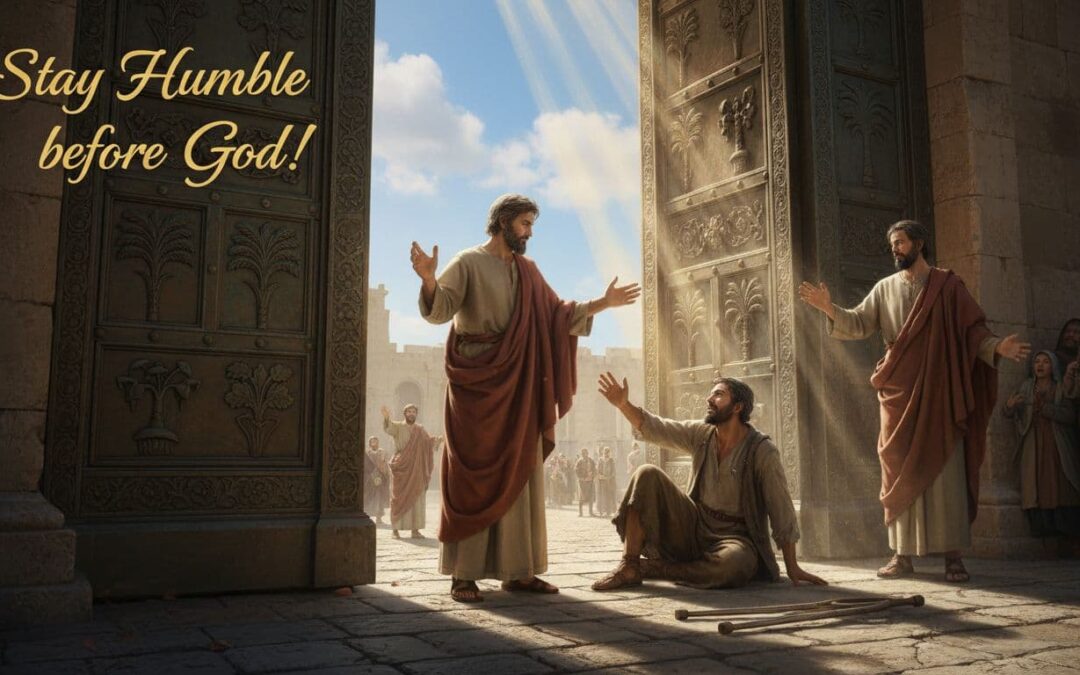
Humility, False Humility, and the Future of Fake Religion (A Biblical Look)
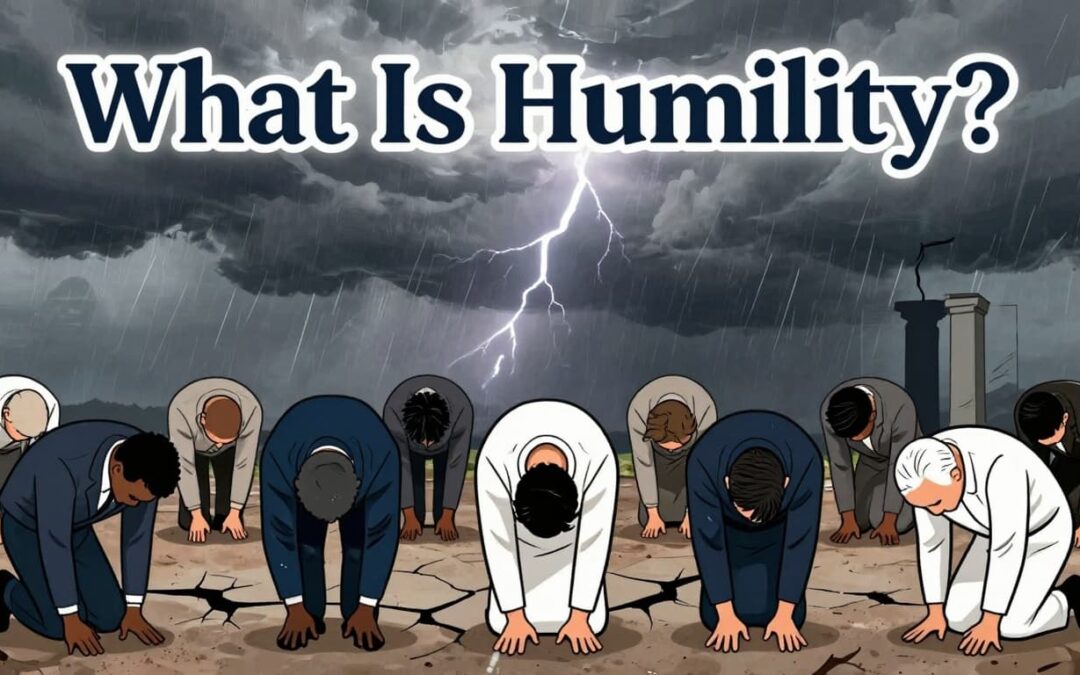
Most people agree that humility is good. Few agree on what it actually is.
Some think humility means hating yourself. Others think it is being quiet, passive, or “nice.” Many people, even in churches, live in something that looks like humility but is actually spiritual poison. The Bible calls that false humility.
From a Bible-centered, evangelical Christian view, humility is simple: seeing God as He is, seeing ourselves as we are, and bowing our whole life to Him. False humility is different. It bends the body but not the heart. It bows to the wrong god, trusts the wrong savior, and does good works in the name of nothing.
This matters if you care about pleasing God. False humility looks spiritual, but it leads nowhere with God.
Watch and share our video of this article to help us spread the Word of God. Be kind and subscribe to our YouTube Channel. Thank You!
In this article we will look at the original Bible words for humility, real-life examples, major religions that practice false humility, and what the Book of Revelation says about the future of fake religion.
What Is True Humility According to God?
True humility does not start with your self-esteem. It starts with God.
Culture often says humility means thinking you are worthless. The Bible says humility means knowing that God is everything, and you are completely dependent on Him. You can be confident and still walk in humility, as long as that confidence comes from God and not from self.
From Genesis to Revelation, God honors the lowly who trust Him and resists the proud who trust themselves. For a broad survey of key passages and themes, you can look at the Topical Bible on humility.
Humility in the Original Bible Languages (Hebrew anavah and Greek tapeinophrosune)
In Hebrew, one key word for humility is anavah. It carries the idea of a person who chooses to bow low before God, not because they are trash, but because they deeply respect Him and trust His wisdom. It is “reverent lowliness.”
Think of a small child holding a parent’s hand while crossing a busy street. The child is not doing math in their head. They just know, “Dad sees more. I will hold on.” That is anavah.
Proverbs 15:33 says, “The fear of the Lord is instruction in wisdom, and humility comes before honor.” Humility is tied to the fear of the Lord, not to self-hatred.
The fear of the Lord is not terror of a cruel boss, it’s deep, aching awareness that God is holy, near, and not to be treated like a toy. Scripture uses the Hebrew word yirah, which carries the idea of awe, weight, and trembling respect, the feeling you get when you stand on the edge of a cliff and know one step matters. It’s like when a parent says, “Don’t stick the scissors in the outlet,” and the child trusts that warning, not because Mom hates fun, but because she loves life and knows more than the child sees.
To fear the Lord means you believe God’s “do” and “don’t” actually touch life and death, joy and ruin, so you stop treating His commands like suggestions and start treating them like guardrails over a canyon.
In daily life, the fear of the Lord shows up when you say no to a secret sin not just because you feel guilty, but because you know God is watching, God is worthy, and God’s way is better than the quick hit of pleasure. It shapes how you speak to people, since you start to care more about what God thinks of your words than how many people clap for you. It changes work, because you stop working only for a paycheck or praise, and you start working “before the face of God,” as if your desk or job site is laid out right in front of His throne.
In worship, the fear of the Lord pulls your heart away from shallow performance and casual mood, and moves you toward honest, humble wonder, where you sing, confess, listen, and obey because he is God, not because the band sounds good. You might still laugh, dance, or raise your hands, but under that joy there is a quiet tremble, a sense that you’re standing on holy ground and you do not run the room.
Over time, this fear does not crush love, it feeds it, because the more you see God’s greatness and purity, the more amazed you are that someone so high bends down to carry someone like you. And when that mix of awe and love settles into your bones, you start to live and worship with a steady heart, not perfect, but anchored, because you know who God is, you know He’s close, and you don’t want to treat His presence like a small thing.
In Greek, the main New Testament word is tapeinophrosune, which means “lowliness of mind” or “humble attitude.” It is a way of thinking, not just a way of standing or talking. You see it in Philippians 2:3, “In humility value others above yourselves.”
Philippians 2:5–8 gives the greatest picture of humility. Jesus, who is fully God, “humbled Himself” and became a servant, even to death on a cross. He did not deny His worth. He laid it down in love.
James 4:6 says God “gives grace to the humble.” In Matthew 18:4, Jesus says the one who becomes like a little child is greatest in the Kingdom. That is the heart of Biblical humility: honest dependence on God.
If you want to study the words more closely, you can use tools like Strong’s Greek search on humility to see how these terms are used.
How the Bible Describes a Humble Person
What does humility look like in real life?
A humble person:
Fears the Lord and trembles at His Word
Trusts God more than their own opinions
Obeys even when it costs them
Serves without needing applause
Gives God the credit when anything good happens
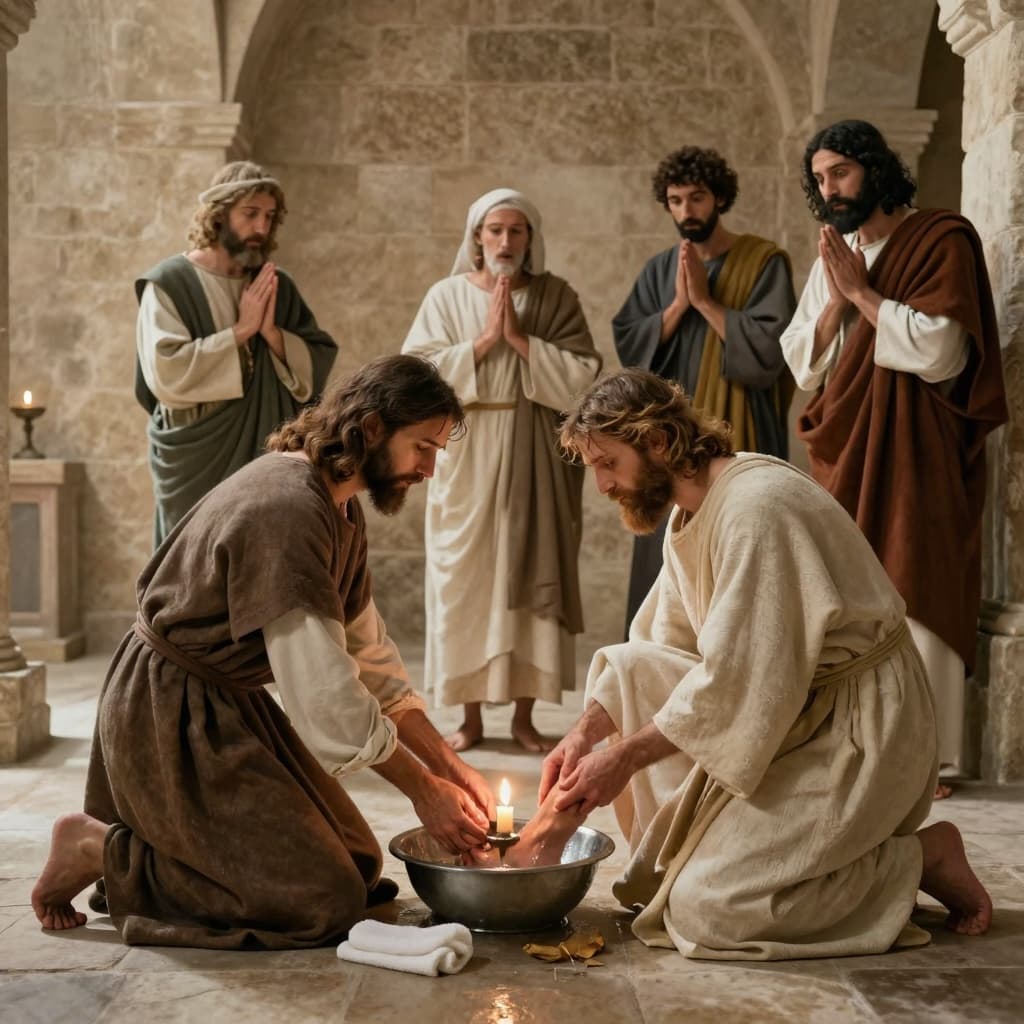
Jesus shows this when He washes the disciples’ feet. The King of glory kneels on the floor, takes a towel, and scrubs dirty toes. No stage, no spotlight, no Instagram post. Just love.
On the cross, He shows humility in full color. He could call angels. He stays and dies.
You see humility in David, who sins badly but repents deeply. In Mary, who says, “Let it be to me according to your word.” In John the Baptist, who says of Jesus, “He must increase, I must decrease.” They are not perfect people. They are yielded people.
Why Humility Matters So Much to God
James 4:6 and 1 Peter 5:5–6 both repeat the same sharp line: “God opposes the proud but gives grace to the humble.”
Humility opens the door to salvation. You cannot receive Christ without admitting you are wrong and He is right. You cannot walk with Him without daily surrender.
2 Chronicles 7:14 ties humility to revival. God says that if His people will humble themselves, pray, seek His face, and turn from their wicked ways, He will hear and heal. No humility, no healing.
Even good works mean nothing without humility. If you serve, give, and preach while your heart still worships self, God is not impressed. Real change starts when you bow low and stay low before Him. You can see how God honors that posture in passages like Revelation 3:7–8, where an “open door” is connected to a faithful, dependent church.
What Is False Humility in the Bible?
False humility is pride dressed up in religious clothing. It sounds soft. It looks lowly. Inside, it is hungry for praise, control, or self-salvation.
God does not only judge our actions. He reads the motive under the action.
For a clear overview of the term “false humility” in Colossians, you can see this simple explanation from GotQuestions on false humility.
False Humility in the Original Context: Colossians 2 and the Pharisees
In Colossians 2:18–23, Paul warns against “false humility,” worship of angels, and harsh treatment of the body. People were setting up man-made rules and mystical experiences as the path to holiness. It looked intense and spiritual. Paul says it “lacks any value in restraining sensual indulgence.” It did not touch the heart.
You can read the whole section in Colossians 2:18–23. It is a sobering picture of religious pride.
Jesus deals with the same thing in Matthew 23. The Pharisees pray long prayers, wear special clothes, and love the best seats. They give, fast, and teach. Yet He calls them “whitewashed tombs.” Clean on the outside, dead inside. A good historical overview of the Pharisees can be found in this article on the Pharisees.
You could picture the difference like this:
On the outside
In the heart
Long prayers
Desire to be seen
Strict rules
Hidden pride
Sad face when fasting
Secret self-trust
Talk of humility
Craving control
That gap is false humility.
How God Defines False Humility: Bowing to a False God and Trusting Empty Works
From Scripture, we can build a simple definition:
False humility is outward lowliness that hides inward pride and trusts something other than Christ.
Sometimes it bows to a wrong object: idols, angels, saints, leaders, or self. This breaks the first commandment in Exodus 20. Romans 1 says people “exchange the truth about God for a lie” and serve created things instead of the Creator. Paul warns believers in 1 Corinthians 10 not to join idol feasts.
Other times, false humility trusts good works. Penance, fasting, almsgiving, rituals, or social justice can become a ladder we build to climb to Heaven. Ephesians 2:8–9 says salvation is by grace through faith, “not by works.” Galatians 3:3 rebukes those who start with the Spirit then try to be perfected by the flesh.
To God, good works done in the name of nothing, or for a false god, are empty. They may help people for a moment, but they do not fix the guilt of sin.
When Scripture talks about good works that God rewards, it’s not talking about earning salvation, it’s talking about the things a child does that make their Father smile, the things that show we actually believed Him in the first place (Ephesians 2:8-10; James 2:18). In simple terms, God calls it a good work when you obey Him out of love, when you forgive someone who hurt you, when you give in secret so no one praises you, when you stay faithful in a small job no one sees, because you did it “unto the Lord and not to men” (Colossians 3:23-24).
Jesus talked about rewards for acts that look tiny to us, like giving a cup of cold water to “one of these little ones” because they belong to Him, and He said that person “will by no means lose his reward” (Matthew 10:42), which tells us God notices the quiet, almost forgettable moments where we choose love over comfort.
A lot of things Heaven calls good works never get applause on earth; patient caregiving, long years of prayer, refusing to cheat when you could get away with it, using your skills to serve a church or neighbor, the long slow work of raising kids in the faith, that “hidden life” counts with God in a way social media never will.
The New Testament talks about the Bema Seat of Christ (2 Corinthians 5:10), a reward seat, not a courtroom for salvation, where He tests our works like fire tests gold, burning away what was selfish or fake, and keeping what was done in faith, hope, and love; in Greek the word for good, agathos, often has the sense of something that is good in its nature, not just in how it looks, so God cares about the heart behind the deed, not just the deed itself.
Even simple work at your job can become a good work in God’s eyes if you do it honestly, with gratitude, and see it as a way to serve people He loves; the task might be common, but the motive turns it into an offering.
There is also the hard work of keeping your body and soul pure in a culture that laughs at holiness, and Scripture promises a “crown of righteousness” and a “crown of life” for those who fight through temptation and stay faithful in trials (2 Timothy 4:8; James 1:12; Revelation 2:10), so even your quiet “no” to sin can echo into eternity.
Generosity is another clear category of reward, as Paul talks about “fruit that increases to your credit” when the Philippians gave to support the Gospel (Philippians 4:17), like God keeps a real account, not of how much we had, but of how much we trusted Him with what we had.
Click Our Ad to Support Us!
Even our words matter as good works, like encouragement that pulls a brother back from quitting, or gentle correction that turns someone from a destructive path, and James says that whoever turns a sinner from wandering “will save his soul from death and cover a multitude of sins” (James 5:19-20), which sounds like the kind of thing God loves to reward.
In the end, good works are not some fancy spiritual category; they are every act, large or small, that lines up with God’s heart, flows from faith in His Son, and is carried out in the power of the Holy Spirit, and while those works never buy our place in Heaven, they will follow us there, and God, who saw every unseen yes, will not forget a single one (Hebrews 6:10).
Why False Humility Gets a Person Nowhere With God
Cain brings an offering in Genesis 4. Abel brings one too. God accepts Abel, not Cain. The issue is not the surface act. It is the heart and the kind of offering.
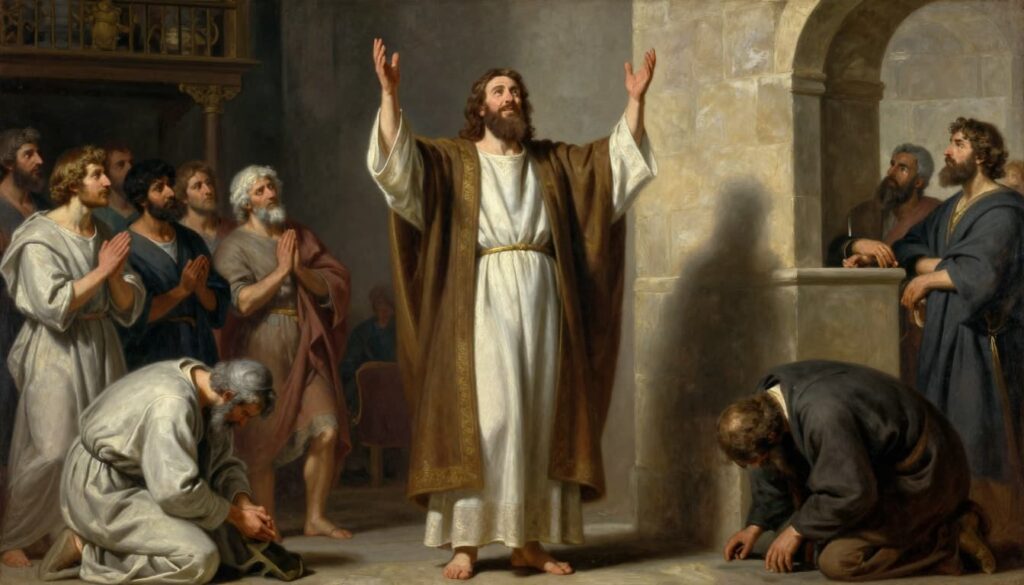
In Luke 18:9–14, Jesus tells of a Pharisee and a tax collector praying in the temple. The Pharisee lists his own goodness. The tax collector beats his chest and begs for mercy. Only one goes home justified. The one with true humility.
Isaiah 1 shows God rejecting sacrifices and feasts because the people refuse to repent. The rituals are correct. The hearts are far away.
False humility can make you very religious and still lost. That is why Scripture warns so strongly against proud religion and calls us to choose humility over pride, not just in words, but in trust.
Real-Life Examples of False Humility: Then and Now
False humility is not just a Bible-time problem. It lives in history and in our phones.
Historic Pictures of False Humility and Their Outcomes
A few snapshots:
Pharisees in Jesus’ day Outward act: strict law-keeping, public giving, careful tithing. Inner problem: pride, lack of mercy, love of praise. Outcome: Jesus warns of judgment and the “greater condemnation.”
Early legalistic groups Some early groups added rules about food, marriage, or special days to the Gospel. Outward act: strict discipline that looked very serious. Inner problem: trusting rules rather than Christ. Outcome: apostolic correction, and often, division and confusion.
Medieval church abuses People were told they could buy indulgences or earn merit through complex rituals. Outward act: pilgrimages, payments, long fasts. Inner problem: a system that turned grace into a product. Outcome: deep corruption and a loss of clear Gospel truth. You can see how concerns about rule-keeping and pride still echo in articles like Ligonier’s piece on the roots of legalism.
Extreme ascetics Some leaders starved themselves, slept on hard floors, or whipped their backs. Outward act: harsh treatment of the body. Inner problem: subtle belief that suffering earns standing before God. Outcome: burnout, spiritual pride, and sometimes strange teachings.
Modern Everyday Examples of False Humility in People
You probably know these scenes:
The humblebrag: “Please pray for me, I am so exhausted from all this ministry,” with a perfect selfie. Looks like humility, but the heart is fishing for praise. The better way is to serve quietly and share for God’s glory, not for likes.
The self-hating talker: They say, “I am the worst Christian,” but refuse to actually repent or receive grace. That is not humility. True humility admits sin, then runs to Christ for cleansing.
The stage-driven leader: They serve as long as there is a mic, a title, or a spotlight. The fix is to practice hidden service that only God sees.
The loud giver: Every gift shows up online. Every act of charity is a post. Jesus tells us to give in secret so that our Father who sees in secret will reward us.
The morally superior neighbor: They serve at shelters and mock “religious people” at the same time. They bow to their own goodness. True humility admits that even our best deeds need the Blood of Jesus.
How False Humility Shows Up in Churches and Ministries Today
False humility can shape whole church cultures:
Performance-driven worship that is really about image and talent
Dress codes or style rules that decide who is “holy”
Leaders who always say “It was nothing” while inwardly craving applause
Ministries that measure worth by numbers, not by faithfulness
The answer is not to hate visible ministry. The answer is to test everything by Scripture, and to build habits that grow humility: unseen acts of service, private prayer, honest confession, and a willingness to be corrected.
Five Major Modern Religions and How They Practice False Humility (From a Biblical Christian View)
This section comes from a Biblical Christian perspective. The goal is not to mock people, but to compare systems with Scripture. Many dear people in these religions are sincere and kind. The question here is about what their systems teach about humility, worship, and salvation.
Roman Catholicism: Devotion, Ritual, and Trust in Church Works
I grew up Catholic. I know Catholics are Christians. Throughout every different type of church (Catholic, Pentecostal, Apostolic, Assemblies of God, Church of God) I have been a member of as I moved around different parts of the world, I have always believed in the same Jesus. God looks at our hearts, not our religion. There is something flawed in every denomination.
Roman Catholicism teaches confession to a priest, penance, the rosary, veneration of Mary and saints, and sacraments as channels of grace.
From a Biblical view, some of this can become false humility:
Bowing before statues or images
Praying to Mary or saints instead of directly to the Father in Jesus’ name
Trusting penance, Mass, or sacraments as necessary for salvation
It looks very lowly to kneel for long hours or carry a rosary. But if the heart is trusting church rituals or human priests instead of the finished work of Christ, that is false humility. The Bible calls prayer to any being other than the true God a form of idolatry.
Some Catholics truly trust Jesus alone in spite of the system. Yet the system often encourages people to lean on church works, not on grace. Just like in any denomination, there are always sheep, goats, and wolves worshipping alongside each other.
Islam: Bowing in Prayer and the Weight of Good Deeds
Muslims pray five times a day, fast in Ramadan, give alms, and may go on pilgrimage to Mecca. It appears deeply humble to put your face on the ground over and over.
From a Biblical Christian view, Islam teaches:
A different god than the Triune God of Scripture
A scale of good and bad deeds at judgment
A denial that Jesus is the Son of God who died and rose for our sins
So the body is low, but the heart is trusting personal effort and a different revelation. Humility here is false because it bows to a false god and rejects Jesus as Savior.
Hinduism: Lowliness Before Many Gods and the Burden of Karma
In Hinduism, people bow to idols, offer incense and food, and serve gurus. They speak of being small before the gods and of working through karma over many lives.
From a Biblical Christian lens, this is false humility because:
Worship is given to many gods and images
Salvation is seen as working off karma, not receiving grace
The cross of Christ has no place in the system
Someone can say, “I am nothing,” yet still cling to their own rituals as the way out. That is self-salvation with a sad face.
Buddhism: Simple Living, Self-Denial, and Saving Yourself
Buddhist monks often live simply. They may own almost nothing, eat little, and spend long hours in silence. To the watching world, this looks like deep humility.
Yet classical Buddhism does not teach a personal Creator God, a Savior, or grace. The focus is on ending desire and escaping suffering through your own path.
From a Biblical Christian view, this is false humility. The self is still the savior, even if the language is gentle.
Modern Rabbinic Judaism: Zeal for the Law Without the Messiah
Many Jewish communities honor the Sabbath, keep kosher laws, pray daily, and love the Torah. There is real reverence for the God of Abraham.
The New Testament, however, says that rejecting Jesus as Messiah and trusting in law-keeping is a form of false humility. Paul weeps over this in Romans 9–11 and tells his own story in Philippians 3, where he counts his legalistic righteousness as “garbage” compared to Christ.
Obedience matters, but without the Lamb of God, the law only exposes sin. It cannot save.
The Future of False Humility: What Revelation Says About False Religion
The Bible does not only look back at false humility. It looks ahead.
Revelation shows a final, global form of fake religion that will look beautiful and spiritual but will be full of pride and rebellion. For more detail on this picture, you can read a clear overview like What is the whore of Babylon?.
The Great Prostitute and the Global False Religion
Revelation 17–18 describes a “great prostitute” riding a beast, seated on many waters, dressed in purple and scarlet, holding a golden cup. She is rich, powerful, and popular with kings and merchants.
She represents a worldwide religious and cultural system that unites people around worship of the Antichrist. It looks like unity. It smells like spirituality. It drinks the blood of the saints.
This is false humility in its final form. People think they are serving a higher good. In reality, they serve the unholy trinity: Satan, the Antichrist, and the False Prophet. The mark of the beast is an outward sign of inward rebellion.
How False Humility Deceives the World and Targets Real Believers
Revelation shows false signs, smooth words, and big promises of peace. The global religion will likely speak of tolerance, love, and inclusion, but it will hate anyone who says, “Jesus alone is Lord.”
Many will feel proud of their humility. They will say things like, “We are done with narrow truth. We accept all paths.” That attitude is celebrated today, and in the end, it will harden into open war on real believers.
The same heart that now bows to idols, rituals, or self-effort will one day gladly bow to a man who claims to be the savior of the world.
God’s Final Judgment of False Humility and the Reward of True Humility
In Revelation 18, God brings the great system down in a single hour. Merchants weep. Kings mourn. Heaven rejoices. Every form of false humility collapses under His hand.
After that, Revelation 19 shows the marriage supper of the Lamb. The true Bride, cleansed by the Blood of Jesus, stands in pure white. No pretense. No fake lowliness. Just redeemed people who learned humility at the feet of their Savior.
Then comes the New Heaven and New Earth. God wipes away tears. He lifts up forever those who bowed down to Him in truth.
False humility has an expiration date. True humility in Christ has no end.
Conclusion: Testing Our Hearts Before God
Here is the contrast in simple form:
True humility trusts Jesus, false humility trusts self or systems.
True humility worships the living God, false humility bows to idols or vague “spirituality.”
True humility serves from gratitude, false humility serves to earn or to be seen.
True humility hopes in the cross and resurrection, false humility hopes in karma, merit, or good vibes.
True humility says, “I am a sinner who needs grace,” false humility says, “I am humble enough already.”
This is a good time to ask God to search your heart. Where have you used the language of humility while still clinging to your own way?
The good news is simple. Jesus died for proud people. He rose to give a new heart. Anyone who turns from false humility and trusts Him alone is forgiven, welcomed, and taught how to walk low before God.
From Stone to Flesh: How God Turns Cold Religion Into Living Relationship
You can start with a simple prayer: “Lord Jesus, I drop my fake humility and my self-salvation. I bow to You as my only Savior and King. Teach me real humility that trusts You and obeys You.”
Then take one quiet step of unseen obedience today. Let humility move from a word in your mouth to a posture in your life.
Related Posts
Humble Hearts, Strong Grace: Abraham’s Faith God’s Power Proverbs 3:34 We all feel that tug of pride when we want to be right, noticed, or in control. And we all know the moment we need help that only God can give. Scripture speaks straight to that tension: “Surely He scorns the scornful, but gives grace to the humble” (Proverbs 3:34), echoed by James, “God resists the proud, but gives grace…
Reprobate Mind: 5 Warning Signs and Hope for Change The Bible’s take on a reprobate mind isn’t just a warning or a piece of theology. It’s a wake-up call. “Reprobate mind” (from the Greek adokimos, meaning rejected or unapproved) describes what happens when people no longer care about God’s truth—they trade what’s holy for what feels good, grow numb to right and wrong, and God lets go. It’s mentioned…
21st Century Discernment: Discover Spiritual Insight and Overcome Deception Discernment might seem rare in a noisy world, but Scripture shows it's as central to faith today as it was for early believers. The Bible doesn't just mention discernment; it raises it up as essential for knowing what's true, what leads to life, and what, quietly, pulls us away from God. Real discernment means more than intuition or a gut…
Quench Not the Spirit: Understanding 1 Thessalonians 5:19
Bible Study / Devotional / Discernment / Holy Spirit Scriptures / Humility / Pentecost / ProphecyPre-Born! gives free ultrasounds to women looking to abort their babies and 86% of those women choose to keep their babies! A fire can fade in two ways, by attack or by neglect. Paul’s warning in 1 Thessalonians 5:19 speaks to that simple image with sharp force: “Quench not the [...]Read more...
Holy Spirit and Fire in Matthew 3:11 Explained
Baptism / Baptized in the Holy Spirit / Bible Study / Holy Spirit Scriptures / Pentecost / Repentance / WrathPre-Born! gives free ultrasounds to women looking to abort their babies and 86% of those women choose to keep their babies! When we hear Holy Spirit and fire in Matthew 3:11, we may picture Pentecost, power, or deep renewal. Yet John the Baptist was not speaking into a calm room. He was standing in [...]Read more...
Anointing Oil in the Bible: What James 5:14 Means
Anointing / Bible Study / Faith / Forgiveness / Miracles / The ChurchPre-Born! gives free ultrasounds to women looking to abort their babies and 86% of those women choose to keep their babies! When sickness hits, we often want something we can hold. A bottle of oil can feel concrete, while prayer can feel hidden. Yet James 5:14 pulls us back to what matters [...]Read more...
Popular
Seven Spirits of God Explained: Trinity Insights for Your Faith Journey – Isaiah 11:2
The Seven Spirits of God stand as one of the most profound and often misunderstood truths in Christian theology. Rooted deeply in Scripture, they aren’t seven separate entities but rather seven attributes of the one Holy Spirit—God revealing Himself in fullness. Isaiah 11:2 describes these [...]Read more...
The 9 Gifts of the Holy Spirit: Biblical Truths, Historical Evidence, and Today
The gifts of the Holy Spirit reveal the active power of God working in the lives of His people. They aren’t just distant historical records or fading Biblical accounts; they’re living because the Holy Spirit, He is living and He is God, and His transformative gifts are reaching people [...]Read more...
Tongues of Fire in Acts 2:3: Meaning, Biblical Significance and Holy Spirit Power
The phrase “tongues of fire” in Acts 2:3 sparks worldwide curiosity and spiritual wonder. It appears in Scripture to describe the Holy Spirit’s descent during Pentecost, when visible flames rested on the apostles, marking the time when God’s Spirit descended on earth, [...]Read more...
The Antichrist
The Apostate Church
The Rapture
Angels
Book of Daniel
Giants
Judgment
Prophecy
The Apostles
Bible Prophecy
Beware of Deception
Sin
Antichrists
Demon Possession
Healing
Millennial Reign
Redemption
The Gospels
The Holy Spirit
American Prophecy
Israel
Armageddon
Forgiveness
Intercession
Prayer
Revival
The Old Testament
The Tribulation
Faith
Kingdom Of God
Bible Interpretation
Free Will
Book Of Jude
Pride
The Afterlife
The Red Dragon
We use cookies so you can have a great experience on our website. View more
Cookies settings
Accept
Decline
Privacy & Cookie policy
Privacy & Cookies policy
Cookies list
Cookie name
Active
Who we are
Our website address is: https://theholyspirit.us.
Comments
When visitors leave comments on the site we collect the data shown in the comments form, and also the visitor’s IP address and browser user agent string to help spam detection.
An anonymized string created from your email address (also called a hash) may be provided to the Gravatar service to see if you are using it. The Gravatar service privacy policy is available here: https://automattic.com/privacy/. After approval of your comment, your profile picture is visible to the public in the context of your comment.
Media
If you upload images to the website, you should avoid uploading images with embedded location data (EXIF GPS) included. Visitors to the website can download and extract any location data from images on the website.
Cookies
If you leave a comment on our site you may opt-in to saving your name, email address and website in cookies. These are for your convenience so that you do not have to fill in your details again when you leave another comment. These cookies will last for one year.
If you visit our login page, we will set a temporary cookie to determine if your browser accepts cookies. This cookie contains no personal data and is discarded when you close your browser.
When you log in, we will also set up several cookies to save your login information and your screen display choices. Login cookies last for two days, and screen options cookies last for a year. If you select "Remember Me", your login will persist for two weeks. If you log out of your account, the login cookies will be removed.
If you edit or publish an article, an additional cookie will be saved in your browser. This cookie includes no personal data and simply indicates the post ID of the article you just edited. It expires after 1 day.
Embedded content from other websites
Articles on this site may include embedded content (e.g. videos, images, articles, etc.). Embedded content from other websites behaves in the exact same way as if the visitor has visited the other website.
These websites may collect data about you, use cookies, embed additional third-party tracking, and monitor your interaction with that embedded content, including tracking your interaction with the embedded content if you have an account and are logged in to that website.
Who we share your data with
If you request a password reset, your IP address will be included in the reset email.
How long we retain your data
If you leave a comment, the comment and its metadata are retained indefinitely. This is so we can recognize and approve any follow-up comments automatically instead of holding them in a moderation queue.
For users that register on our website (if any), we also store the personal information they provide in their user profile. All users can see, edit, or delete their personal information at any time (except they cannot change their username). Website administrators can also see and edit that information.
What rights you have over your data
If you have an account on this site, or have left comments, you can request to receive an exported file of the personal data we hold about you, including any data you have provided to us. You can also request that we erase any personal data we hold about you. This does not include any data we are obliged to keep for administrative, legal, or security purposes.
Where your data is sent
Visitor comments may be checked through an automated spam detection service.