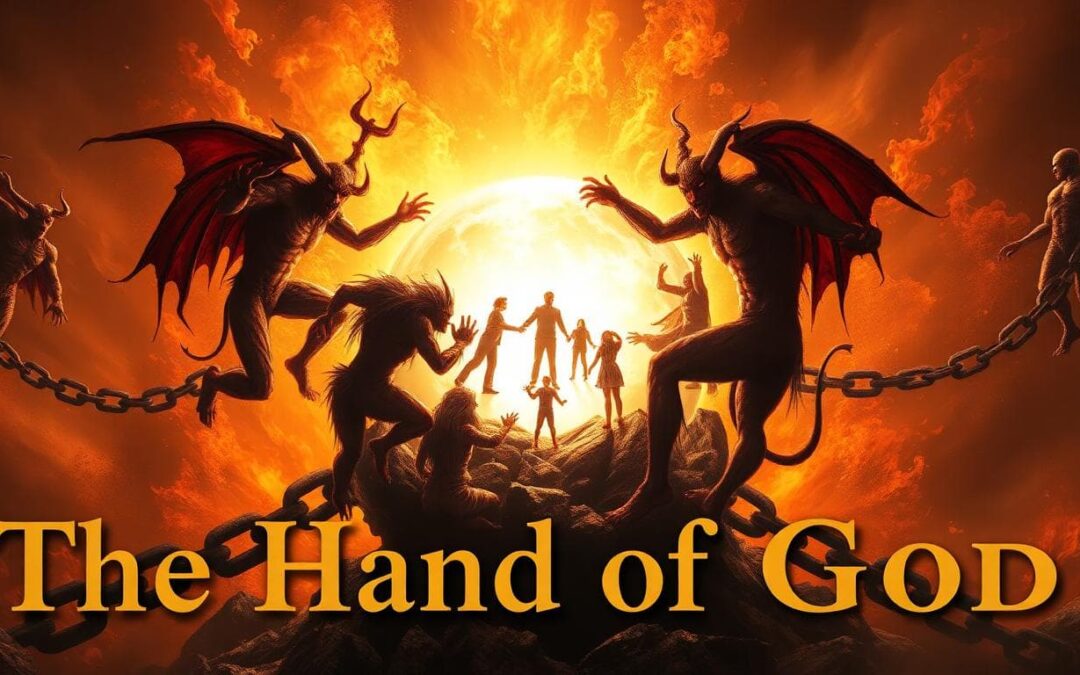
The Hand of God: Protection, Discipline, and Calling in a Broken World
Why does the Bible talk so often about the Hand of God, and why does that phrase still grab our hearts when life is messy, painful, or confusing?
If you have ever thought, “God, where are You in this?”, you are already touching this idea. The Hand of God is not a giant hand in the sky. It is picture language, a way to talk about God’s power, presence, and purpose at work in real time, in real lives, including yours.
In this article we will look at the original Hebrew and Greek words, trace the Hand of God through Scripture in both protection and discipline, and then talk about how to worship and listen when life hurts. Along the way we will see that the Hand of God does not only shield us. It also shapes us, redirects us, and pushes us into our calling with Jesus leading the way.
What the Hand of God Means in the Original Bible Languages
The Bible uses simple body words to help us talk about a God we cannot see. One of the most common is “hand.”
In Hebrew, the main word is yad. In Greek, the word is cheir. Both can mean a normal, human hand. But when the Bible talks about the Hand of God, it is using a picture for His power, authority, and active work in history.
If you want to look deeper into the Hebrew side, a helpful overview of yad is given in Hebrew Word of the Week – Yad, which shows how often this picture is tied to God’s might and care.
The Hebrew word “yad”: God’s hand as power, protection, and control
In the Old Testament, yad can mean control, power, or authority. To be in someone’s hand is to be under their control. When that someone is God, it is either very good news or very sobering news.
For example:
In Exodus 9:3, God warns Pharaoh that His hand will bring a plague on Egypt’s animals. Here, the Hand of God is judgment that breaks pride.
In Exodus 3 to 14, God brings Israel out of Egypt with a “mighty hand.” His yad tears down idols and lifts His people out of slavery.
In Ezra 7:6, the king gives Ezra everything he asks “because the hand of the Lord his God was on him.” Now the Hand of God means favor, open doors, and guidance.
So in Hebrew thought, the Hand of God can strike, or it can support. It can close a door, or it can open a sea. It is His power in motion. A more word-study style look at yad is found in the Strong’s Hebrew 3027 entry, which shows how wide the word’s use is across Scripture.
The Greek word “cheir”: the Hand of God in the New Testament church
In the New Testament, the Greek word cheir is used in the same picture way. In Luke 1:66, people look at John the Baptist and say, “What then is this child going to be?” Because “the hand of the Lord was with him.” God’s hand here marks a life set apart, guided, and backed by Heaven.
In Acts 11:21, as the Gospel spreads in Antioch, we read, “The hand of the Lord was with them, and a great number of people believed.” The Hand of God is not only about keeping believers safe. It is about bold mission, clear words, changed hearts, and supernatural help.
You can even see a link between the mighty “hand” of God in the Old Testament and the work of Jesus in the New. Some teachers draw this out in reflections like Yad: With a Mighty HAND…, where the focus is on how God’s saving power reaches its peak in Christ.
Right hand, mighty hand, outstretched hand: word pictures of God’s strength
The Bible adds color with phrases like “right hand,” “mighty hand,” and “outstretched hand.” These are not random.
The right hand of God points to authority and honor. Psalm 118 praises the Lord because “the right hand of the Lord does valiantly.” In Acts 7, Stephen sees Jesus standing at the right hand of God, a place of glory and shared rule.
A mighty hand speaks of sure victory. When Israel sings about God’s mighty hand, they are remembering the Red Sea, not a vague feeling.
An outstretched hand often shows God reaching into history, either to save or to strike. Isaiah 41 speaks of God upholding His people with His righteous right hand, a strong, steady grip when they feel small and weak.
These pictures are mercy for our limited minds. The Hand of God is God Himself, close enough to touch your story.
Where the Hand of God Shows Up in Scripture: Protection, Judgment, and Guidance
We will not list every verse that mentions the Hand of God. But we can follow some key paths that show what His hand does: rescue, judgment, guidance, and discipline.
The Hand of God in Exodus: rescue from human enemies and false gods
In Exodus, the Hand of God is loud. Pharaoh thinks he is in control. The gods of Egypt look strong. Israel is trapped under slave masters.
Then God stretches out His hand.
The plagues are not random disasters. They are a showdown with idols. Every plague exposes a false god. God’s “strong hand” breaks the grip of Egypt and proves that He alone rules heaven and earth. At the same time, His hand covers Israel. Same power, two different outcomes.
At the Red Sea, the people see this most clearly. The sea opens, Israel walks through, and the waters crash back over Pharaoh’s army. The Hand of God fights for His people when they cannot fight for themselves.
The Hand of God in Israel’s history: victory, warning, and discipline
After Exodus comes the land. In Joshua, the Hand of God gives victory over enemies that are stronger on paper. Walls fall, armies flee, and everyone knows it is not Israel’s skill, it is God’s hand.
In Judges, we see a pattern. When Israel trusts God, His hand gives them rest from their enemies. When they chase idols, the hand that once protected seems lifted, and foreign powers gain control. Then the people cry out, and God raises up a judge, and His hand rescues again.
David’s story holds both sides. The Hand of God gives David victory over Goliath, guidance in wilderness years, and success as king. Later, after David’s sin with Bathsheba and the murder of Uriah, trouble rises in his own house. God does not abandon David, but His hand allows painful fallout that humbles and refines him.
The Hand of God is never random. It answers faith, responds to obedience, and also responds to pride.
The Hand of God in the prophets and exile: lifted protection and hard lessons
In the prophets, the language gets sharper. God sends warnings through Isaiah, Jeremiah, Ezekiel, and others. The message is often the same: years of idol worship, injustice, and refusal to listen are about to bring judgment.
God allows Assyria and later Babylon to strike Israel and Judah. Cities burn. The temple falls. It looks like God’s hand has left them. In truth, His hand is still at work, but now in discipline. He lets their false supports fall so they can see what they have trusted instead of Him.
Yet the prophets also speak of hope. God promises to gather His people again, to plant them back in their land, to restore them by His hand. Even anger and exile are wrapped in a long plan of mercy.
The Hand of God in the Psalms: comfort, refuge, and honest questions
If you want to learn how to talk to God about His hand, read the Psalms.
In Psalm 63, David says, “Your right hand upholds me.” Here the Hand of God is comfort and strength in a dry land.
In Psalm 32, he speaks of God’s “heavy hand” on him when he kept silent about sin. That weight was conviction that pushed him toward confession and freedom.
The psalmists are honest when the Hand of God feels far. They say things like, “Why do You hide Your face?” or “How long, O Lord?” Yet they keep talking to Him. They do not walk away. They trust His heart even when they do not understand His timing.
The Hand of God in the life of Jesus and the early church
Jesus is the clearest picture of the Hand of God. His own hands touch lepers, lift the dead, break bread, and are finally nailed to a cross. In Him, God’s power and mercy move into our neighborhood.
After the resurrection, the New Testament says Jesus sits at the right hand of God. This means the same power that split seas and shook nations now flows through the risen Christ.
In Acts, the Hand of God shows up in miracles, bold preaching, and rapid growth. It also shows up in holy fear, like in the story of Ananias and Sapphira in Acts 5. God’s hand is on His people for mission, but He also guards the purity of His church.
The same Hand of God still backs the mission of Jesus today, even when opposition rises or culture shifts. If you want to learn more about how this plays out in modern ministry battles, you might find Spiritual Warfare Against the Church: 21st Century Battle Tactics helpful.
When God’s Hand of Protection Seems Lifted: Why It Happens and What Follows
This is where many of us wrestle. We read about rescue, but our own story feels like loss. Where is the Hand of God when tragedy hits, or when spiritual attack feels constant?
The Bible does not give shallow answers. It gives honest stories.
Examples in Scripture where God allows attack or loss for a greater purpose
Job’s story is the classic example. Satan wants to destroy him. God sets limits and allows deep testing. Job loses wealth, children, and health. His friends think the Hand of God has turned against him.
Click Our Ad to Support Us!
In truth, Job is held the whole time. The enemy is on a leash. In the end, Job knows God more deeply, his character is refined, and God restores him. The Hand of God allowed the storm, but never left the boat.
David lives through years of danger before he sits on the throne. The early church in Acts faces prison, beatings, and even martyrdom. Satan and demons are real, and they hate the work of God. Yet they cannot step beyond what God allows, and God keeps turning what they mean for harm into deeper faith and wider witness.
Why God sometimes lifts His hand: sin, pride, idols, and stubborn hearts
Sometimes the pain is not about persecution but about patterns. Israel’s long history shows this. When people cling to sin, ignore warnings, and build their lives on idols, God may lift part of His protective hand. He lets them taste the fruit of their choices.
The goal is not payback. The goal is wake-up. When we trust our own strength, our money, our leaders, or our feelings more than God, we are a bit like a child trying to stick scissors into an outlet. Love will sometimes let us feel the sting so we learn to fear what harms us.
What happens after His hand is lifted: discipline, repentance, and fresh mercy
God’s pattern with His people is consistent:
He warns.
They ignore.
He lifts some protection.
Painful things happen.
They cry out.
He restores.
You can see this in Judges over and over. You can see it in the exile and return. You can see it in your own life if you look back. Even the hard seasons can become altars where you say, “I met God again here.”
No matter how far you have gone, the Hand of God has not forgotten your name. In Christ, the way back is open through repentance and trust.
Heroes of Faith Under the Hand of God: Attacked, Tested, and Still Trusting
Hebrews 11 is like a hallway of stories, filled with people who walked under the Hand of God in all kinds of conditions. Some saw miracles. Some saw prison cells. All walked by faith.
Job: when the Hand of God feels heavy, yet God is still for us
Job speaks words many of us have thought in the dark. He complains, questions, and grieves. But he keeps talking to God. He refuses to curse Him.
At the end, God speaks, not with simple answers, but with a bigger view of Himself. Job’s respect deepens. His worship matures. The Hand of God that felt heavy is revealed as holy, wise, and very near.
David: protected, pursued, and prepared through many attacks
David is anointed as king while still a boy, then spends years running from Saul. He faces Goliath, hostile armies, betrayal, and family chaos.
His psalms show the inside of that journey. Fear and faith sit in the same song. He cries out, “How long?” and also says, “Your right hand upholds me.” The Hand of God protects David many times, but it also shapes him through pressure, sanding off pride and teaching him to be a shepherd-king.
Jesus and the apostles: spiritual warfare and the Hand of God in suffering
Jesus faces direct temptation from Satan, constant conflict with religious leaders, and finally the cross. Yet He keeps saying things like, “Into Your hands I commit My spirit.” He trusts the Father’s hand all the way through death and into resurrection.
In Acts, the apostles cast out demons, heal the sick, and also sit in jail cells. The Hand of God is over their preaching and over their pain. Being under that hand does not mean a pain-free life. It means a held life.
Hebrews 11: faith heroes who saw God’s hand even when they did not see rescue
Hebrews 11 splits into two kinds of stories. Some conquer kingdoms, shut the mouths of lions, and escape the sword. Others are tortured, sawn in two, and wander in deserts and caves. Both groups are under the same Hand of God.
Faith is not proven only when we get the ending we want. Faith is proven when we cling to God’s hand even when the story on earth feels unfinished.
How to Worship Under the Hand of God in Trials and Spiritual Attack
So what do we do in our own storms? How do we stay under the Hand of God when everything in us wants to run, numb out, or fight back in the flesh?
Bringing honest worship and lament when life hurts
The Bible gives you permission to lament. You can say, “God, this hurts. I do not understand,” and still be worshiping. What matters is that you bring your pain to Him, not away from Him.
Psalms of lament are a guide. They usually move from complaint, to request, to renewed trust. Honest words open space for the Hand of God to comfort, correct, and carry you. Bitter silence closes that space.
Standing firm against spiritual attack with God’s hand as our covering
Spiritual warfare is real, but you are not uncovered. Ephesians 6 talks about the armor of God: truth, righteousness, faith, salvation, the word of God, prayer. All of this is really about staying under God’s hand.
Some simple ways to stand:
Speak Scripture out loud when lies and fear hit.
Pray, even simple prayers, often.
Stay in honest community. Do not fight alone.
Confess sin quickly so the enemy has less ground.
Jesus has already won the core battle. The Hand of God holds you even when the fight feels loud and long.
Hearing God’s direction in the middle of pain and pressure
Many people say they heard God more clearly in their hardest seasons than in their calmest ones. Suffering slows us down. It strips away noise.
To hear God’s direction under pressure, lean into:
The Bible, which is His steady voice.
Prayer, not only talking but sitting in quiet.
Wise, Godly counsel that confirms or corrects what you sense.
The inner witness of the Holy Spirit, who aligns your heart with God’s will.
The Hand of God does not just block attacks. It points, redirects, and sometimes closes doors so you will walk through the right one.
The Hand of God as Calling: Pushing Us Out of Comfort to Advance His Kingdom
The Hand of God is not only about keeping you safe. It is also about moving you into God’s mission. Many of God’s people were pushed out of comfort so others could meet Him.
Biblical examples of God’s hand pushing people into new callings
Often we only see later that the pressure we hated was actually what moved us into the next step of our calling.
Living under the Hand of God today: trust, obedience, and mission
To live under the Hand of God today means you:
Trust His character when feelings swing.
Obey in the small, daily steps He shows you.
Stay available for His mission, not just your comfort.
The Hand of God is strongest in the center of His will, not in the center of your comfort zone. That may mean forgiving someone who hurt you, sharing Jesus with a neighbor, changing a job, or saying yes to something that scares you but has His fingerprints all over it.
Conclusion: Held, Shaped, and Sent by the Hand of God
From Genesis to Revelation, the Hand of God speaks of His power, presence, protection, judgment, and guidance at work in real people. Sometimes that hand shields. Sometimes it shakes. Sometimes it sends. But it is always shaped by His love and wisdom.
When you face trials, spiritual attack, or big decisions, you can choose to stay under that hand through faith in Jesus, honest worship, repentance, and simple obedience. You are not forgotten. You are held.
Here is a short prayer you can make your own:
“Father, thank You that Your hand is over my life. Where I have pulled away, draw me back. Where I am under attack, cover me. Where I am stuck in comfort, push me into Your will. Keep Your hand on me, and lead me into deeper trust and bolder Kingdom living with Jesus at the center. Amen.”
Related Posts
1 Truth: Blood of Jesus: God's Life in Sinless Flesh What if the very thing running through the veins of Jesus was not just human, but the Blood of Jesus holding the actual life of God Himself, poured out for us? That sounds huge, maybe even hard to take in at first, yet Scripture keeps pulling us back to this one thread: life is in the blood, sin corrupts human…
21 Century Spirituality According to God: What the Bible Says vs. World Beliefs and New Age What does it really mean to be spiritual? The word gets thrown around everywhere, but rarely with the kind of clarity or honesty God gives us in the Bible. Spirituality is not just a feeling or an idea—it has roots, a shape, actual words that God used in ancient times to tell us exactly what matters to Him. Through the…
Reprobate Mind: 5 Warning Signs and Hope for Change The Bible’s take on a reprobate mind isn’t just a warning or a piece of theology. It’s a wake-up call. “Reprobate mind” (from the Greek adokimos, meaning rejected or unapproved) describes what happens when people no longer care about God’s truth—they trade what’s holy for what feels good, grow numb to right and wrong, and God lets go. It’s mentioned…
Bible Prophecy / Bible Study / Devotional / Faith / Heart of Stone / SinPre-Born! gives free ultrasounds to women looking to abort their babies and 86% of those women choose to keep theirRead more...
Who Is the Helper in John 14:16? The Holy Spirit
Bible Study / Holy Spirit Scriptures / Spirit Of Truth / The Upper RoomPre-Born! gives free ultrasounds to women looking to abort their babies and 86% of those women choose to keep theirRead more...
John 14:26 Explained: The Holy Spirit as Teacher
Bible Study / Devotional / Holy Spirit Scriptures / Spirit Of TruthPre-Born! gives free ultrasounds to women looking to abort their babies and 86% of those women choose to keep theirRead more...
Popular
Seven Spirits of God Explained: Trinity Insights for Your Faith Journey – Isaiah 11:2
The Seven Spirits of God stand as one of the most profound and often misunderstood truths in Christian theology. Rooted deeply in Scripture, they aren’t seven separate entities but rather seven attributes of the one Holy Spirit—God revealing Himself in fullness. Isaiah 11:2 describes these [...]Read more...
The 9 Gifts of the Holy Spirit: Biblical Truths, Historical Evidence, and Today
The gifts of the Holy Spirit reveal the active power of God working in the lives of His people. They aren’t just distant historical records or fading Biblical accounts; they’re living because the Holy Spirit, He is living and He is God, and His transformative gifts are reaching people [...]Read more...
Tongues of Fire in Acts 2:3: Meaning, Biblical Significance and Holy Spirit Power
The phrase “tongues of fire” in Acts 2:3 sparks worldwide curiosity and spiritual wonder. It appears in Scripture to describe the Holy Spirit’s descent during Pentecost, when visible flames rested on the apostles, marking the time when God’s Spirit descended on earth, [...]Read more...
The Antichrist
The Apostate Church
The Rapture
Angels
Book of Daniel
Giants
Judgment
Prophecy
The Apostles
Bible Prophecy
Beware of Deception
Sin
Antichrists
Demon Possession
Healing
Millennial Reign
Redemption
The Gospels
The Holy Spirit
American Prophecy
Israel
Armageddon
Forgiveness
Intercession
Prayer
Revival
The Old Testament
The Tribulation
Faith
Kingdom Of God
Bible Interpretation
Free Will
Book Of Jude
Pride
The Afterlife
The Red Dragon
We use cookies so you can have a great experience on our website. View more
Cookies settings
Accept
Decline
Privacy & Cookie policy
Privacy & Cookies policy
Cookies list
Cookie name
Active
Who we are
Our website address is: https://theholyspirit.us.
Comments
When visitors leave comments on the site we collect the data shown in the comments form, and also the visitor’s IP address and browser user agent string to help spam detection.
An anonymized string created from your email address (also called a hash) may be provided to the Gravatar service to see if you are using it. The Gravatar service privacy policy is available here: https://automattic.com/privacy/. After approval of your comment, your profile picture is visible to the public in the context of your comment.
Media
If you upload images to the website, you should avoid uploading images with embedded location data (EXIF GPS) included. Visitors to the website can download and extract any location data from images on the website.
Cookies
If you leave a comment on our site you may opt-in to saving your name, email address and website in cookies. These are for your convenience so that you do not have to fill in your details again when you leave another comment. These cookies will last for one year.
If you visit our login page, we will set a temporary cookie to determine if your browser accepts cookies. This cookie contains no personal data and is discarded when you close your browser.
When you log in, we will also set up several cookies to save your login information and your screen display choices. Login cookies last for two days, and screen options cookies last for a year. If you select "Remember Me", your login will persist for two weeks. If you log out of your account, the login cookies will be removed.
If you edit or publish an article, an additional cookie will be saved in your browser. This cookie includes no personal data and simply indicates the post ID of the article you just edited. It expires after 1 day.
Embedded content from other websites
Articles on this site may include embedded content (e.g. videos, images, articles, etc.). Embedded content from other websites behaves in the exact same way as if the visitor has visited the other website.
These websites may collect data about you, use cookies, embed additional third-party tracking, and monitor your interaction with that embedded content, including tracking your interaction with the embedded content if you have an account and are logged in to that website.
Who we share your data with
If you request a password reset, your IP address will be included in the reset email.
How long we retain your data
If you leave a comment, the comment and its metadata are retained indefinitely. This is so we can recognize and approve any follow-up comments automatically instead of holding them in a moderation queue.
For users that register on our website (if any), we also store the personal information they provide in their user profile. All users can see, edit, or delete their personal information at any time (except they cannot change their username). Website administrators can also see and edit that information.
What rights you have over your data
If you have an account on this site, or have left comments, you can request to receive an exported file of the personal data we hold about you, including any data you have provided to us. You can also request that we erase any personal data we hold about you. This does not include any data we are obliged to keep for administrative, legal, or security purposes.
Where your data is sent
Visitor comments may be checked through an automated spam detection service.