What God Really Says About Israel, The Church, and the Promise to Abraham
God made a real covenant about land, people, and blessing. It was not a vague idea. It was about a family, a nation, and a place on the map. In that covenant, Abraham promised Israel to his descendants because God told him to, not because he dreamed it up on his own.
Many believers today feel confused. Is there a “spiritual Israel”? Did the Church replace Israel? Are all Christians Israel now? What about the Millennial Reign of Jesus in Jerusalem?
Watch and share our video of this article to help us spread the Word of God. Be kind and subscribe to our YouTube Channel. Thank You!
In this study, we will look at the original language and context, follow the storyline from Abraham, Isaac, and Jacob, talk about Hagar and Ishmael, and see how Jesus will rule from Israel in His future Kingdom. Along the way, we will see why Abraham promised Israel to his physical descendants, and how believers in Jesus become “Jews inwardly” without replacing the nation of Israel in God’s eyes.
What Does “Israel” Mean in the Bible’s Original Language?
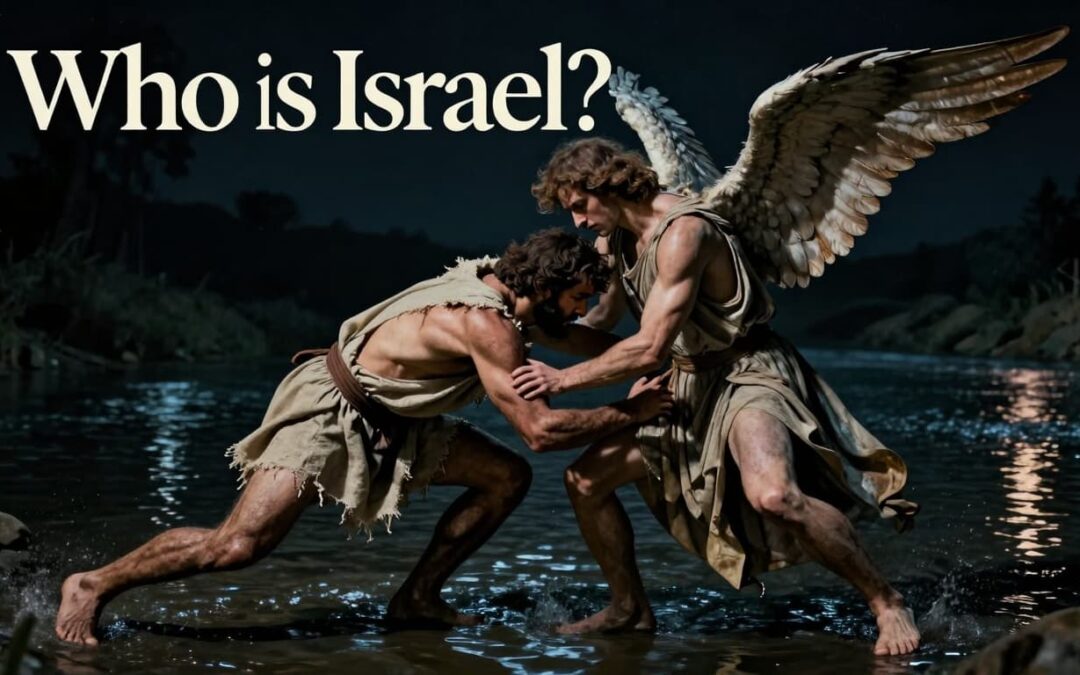
Jacob wrestling with the angel, the night God gives him the name “Israel.”
In Hebrew, the word “Israel” is Yisra’el. It comes from the history in Genesis 32, where Jacob wrestles with a mysterious Man through the night. At the end of the struggle, God says:
“You shall no longer be called Jacob, but Israel, for you have struggled with God and with men, and have prevailed” (Genesis 32:28).
The name “Israel” carries the idea of “he struggles with God” or “God rules” or “one who wrestles with God and prevails.”
At first, Israel is one man, Jacob. Then it becomes his family. Then it becomes a nation that lives in the land that Abraham promised Israel would inherit by God’s word.
So from the start:
Israel is a real person.
Israel becomes a real family.
Israel grows into a real nation in a real land.
Israel is not first a symbol or a religious idea. It is a name, a bloodline, and a people on the earth.
From Jacob the man to Israel the nation
God begins this line with Abraham. He calls Abraham out of his homeland and promises him land, descendants, and blessing. Then God makes it clear that the covenant will go through:
Abraham
Isaac (the son of promise)
Jacob (whose name becomes Israel)
Jacob has twelve sons. Those twelve sons become the twelve tribes of Israel. When you read about the tribes in the Old Testament, you are reading about real extended families that came from one man.
So when Abraham promised Israel to his children, he was speaking about a specific land and a specific family line that God Himself chose.
This family becomes the center of the Bible’s history of covenant, law, prophets, and finally, Jesus the Messiah. The history of salvation is tied to this people and this land.
Why the meaning of Israel matters for understanding prophecy
Since Israel begins as a real person and a real nation, we should be slow to turn it into only a symbol. Some teachings today speak of “spiritual Israel” in a way that cancels God’s promises to physical Israel, the descendants of Abraham, Isaac, and Jacob.
If we forget the original meaning, we can twist prophecy. We can end up saying that God changed His mind about the land, the nation, and His future Kingdom.
So as we go on, keep this simple truth in mind: Israel in the Bible is first Jacob, his children, and their land. Any spiritual meaning must grow from that, not erase it.
How God Chose Abraham, Isaac, and Jacob (Not Hagar and Ishmael)
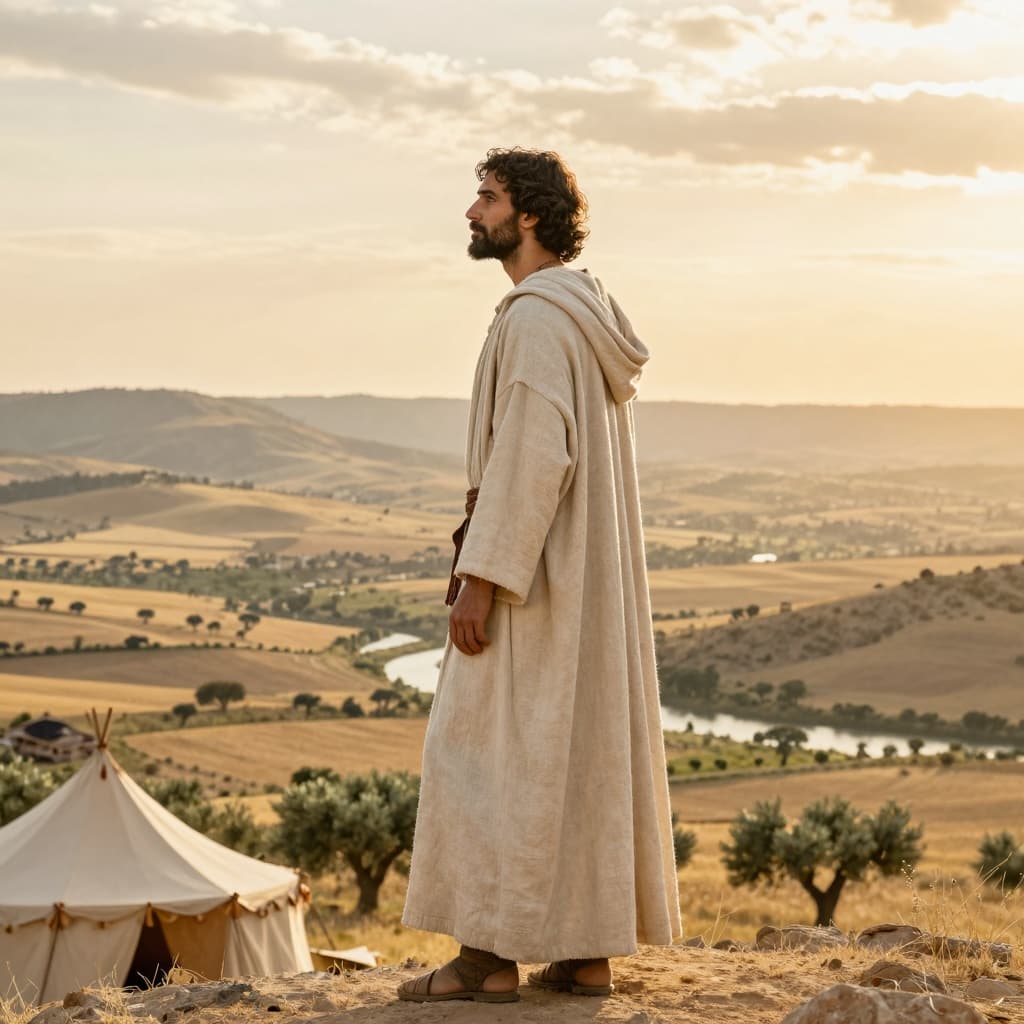
Abraham looking over the land he was promised.
The Bible gives a clear covenant line: Abraham, then Isaac, then Jacob. This is not random. It is God’s choice.
Abraham and Sarah were old and childless. God promised them a son and a nation. God promised a land that Abraham promised Israel would one day fully possess. The problem came when Abraham and Sarah got tired of waiting.
They brought in Hagar, Sarah’s servant. Abraham slept with Hagar, and Ishmael was born. God cared for Ishmael, but Ishmael was not the child of the covenant line for Israel.
The covenant promises God gave Abraham
Here are the main promises God gave Abraham:
Land: God promised Abraham a land, Canaan, that his physical descendants would own forever. You can see this clearly in Genesis 17:8. God promised Abraham Israel as a real land, not only a picture of Heaven.
Nation: God promised to make Abraham into a great nation. This nation would come through his own body and through Sarah, not a backup plan.
Blessing for all nations: God promised that in Abraham’s “seed” all nations would be blessed. The New Testament shows that this seed is Christ. Every time you read the Gospel history, you are seeing how Abraham promised Israel’s blessing to the world through Jesus.
These are not soft wishes. They are covenant promises. If you want more detail on this, a helpful overview is in What is the Abrahamic Covenant?.
Why the covenant goes through Isaac and Jacob, not Ishmael
Genesis tells the history in honest, simple terms. Abraham and Sarah get impatient. Sarah gives Hagar to Abraham. Ishmael is born. Pain and jealousy fill the home.
Then God speaks. He tells Abraham that He will bless Ishmael and make him a nation, but His covenant will pass through Isaac, the miracle son born from Sarah’s own body. Sarah was already past menopause and was physically unable to have children. Isaac was truly a miracle baby only God could bring into this earth.
Later, God passes the same covenant to Jacob, not Esau. Once again, God chooses the line that will carry His promise.
Ishmael is a picture of human effort trying to make God’s Word happen early and in our own way. Isaac is a picture of God’s promise coming by grace and power, in God’s time.
In the same way, when Abraham promised Israel to Isaac and Jacob, he was agreeing with God’s choice, not trying to rewrite it.
Hagar, Ishmael, and the danger of forcing prophecy
Galatians 4 uses Hagar and Sarah as a picture. Hagar points to the flesh, human effort, and bondage. Sarah points to promise, grace, and freedom.
Ishmael as a person is not a mistake. God loves him. The mistake was trying to push prophecy instead of trusting God’s will and timing.
Something similar happens when teachers say the Church is the only “Israel” now and that physical Israel has no future. That idea tries to force God’s plan into our own system. It treats the land and the nation as if God never really meant it.
When we talk about a “spiritual Israel” that erases physical Israel, we are close to doing what Abraham and Sarah did with Hagar. We reach for our own solution instead of waiting for God to finish what He started when Abraham promised Israel to his physical children.
Is There a Spiritual Israel and Are All Believers Jews in God’s Eyes?
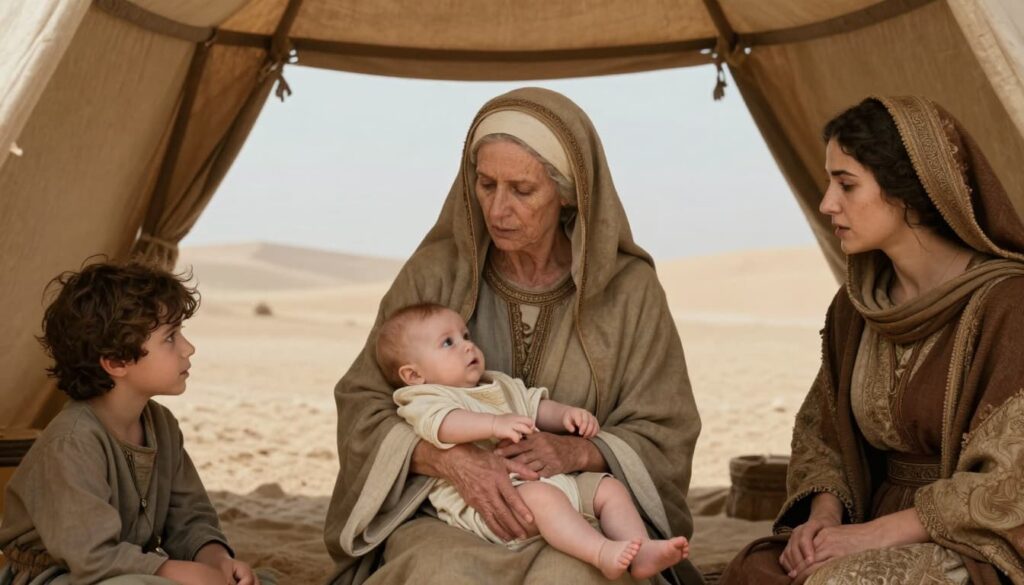
Sarah, Hagar, Isaac, and Ishmael, showing promise versus human effort.
The New Testament does speak about something deeper than outward birth. It talks about “circumcision of the heart” and people who are “children of Abraham” by faith.
So is there a sense in which believers in Jesus are “Jews in God’s eyes”? Yes, but we need to be careful with what that means. The Bible honors two truths at the same time:
There is physical Israel, the nation that comes from Abraham, Isaac, and Jacob.
There are spiritual children of Abraham, all who trust in Jesus.
These are connected, but they are not the same thing.
What Paul means by a “Jew inwardly” (Romans 2:28–29)
In Romans 2:28–29, Paul writes that a person is not a true Jew only by outward marks, like physical circumcision. He says a real Jew is one inwardly, whose heart is marked by the Holy Spirit.
Paul is not erasing the Jewish people. He is saying that God’s praise goes to those whose hearts are changed, whether they are born Jewish or Gentile.
When you trust Jesus, God cuts away the hardness of your heart. In that sense, you become what Paul calls a “Jew inwardly.” You share in the same covenant mercy that God showed to Abraham.
But Scripture never says that every believer becomes national Israel. The Bible does not rewrite the maps of Genesis and Joshua. When Abraham promised Israel to his children, it was about land and nation, not only inner faith.
Children of Abraham by faith but not replacements for Israel
Galatians 3 and Romans 4 explain that those who believe in Jesus are “children of Abraham” because they share his faith. They receive the blessing promised “in your seed all the nations shall be blessed.”
This blessing flows through Abraham, Isaac, and Jacob. Jesus comes from this family line. When you cling to Jesus, you connect to that line by faith.
So you might say, in a spiritual sense, that when Abraham promised Israel’s blessing to his sons, he was also looking far ahead to you if you are in Christ. You drink from the same stream of promise.
But that does not mean your church is now called “Israel” in God’s prophetic program. The New Testament never takes the land promises and hands them to the Church. It gives the blessing in Christ to all nations, while the land and nation promises still belong to the descendants of Abraham through Isaac and Jacob.
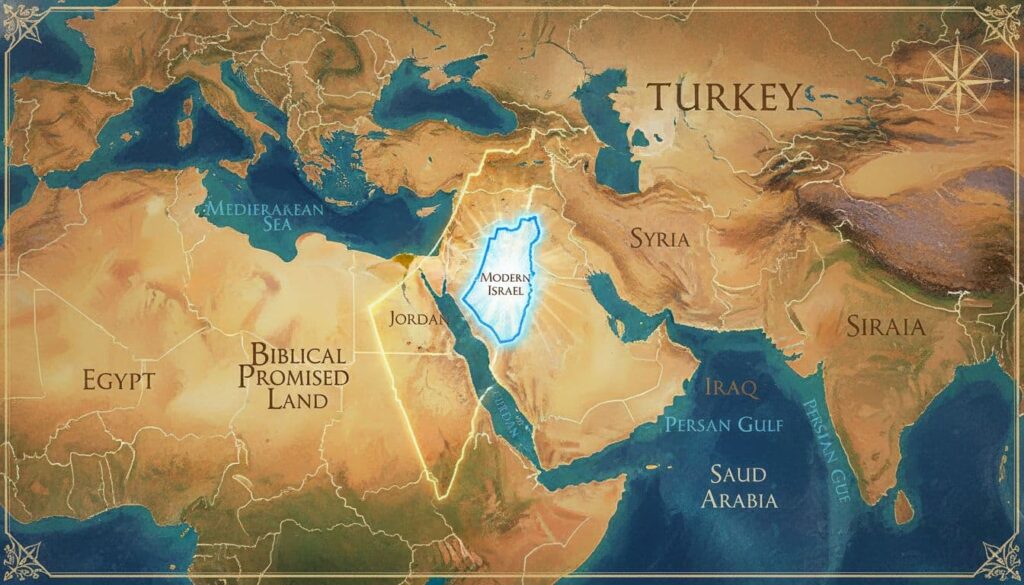
Today Israel only possesses a fraction of the land God promised them.
Why calling the Church “Israel” can become another forced prophecy
When teachers say, “The Church is Israel now, and the Jewish people have no separate future in God’s plan,” they often skip over many Old Testament promises that speak of land, city, and restored nation. They also run into Romans 11, where Paul still talks about Israel as a people God will restore.
This kind of teaching can be another way of forcing prophecy. It reshapes the history to fit our own system, like Abraham and Sarah reshaped God’s promise when they turned to Hagar, which eventually led to Islam, a religion God later prophesied to John in Revelation would bring about the apostate church. Would that prophecy have ever existed had Abraham and Sarah not tried to force prophecy?
A better way is to keep both truths:
All who trust Jesus are part of God’s covenant family and can be called children of Abraham by faith, “Jews inwardly” whose hearts are marked by the Holy Spirit.
God still has a special calling for national Israel and will finish what He began when Abraham promised Israel’s land and future to his own physical descendants.
God’s Promises to Israel and Why They Still Matter Today
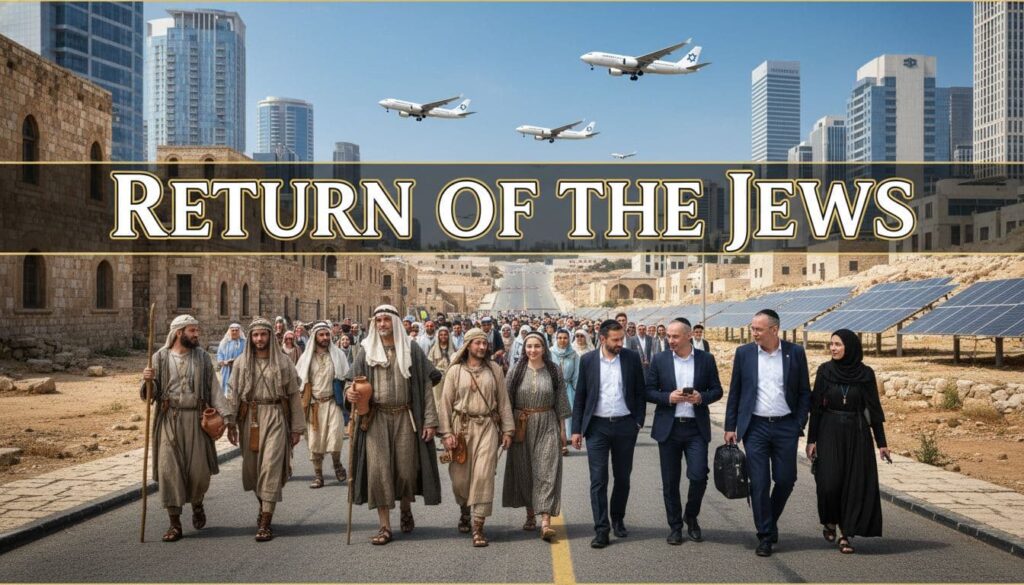
The promises to Israel did not expire in the first century. God’s covenant with Abraham stretches across history, through exile, return, the fall of Jerusalem in 70 AD, the long years of scattering, and the modern return of the Jewish people to their ancient homeland.
Land, people, and blessing: the core promises to Israel
At the heart of God’s promise to Abraham are three simple things:
Land: From the river of Egypt to the Euphrates, focused on Canaan.
People: Descendants like the stars of heaven.
Blessing: All nations blessed through Abraham’s seed.
These promises are repeated to Abraham, Isaac, and Jacob with words like “everlasting covenant” and “forever.” When Abraham promised Israel to his sons, he was passing on what God had sworn to him.
If God could break those promises, His own character would be at risk. The Bible never opens that door. God ties His own name to this covenant. You can see how seriously some scholars take this in The Everlasting Covenant and in a study of the borders in Original Land Promised to Abraham.
Why God’s promises to Israel are important for Christians now
For Christians, these promises are a reminder that God keeps His word over thousands of years. He does not forget what He promised when Abraham promised Israel to his family.
The history of Israel also shows how God weaves mercy and judgment together. The fall of Jerusalem in 70 AD, the scattering, and the modern return all sit inside His plan.
Watching Israel’s story today can help us stay awake spiritually. It reminds us that God is moving history toward the return of Jesus and the Kingdom that will center on Jerusalem.
These promises should shape our hearts:
We honor Israel’s role in God’s plan.
We pray for Jewish people to come to faith in Jesus.
We walk in love toward all nations, knowing the same Jesus died for every tribe and tongue.
Israel, Jesus, and the Millennial Reign: What the Bible Says About the Future
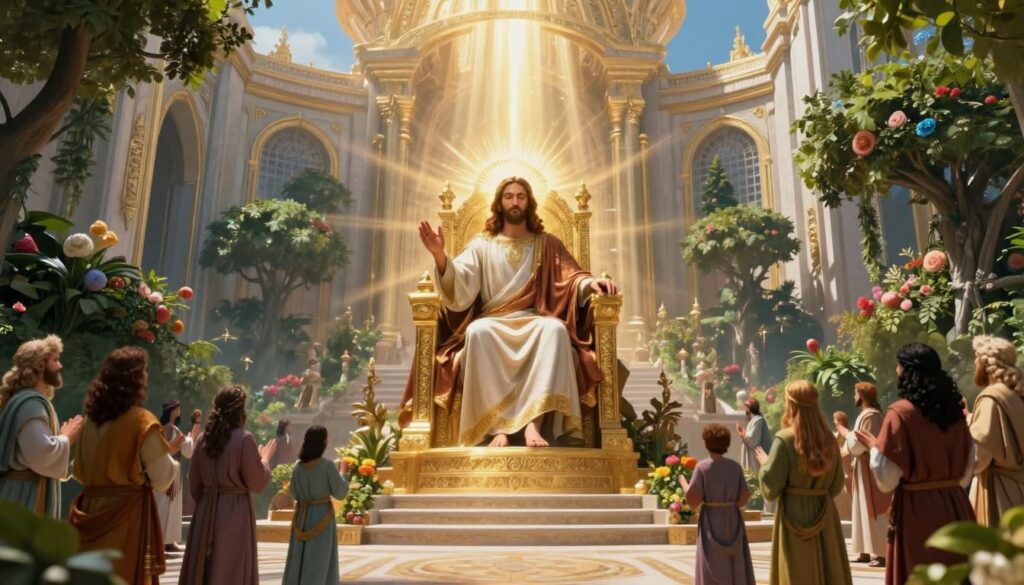
Jesus reigning from Jerusalem in the Millennial Kingdom.
In that future, Israel will be the home base of King Jesus. The land that Abraham promised Israel will finally rest under the feet of the King who came from Abraham’s line.
Jesus ruling from Jerusalem in the Millennial Kingdom
Zechariah 14 speaks of the Lord standing on the Mount of Olives. The nations gather against Jerusalem, the Lord fights for His people, and then “the Lord shall be King over all the earth.”
Ezekiel 40–48 shows a restored temple, a renewed land, and tribes of Israel placed in their portions. Revelation 20 speaks of a thousand-year reign where Christ rules and His people reign with Him.
This is not a foggy idea. It is a future where:
Jesus returns in glory.
He rules from Jerusalem.
Israel is restored and healed.
The land promise to Abraham’s physical descendants is honored in history.
In that Kingdom, the promise Abraham made when Abraham promised Israel to his children will reach its fullest earthly expression.
How the Church and Israel share in the Kingdom without replacing each other
Olive tree with natural and grafted branches, a picture from Romans 11.
Romans 11 gives us a picture of an olive tree. Israel is the natural tree. Some branches are broken off because of unbelief. Gentile believers are like wild branches that are grafted in.
Two key points stand out:
The natural branches are not thrown away forever. God is able to graft them in again.
The wild branches do not become the whole tree. They share in the root.
In the Millennial Kingdom:
Believers from every nation will reign with Christ.
Israel will still be Israel, a restored nation with a special calling.
The Church will be the Bride from all nations, joined to her Jewish Messiah.
All who trust in Jesus are counted as part of God’s covenant family, “Jews inwardly” with hearts marked by the Holy Spirit. But they are not all turned into national Israel. Israel remains Israel. The Church includes all who belong to Christ.
If you want to think more about how the Kingdom of Heaven works now and in the future, take a look at How to enter the Kingdom of Heaven.
Conclusion: Trusting the God Who Keeps His Word
We have seen that Israel in the Bible is first a real man and a real nation, not just a symbol. The blessing flows through Abraham, Isaac, and Jacob, not through Hagar and Ishmael, because God honors His own plan, not our shortcuts.
All who trust in Jesus are counted as children of Abraham and can be called “Jews inwardly,” but they are not replacements for the physical nation of Israel. The promises of land and nation still belong to the descendants of Abraham through Isaac and Jacob, just as Abraham promised Israel to them by God’s command.
One day, Jesus will rule from Jerusalem in His Kingdom. Israel will be His earthly home center in the Millennial Reign, and the Church from all nations will share in His glory.
So let your heart rest in this: God keeps His Word. Pray for Israel. Pray for the nations. Most of all, put your trust in Jesus, the promised Seed of Abraham, so you can share in the blessing that began when Abraham promised Israel’s hope to his children by faith.
Related Posts
1 Truth: Blood of Jesus: God's Life in Sinless Flesh What if the very thing running through the veins of Jesus was not just human, but the Blood of Jesus holding the actual life of God Himself, poured out for us? That sounds huge, maybe even hard to take in at first, yet Scripture keeps pulling us back to this one thread: life is in the blood, sin corrupts human…
Reprobate Mind: 5 Warning Signs and Hope for Change The Bible’s take on a reprobate mind isn’t just a warning or a piece of theology. It’s a wake-up call. “Reprobate mind” (from the Greek adokimos, meaning rejected or unapproved) describes what happens when people no longer care about God’s truth—they trade what’s holy for what feels good, grow numb to right and wrong, and God lets go. It’s mentioned…
Baal and False Worship Exposed 1 Kings 18: A Bold Wake-Up Call If you read the Bible with open eyes, Baal shows up like a shadow behind so many of Israel’s worst moments. He is more than an ancient statue. He represents a way of living that wants blessing, rain, sex, and power, but does not want the true God.
Praying in the Holy Spirit in Jude 20, Explained Simply
Bible Study / Devotional / Discernment / Faith / Holy Spirit Scriptures / Humility / Led by the Spirit / Speaking In TonguesPre-Born! gives free ultrasounds to women looking to abort their babies and 86% of those women choose to keep theirRead more...
Walk in the Spirit: Galatians 5:16 in Daily Life
Bible Study / Devotional / Fruits of the Holy Spirit / Holy Spirit Scriptures / Led by the Spirit / SinPre-Born! gives free ultrasounds to women looking to abort their babies and 86% of those women choose to keep theirRead more...
Filled With the Spirit, Ephesians 5:18 for Daily Life
Bible Study / Devotional / Holy Spirit Power / Holy Spirit Scriptures / Led by the SpiritPre-Born! gives free ultrasounds to women looking to abort their babies and 86% of those women choose to keep theirRead more...
Popular
Seven Spirits of God Explained: Trinity Insights for Your Faith Journey – Isaiah 11:2
The Seven Spirits of God stand as one of the most profound and often misunderstood truths in Christian theology. Rooted deeply in Scripture, they aren’t seven separate entities but rather seven attributes of the one Holy Spirit—God revealing Himself in fullness. Isaiah 11:2 describes these [...]Read more...
The 9 Gifts of the Holy Spirit: Biblical Truths, Historical Evidence, and Today
The gifts of the Holy Spirit reveal the active power of God working in the lives of His people. They aren’t just distant historical records or fading Biblical accounts; they’re living because the Holy Spirit, He is living and He is God, and His transformative gifts are reaching people [...]Read more...
Tongues of Fire in Acts 2:3: Meaning, Biblical Significance and Holy Spirit Power
The phrase “tongues of fire” in Acts 2:3 sparks worldwide curiosity and spiritual wonder. It appears in Scripture to describe the Holy Spirit’s descent during Pentecost, when visible flames rested on the apostles, marking the time when God’s Spirit descended on earth, [...]Read more...
The Antichrist
The Apostate Church
The Rapture
Angels
Book of Daniel
Giants
Judgment
Prophecy
The Apostles
Bible Prophecy
Beware of Deception
Sin
Antichrists
Demon Possession
Healing
Millennial Reign
Redemption
The Gospels
The Holy Spirit
American Prophecy
Israel
Armageddon
Forgiveness
Intercession
Prayer
Revival
The Old Testament
The Tribulation
Faith
Kingdom Of God
Bible Interpretation
Free Will
Book Of Jude
Pride
The Afterlife
The Red Dragon
We use cookies so you can have a great experience on our website. View more
Cookies settings
Accept
Decline
Privacy & Cookie policy
Privacy & Cookies policy
Cookies list
Cookie name
Active
Who we are
Our website address is: https://theholyspirit.us.
Comments
When visitors leave comments on the site we collect the data shown in the comments form, and also the visitor’s IP address and browser user agent string to help spam detection.
An anonymized string created from your email address (also called a hash) may be provided to the Gravatar service to see if you are using it. The Gravatar service privacy policy is available here: https://automattic.com/privacy/. After approval of your comment, your profile picture is visible to the public in the context of your comment.
Media
If you upload images to the website, you should avoid uploading images with embedded location data (EXIF GPS) included. Visitors to the website can download and extract any location data from images on the website.
Cookies
If you leave a comment on our site you may opt-in to saving your name, email address and website in cookies. These are for your convenience so that you do not have to fill in your details again when you leave another comment. These cookies will last for one year.
If you visit our login page, we will set a temporary cookie to determine if your browser accepts cookies. This cookie contains no personal data and is discarded when you close your browser.
When you log in, we will also set up several cookies to save your login information and your screen display choices. Login cookies last for two days, and screen options cookies last for a year. If you select "Remember Me", your login will persist for two weeks. If you log out of your account, the login cookies will be removed.
If you edit or publish an article, an additional cookie will be saved in your browser. This cookie includes no personal data and simply indicates the post ID of the article you just edited. It expires after 1 day.
Embedded content from other websites
Articles on this site may include embedded content (e.g. videos, images, articles, etc.). Embedded content from other websites behaves in the exact same way as if the visitor has visited the other website.
These websites may collect data about you, use cookies, embed additional third-party tracking, and monitor your interaction with that embedded content, including tracking your interaction with the embedded content if you have an account and are logged in to that website.
Who we share your data with
If you request a password reset, your IP address will be included in the reset email.
How long we retain your data
If you leave a comment, the comment and its metadata are retained indefinitely. This is so we can recognize and approve any follow-up comments automatically instead of holding them in a moderation queue.
For users that register on our website (if any), we also store the personal information they provide in their user profile. All users can see, edit, or delete their personal information at any time (except they cannot change their username). Website administrators can also see and edit that information.
What rights you have over your data
If you have an account on this site, or have left comments, you can request to receive an exported file of the personal data we hold about you, including any data you have provided to us. You can also request that we erase any personal data we hold about you. This does not include any data we are obliged to keep for administrative, legal, or security purposes.
Where your data is sent
Visitor comments may be checked through an automated spam detection service.