Matthew 7:21-23 Explained (Original Language, “Lord, Lord,” and Why Being Religious Isn’t Knowing Jesus)
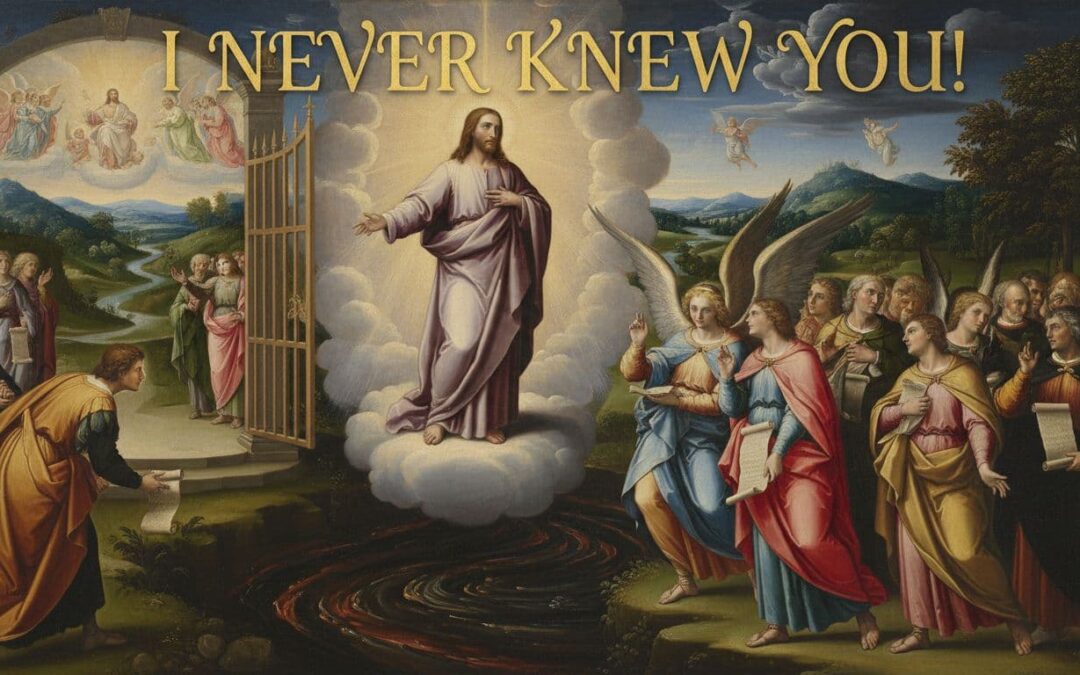
Matthew 7:21-23 is one of Jesus’ most sobering warnings, because the people He speaks to aren’t atheists. They’re religious. They pray, preach, and talk like insiders. Some even point to miracles.
And Jesus says, “I never knew you.”
That line should stop us in our tracks. It forces a hard question: are we just doing God stuff, or are we actually living with God? In this article, we’re going to walk through Matthew 7:21-23 in its context, look at key Greek words like “Lord,” “knew,” and “lawlessness,” and connect it to the Father’s will, the new birth (John 3), Jesus as the image of God (Colossians 1:15), and the new covenant promise of God’s law written on our hearts (Jeremiah 31:33).
Watch and share our video of this article to help us spread the Word of God. Be kind and subscribe to our YouTube Channel. Thank You!
Matthew 7:21-23 in context, why religious words and works can miss Jesus
Matthew 7:21-23 sits near the end of the Sermon on the Mount, right where Jesus stacks warning after warning. Narrow gate versus wide gate. True prophets versus false prophets. Good trees versus bad trees. Rock foundation versus sand.
So the point isn’t random. Jesus is drawing a bright line between two kinds of people who may look similar on the outside: religious talkers and real disciples.
He says:
“Not everyone who says to Me, ‘Lord, Lord,’ will enter the Kingdom of Heaven…”
“…but the one who does the will of My Father who is in Heaven.”
That contrast matters. Jesus isn’t saying works don’t matter. He’s saying the wrong kind of works don’t matter, the kind that can exist without surrender, without obedience, without love.
In other words, we can be religious and still be totally foreign to Jesus.
Key phrases in the original language: “Lord, Lord,” “do,” “will,” “I never knew you,” and “lawlessness”
Let’s put a few key words in plain English. We don’t need to be scholars to get Jesus’ meaning, but the original language sharpens the warning.
“Lord” (Greek: kyrios) Kyrios can mean “sir,” but in Jewish Scripture it also functions as the standard Greek way to refer to Israel’s God, because the divine name (YHWH) was treated with such reverence it wasn’t spoken aloud. Context decides how heavy the title is, and here it’s clearly heavy. They’re not casually saying, “Hey sir.” They’re appealing to Jesus as the Ultimate Authority, Yahweh.
“Do” (Greek: poieō) This is action, not vibes. Not talk. Not claims. Jesus points to actual obedience, lived out.
“Will” (Greek: thelēma) This means desire, purpose, what someone wants done. Jesus anchors it in “My Father who is in Heaven,” which means the will isn’t self-defined. We don’t get to invent it.
“Knew” (Greek: ginōskō) When Jesus says, “I never knew you,” He’s not saying, “I never knew facts about you.” This word can carry relational weight. In Scripture, to “know” often points to covenant closeness, recognition, belonging. The chilling part is the word “never.” Not “I knew you once.” Not “you drifted.” He says there was no real relationship at all.
“Lawlessness” (Greek: anomia) Jesus calls them “workers of lawlessness.” That sounds strange, since they were doing “ministry” things. But anomia is life without God’s ways, even if God’s name is in our mouth. It’s possible to look religious while living like we’re self-ruled.
What Jesus is condemning: practicing religion without a real relationship
Notice what the people say in Matthew 7:22. They don’t say, “Lord, we trusted You.” They say:
“Did we not prophesy…”
“cast out demons…”
“do many mighty works…”
That’s a resume. It’s religious performance language, even if the works were public and dramatic.
Jesus’ answer is personal: “I never knew you.” He’s naming the real issue, they used His name, but they didn’t belong to Him.
Jesus didn’t talk about hearing Him as a vague religious vibe, He framed it as the normal pattern of belonging: “My sheep hear my voice, and I know them, and they follow me” (John 10:27), so when we’re truly His, we recognize Him and we move toward Him.
In that same Shepherd picture, hearing isn’t just catching sound, it’s recognition and trust, like sheep who know their shepherd’s call and won’t chase a stranger’s religious noise (John 10:4-5). That’s why Jesus can say, “Whoever is of God hears the words of God” (John 8:47), because the issue isn’t religious intelligence, it’s spiritual family likeness, we hear because we’re His.
And notice the order Jesus gives, He knows His people, then they hear, then they follow, which keeps our religious pride out of it; we’re responding to His initiative, not proving our religious worth.
Jesus also ties this listening to love and obedience, “If anyone loves me, he will keep my word” (John 14:23-24), so our response isn’t hype, it’s a life that starts lining up with what He said. When we hear His voice by the power of the Holy Spirit, in Scripture, through faithful preaching, or through a conviction that matches His words, we don’t treat it like religious background music, we know it is the Shepherd calling our name.
Even our repentance fits here, because following means we turn from the voice of sin and self and walk behind Him, step by step. That’s why Jesus can say He came so His sheep have life (John 10:10), because His voice doesn’t just inform our minds, it carries His life to our hearts.
And for a clear summary of Jesus’s point in John 10:27, Got Questions on “my sheep hear my voice” lays out how hearing and following stay together in real faith. So when we say we belong to Jesus, we’re saying something faithful and concrete, we hear Him, we’re known by Him, and we actually follow where He leads, even when our comfort gets challenged.
A simple heart-check we can use (not as a new law, but as a mirror):
Knowing Jesus: do we talk with Him, not just about Him?
Trusting Jesus: are we leaning our weight on Him, not on our record?
Following Jesus: are we obeying when it costs us?
Matching confession with life: does our private life agree with our public language?
This is where religious life can get scary. It can train us to sound close to God while staying far away from Him.
What is the will of the Father, and how Jesus came to show us the Father
Jesus says the one who enters the Kingdom of Heaven is the one who “does the will of My Father.” So what is that will?
It’s bigger than a checklist, but it’s not vague. The Sermon on the Mount itself describes it: not just external rule-keeping, but inner transformation, real fruit, real love, real obedience.
Years ago, God gave me a prophetic vision I won't go into much detail about yet, and this prophetic vision set me on the path I am on today. Long story short, I have been a believer as long as I can remember but world circumstances and a lack of education about God set me on a much different path than God had planned for me.
I was religious most of my life, but I lacked a relationship with God. In this prophetic vision, I was literally with Jesus on the outskirts of the Third Heaven. I didn't know anything about any of that, but research on this vision over the years has made me realize where I was at with Him.
Anyway, I never did the will of the Father, mainly due to a lack of education regarding my religious faith I had at that time, which is one reason why I desire to teach other believers the truth about God and His ways. The point I am making here is, in the prophetic vision Jesus gave me, I realized in Heaven everyone does the will of the Father automatically. The choice to do His will is made while we are alive as humans on earth, that is the point.
When Jesus said, "Your kingdom come. Your will be done on earth as it is in Heaven," (Matthew 6:10) Jesus was speaking quite literally. His will is done automatically in Heaven by those who chose to do His will during their trials before Heaven. There are many great interpretations of this verse about the Millennial Reign and many of those interpretation scratch the surface of what Jesus meant. This article of ours on the Millennial Reign really breaks it down.
And we can’t separate the Father’s will from the Son, because the Son is how the Father makes Himself known. If we claim we love God but dismiss Jesus, we’ve invented a religious idea of God that Jesus didn’t teach.
The Father’s will is more than religious activity, it is trust, obedience, and heart-level righteousness
God’s will isn’t “stay busy.” It’s not “be impressive.” It’s not “collect spiritual stories.”
In the Sermon on the Mount, God’s will looks like:
Obedience doesn’t buy salvation, but it does reveal who we trust. A religious life can mimic obedience for a season, but it can’t produce the fruit of surrender without the Holy Spirit changing us.
Click Our Ad to Support Us!
Jesus shows us what the Father is like: the visible picture of the invisible God
When we look at Jesus, we aren’t just getting good teaching. We’re seeing God’s heart in human form.
That’s why the New Testament can say things like “He who has seen Me has seen the Father” (John 14:9). Jesus isn’t a mask God wears. He’s the eternal Son revealing the Father truly.
So Matthew 7 hits even harder: if we don’t really know Jesus, we don’t really know the Father’s will either. We may be religious, but we’re guessing.
Colossians 1:15 explained, “firstborn over all creation” and why it does not mean Jesus was created
Colossians 1:15 says Jesus “is the image of the invisible God, the firstborn of all creation.” That phrase “firstborn” has confused a lot of people, and it’s been used to argue Jesus is a created being.
But the context won’t allow that reading.
Right after “firstborn,” Paul says, “For by Him all things were created… all things were created through Him and for Him. And He is before all things…” (Colossians 1:16-17). If all things were created through Him, then He’s not part of the “created things” category.
What “firstborn” means in the Bible: rank, inheritance, and preeminence
The Greek word for firstborn is prototokos. It can mean first in time, but it often means first in status.
In the Bible, “firstborn” is tied to inheritance rights and family authority. It’s a leadership word. Sometimes Scripture even uses “firstborn” for someone who wasn’t literally born first, because the point is rank.
A clear example is Psalm 89:27, where God says of David, “I will make him the firstborn, the highest of the kings of the earth.” David wasn’t the first human born, and he wasn’t even the first son in his family, but he was given preeminence.
So in Colossians 1:15, “firstborn over all creation” means Jesus is the rightful heir and ruler over creation, the one with authority, the one all creation answers to.
That hits Matthew 7 again. A religious person may call Jesus “Lord,” but if Jesus is truly firstborn over all creation, then our whole life belongs under His rule.
Why Paul calls Jesus firstborn in Colossians: Jesus is before, over, and central to everything
Colossians was written to lift Jesus higher than the competing spiritual ideas of the day. Paul refuses to let Jesus be reduced to “one of God’s agents” or “a high-level spiritual being.”
Jesus is:
the image (God made visible)
the firstborn (the supreme heir and ruler)
the Creator (all things made through Him)
the goal (“for Him”)
Real faith begins with who Jesus is, not with how religious we can look. If we start with Jesus as a tool to build our platform, we’re already off.
“Lord, Lord,” Yahweh, and why we baptize in one Name: Father, Son, and Holy Spirit
“Lord, Lord” is intense language, but Matthew 7 proves intensity isn’t the same as intimacy. We can sound passionate and still be unsubmitted.
This is also where the Bible’s patterns of repetition, God’s covenant name (Yahweh), and the Trinity connect in a way that’s simple but weighty.
Why Scripture repeats words twice, and what “Lord, Lord” is meant to communicate
In Hebrew and Aramaic flavored speech, repeating a word can show urgency, emotion, closeness, or solemn warning. We see it in moments like “Abraham, Abraham” (Genesis 22:11), “Moses, Moses” (Exodus 3:4), and “Samuel, Samuel” (1 Samuel 3:10).
So “Lord, Lord” is a strong appeal. It’s like saying, “Master, please, listen.” But Jesus shows us a painful truth: a religious mouth can be loud while a life stays stubborn.
Jesus, Yahweh, and the Trinity in simple terms, plus why baptism is in one singular Name (Matthew 28:19)
Yahweh is the covenant name of the God of Israel, written as YHWH (often called the Tetragrammaton). English Bibles usually render it as “LORD” (all caps). In the Greek Old Testament (the Septuagint), YHWH is typically represented as kyrios.
That background matters because the double “Lord, Lord” language has been argued to echo the way Scripture represents the divine name, where Jesus is saying He is Yahweh, which He said multiple times He is God. For readers who want to study that claim, this academic discussion is a starting point: “Lord, Lord”: Jesus as YHWH in Matthew and Luke (Cambridge) (and a related summary post: Jason Staples on “Lord LORD”). Me personally, I know Jesus is God, Yahweh, and I also know many people do not know Him on that level, but everyone really should.
Matthew 7 is first a warning, then a realization to those who have ears to hear. It sits in a New Testament world where Jesus receives honors and titles that belong to Israel’s God, and where believers worship Jesus without believing in multiple gods.
That brings us to the Trinity in plain language: one God, three persons in how God relates to us, Father, Son, Holy Spirit, perfectly united, not three gods, not one person wearing three masks. The Trinity is a mystery of God's Kingdom no one person fully understands, but those of us who know God understand God enough to understand in our spirits.
So why do we baptize in one singular name? Because Jesus commanded it: “in the name (singular) of the Father and of the Son and of the Holy Spirit” (Matthew 28:19). One name points to one divine identity and authority.
If we want a grounded, practical look at the Holy Spirit’s role in Jesus’ own life and ministry, our article pairs well here: Why Jesus Needed the Holy Spirit.
A religious person may say “Lord, Lord,” but baptism points to something deeper: belonging, union, a new identity.
Born again, seeing versus entering the Kingdom, and the law written on our hearts
Matthew 7:21 talks about who will enter the Kingdom. John 3:3 says we must be born again to see the Kingdom. Both matter, and they fit together.
A religious life can train us to look at the Kingdom like it’s a topic. Jesus says it’s a reality we can’t even perceive rightly until God remakes us.
Why Jesus says we must be born again to “see” the Kingdom (John 3:3) and to “enter” it (Matthew 7:21)
In John 3, Jesus tells Nicodemus, a teacher of Israel, that without being born again (born “from above”), no one can “see” the Kingdom of God. “See” is about perception. It’s spiritual eyesight.
We can be religious and still not recognize God’s reign when it shows up. Nicodemus had the Scriptures, the status, the system, and he still needed new birth.
“Enter” in Matthew 7:21 is about belonging and access. It’s not just noticing the Kingdom exists. It’s being received into it, living under the King.
New birth connects both: when God gives us a new heart, we start to see differently, and that new heart begins to obey from the inside.
From Stone to Flesh: How God Turns Cold Religion Into Living Relationship
Jeremiah 31:33 and Jesus: God’s law written on our hearts, not just rules on a page
Jeremiah 31:33 promises a new covenant: “I will put My law within them, and on their heart I will write it… and they shall all know Me.” That’s the opposite of Matthew 7’s tragedy.
The problem in Matthew 7 isn’t lack of religious effort. It’s lack of covenant knowing, “I never knew you.” Jeremiah says God will create a people who truly know Him, from the inside.
Jesus fulfills that new covenant through His life, death, and resurrection, and He applies it by the Holy Spirit. The Spirit doesn’t just hand us better rules. He writes God’s ways into our desires, so obedience becomes real and personal.
That’s also why Jesus can call the false kind of ministry “lawlessness.” It’s activity without God’s inner rule.
If we’re tired of being religious in the hollow way, a few simple next steps are still deep:
talk to Jesus honestly, not formally
confess what’s fake, not just what’s obvious
ask the Holy Spirit for a new heart, not new hype
practice obedience in secret, where nobody claps
Conclusion
Matthew 7:21-23 warns us that being religious, gifted, and active can still miss the point. Jesus isn’t hunting for impressive claims, He’s looking for people who belong to Him, who do the Father’s will from a changed heart.
When we see Jesus, we see the Father, because Jesus is the image of the invisible God. When we hear “firstborn over all creation,” we should think supremacy and inheritance, not that Jesus was created. When we say “Lord, Lord,” we’re using heavy language, but words don’t replace surrender.
If we want to move from religious performance to real life with God, the doorway is still the same: be born again, trust Jesus, and ask the Holy Spirit to write God’s law on our hearts so our obedience becomes honest.
Related Posts
6 Honest Truths About the Kingdom of God You Can’t Ignore In this article we will walk through what these verbs mean in their original Bible context, how they fit together, and how they help us see the difference between the Kingdom of God, Heaven, being born again, and being saved. Under all of it stands one simple truth: the King Himself, Jesus, is inviting you into far more than “not…
Sin, Truth, and a Reprobate Mind: Inside 1 John 1:8-10 with Jesus In this post we will look at 1 John 1:8-10 in the original Greek, connect it to Jesus as the Truth and the Word of God, and then wrestle with hard questions. What about a reprobate mind? What about people who seem very religious but live in secret sin? Are the people in Matthew 7:21 the ones who never had…
The Seven Spirits of God stand as one of the most profound and often misunderstood truths in Christian theology. Rooted deeply in Scripture, they aren’t seven separate entities but rather seven attributes of the one Holy Spirit—God revealing Himself in fullness. Isaiah 11:2 describes these [...]
The gifts of the Holy Spirit reveal the active power of God working in the lives of His people. They aren’t just distant historical records or fading Biblical accounts; they’re living because the Holy Spirit, He is living and He is God, and His transformative gifts are reaching people [...]
The phrase “tongues of fire” in Acts 2:3 sparks worldwide curiosity and spiritual wonder. It appears in Scripture to describe the Holy Spirit’s descent during Pentecost, when visible flames rested on the apostles, marking the time when God’s Spirit descended on earth, [...]
The Bible’s take on a reprobate mind isn’t just a warning or a piece of theology. It’s a wake-up call. “Reprobate mind” (from the Greek adokimos, meaning rejected or unapproved) describes what happens when people no longer care about God’s truth—they trade what’s holy for what feels good, grow numb [...]
The upper room, a sacred space in Jerusalem, holds profound significance in Christian history. Acts 2 tells us it is the gathering place for Jesus’ disciples when the Holy Spirit descended upon them during Pentecost. This transformative moment not only empowered those present but also sparked [...]
Pentecost isn’t just a Christian event; its roots stem from the Jewish celebration of Shavuot, the day Moses received the Ten Commandments from God. For Christians, Pentecost marks the moment when God poured out His Spirit and Jesus’ worldwide church empowered by the Holy Spirit and His gifts [...]
Charismatic gifts, often referred to as manifestation gifts, showcase the miraculous power of the Holy Spirit. From healing and miracles to prophecy and discernment, they serve as tangible evidence of God’s presence and transformative work. These gifts, seen throughout Biblical history, have [...]
Revelation 3:7-8 offers a powerful message to the church in Philadelphia, a message that remains relevant today. It speaks of a divine “open door” that no man can shut, given by the one who holds the Key of David. This imagery represents not only an opportunity but also God’s sovereign [...]
Have you ever wondered why the word “anointing” carries so much depth in Scripture? The idea of anointing—of sacred oil poured out on kings, priests, and prophets—echoes through the Old Testament as a symbol of God choosing, empowering, and setting apart. God didn’t leave the details of [...]
The Bible boldly declares the truth that Jesus is both fully God and fully man—a mystery that anchors the Christian faith. But what does it mean, practically, for us as believers? Jesus didn’t perform miracles or operate in the gifts of the Holy Spirit simply as God; He demonstrated how a [...]
The Antichrist
The Apostate Church
The Rapture
Angels
Book of Daniel
Giants
Judgment
Prophecy
The Apostles
Bible Prophecy
Beware of Deception
Sin
Antichrists
Demon Possession
Healing
Millennial Reign
Redemption
The Gospels
The Holy Spirit
American Prophecy
Israel
Armageddon
Forgiveness
Intercession
Prayer
Revival
The Old Testament
The Tribulation
Faith
Kingdom Of God
Bible Interpretation
Free Will
Book Of Jude
Pride
The Afterlife
The Red Dragon
We use cookies so you can have a great experience on our website. View more
Cookies settings
Accept
Decline
Privacy & Cookie policy
Privacy & Cookies policy
Cookies list
Cookie name
Active
Who we are
Our website address is: https://theholyspirit.us.
Comments
When visitors leave comments on the site we collect the data shown in the comments form, and also the visitor’s IP address and browser user agent string to help spam detection.
An anonymized string created from your email address (also called a hash) may be provided to the Gravatar service to see if you are using it. The Gravatar service privacy policy is available here: https://automattic.com/privacy/. After approval of your comment, your profile picture is visible to the public in the context of your comment.
Media
If you upload images to the website, you should avoid uploading images with embedded location data (EXIF GPS) included. Visitors to the website can download and extract any location data from images on the website.
Cookies
If you leave a comment on our site you may opt-in to saving your name, email address and website in cookies. These are for your convenience so that you do not have to fill in your details again when you leave another comment. These cookies will last for one year.
If you visit our login page, we will set a temporary cookie to determine if your browser accepts cookies. This cookie contains no personal data and is discarded when you close your browser.
When you log in, we will also set up several cookies to save your login information and your screen display choices. Login cookies last for two days, and screen options cookies last for a year. If you select "Remember Me", your login will persist for two weeks. If you log out of your account, the login cookies will be removed.
If you edit or publish an article, an additional cookie will be saved in your browser. This cookie includes no personal data and simply indicates the post ID of the article you just edited. It expires after 1 day.
Embedded content from other websites
Articles on this site may include embedded content (e.g. videos, images, articles, etc.). Embedded content from other websites behaves in the exact same way as if the visitor has visited the other website.
These websites may collect data about you, use cookies, embed additional third-party tracking, and monitor your interaction with that embedded content, including tracking your interaction with the embedded content if you have an account and are logged in to that website.
Who we share your data with
If you request a password reset, your IP address will be included in the reset email.
How long we retain your data
If you leave a comment, the comment and its metadata are retained indefinitely. This is so we can recognize and approve any follow-up comments automatically instead of holding them in a moderation queue.
For users that register on our website (if any), we also store the personal information they provide in their user profile. All users can see, edit, or delete their personal information at any time (except they cannot change their username). Website administrators can also see and edit that information.
What rights you have over your data
If you have an account on this site, or have left comments, you can request to receive an exported file of the personal data we hold about you, including any data you have provided to us. You can also request that we erase any personal data we hold about you. This does not include any data we are obliged to keep for administrative, legal, or security purposes.
Where your data is sent
Visitor comments may be checked through an automated spam detection service.