Death in the Bible (Hebrew, Greek, and the “Second Death” Explained)
When people argue about death, they’re often arguing past each other. Not because they don’t love Scripture, but because the Bible uses the word death in more than one way. Sometimes it means the moment a heart stops. Sometimes it means separation from God while a person still breathes. And sometimes it means the final outcome after judgment, what Revelation calls the second death.
This is a Bible-first walk through the main meanings of death, with just enough Hebrew and Greek to keep us honest, without turning this into a classroom lecture. We’ll also face the big questions: Do all humans die? Who didn’t? What happens when believers die, does Jesus come, do angels come? What about nonbelievers? And when the Bible talks about the lake of fire, is it endless conscious torment or final destruction?
What “death” means in the Bible (Hebrew and Greek words in context)
A quick word-study can help, but it can also mislead if we ignore context. In Scripture, death can be:
an event (dying),
a state (being dead),
a power (death “reigning” over humanity),
a separation (cut off from God’s life).
The same English word can cover all of those. That’s why people get confused, then get loud.
Old Testament words: muth, mavet, and Sheol (death, mortality, and the place of the dead)
In the Old Testament, the verb often translated “to die” is mûwth (muth). The noun māvet (mavet) is “death.” Most of the time, these are plain, physical words. People live, then they die. Bodies return to dust. The Bible doesn’t try to soften that.
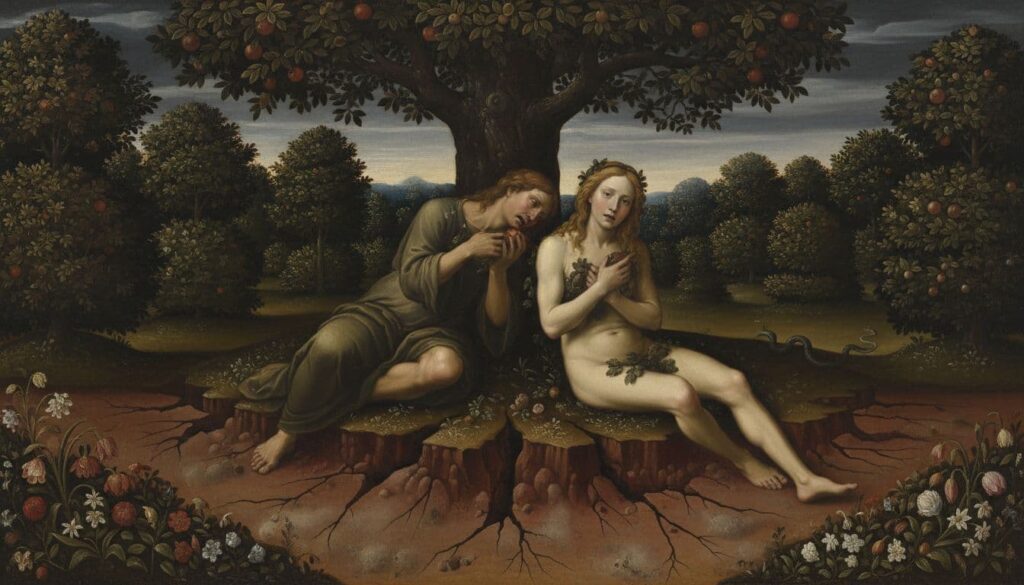
This connects to Genesis 2:17, where God warns that disobedience leads to death. After the Fall of Adam and Eve, death becomes part of human life east of Eden. You can feel it in the history: the world is still beautiful, but it’s also breaking.
Then there’s Sheol, often translated “the grave” or “the realm of the dead.” Sheol is not described like the final lake of fire. It’s more like the shadowy place where the dead are gathered, a way of speaking about the unseen side of death and the grave. Some passages are poetic, and they use Sheol language like a songwriter uses darkness and morning, it paints a picture, not a technical diagram.
New Testament words: apothnesko, nekros, thanatos, and Hades (dying, dead, death’s power, and the realm of the dead)
In the New Testament, apothnēskō means “to die,” and nekros means “dead” (a corpse, or the state of being dead). Then there’s thanatos, “death,” which can mean the fact of dying, but also the rule of death over humanity.
That’s why Paul can talk about death as something that “spread to all” through sin (Rom 5:12), and as the consequence sin pays out (Rom 6:23). In other words, death is not only what happens at the end of life, it’s also a spiritual problem that Christ came to break.
The New Testament word that often lines up with Sheol is Hades. Hades is the realm of the dead, not the final destination after judgment. That matters in Revelation 20:14, where “Death and Hades” are thrown into the lake of fire. Even the place of the dead gets emptied and judged. (For a technical discussion on that verse, see this thread on Revelation 20:14 and “Death and Hades” thrown into the lake.)
The different kinds of death in Scripture and why the second death matters most
The Bible’s uses of death fit well into a simple framework:
Physical death (the body dies)
Spiritual death (separation from God while living)
The second death (final judgment after resurrection)
The second death matters most because it’s the last word for those who reject God’s life.
Physical death: what it is, why it entered the world, and why everyone faces it
Physical death is the ending of bodily life. Scripture ties its entrance into human experience to sin (Gen 2:17; Rom 5:12). We age, we weaken, we return to dust. No amount of money, medicine, or motivation cures mortality.
Hebrews 9:27 gives the basic rhythm most of us live under: death comes, then judgment. That doesn’t mean God can’t act in rare ways, but it does describe the normal human pattern.
Spiritual death: being “dead” while still breathing (separation from God)
There’s another kind of death that doesn’t wait for a funeral. The New Testament can describe people as “dead” because of sin (often summarized as being “dead in sins,” see Eph 2:1). That’s not poetry for feeling sad. It’s separation from God’s life, God’s light, God’s fellowship.
Think of a lamp unplugged from the wall. It might still look fine on the outside. But it can’t shine because it’s cut off from its source. Spiritual death is like that: alive outwardly, disconnected inwardly.
This is not the second death, but it points toward it. If a person stays separated from God, they’re moving toward final separation.
The second death: what it is, when it happens, and what makes it unique
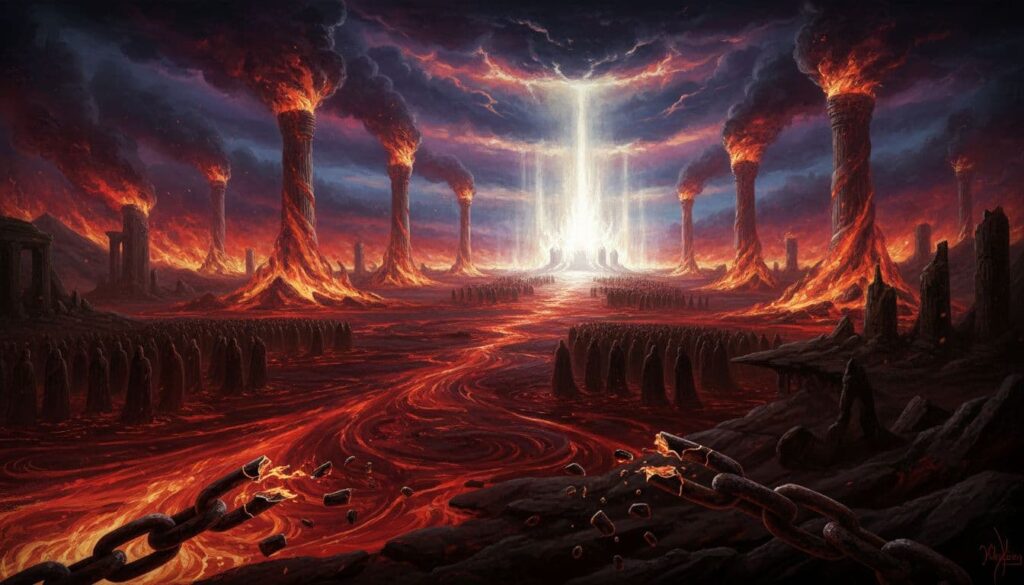
The “second death” is named in Revelation (Rev 20:14-15; 21:8). It is connected with the lake of fire and comes after resurrection and final judgment, not during ordinary history.
That’s what makes it unique.
It happens after judgment. Physical death comes to saint and sinner alike in this age. The second death comes after God’s verdict.
It follows resurrection. Revelation pictures the dead being raised, judged, and then some face the second death (Rev 20:11-15).
It’s final and irreversible. There’s no hint of a third death after that, no later appeal, no second chance built into the wording.
So, is the second death unlike any other death in the Bible? Yes, in the sense that it is not merely biological. It is the final outcome of judgment, the last separation, the end-state for those not found in the book of life.
In contrast, after believers are resurrected, Scripture says we’re raised imperishable and changed, because flesh and blood as we know it can’t inherit the Kingdom the way God’s bringing it (1 Corinthians 15:50-54).
This isn’t God patching up the old, worn-out version of us, it’s Him finishing what He started, giving us bodies that match a forever world, strong, whole, and fully alive to His presence. Jesus is the pattern: He came out of the tomb in a real body you could touch, He could eat fish, and He still carried identifiable scars, yet He also appeared in locked rooms and was no longer limited by weakness or decay (Luke 24:39-43; John 20:19-20).
Paul calls it a “spiritual body,” not meaning non-physical, but meaning Spirit-powered, a body finally ruled by the Holy Spirit instead of ruled by corruption (1 Corinthians 15:42-49). That’s why the Bible can say we’ll be like Him, because when He appears, we’ll see Him as He is and we’ll be conformed to His likeness (1 John 3:2; Philippians 3:20-21), and if you want a tight summary of what the Bible says about that, Got Questions on glorified bodies gives a helpful overview.
These glorified bodies aren’t just for “afterward,” they’re for reigning with Christ, because Revelation ties the first resurrection to priesthood and shared rule, and priests and rulers don’t do their work as wisps floating around, they serve as whole persons (Revelation 20:4-6) during the Millennial Reign, that means resurrected believers can live and serve with steady strength, clear minds, and unbroken worship, carrying out Jesus’ administration with justice and joy instead of fatigue and frustration (Isaiah 2:2-4).
It also helps explain how resurrected saints can coexist with people still living in natural bodies in that era, because the Kingdom has layers, glorified rulers with the King, and nations being taught His ways, a question people wrestle with and discuss in places like this Millennial Kingdom discussion. And the simplest way to hold it all together is this: resurrection life makes you fit to stand in Jesus’ world without breaking, so you can worship, work, and reign with Him for real, as the same “you,” finally healed, finally steady, finally home.
Do all humans experience death, and who has not (or will not)?
Most humans experience physical death. Scripture treats that as the normal human history. Still, the Bible also records exceptions, not to erase the rule, but to show God’s power over death.
Enoch and Elijah: taken by God instead of dying the normal way
Genesis 5:24 says Enoch “walked with God, and he was not, for God took him.” 2 Kings 2:11 describes Elijah taken up in a whirlwind. The plain sense is that they did not go through ordinary physical death the way most people do.
My dad had a similar experience when he went to be with the Lord. In August 2010, my dad was diagnosed with stage 4 esophageal cancer. He did not seek healing from God as many people do, nor did he seek chemotherapy. He knew it was his time to go be with the Lord.
Every day for 3 months or so, my dad prayed to God like he normally did, but this time he prayed something specific. My dad prayed that God would spare him from the pain and dying of cancer. The day finally came when it was his last day on earth.
My son and I were at my parents' during Christmas break, visiting while we had a chance to hang out with my dad. My dad was still strong as an ox. I remember he playfully grabbed me on the shoulder the night before to get my attention, and it hurt. He was still the strong man I always knew, even at age 72.
It was early morning his last day with us and he began acting somewhat strange. We did not know it was going to be his last day with us because he was still alert and strong like nothing was happening out of the ordinary.
We had never experienced someone that close to us dying of cancer before. Sure, we had family members who had died of cancer but none that we were by their bedside for the entire experience. We did not know what to expect.
Click Our Ad to Support Us!
Hospice was in and out of the house every day providing care for my dad. He still slept in his own bed and they had just ordered him a hospital bed for the house to be delivered that day. He would never sleep in that hospital bed.
As the day progressed, by dad began becoming more and more distant from us. He would sit in his chair, staring out the window, not listening to us, and refusing to take any pain medication. The hospice nurse told my mom he had one foot in this world and one foot in the next world.
We still had no idea my dad was about to move on from this world. We expected him to go through the normal dying process of cancer. We didn't know what else to expect.
My dad began talking to whoever was there to get him and take him to be with the Lord. As it got closer for his time to leave this world and go be with the Lord, my dad was sitting in his recliner looking out the window and he began to say things to whoever was there to get him like, "But I don't want to go anywhere!" We looked at each other amazed.
They had just delivered the hospital bed and set it up. My dad never even sat on that bed himself. He was sitting in his wheelchair with me standing at his right side and a family friend at his left side. Finally, my dad said, "Fine!" to whoever was there to get him and stood up from his wheelchair with his full strength still intact in his body.
My dad put his right arm around my shoulders and his left arm around our friend, looked up to the ceiling of the family room, and left his body, then the full weight of his body fell on my shoulders and I knew he was gone in that instant, in a twinkling of an eye, my dad was here and then he was there.
My dad never experienced death like any other person I have ever known, and especially not like any other cancer patient I have ever known, he simply took a step from this life to the next, fully embraced by God the entire time.
My dad knew God my entire life. They were friends as long as I can remember, and God answered his prayer of not dying from the pain of cancer. Then, God came and got my dad, took him to glory.
These stories don’t teach that humans can outsmart death. They teach that God can rescue, and that death doesn’t trap Him. For a simple overview, see why God took Enoch and Elijah without them dying.
Believers alive at Christ’s return: changed without dying (and why that matters)
The New Testament also teaches that some believers will not experience physical death because they’ll be alive when Christ returns. Paul says, “We shall not all sleep, but we shall all be changed” (1 Cor 15:51-52). 1 Thessalonians 4:16-17 describes living believers being caught up to meet the Lord.
So the pattern is: not everyone will die, but everyone will be changed. That’s not an escape trick. It’s a promise that Jesus will finish what He started, and death won’t get the last line.
What happens at death for believers and nonbelievers (and what the Bible actually says)
When someone dies, we want details. Who comes? What do they see? What do they feel? The Bible gives real hope and real warnings, but it doesn’t satisfy every curiosity. It tells us what we need for faith, not everything we might want for a timeline chart.
Believers at death: with Christ, cared for by God, awaiting resurrection
Jesus says He is “the resurrection and the life” (John 11:25). On the cross, He tells the thief, “Today you will be with me in paradise” (Luke 23:43). Paul describes death for the believer as being “with Christ” (Phil 1:23), and as being “at home with the Lord” (2 Cor 5:8).
Notice the shape of Christian hope:
The body dies.
The believer is not abandoned.
The final hope is resurrection, not a ghostly forever.
Acts 7:55-56 is tender here. Stephen, dying, sees Jesus standing. That scene doesn’t read like God is distant at the moment of death. It reads like welcome.
Who comes for believers: angels, Jesus Himself, and what passages are descriptive vs parabolic
Luke 16:22 says angels carried Lazarus to Abraham’s side, but that doesn't mean it is a guaranteed travel schedule for every believer.
Still, the point is clear: God is not helpless at death. He is able to carry His people through.
At the same time, Jesus centers the promise on Himself. “I will come again and will take you to myself” (John 14:3). Many attribute this verse to the rapture only, but it can mean more than just the rapture. A very small percentage of the total believers will be raptured. Most of us will be resurrected.
Acts 7 shows Jesus receiving Stephen in a moment of suffering. If angels assist, they do so under Christ’s authority. The comfort stays the same either way: the believer’s death is not a lonely fall into darkness.
Nonbelievers at death: what the Bible says about Hades, judgment, and the second death
For those who die apart from Christ, Scripture speaks soberly. The dead apart from Christ are in Sheol or Hades (language for the realm of the dead), awaiting judgment. Revelation 20:11-15 shows the sequence clearly: the dead apart from Christ are raised, judged, and those not found in the book of life face the lake of fire, which is the second death.
That means we shouldn’t mash everything together as if “Hades” and the “lake of fire” are the same thing at the same time. For more context on how different terms get used, this overview of Sheol, Hades, Paradise, and the grave lays out the vocabulary differences many readers miss.
Lake of fire, “eternal death,” and the big debate: conscious torment or annihilation?
Christians who take the Bible seriously have landed in two main places on the final fate of the lost. Both sides agree on the basics: judgment is real, sin is serious, Jesus saves, and the second death is not something to shrug at.
The debate is about what Scripture means when it describes final punishment as “eternal,” and when Revelation calls it “death.”
Eternal conscious torment: why some Christians believe punishment is unending and aware
This view says the lake of fire involves ongoing, conscious punishment. People who hold it point to Jesus’ warnings about “eternal fire” and “eternal punishment” (Matt 25:41-46), and to Revelation’s vivid images of judgment.
They read “eternal” as describing the continuing experience, not only the result. They also see Revelation’s language about torment as hard to reduce to a momentary event.
Annihilation (conditional immortality): why others believe the wicked finally perish in the second death
This view says the wicked do not live forever in torment because immortality is God’s gift, not a default human setting. The lost are judged, they suffer justly, and then the second death results in final destruction, not endless life in misery.
Supporters point to Romans 6:23: eternal life is God’s gift, while sin’s wages are death. They also emphasize the Bible’s “perish” and “destroy” language (John 3:16; Matt 10:28). In this reading, “second death” means what it sounds like: not a second kind of life, but a final end.
For a readable introduction to this conditionalist perspective, see Modern Reformation’s interview, Hell: The “Minority” View.
Do the wicked “live forever” in hell, or is eternal life only for the righteous?
The Bible is crystal clear that eternal life is a gift given to those in Christ (Rom 6:23). The Bible is also crystal clear that there is eternal judgment for those who reject Him (Matt 25:46), and Revelation’s second death is terrifying in its finality (Rev 20:14-15; 21:8).
The question is what “eternal” modifies.
If it modifies the process, then punishment is ongoing and conscious.
If it modifies the result, then the punishment’s effect is permanent, with no return, no reversal, no undoing, and the second death is final destruction.
Either way, nobody should treat the second death like a debating sport. The cross tells us what sin costs, and what love pays. Jesus didn’t die to help us win arguments. He died to give life.
The Bible’s language about death has layers. Physical death ends our earthly life. Spiritual death is separation from God even while we live. And the second death is unique because it comes after resurrection and final judgment, tied to the lake of fire and God’s final justice.
If you’re reading this with a tight feeling in your chest, that’s not strange. Death is heavy. Still, Christian hope is not wishful thinking, it’s anchored in Jesus’ resurrection and His promise to receive His people. Choose Him, trust Him, and receive eternal life as God’s gift, because death is not the end, and judgment is real.
Related Posts
Reprobate Mind: 5 Warning Signs and Hope for Change The Bible’s take on a reprobate mind isn’t just a warning or a piece of theology. It’s a wake-up call. “Reprobate mind” (from the Greek adokimos, meaning rejected or unapproved) describes what happens when people no longer care about God’s truth—they trade what’s holy for what feels good, grow numb to right and wrong, and God lets go. It’s mentioned…
What Does Jesus Mean Today? Yeshua, Savior Matthew 1:21 When we ask, what does Jesus mean, we’re not just chasing a word origin, we’re listening to how God tied a Name to a mission. Matthew 1:21 doesn’t treat "Jesus" like a random label, it reads like Heaven signing the birth certificate with purpose: “you shall call His name,” because “He will save.”
What Changes in Us to Become a Born Again Christian - John 3:3 We’re going to walk through the “from above” new birth, the Holy Spirit’s work, Adam’s first calling and choice, what sin really is (in plain Bible terms), why spiritual truth stays hidden to the natural mind, and how salvation (new birth) relates to Holy Spirit baptism (empowerment).
The Seven Spirits of God stand as one of the most profound and often misunderstood truths in Christian theology. Rooted deeply in Scripture, they aren’t seven separate entities but rather seven attributes of the one Holy Spirit—God revealing Himself in fullness. Isaiah 11:2 describes these [...]
The gifts of the Holy Spirit reveal the active power of God working in the lives of His people. They aren’t just distant historical records or fading Biblical accounts; they’re living because the Holy Spirit, He is living and He is God, and His transformative gifts are reaching people [...]
The phrase “tongues of fire” in Acts 2:3 sparks worldwide curiosity and spiritual wonder. It appears in Scripture to describe the Holy Spirit’s descent during Pentecost, when visible flames rested on the apostles, marking the time when God’s Spirit descended on earth, [...]
The Bible’s take on a reprobate mind isn’t just a warning or a piece of theology. It’s a wake-up call. “Reprobate mind” (from the Greek adokimos, meaning rejected or unapproved) describes what happens when people no longer care about God’s truth—they trade what’s holy for what feels good, grow numb [...]
The upper room, a sacred space in Jerusalem, holds profound significance in Christian history. Acts 2 tells us it is the gathering place for Jesus’ disciples when the Holy Spirit descended upon them during Pentecost. This transformative moment not only empowered those present but also sparked [...]
Pentecost isn’t just a Christian event; its roots stem from the Jewish celebration of Shavuot, the day Moses received the Ten Commandments from God. For Christians, Pentecost marks the moment when God poured out His Spirit and Jesus’ worldwide church empowered by the Holy Spirit and His gifts [...]
Charismatic gifts, often referred to as manifestation gifts, showcase the miraculous power of the Holy Spirit. From healing and miracles to prophecy and discernment, they serve as tangible evidence of God’s presence and transformative work. These gifts, seen throughout Biblical history, have [...]
Revelation 3:7-8 offers a powerful message to the church in Philadelphia, a message that remains relevant today. It speaks of a divine “open door” that no man can shut, given by the one who holds the Key of David. This imagery represents not only an opportunity but also God’s sovereign [...]
Have you ever wondered why the word “anointing” carries so much depth in Scripture? The idea of anointing—of sacred oil poured out on kings, priests, and prophets—echoes through the Old Testament as a symbol of God choosing, empowering, and setting apart. God didn’t leave the details of [...]
The Bible boldly declares the truth that Jesus is both fully God and fully man—a mystery that anchors the Christian faith. But what does it mean, practically, for us as believers? Jesus didn’t perform miracles or operate in the gifts of the Holy Spirit simply as God; He demonstrated how a [...]
The Antichrist
The Apostate Church
The Rapture
Angels
Book of Daniel
Giants
Judgment
Prophecy
The Apostles
Bible Prophecy
Beware of Deception
Sin
Antichrists
Demon Possession
Healing
Millennial Reign
Redemption
The Gospels
The Holy Spirit
American Prophecy
Israel
Armageddon
Forgiveness
Intercession
Prayer
Revival
The Old Testament
The Tribulation
Faith
Kingdom Of God
Bible Interpretation
Free Will
Book Of Jude
Pride
The Afterlife
The Red Dragon
We use cookies so you can have a great experience on our website. View more
Cookies settings
Accept
Decline
Privacy & Cookie policy
Privacy & Cookies policy
Cookies list
Cookie name
Active
Who we are
Our website address is: https://theholyspirit.us.
Comments
When visitors leave comments on the site we collect the data shown in the comments form, and also the visitor’s IP address and browser user agent string to help spam detection.
An anonymized string created from your email address (also called a hash) may be provided to the Gravatar service to see if you are using it. The Gravatar service privacy policy is available here: https://automattic.com/privacy/. After approval of your comment, your profile picture is visible to the public in the context of your comment.
Media
If you upload images to the website, you should avoid uploading images with embedded location data (EXIF GPS) included. Visitors to the website can download and extract any location data from images on the website.
Cookies
If you leave a comment on our site you may opt-in to saving your name, email address and website in cookies. These are for your convenience so that you do not have to fill in your details again when you leave another comment. These cookies will last for one year.
If you visit our login page, we will set a temporary cookie to determine if your browser accepts cookies. This cookie contains no personal data and is discarded when you close your browser.
When you log in, we will also set up several cookies to save your login information and your screen display choices. Login cookies last for two days, and screen options cookies last for a year. If you select "Remember Me", your login will persist for two weeks. If you log out of your account, the login cookies will be removed.
If you edit or publish an article, an additional cookie will be saved in your browser. This cookie includes no personal data and simply indicates the post ID of the article you just edited. It expires after 1 day.
Embedded content from other websites
Articles on this site may include embedded content (e.g. videos, images, articles, etc.). Embedded content from other websites behaves in the exact same way as if the visitor has visited the other website.
These websites may collect data about you, use cookies, embed additional third-party tracking, and monitor your interaction with that embedded content, including tracking your interaction with the embedded content if you have an account and are logged in to that website.
Who we share your data with
If you request a password reset, your IP address will be included in the reset email.
How long we retain your data
If you leave a comment, the comment and its metadata are retained indefinitely. This is so we can recognize and approve any follow-up comments automatically instead of holding them in a moderation queue.
For users that register on our website (if any), we also store the personal information they provide in their user profile. All users can see, edit, or delete their personal information at any time (except they cannot change their username). Website administrators can also see and edit that information.
What rights you have over your data
If you have an account on this site, or have left comments, you can request to receive an exported file of the personal data we hold about you, including any data you have provided to us. You can also request that we erase any personal data we hold about you. This does not include any data we are obliged to keep for administrative, legal, or security purposes.
Where your data is sent
Visitor comments may be checked through an automated spam detection service.