Hell, Sheol, Hades, Gehenna, and the Lake of Fire: A Simple Biblical Guide
The English word hell carries a lot of weight. It pulls in cartoon flames, horror stories, half-remembered sermons, and deep questions about God’s heart. But in our English Bibles, "hell" often stands in for several very different Hebrew and Greek words: Sheol, Hades, Gehenna, and the lake of fire. No wonder people feel confused.
Many believers quietly wrestle with questions. Is God really good if there is eternal punishment in hell? Do the lost suffer forever, or are they finally destroyed? What about “outer darkness” and “weeping and gnashing of teeth”? And how do Death and Hades get thrown into the lake of fire?
Watch and share our video of this article to help us spread the Word of God. Be kind and subscribe to our YouTube Channel. Thank You!
This article steps back and asks, what does Scripture actually say, in context, in the original languages, with a humble heart? The goal is not to win a debate. The goal is to see God more clearly, take sin more seriously, and draw near to Him with both sober fear and deep hope.
Why Understanding Hell Biblically Matters for Faith and Life
What we believe about hell is not a side issue. It shapes:
How we see God’s character
How we see sin
How urgent we feel about repentance and faith
If hell is only a vague scary place, we might shrug at Jesus’ warnings. If hell is shaped more by cartoons than by Scripture, we might quietly doubt God’s goodness.
Defining hell the way the Bible does helps us hold together that God is holy, just, and loving at the same time. He hates evil more than we do, and He loves people more than we do.
In this article we will walk through:
What Sheol, Hades, Gehenna, the lake of fire, and outer darkness mean
Whether hell and death can be seen as “spirits” or powers
Whether spirits are eternal and who actually lives forever
What annihilationism says and why some Christians believe it
How eternal punishment fits with God’s love and justice
Common Ideas About Hell That Need a Second Look
Most people grow up with a picture of hell that comes from jokes, movies, or old paintings. Red devils with pitchforks. Endless flames. People screaming in caves underground.
But if you open a Bible and start reading carefully, the picture is both more complex and more serious. Several different words sit behind our one word hell. Sometimes English translations blur them together.
Good Bible study does not make hell softer. It makes it clearer. And clarity can wake up our hearts.
Sheol, Hades, Gehenna, and the Lake of Fire: What the Bible Really Says
Bible students and pastors have worked hard to explain how these words relate. You can see one helpful summary in this article on Sheol, Hades, and Gehenna. Let’s walk through each term in simple language.
Sheol in the Old Testament: The Shadowy Place of the Dead
Sheol is a Hebrew word. It is often translated “grave,” “pit,” or sometimes “hell,” but its basic meaning is “the place of the dead,” the unseen world.
In the Old Testament:
David cries, “In death there is no remembrance of you; in Sheol who will give you praise?” (Psalm 6:5).
Ecclesiastes says that in the grave there is no work, planning, or knowledge (Ecclesiastes 9:10).
Jacob expects to go down to Sheol in grief for his son (Genesis 37:35).
Both righteous and wicked go to Sheol. It is a place of silence and waiting, not yet the final judgment. Fire is not the main picture here. Sheol is more like a dark holding place where bodies are dead and spirits wait for what comes next.
When Jesus breathed His last on the cross and said, “It is finished,” His body went into the tomb, but His Spirit went into Sheol, the place of the dead, not as a victim but as the victorious Son who had just paid the full cost of sin.
The early church called this the “harrowing of hell,” a way of talking about His descent to the dead to proclaim victory and free those who had died in faith before the cross, which you can see traced in the idea of the Harrowing of Hell. Paul hints at this in Ephesians 4:8–10, saying that the One who “ascended on high” and “led captivity captive” first “descended into the lower parts of the earth,” Christ entering the depths to claim His people, as explored in this study of He led captivity captive.
Peter echoes the same mystery when he says Jesus was “made alive in the Spirit” and “went and preached to the spirits in prison” (1 Peter 3:18–20).
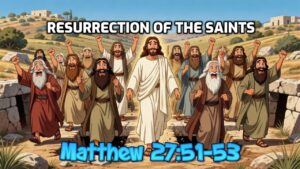
All of this fits the older promises: Psalm 16:10 said God would not abandon His Holy One to Sheol, Isaiah 61:1 spoke of the Anointed One proclaiming liberty to captives, and Hosea 13:14 taunted death itself. So Jesus steps into death’s house, not as a guest, but as the owner of the keys, fulfills the prophecies that God would ransom His people from Sheol, and then walks out alive, carrying His freed captives with Him (Matthew 27:52-53).
So when an English Bible uses “hell” for Sheol, it can be confusing. Sheol is serious, but it is not exactly what most people think of when they hear the word hell.
Hades in the New Testament: Greek Term for the World of the Dead
In the Greek New Testament, Hades usually plays the same role that Sheol did in the Old Testament. It is the unseen realm of the dead.
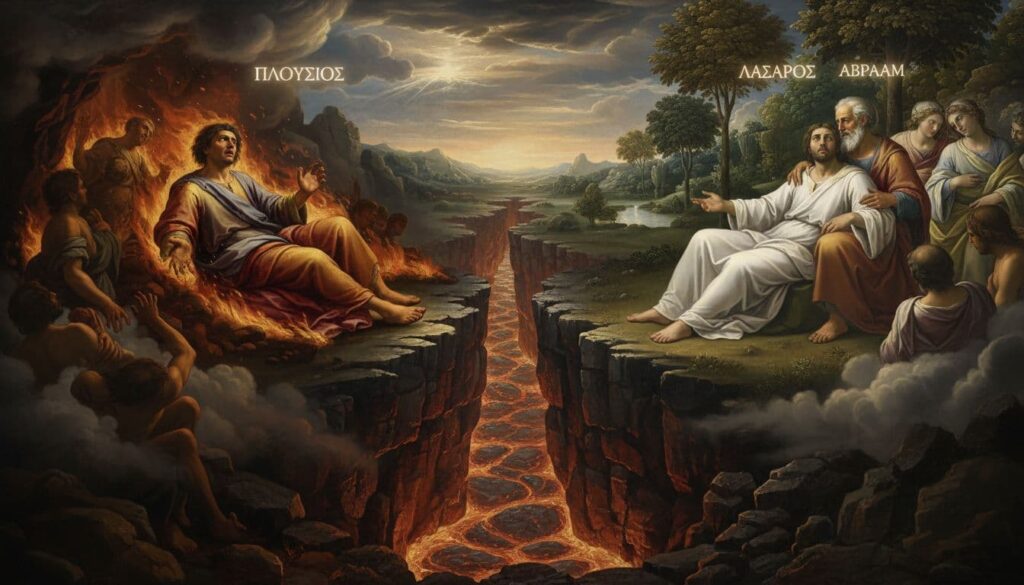
Jesus gives one of the most vivid pictures in Luke 16. The rich man is in torment in Hades, while Lazarus is comforted “at Abraham’s side.” There is a gulf between them. Both are conscious. Yet this scene happens before the final resurrection and judgment.
Revelation 20:13 says that “Death and Hades gave up the dead who were in them,” and then those people are judged. That shows Hades is temporary. It is an intermediate place, not the final hell.
So we could say:
Sheol (Hebrew) and Hades (Greek) refer to the present world of the dead away from Christ.
Within Hades before Jesus conquered death and rose again there used to be comfort or torment, but now there is only torment.
Hades is emptied before the final judgment.
Gehenna: From Valley of Hinnom to Picture of Final Judgment
Gehenna is a Greek form of the Hebrew Ge Hinnom, the Valley of Hinnom outside Jerusalem. In the Old Testament that valley was stained with child sacrifice to false gods. It became a symbol of cursed rebellion.
Jesus takes that horrible valley and uses it as a picture of final judgment. In Matthew 5:22, 29–30 and Mark 9:43–48, He warns about being thrown into Gehenna. He calls it “unquenchable fire” and quotes Isaiah, “their worm does not die.”
In simple terms:
“Unquenchable fire” means a fire that humans cannot put out.
“Their worm does not die” pictures ongoing ruin, not a quick clean burn.
For most people today, when they say hell, they are thinking of what Jesus pictures with Gehenna: final, terrifying judgment for sin.
The Lake of Fire in Revelation: The Final Hell After Judgment
All whose names are not in the book of life thrown in (Revelation 20:15).
Here we are past the final judgment. There is no more appeal, no more history to live. The lake of fire is the last destination.
Many Christians, when they say hell, are really talking about this final lake of fire. Revelation uses very strong language of eternal punishment and separation from God here.
How These Words Relate to Our English Word “Hell”
To summarize:
Sheol / Hades: present world of the dead away from Christ, a waiting place, often temporary.
Gehenna: Jesus’ picture of final fiery judgment for the wicked.
Lake of fire: Revelation’s picture of final hell after resurrection and judgment.
English Bibles sometimes translate all of these as “hell.” That can hide the difference between present waiting, final judgment, and the last state of the lost.
When we slow down and see the layers, the teaching of hell becomes clearer, not lighter.
Are Hell and Death Spirits, and What Happens at the Lake of Fire?
When you sit with Revelation 20:14 and really let it speak, you notice something striking: “death and Hades” are treated like enemies that can be grabbed, judged, and thrown into the lake of fire, not just abstract ideas.
John writes as if Death and Hell are hostile powers, almost like dark spiritual rulers that have tormented God’s people, and now God brings them into court and ends their rule forever. Many commentators point out this personification in the text, seeing “Death and Hades” as active forces or powers that Christ defeats, not neutral conditions of existence, which you can see unpacked in the notes on Revelation 20:14 at Bible Hub.
Paul has the same flavor in 1 Corinthians 15 when he calls death “the last enemy” that will be destroyed, echoing Hosea’s taunt, “O Death, where are your plagues? O Sheol, where is your sting?” It is as if Scripture lines up Death and Hell in front of the throne, names them as evil rulers over fallen humanity, then shows God casting them into the “lake of fire,” the final place of judgment, which writers like GotQuestions describe as the ultimate end of all rebellion against God. In that light, Hell and Death are not just places or states, they are beaten spirits, stripped of authority and thrown away forever.
In 1 Corinthians 15:26, Paul calls death “the last enemy.” In Revelation, death and Hades are pictured as holding the dead, then standing before God, then being thrown into the lake of fire.
Death and Hades as Powers That Will Be Destroyed
Revelation 20:14 says, “Then death and Hades were thrown into the lake of fire. This is the second death, the lake of fire.”
Others say this does not mean a literal person named Death or a ghost named Hades is screaming in the fire. It means the whole power and realm of death is brought to a final end.
Either way, it all lines up with the promise in Revelation 21:4 that there will be no more death, crying, or pain when God makes all things new. The important takeaway is Death itself is judged.
How the Fate of Death and Hades Compares to People Who Reject God
Revelation 20:11–15 also shows all the dead standing before God. Those not listed in the book of life are thrown into the same lake of fire.
So we have:
Death and Hades, as powers, ended in the lake of fire.
People who rejected God, cast into that same lake.
Here is the hard question: Do those people experience eternal conscious punishment in hell, or are they finally destroyed after judgment? Scripture uses language that points both to ongoing torment and to destruction. That tension is exactly where the debate about annihilationism lives.
Are Spirits Eternal, and Who Actually Lives Forever?
When we talk about hell, we are really talking about the future of spirits and souls. What keeps existing forever?
What the Bible Says About Spirits, Souls, and Eternal Existence
The Bible is clear that God alone “has immortality” in Himself (1 Timothy 6:16). Every created spirit, whether angel, demon, or human soul, depends on Him for continued existence.
Scripture shows human souls alive and conscious after physical death. In Luke 16 the rich man and Lazarus are awake in Hades. In Revelation 6:9–11, the souls of martyrs cry out under the altar.
Hell matters because what we do in the body echoes into this ongoing spiritual life.
“Eternal life” in the New Testament is more than just living without end. Jesus defines it as knowing the Father and the Son (John 17:3). Life is fellowship with God.
Click Our Ad to Support Us!
This gift is promised to those who trust Christ, who are written in the Lamb’s book of life. They will see His face, serve Him, and enjoy His presence forever.
So the question becomes, does everyone exist forever, but some in hell, or do only the saved receive immortality and the lost are destroyed?
Do the Lost Suffer Forever or Are They Finally Destroyed?
Here are the two main views, in simple words.
Traditional view:
The lost are raised, judged, and then suffer conscious, eternal punishment apart from God.
After judgment, the wicked do not suffer forever in hell.
They receive real, conscious punishment that fits their sin.
Then, at some point, they are destroyed and no longer exist.
Many who hold this view also speak of “conditional immortality.” Only those who belong to Christ receive immortality as a gift. The lost do not live forever in hell, because they never receive that gift.
They point to Bible words like “perish,” “destroy,” and “second death,” and say we should read those as real endings, not just endless pain.
Where Did Annihilationism Come From and Why Do Some Christians Believe It?
Hints of this view appear in some early Christian writers, but it became more organized in later groups, such as some Anabaptists, some Adventists, and a number of evangelical scholars in the last 150 years.
Why are some believers drawn to it?
Eternal torment in hell feels to them out of character with God’s love.
They want to take texts about destruction and death at face value.
They like a picture where God finally wipes evil from creation, instead of maintaining a forever-prison of suffering.
Others, of course, see strong reasons to hold the traditional view.
How Annihilationism Compares With the Traditional View of Hell
Both views agree that:
All people will stand before God in judgment.
The lost will face real, fearful judgment in hell.
Salvation comes only through Jesus.
They differ on what happens after judgment.
In the traditional view, hell is eternal conscious punishment. “Eternal fire” means fire that keeps burning, and “eternal punishment” means ongoing suffering.
In annihilationism, “eternal destruction” means a destruction whose results last forever. Hell is eternal in effect, not in process.
Here is where careful reading matters. Each reader needs to look at the passages, pray, and ask God for a clean heart more than a clever argument.
Is Eternal Punishment Just, Loving, and in Line With God’s Character?
The questions here are not just intellectual. They are emotional. Many of us have asked, quietly:
Does eternal punishment in hell really fit the crime?
Is it cruel or unworthy of a God of love?
Does Eternal Punishment Fit the Crime of Sin Against God?
In Scripture, the weight of sin is not just about the act, but the One offended. To sin is to spit in the face of a holy, infinite God, to say “My will, not Yours.”
Jesus puts “eternal punishment” and “eternal life” side by side in Matthew 25:46. The same word “eternal” describes both. This is one of the strongest texts for the traditional view of hell.
Jesus said, "Then He will answer them, saying, ‘Assuredly, I say to you,inasmuch as you did not do it to one of the least of these, you did not do it to Me. Andthese will go away into everlasting punishment, but the righteous into eternal life.” Matthew 25:45-46
In Matthew 25:46, the English word “eternal” translates the Greek adjective aionios, which comes from aion, meaning “age” or a long period of time, and the debate starts right there.
In some places, aionios can point to something tied to an “age” or era, but in this verse it stands in tight parallel with “eternal life,” so whatever span or quality it carries for the righteous, it carries the same kind for the punishment of the wicked. The focus is not just on a ticking clock that never runs out, but on a settled, irreversible outcome that flows from God’s final judgment, a life or a loss that belongs to the age to come and can’t be undone.
If you want to see how scholars work through that tension between “age-long” and “everlasting,” the discussion at What does “eternal” mean in Matthew 25:46? walks through the main views in detail, and a more pastoral breakdown of the Greek in The Greek of Matthew 25:46 shows how aionios connects to both “punishment” and “life.” When you sit with the verse in its original language, the weight of it is not just that time goes on, but that our response to Jesus now leans into a future that is fixed, serious, and deeply personal.
Is Eternal Judgment Cruel or Out of God’s Loving Character?
God is love, but He is also a consuming fire. He is patient and slow to anger, but not indifferent.
He says He has no pleasure in the death of the wicked, but that they turn and live (Ezekiel 18:23). He is “not wishing that any should perish, but that all should reach repentance” (2 Peter 3:9).
If anyone ends up in hell, it will be over the broken heart of God, not because He enjoyed sending them there.
Whatever view we hold about the details of hell, we cannot let our feelings rewrite what God has revealed. At the same time, we must let His love shape how we read His warnings.
What the Bible Actually Says About Eternal Punishment
Key passages include:
Matthew 25:41, 46: eternal fire, eternal punishment, and Jesus Himself said that.
In Matthew 25:41, Jesus says, “Depart from me, you cursed, into the eternal fire prepared for the devil and his angels.” In Greek, that phrase is εἰς τὸ πῦρ τὸ αἰώνιον, literally “into the fire, the eternal,” where αἰώνιον (aiōnion) is the same word used in verse 46 for both “eternal punishment” and “eternal life.”
You can see the Greek layout and grammar for yourself in this interlinear of Matthew 25:41. The text doesn’t say “the fire is eternal but the wicked are not.” It links the cursed people to the same aiōnion reality that defines the destiny of the righteous, just in opposite directions.
In the flow of the chapter, Jesus is not giving a physics lesson about what fire does to a body but revealing a final, irreversible judgment, prepared first for the devil and his angels, then shared by those who align with them.
Some argue that “eternal fire” only describes the source or quality of the judgment and not its ongoing result, and they connect this to passages like Jude 7. Yet the parallel in Matthew 25:46, where “eternal punishment” and “eternal life” stand side by side, presses us to read aiōnion in the same way for both, as an unending state, not a short event with a long after-effect.
A careful word study of “eternal fire,” including its limited New Testament use, makes this contrast clear and shows why many see Jesus describing an ongoing, conscious judgment, not simple extinction of the wicked, as discussed in this word study on “eternal fire” and aiōnios. The sobering heart of the passage is that the fire’s eternity exposes the weight of separation from Christ, not just the length of time, and it invites us to ask, in a very personal way, which side of the King we’re standing on.
Mark 9:43–48: unquenchable fire, their worm does not die.
2 Thessalonians 1:8–9: punishment of eternal destruction, away from the presence of the Lord.
The traditional view reads these as clear teaching that hell involves ongoing conscious punishment. Annihilationists answer that “eternal destruction” means a final, total end, and that images of smoke rising forever can picture permanent ruin.
The Bible leaves no doubt about this: judgment is real, final, fearful, and eternal.
What Is the Outer Darkness and How Is It Different From Hell?
Jesus also talks about “outer darkness” where there is “weeping and gnashing of teeth.” This picture stands beside the images of hellfire, not always identical with them.
Outer darkness shows us that hell is not only about physical pain. It is also about being shut out. A person is still alive, still aware, still weeping and grinding teeth in regret, but far from the King and His joy.
This is a kind of eternal “life” that is really eternal death, a long night with no sunrise. Whether or not you lean toward annihilationism, you can feel the weight of that loss.
Conclusion: Facing Hell With Honest Fear and Real Hope
We have walked through Sheol and Hades as the present world of the dead, Gehenna as Jesus’ picture of final fiery judgment, the lake of fire as the last hell of Revelation, and outer darkness as the terror of being shut out from God’s Kingdom. We have seen death and Hades thrown into the lake of fire, and we have felt the tension between eternal conscious punishment and the hope some see in annihilation.
Most of all, we have seen that God’s judgment is real and His heart is not casual about sin. Hell is not a joke. It is not a cartoon. It is what happens when a holy God finally says “Enough” to rebellion.
But the cross tells us something just as true. Jesus stepped into our place, tasted death and judgment for us, so that we could share eternal life with God and never fear hell. Jesus saved us from hell. The right response is not endless speculation. It is repentance, faith in Christ, and a life that walks in the light.
Keep opening your Bible. Let the fear of the Lord and the love of God sit side by side in your heart. And while questions remain, cling to the One who saves from the wrath to come, and who loves to bring people from darkness into His marvelous light.
Related Posts
Death in the Bible: Hebrew, Greek, Second Death Conquered - Romans 6:23 When people argue about death, they’re often arguing past each other. Not because they don’t love Scripture, but because the Bible uses the word death in more than one way. Sometimes it means the moment a heart stops. Sometimes it means separation from God while a person still breathes. And sometimes it means the final outcome after judgment, what Revelation…
6 Honest Truths About the Kingdom of God You Can’t Ignore In this article we will walk through what these verbs mean in their original Bible context, how they fit together, and how they help us see the difference between the Kingdom of God, Heaven, being born again, and being saved. Under all of it stands one simple truth: the King Himself, Jesus, is inviting you into far more than “not…
Tongues of Fire in Acts 2:3: Meaning, Biblical Significance and Holy Spirit Power The phrase "tongues of fire" in Acts 2:3 sparks worldwide curiosity and spiritual wonder. It appears in Scripture to describe the Holy Spirit's descent during Pentecost, when visible flames rested on the apostles, marking the time when God's Spirit descended on earth, fulfilling the prophecy Jesus gave us when He said, “I will ask the Father, and He will give…
The Seven Spirits of God stand as one of the most profound and often misunderstood truths in Christian theology. Rooted deeply in Scripture, they aren’t seven separate entities but rather seven attributes of the one Holy Spirit—God revealing Himself in fullness. Isaiah 11:2 describes these [...]
The gifts of the Holy Spirit reveal the active power of God working in the lives of His people. They aren’t just distant historical records or fading Biblical accounts; they’re living because the Holy Spirit, He is living and He is God, and His transformative gifts are reaching people [...]
The phrase “tongues of fire” in Acts 2:3 sparks worldwide curiosity and spiritual wonder. It appears in Scripture to describe the Holy Spirit’s descent during Pentecost, when visible flames rested on the apostles, marking the time when God’s Spirit descended on earth, [...]
The Bible’s take on a reprobate mind isn’t just a warning or a piece of theology. It’s a wake-up call. “Reprobate mind” (from the Greek adokimos, meaning rejected or unapproved) describes what happens when people no longer care about God’s truth—they trade what’s holy for what feels good, grow numb [...]
The upper room, a sacred space in Jerusalem, holds profound significance in Christian history. Acts 2 tells us it is the gathering place for Jesus’ disciples when the Holy Spirit descended upon them during Pentecost. This transformative moment not only empowered those present but also sparked [...]
Pentecost isn’t just a Christian event; its roots stem from the Jewish celebration of Shavuot, the day Moses received the Ten Commandments from God. For Christians, Pentecost marks the moment when God poured out His Spirit and Jesus’ worldwide church empowered by the Holy Spirit and His gifts [...]
Charismatic gifts, often referred to as manifestation gifts, showcase the miraculous power of the Holy Spirit. From healing and miracles to prophecy and discernment, they serve as tangible evidence of God’s presence and transformative work. These gifts, seen throughout Biblical history, have [...]
Revelation 3:7-8 offers a powerful message to the church in Philadelphia, a message that remains relevant today. It speaks of a divine “open door” that no man can shut, given by the one who holds the Key of David. This imagery represents not only an opportunity but also God’s sovereign [...]
Have you ever wondered why the word “anointing” carries so much depth in Scripture? The idea of anointing—of sacred oil poured out on kings, priests, and prophets—echoes through the Old Testament as a symbol of God choosing, empowering, and setting apart. God didn’t leave the details of [...]
The Bible boldly declares the truth that Jesus is both fully God and fully man—a mystery that anchors the Christian faith. But what does it mean, practically, for us as believers? Jesus didn’t perform miracles or operate in the gifts of the Holy Spirit simply as God; He demonstrated how a [...]
The Antichrist
The Apostate Church
The Rapture
Angels
Book of Daniel
Giants
Judgment
Prophecy
The Apostles
Bible Prophecy
Beware of Deception
Sin
Antichrists
Demon Possession
Healing
Millennial Reign
Redemption
The Gospels
The Holy Spirit
American Prophecy
Israel
Armageddon
Forgiveness
Intercession
Prayer
Revival
The Old Testament
The Tribulation
Faith
Kingdom Of God
Bible Interpretation
Free Will
Book Of Jude
Pride
The Afterlife
The Red Dragon
We use cookies so you can have a great experience on our website. View more
Cookies settings
Accept
Decline
Privacy & Cookie policy
Privacy & Cookies policy
Cookies list
Cookie name
Active
Who we are
Our website address is: https://theholyspirit.us.
Comments
When visitors leave comments on the site we collect the data shown in the comments form, and also the visitor’s IP address and browser user agent string to help spam detection.
An anonymized string created from your email address (also called a hash) may be provided to the Gravatar service to see if you are using it. The Gravatar service privacy policy is available here: https://automattic.com/privacy/. After approval of your comment, your profile picture is visible to the public in the context of your comment.
Media
If you upload images to the website, you should avoid uploading images with embedded location data (EXIF GPS) included. Visitors to the website can download and extract any location data from images on the website.
Cookies
If you leave a comment on our site you may opt-in to saving your name, email address and website in cookies. These are for your convenience so that you do not have to fill in your details again when you leave another comment. These cookies will last for one year.
If you visit our login page, we will set a temporary cookie to determine if your browser accepts cookies. This cookie contains no personal data and is discarded when you close your browser.
When you log in, we will also set up several cookies to save your login information and your screen display choices. Login cookies last for two days, and screen options cookies last for a year. If you select "Remember Me", your login will persist for two weeks. If you log out of your account, the login cookies will be removed.
If you edit or publish an article, an additional cookie will be saved in your browser. This cookie includes no personal data and simply indicates the post ID of the article you just edited. It expires after 1 day.
Embedded content from other websites
Articles on this site may include embedded content (e.g. videos, images, articles, etc.). Embedded content from other websites behaves in the exact same way as if the visitor has visited the other website.
These websites may collect data about you, use cookies, embed additional third-party tracking, and monitor your interaction with that embedded content, including tracking your interaction with the embedded content if you have an account and are logged in to that website.
Who we share your data with
If you request a password reset, your IP address will be included in the reset email.
How long we retain your data
If you leave a comment, the comment and its metadata are retained indefinitely. This is so we can recognize and approve any follow-up comments automatically instead of holding them in a moderation queue.
For users that register on our website (if any), we also store the personal information they provide in their user profile. All users can see, edit, or delete their personal information at any time (except they cannot change their username). Website administrators can also see and edit that information.
What rights you have over your data
If you have an account on this site, or have left comments, you can request to receive an exported file of the personal data we hold about you, including any data you have provided to us. You can also request that we erase any personal data we hold about you. This does not include any data we are obliged to keep for administrative, legal, or security purposes.
Where your data is sent
Visitor comments may be checked through an automated spam detection service.